Opinion: Yitzhak Rabin’s assassination 25 years ago was an intelligence failure
November 4, 2020 1 Comment
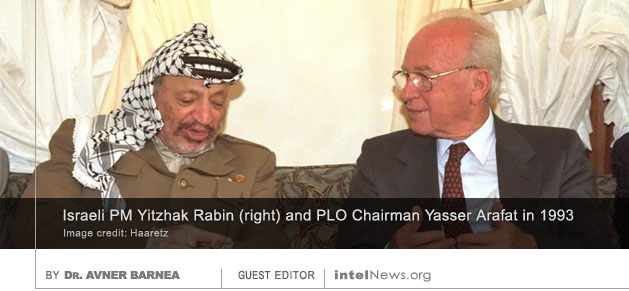
THE ASSASSINATION OF YITZHAK Rabin, Prime Minister of Israel, on the evening of November 4, 1995, by an extreme right-wing Jew was one of the most traumatic events in the history of the State of Israel. Contrary to the public perception that the assassination happened as a result of a security failure and poor management of the Israel Security Agency (ISA), I argue that the murder was mainly due to an ISA intelligence failure.
“The Shamgar Inquiry Commission”, as it was known because it was chaired by Meir Shamgar, former president of the Supreme Court, submitted its report in March 1996. This commission found significant failures in the security measures taken by the ISA to protect the late Prime Minister. But, in my opinion, its findings were seriously wrong, as it avoided diving into the major intelligence failure that led to this tragic incident.
On the evening of November 4, 1995, Israeli Prime Minister Yitzhak Rabin was killed by Yigal Amir, a 27-year-old student who was known as an extreme rightwing activist. Amir was waiting for the prime minister next to his car and shot Rabin three times from a close distance, in spite of the fact that four of Rabin’s bodyguards were surrounding the prime minister. Amir claimed to have done it “for Israel, for the people of Israel and the State of Israel”. He was found guilty and was sent to serve a life sentence in prison.
The progress in the peace process with the Palestinians, known as the Oslo Accords of 1993, allowed the political breakthrough of a peace agreement with Jordan in October 1994. Rabin was awarded the 1994 Nobel Peace Prize, along with Yasser Arafat and Shimon Peres, for their role in the creation of the Oslo Accords.
Read more of this post
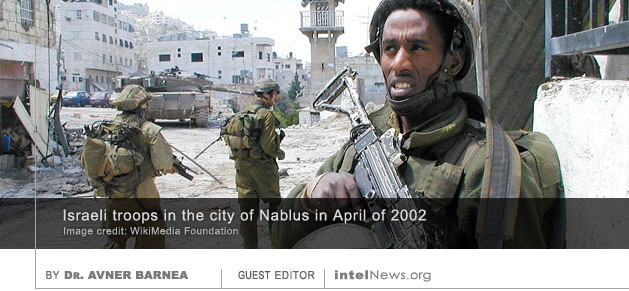 On the 20th anniversary of the outbreak of the second intifada (October 2000), the debate arises again in Israel as to whether the Palestinian move was an initiative of Chairman Arafat and the Palestinian Authority or whether it was a spontaneous evolution on the Palestinian side that largely surprised not only Israel but also the Palestinians.
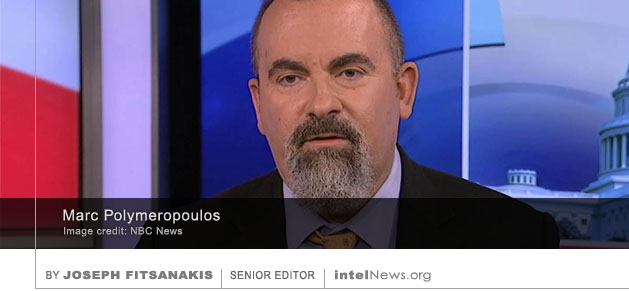 Intelligence insiders, including a former senior Central Intelligence Agency operations officer who spent decades in the Middle East, have described the establishment of official relations between Israel and some Gulf States as “the biggest change in the region in decades”.
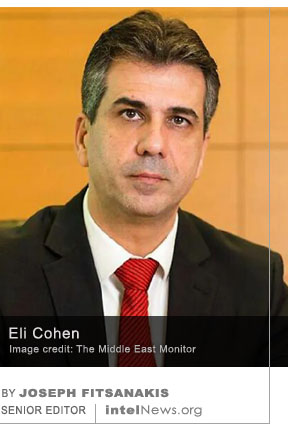 Israel’s minister of intelligence has said Bahrain and Oman could follow the United Arab Emirates in establishing diplomatic relations with Israel, following last week’s historic announcement. Israel said on Thursday that the UAE had
 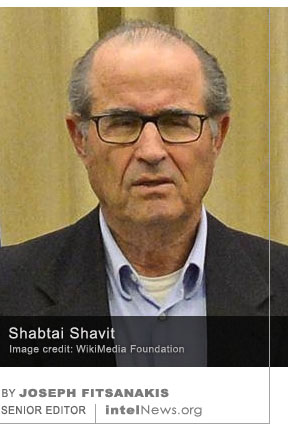 Shabtai Shavit, one of the longest-serving directors of the Israeli spy agency Mossad, has said that Israel and the world cannot stop Iran from developing a nuclear arsenal, and should focus instead on establishing a deterrence mechanism. Shavit, who is now 80, rose through the ranks of the secretive intelligence agency and became its director in 1989, under Labor Party leader Yitzhak Rabin. He stepped down in 1996 and was succeeded by Danny Yatom.
 There is growing speculation that Israel’s intelligence services may be behind a spate of blasts that have damaged military and civilian industrial sites in Iran in recent days. Citing a “Middle Eastern intelligence official”, The New York Times
  • Russian spy chief in rare interview with the BBC. In an exclusive
  A leaked report produced by analysts at Israel’s Ministry of Intelligence urges the government to annex occupied territories in the West Bank as soon as possible, in case Donald Trump loses the upcoming United States presidential elections in November. The report advises the Israeli government that it “should not expect” a widespread outbreak of violence in the streets. It also forecasts that “a wave of diplomatic protests” will gradually give its place to acceptance, as “the international system acclimates itself to annexation”.
 Researchers at a university in Israel claim to have discovered a new low-tech eavesdropping technique, which relies on sound vibrations on the glass surface of light bulbs and requires equipment costing less than $1,000. The researchers claim that the technique, which they call “lamphone”, enables eavesdroppers to intercept, in real time, audible conversations from a room located hundreds of feet away, simply by recording the vibrations that sounds create on the glass surface of a common light bulb present in the room.
 • State-level espionage on EU a ‘very high threat’ says report. The most successful attempts of espionage at a top EU institution are state sponsored, according to an
  •
• 






 intelNews.org
More details emerge about alleged killing of al-Qaeda #2 in Iran by Israeli spies
November 16, 2020 by Joseph Fitsanakis 3 Comments
THE ASSOCIATED PRESS SAYS it has confirmed a claim made last week by The New York Times, according to which an Israeli assassination team killed al-Qaeda’s deputy leader in a daring operation inside Iran in August. The paper said on November 13 that Abdullah Ahmed Abdullah, who went by the operational name Abu Muhammad al-Masri, had been assassinated in Tehran on August 7. He was the deputy leader of al-Qaeda, and was wanted by the United States Federal Bureau of Investigation for helping plan the 1998 bombings of American embassies in Kenya and Tanzania.
On Sunday, the Associated Press said it was able to corroborate the The Times’ story with “four current and former US [intelligence] officials”, one of whom had “direct knowledge of the operation” and another, a former CIA officer, had been briefed about it. The news agency said the operation was carried out by Israel, acting on information given to it by the US. The Americans gave the Israelis information about al-Masri’s whereabouts in Iran, as well as the cover he was using to avoid detection.
Al-Masri was killed by a team of Israeli assassins while driving his car in a quiet street in the suburbs of Tehran, according to The Times. The assassins, who were riding on motorcycles, shot him with guns equipped with silencers. Al-Masri’s daughter, Maryam, who was riding with him in the car, was also killed. This was part of the plan, said the Associated Press. Al-Masri’s daughter was also the widow of Hamza bin Laden, the son of al-Qaeda founder Osama bin Laden. Hamza bin Laden was killed in 2019 by the US at the border between Afghanistan and Pakistan. According to the Associated Press, US intelligence planners believed Maryam was “being groomed for a leadership role in al-Qaeda” and “was [already] involved in operational planning”.
Iranian media portrayed the incident as the murder of Habib Daoud, a Lebanese professor of history, who was gunned down in the Iranian capital along with his daughter by unknown suspects. In reality, said the Associate Press, the father and daughter were killed by the Kidon, (“tip of the spear” in Hebrew), an elite assassination unit within Israel’s Mossad intelligence agency.
► Author: Joseph Fitsanakis | Date: 16 November 2020 | Permalink
Filed under Expert news and commentary on intelligence, espionage, spies and spying Tagged with Abu Muhammad al-Masri, al-Qaeda, assassinations, Hamza bin Laden, intelligence cooperation, Iran, Israel, Maryam Abdullah, Mossad, News, United States