Intelligence insiders see Israeli alliance with Gulf States as ‘biggest change in decades’
September 15, 2020 2 Comments
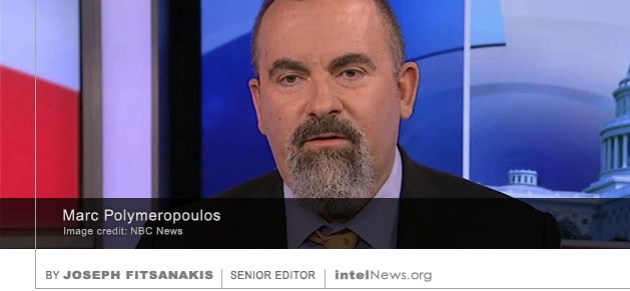 Intelligence insiders, including a former senior Central Intelligence Agency operations officer who spent decades in the Middle East, have described the establishment of official relations between Israel and some Gulf States as “the biggest change in the region in decades”.
The former CIA official, Marc Polymeropoulos, who worked closely with both Israel and the Palestinians in his 26-year career, told SpyTalk’s Jeff Stein and Jonathan Broder that secret intelligence links between Israel and some Arab countries are nothing new. However, “this [new] overt alliance is the biggest change in the region in decades”, said Polymeropoulos. He added that these intelligence links will only deepen now that official diplomatic relations have been established between Israel, the United Arab Emirates and Bahrain.
In their analysis, Stein and Broder explain that these historic developments in the Middle East were initially forged “in secret political interactions” facilitated in the intelligence domain. These were led by the Mossad, which has been tasked by the Israeli leadership with creating a regional alliance against Iran. These efforts have intensified in recent years, especially after the administration of United States Donald Trump annulled the Joint Comprehensive Plan of Action with Iran, which effectively signaled the resumption of Tehran’s nuclear program.
The end of the Joint Comprehensive Plan of Action, and the deepening polarization between Sunni and Shia populations in the Middle East, were the context in which the Israeli outreach to Arab states took shape. This context essentially convinced Arab leaders that their populations are sufficiently concerned about Iran to “stomach an alliance with Israel” Polymeropoulos told SpyTalk.
What’s next in this process? Stein and Broder suggest that Mossad officials will continue to reach out to their Arab counterparts, in secret, in the coming months, as part of Israel’s effort to build an alliance against Iran. These efforts will be crucially amplified by the White House, which recently sent US Secretary of State Mike Pompeo to Sudan in order to pressure the country’s new government to recognize Israel. In the meantime, say Stein and Broder, Mossad will become a lot more active in the Emirates and Bahrain.
► Author: Joseph Fitsanakis | Date: 15 September 2020 | Permalink
 A new book reveals for the first time the name of a former intelligence officer of the Soviet KGB who helped American authorities arrest Robert Hanssen, an American spy for the Soviet Union and Russia. The son of a Chicago police officer, Hanssen joined the Federal Bureau of Investigation in 1976 and was eventually transferred to the Bureau’s Soviet analytical unit, where he held senior counterintelligence posts. It wasn’t until 2000, however, that the FBI realized Hanssen had spied for Moscow since 1979. Following Hanssen’s arrest in 2001, it emerged that he had betrayed the names of 50 FBI and CIA assets or informants, many of whom perished in the hands of the Russian intelligence services.
 A surge in the activity of Russian intelligence personnel on United States soil has caused American spy agencies to rehire retired Russia specialists,
  Intelligence veterans have raised concerns that the temporary ban on immigrants and refugees from seven Muslim-majority nations, which has been imposed by the White House, will significantly hinder American efforts to recruit intelligence assets and sources in Muslim countries. United States President Donald Trump signed an executive order on Friday, banning entry into the United States of citizens of Iran, Iraq, Syria, Yemen, Sudan, Somalia and Libya. According to the White House, the goal of the temporary ban is to help increase domestic security in the US. But
 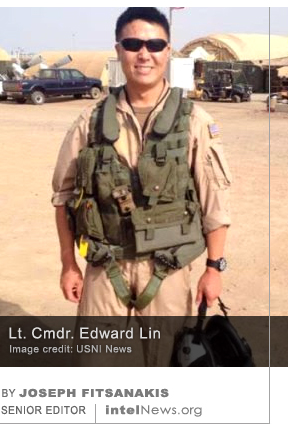 An American official has told Newsweek magazine that the possibility of further arrests in the espionage case of United States Navy flight officer Edward Lin should not be ruled out. Last Sunday, the US Navy reported the arrest Lt. Cmdr. Lin, who faces two counts of espionage and three counts of attempted espionage, among other charges. Aside from a three-page, heavily redacted charge sheet released by the Navy, almost nothing is known about this case. However, as intelNews
  Lawyers for Jonathan Pollard, an American with Israeli citizenship who spied on the United States for Israel in the 1980s,
  By JOSEPH FITSANAKIS | intelNews.org








 intelNews.org
Espionage allegations prompt sharp exchanges between ex-CIA officials
February 13, 2023 by Joseph Fitsanakis 2 Comments
Baer’s book, The Fourth Man: The Hunt for a KGB Spy at the Top of the CIA and the Rise of Putin’s Russia (Hachette Books, May 2022), focuses on the period following the arrests of three American intelligence insiders, who were found to have spied for the Kremlin: Federal Bureau of Investigation (FBI) agent Robert Hanssen, and CIA officers Aldrich Ames and Edward Lee Howard. By 2002, Hanssen and Ames were serving life sentences for espionage, while Howard had died in Russia where he had fled while under investigation by the FBI. Collectively, these three had been responsible for some of the CIA’s gravest operational setbacks against the Soviet KGB and its Russian successor agencies.
Some in the CIA, however, remained convinced that not all of the CIA’s failures in the 1980s and 1990s could be explained away in this fashion. They held on to the suspicion that Moscow had been able to recruit a senior CIA executive, who —among other things— had sabotaged numerous probes by some of the Agency’s most committed spy-hunters. Baer’s book discusses how, in the mid-1990s, the CIA’s Directorate of Operations actively pursued those suspicions, by setting up a Special Investigations Unit (SIU). This new unit was led by one of the CIA’s most talented counterintelligence officers, Paul Redmond.
CONTROVERSY
This is precisely the point at which Baer’s book turns wildly controversial: it alleges that the missing spy, whom Baer refers to as “the fourth man”, is none other than Redmond himself. The retired CIA case officer further alleges that even the SIU eventually concluded that Redmond —i.e. its leading member— was a spy for Moscow. The author claims that the SIU presented those findings at a briefing with Redmond among the audience. The presentation prompted Redmond to storm out of the meeting, Baer alleges.
Importantly, Baer describes his case as “inconclusive”, and claims that he relies on information from some of his former CIA colleagues. He also admits that the very idea of a “fourth man” may be nothing more than a chimera. Nevertheless, the SIU probe did occur. It also appears that the FBI opened an investigation into the matter in 2006. Baer claims to have received a visit by two FBI agents in 2021, in which he was asked about what he knew about Raymond. This, he says, left him with the impression that some sort of counterintelligence effort to find the “fourth man” was “ongoing then and is continuing” now. Moreover, according to Baer, this counterintelligence investigation is no longer confined in-house at CIA; the FBI has now taken the lead.
REDMOND’S SIDE RESPONDS
Remarkably, Baer appears to have spoken to Redmond at least twice while preparing his book. On each occasion, the retired CIA senior executive fiercely rejected Baer’s claims that he was a spy for Moscow. In recent months, Redmond voiced his dismay at Baer’s claims publicly. As SpyTalk reports, the first time Redmond spoke publicly about Baer’s book was in November of last year, during an event held by the Association of Former Intelligence Officers. Read more of this post
Filed under Expert news and commentary on intelligence, espionage, spies and spying Tagged with Analysis, CIA, counterintelligence, espionage, Jeff Stein, Joseph Fitsanakis, News, Newstex, Paul Redmond, Robert Baer, United States