Analysis: The West should weigh carefully its response to the Paris carnage
November 14, 2015 13 Comments
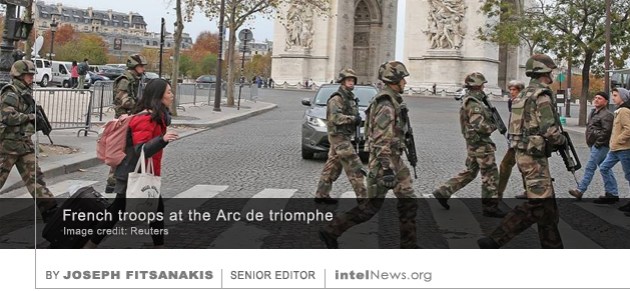 Paris is still reeling from Friday’s unprecedented carnage, which left at least 130 people dead and over 350 wounded. The six separate incidents included the first known suicide bombings in the country’s history and marked the deadliest coordinated attacks on French soil since World War II. The magnitude of the attacks prompted the French government to close the country’s borders and declare a nationwide state of emergency —the first since 1961. The shock from the mass killings is today reverberating throughout Europe, a continent that had not seen such a deadly incident since the Madrid train bombings of 2004, when a group of al-Qaeda-inspired militants killed 191 people in the Spanish capital. A response from France and its Western allies is to be expected. However, the West should pause and think very carefully before deepening its engagement in a chaotic and unpredictable war that is like nothing it has ever experienced. Specifically, Western leaders should consider the following:
I. The adversaries know and understand the West, its culture and way of life, far better than the West understands them. Ever since 9/11 and the London bombings of 2005, a number of Western observers have cautioned against the so-called “Islamization of Europe”. Nothing could be further from the truth. In reality, the events of 9/11 caused a widening gulf between an increasingly Islamophobic West and Muslims; the latter are viewed by European critics of Islam as foreign bodies. What is far more prevalent and important is the Europeanization of Islam, which means that adherents of radical Islam are studying and interacting with European culture, norms and values, more intensely than ever before. Consequently, armed attacks carried out by Islamist militants against Western targets reflect a deep understanding of Western culture that far exceeds the West’s understanding of them. The November 13 attacks in Paris typify this: they were not “indiscriminate”, as some have suggested. They were carefully selected to achieve core political objectives, while at the same time sending a symbolic message against the Western way of recreation, which Islamists view as decadent. That was highlighted in a statement about the Paris attacks issued by the Islamic State, in which the group singled out the Bataclan Theater as  a venue where “a party of perversity” was taking place. Europe’s response to this phenomenon is dismissal and indifference. Most Westerners are still at a loss trying to understand the basic differences between Sunni and Shia Islam, let alone the ideological and spiritual underpinnings of groups like the Islamic State, Jabhat al-Nusra, and others. The idea that radical Islam can be defeated before it is understood is naïve and dangerous.
II. The West does not have the intelligence and security infrastructure that is necessary to take on the Islamic State. It should not be forgotten that last Friday’s attacks took place despite the state of heightened alert that France has been under after the Charlie Hebdo shootings of January 2015. Since that time, French authorities have reportedly managed to stop at least six advanced plots against civilian targets, while alert passengers were able to prevent a mass shooting aboard a French train in August of this year. However, if France deepens its involvement in the Syrian Civil War, these attacks will continue with a scale and complexity that is bound to stretch —and possibly overwhelm— the country’s security infrastructure. Nine months after the Charlie Hebdo shootings, the presence of thousands of police officers and even troops in the streets of Paris has become common. But that did nothing to stop Friday’s attacks in a city of 2.2 million people, which features 35,000 cafés, 13,000 restaurants and over 2,000 hotels. The sheer number of these “soft targets” makes Paris a city that is virtually impossible to defend against determined suicide assailants. The French are also used to traveling with ease within their country and across Europe, as the borders between France and its neighbors, such as Belgium, Germany and Switzerland, have become practically meaningless. Moreover, French authorities estimate that at least 13,000 radicalized Muslims live in France —a fraction of the country’s nearly 6 million Muslim citizens, but large enough to overwhelm the French security services. Read more of this post
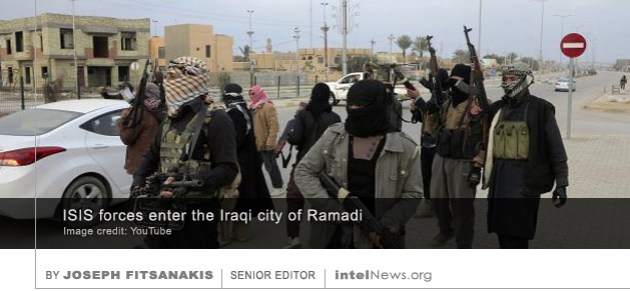 The capture by Islamic State forces of the Iraqi city of Ramadi, on May 17, has given the organization a fortified urban base less than an hour’s drive from Baghdad. Its near-simultaneous takeover of the central Syrian city of Palmyra, points to the organization’s permanence and demonstrates its widening operational span, which now ranges from Western Libya to the Iranian border. Without an all-out war effort by outside forces, such as Iran, or the United States, it is difficult to see how the Islamic State could be stopped from permanently establishing itself as a major actor in the region, especially since no outside force appears willing to confront it directly.
 pacified. Iraqi government forces will almost certainly face a protracted armed campaign by a mixture of heavily armed groups in the city. Some of these groups are led by ISIS, some are inspired by al-Qaeda, while others are motivated by a broader anti-Shiite sentiment, which is currently the predominant political ideology in Anbar Province.
 are aligned to it. Iraqi Sunnis believe that if they lose the fight against the Iraqi military they will be extinct as a people, which explains why they are fighting with more zeal and determination than their Shiite compatriots.
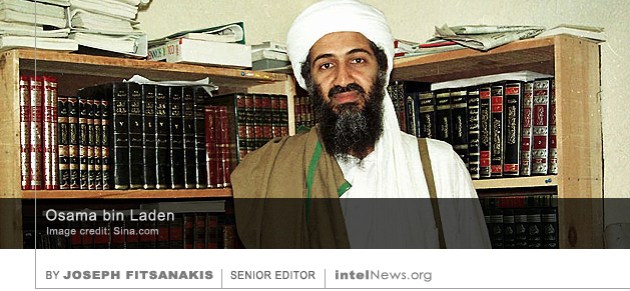 The release this week of material from Osama bin Laden’s personal stack of books and documents, which were confiscated from his Abbottabad compound, is timely as it is important. The decision by the United States Office of the Director of National Intelligence (ODNI) to declassify the documents was almost certainly in response to recent claims that bin Laden was being kept under house arrest by the Pakistani intelligence services at the time of his assassination. American journalist Seymour Hersh, who made the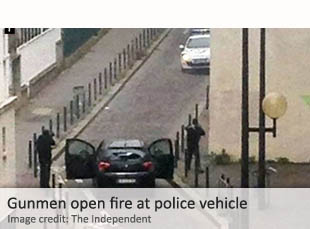










 intelNews.org
Analysis: The real danger in Syria is not ISIS, but a war between major powers
November 25, 2015 by Joseph Fitsanakis 2 Comments
In response to earlier incidents, Turkey had warned the Russian Air Force that it would not tolerate further violations of its air space by Russian jets conducting an air campaign in support of Syrian President Bashar al-Assad. The message delivered to the Russian ambassador in Ankara was that Turkish pilots would be ordered to open fire next time. That was precisely what happened on Tuesday, when a Turkish F-16 jet brought down a Russian bomber aircraft with a single missile strike. By most accounts, the Russian airplane was barely two miles inside Turkish airspace, presented no immediate threat to Turkey’s national security, and would probably have returned to Syrian airspace within seconds. But that did not stop the Turkish F-16 from shooting down the Russian plane. Adding injury to insult, Turkish-backed rebels on the Syrian side of the border shot dead one of the plane’s two Russian pilots and opened fire on a Russian rescue team that tried to save the crew, killing at least one marine.
Rather expectedly, a visibly furious Russian President Vladimir Putin, who is not used to being challenged militarily, described the incident as “a stab in the back” by “accomplices to terrorists”, and warned Ankara of “serious consequences”. But why would Turkey provoke Russia in such a direct way? Like every other country involved directly or indirectly in the Syrian Civil War, Turkey and Russia wish to see the Islamic State of Iraq and Syria (ISIS) destroyed. But they differ drastically on what should follow. The Kremlin is adamant that President al-Assad, whom it considers its strongest ally in the Middle East, should remain in power. The Turks, on the other hand, view the Syrian president as an existential threat, due to his support for Kurdish militancy throughout the region.
The roots of the animosity between the Turkish state and the al-Assad regime go back to 1978, when the Kurdistan Workers Party (PKK) was established in Lebanon’s Beqaa Valley, which was at the time occupied by Syria. The PKK is a Marxist militant organization that seeks to establish a Kurdish homeland in eastern Turkey and northern Iraq. The group was actively trained, funded, armed and protected by Syria and the Soviet Union. The latter was actively interested in destabilizing Turkey, a NATO member, while Syria used the PKK to exercise pressure on its northern neighbor, with whom it was embroiled in a series of complex land- and water-rights disputes. In 1998, the al-Assad regime was forced to expel PKK leader Abdullah Öcalan, who was living in Damascus under Syrian protection, after Turkey threatened an all-out war if the Syrian intelligence services continued to shelter the PKK leadership.
Ankara saw the outbreak of the Syrian Civil War in 2011 as an opportunity to get rid of the al-Assad regime, which it sees as a primary threat to regional stability. Along with the United States, Turkey has been funding, arming and training a host of Syrian rebel groups, while at the same time hosting over 2 million refugees from Syria. The subsequent rise of ISIS alarmed America and its Western allies; but in the eyes of Ankara, ISIS pales into insignificance in comparison to the resurgence of Kurdish nationalism, which has been fueled by the demise of Ba’ath in Iraq and the fragmentation of Syria. For Turkey, Kurdish separatism poses an existential threat to the survival of the Turkish Republic, and is the primary reason for its involvement in the Syrian conflict.
It follows that Russia’s entry in the Syrian Civil War strengthens President al-Assad and the PKK, and is thus regarded by Turkey as a direct threat to its national security. Ankara is also concerned about France’s efforts to build a broad anti-ISIS alliance that includes Russia, and fears that the West is now openly flirting with the possibility of allowing al-Assad to stay in power in Damascus. The deliberate downing of the Russian airplane, which was undoubtedly authorized by the most senior levels of government in Ankara, was aimed at disrupting France’s efforts to build an anti-ISIS coalition, while at the same time pushing back against Russia’s regional ambitions.
What will happen next? Theoretically, Turkey could invoke Article 5 of the NATO charter, which would compel member-states to rush to its assistance. In reality, however, such an eventuality is remote, especially given the expressed willingness of Western leaders to help deescalate the Turkish-Russian row. Following their closed-door meeting on Tuesday, French President Francois Hollande and his American counterpart Barack Obama went out of their way to avoid mentioning the Russian plane incident, and briefly commented on it only after they were asked to do so by reporters. This does not mean that Russia will not respond; but it will most likely do so behind the scenes, probably by increasing its support for the PKK and other Kurdish separatist groups.
The downing of the Russian bomber highlights the immense contradictions and complica- tions that plague the anti-ISIS forces involved in the Syrian Civil War. It is clear that ISIS is now in a position to attack targets that are located far from its territory in Syria and Iraq, or in its wilayah (provinces) in Libya, Somalia, and elsewhere. However, the threat that ISIS currently poses to international peace and stability is at most marginal and symbolic. Of far more importance to the security of the world is the possibility of an armed conflagration between regional powers, which are being drawn into Syria by the vacuum created by the civil war. All of these regional powers, including Turkey, Russia, Iran, Saudi Arabia, Lebanon, Israel, and the US, are heavily armed, many with nuclear weapons. Moreover, they radically disagree on what a post-ISIS Middle East should look like.
The possibility of a serious conflagration between heavily armed regional actors will be removed only if and when the Syrian Civil War ends, even if that results in the loss of land to the so-called Islamic State. That must be the immediate goal of the Combined Joint Task Force and every other regional actor that wishes to see the end of ISIS. It is only after peace has been achieved in Syria that ISIS can be dealt with effectively.
Filed under Expert news and commentary on intelligence, espionage, spies and spying Tagged with Analysis, Islamic State, Joseph Fitsanakis, Russia, Syria, Syrian Civil War, Turkey