Analysis: Is Putin planning to restore the Soviet-era KGB?

SVR hqLast week, following the results of Russia’s parliamentary election, Russian media run a story suggesting that the Kremlin is planning to implement far-reaching changes to the country’s intelligence apparatus. According to the Moscow-based daily Kommersant, the administration of President Vladimir Putin is considering merging Russia’s two major intelligence and counterterrorism agencies into one. Specifically, the Russian Foreign Intelligence Service, or SVR, will merge with the FSB, the Federal Security Service, according to Kommersant. The merger will create a new amalgamated intelligence agency that will be named “Ministry of State Security”, or MGB, in Russian. The last time this title was used was from 1946 to 1953, during the last years of the reign of Soviet Premier Joseph Stalin. It was one of several agencies that were eventually combined to form the Soviet KGB in 1954.

If the Kommersant article is accurate, Russia’s two main intelligence agencies will merge after an institutional separation that has lasted a quarter of a century. They were separated shortly after the official end of the Soviet Union, in 1991, when it was recognized that the KGB was not under the complete control of the state. That became plainly obvious in August of that year, when the spy agency’s Director, Vladimir Kryuchkov, helped lead a military coup aimed at deposing Soviet Premier Mikhail Gorbachev. The two new agencies were given separate mandates: the SVR inherited the mission of the KGB’s foreign intelligence directorates and focused on collecting intelligence abroad; the FSB, on the other hand, assumed the KGB’s counterintelligence and counterterrorist missions. A host of smaller agencies, including the Federal Agency of Government Communications and Information (FAPSI), the Federal Protective Service (FSO) and others, took on tasks such as communications interception, border control, political protection, etc.

Could these agencies merge again after 25 years of separation? Possibly, but it will take time. An entire generation of Russian intelligence officers has matured under separate institutional roofs in the post-Soviet era. Distinct bureaucratic systems and structures have developed and much duplication has ensued during that time. If a merger was to occur, entire directorates and units would have to be restructured or even eliminated. Leadership roles would have to be purged or redefined with considerable delicacy, so as to avoid inflaming bureaucratic turf battles. Russian bureaucracies are not known for their organizational skills, and it would be interesting to see how they deal with the inevitable confusion of a possible merger. It could be argued that, if Putin’s goal is to augment the power of the intelligence services —which is doubtful, given their long history of challenging the power of the Kremlin— he would be better off leaving them as they are today.

Author: Joseph Fitsanakis | Date: 04 October 2016 | Permalink

Soviet memoirs suggest KGB abducted and murdered Swedish diplomat

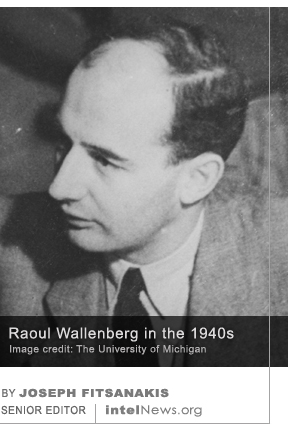
Raoul WallenbergThe recently discovered memoirs of a former director of the Soviet KGB suggest that a senior Swedish diplomat, who disappeared mysteriously in the closing stages of World War II, was killed on the orders of Joseph Stalin. The fate of Swedish diplomat Raoul Wallenberg is one of the 20th century’s unsolved espionage mysteries. In 1944 and 1945, the 33-year-old Wallenberg was Sweden’s ambassador to Budapest, the capital of German-allied Hungary. During his time there, Wallenberg is said to have saved over 20,000 Hungarian Jews from the Nazi concentration camps, by supplying them with Swedish travel documents, or smuggling them out of the country through a network of safe houses. He also reportedly dissuaded German military commanders from launching an all-out armed attack on Budapest’s Jewish ghetto.

But Wallenberg was also an American intelligence asset, having been recruited by a US spy operating out of the War Refugee Board, an American government outfit with offices throughout Eastern Europe. In January of 1945, as the Soviet Red Army descended on Hungary, Moscow gave orders for Wallenberg’s arrest on charges of spying for Washington. The Swedish diplomat disappeared, never to be seen in public again. Some historians speculate that Joseph Stalin initially intended to exchange Wallenberg for a number of Soviet diplomats and intelligence officers who had defected to Sweden. According to official Soviet government reports, Wallenberg died of a heart attack on July 17, 1947, while being interrogated at the Lubyanka, a KGB-affiliated prison complex in downtown Moscow. Despite the claims of the official Soviet record, historians have cited periodic reports that Wallenberg may have managed to survive in the Soviet concentration camp system until as late as the 1980s.

But the recently discovered memoirs of Ivan Serov, who directed the KGB from 1954 to 1958, appear to support the prevalent theory about Wallenberg’s demise in 1947. Serov led the feared Soviet intelligence agency under the reformer Nikita Khrushchev, who succeeded Joseph Stalin in the premiership of the USSR. Khrushchev appointed Serov to conduct an official probe into Wallenberg’s fate. Serov’s memoirs were found in 2012 by one of his granddaughters, Vera Serova, inside several suitcases that had been secretly encased inside a wall in the family’s summer home. According to British newspaper The Times, the documents indicate that Wallenberg was indeed held for two years in the Lubyanka, where he was regularly interrogated by the KGB. The latter were certain that the Swedish diplomat was an American spy who had also been close to Nazi Germany’s diplomatic delegation in Hungary. Soviet Premier Joseph Stalin considered exchanging him for Soviet assets in the West. But eventually Wallenberg “lost his value [and] Stalin didn’t see any point in sending him home”, according to Serov’s memoirs. The KGB strongman adds that “undoubtedly, Wallenberg was liquidated in 1947”. Further on, he notes that, according to Viktor Abakumov, who headed the MGB —a KGB predecessor agency— in the mid-1940s, the order to kill Wallenberg came from Stalin himself.

In 2011, Lt. Gen. Vasily Khristoforov, Chief Archivist for the Russian Federal Security Service (FSB), one of two successor agencies to the old Soviet KGB, gave an interview about Wallenberg, in which he said that most of the Soviet documentation on the Swedish diplomat had been systematically destroyed in the 1950s. But he said that historical reports of Wallenberg’s survival into the 1980s were “a product of […] people’s imagination”, and insisted that he was “one hundred percent certain […] that Wallenberg never was in any prison” other than the Lubyanka. An investigation by the Swedish government into the diplomat’s disappearance and eventual fate is ongoing.

Author: Joseph Fitsanakis | Date: 13 September 2016 | Permalink

Palestinian leader Mahmoud Abbas was KGB agent, researchers claim

Mahmoud Abbas

Mahmoud Abbas

Two Israeli researchers claim that a document from the archives of the Cold-War-era KGB identifies the current president of the Palestine Authority, Mahmoud Abbas, as a Soviet agent. The document was found in the United Kingdom, and was smuggled out of Russia by a former senior archivist of the Soviet KGB. Abbas is the leader of the largely secular Palestinian group Fatah, which controls the West Bank. Unlike Hamas, which is designated a terrorist group by Israel and its allies, Fatah is seen by Tel Aviv as the legitimate representative of the Palestinian people. That is disputed by Hamas, a religiously inspired group, which controls the Gaza Strip and maintains a tense relationship with Fatah and Abbas himself.

The allegation about Abbas’ past emerged on Wednesday in the Israeli media, after two local academic researchers disclosed the contents of a KGB document discovered at Cambridge University’s Churchill Archives Centre in Britain. The researchers, Gideon Remez and Isabella Ginor, of the Truman Institute at the Hebrew University of Jerusalem, said the document dates from 1983. It was found among thousands of similar documents that were secretly smuggled out of Russia in the early 1990s by British intelligence, following the defection of Vasili Mitrokhin, an archivist in the First Chief Directorate of the KGB during the Cold War. Some of the documents later formed the basis of a two-volume edition on the activities of Soviet intelligence, which was edited by Cambridge University Professor Christopher Andrew.

According to Remez and Ginor, the document identifies Mahmoud Abbas as a “KGB agent” based in Damascus, Syria, codenamed krotov, which in Russian means ‘mole’. Abbas was born in Palestine in 1935, but his family fled to Syria in 1948, following the establishment of the state of Israel and the outbreak of the first Arab-Israeli war. The young Abbas grew up in Damascus, where he went to university and joined the local branch of the PLO, the Palestinian Liberation Organization, of which Fatah is a member. If true, the allegation that Abbas worked for the KGB will not come as a surprise to observers of Palestinian politics. For most of the Cold War, the PLO was known to be close to Moscow, while Abbas was intimately involved with the Palestinian-Soviet Friendship Association, a pro-Moscow group that was widely seen as an agent of communist influence in the Palestinian territories. But the document from the Mitrokhin archives may be the first concrete evidence that Abbas was handled by the KGB.

Palestinian officials quickly dismissed the document on Wednesday as a fabrication and a deliberate slander. Mohammed al-Madani, a member of the central committee of Fatah, and a close associate of Abbas, said the allegation was part of a “clear effort to damage [Abbas] by various actors, including the government of Israel”.

Author: Joseph Fitsanakis | Date: 08 August 2016 | Permalink

Interview with children of Russian deep-cover spies caught in the US

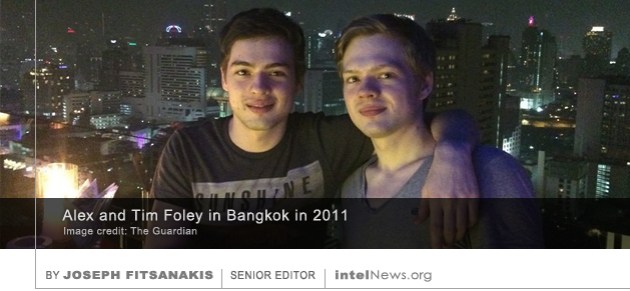
First Post HThe two sons of a Russian couple, who were among 10 deep-cover spies arrested in the United States, have given an interview about their experience for the first time. Tim and Alex Foley (now Vavilov) are the sons of Donald Heathfield and Tracey Foley, a married couple arrested in 2010 under Operation GHOST STORIES, a counterintelligence program run by the US Federal Bureau of Investigation. Following their arrest, their sons, who had grown up thinking their parents were Canadian, were told that they were in fact Russian citizens and that their real names were Andrei Bezrukov and Elena Vavilova. Their English-sounding names and Canadian passports had been forged in the late 1980s by the KGB, the Soviet Union’s primary external intelligence agency.

The two boys were at the family’s home in suburban Cambridge, MA, on Sunday, June 27, 2010, when FBI agents conducted coordinated raids across New England, arresting their parents and eight more Russian ‘illegals’. That term is used to signify Russian non-official-cover operatives, namely intelligence officers who operate abroad without diplomatic cover and typically without connection to the country they spy for. It is now believed that Bezrukov and Vavilova were recruited as a couple in the 1980s by the KGB’s Department S, which operated the agency’s ‘illegals’ program. They were trained for several years before being sent to Canada, where their mission was to blend into the society and establish a ‘legend’, a background story of their lives that could be supported by forged documentation supplied by the KGB. In 1995, the family moved to Paris, France, where Bezrukov, using the name Donald Heathfield, earned Master in Business Administration from the École des Ponts. Both their children had been born by 1999, when the family moved to Massachusetts so that Bezrukov could study at Harvard University. He then joined a consultancy firm, which he apparently planned to use as a vehicle in order to get close to influential American lawmakers.

Their two sons, who are now living in unspecified locations in Europe and Singapore, told British newspaper The Guardian that their childhood was “absolutely normal” and that they never suspected their parents of being spies. They told The Guardian’s Shaun Walker that their parents never discussed Russia or the Soviet Union, never ate Russian food, and never met Russian people while in Massachusetts. The sons, whose Russian names are Alexander and Timofei Vavilov, said they remember meeting their grandparents “somewhere in Europe” when they were very young, but that they later disappeared from their lives. Their parents told them that they lived in rural Alberta, Canada, and that they found it difficult to travel.

The two brothers said that, shortly after their parents were arrested by the FBI, they were put on a plane to Moscow. When they arrived there, a group of people appeared on the plane door and introduced themselves to them as “colleagues of their parents”. They were then placed in a van and taken to a Moscow apartment, where they were given information about their parents’ true backgrounds, including photographs of them from their teenage lives and military service in the USSR. It was then, they told The Guardian, that they finally believed that their parents were indeed Russian spies.

The family reunited a few days later in Moscow, after Bezrukov, Vavilova, and the other Russian ‘illegals’ were exchanged with four men held in Russian jails for spying for the West. The two brothers now want to regain their Canadian citizenship, which was taken from them by the government of Canada after their parents were found to have been using forged Canadian citizenship papers. They argue that they feel Canadian, not Russian, and that they are not responsible for their parents’ actions, which were hidden from them until their arrest in 2010.

Author: Joseph Fitsanakis | Date: 09 May 2016 | Permalink

Ex-KGB spy accused of Litvinenko murder says MI6 tried to recruit him

Andrei Lugovoi A Russian former intelligence officer, who is accused by the British government of having killed another Russian former spy in London, said the British intelligence services tried to recruit him in 2006. British government prosecutors have charged Andrei Lugovoi with the killing of Alexander Litvinenko, a former employee of the Soviet KGB and one of its successor agencies, the FSB. In 2006, Litvinenko died in London, where he had defected with his family in 2000, following exposure to the highly radioactive substance Polonium-210. In July of 2007, the British government charged Lugovoi and another Russian, Dmitri Kovtun, with the murder of Litvinenko, and expelled four Russian diplomats from London. Last week, following the conclusion of an official inquest into the former KGB spy’s death, the British government took the unusual step of summoning the Russian ambassador to London, to file an official complaint about Moscow’s refusal to extradite Lugovoi and Kovtun to the United Kingdom.
But Lugovoi, who is now a member of the Russian Duma, denies any involvement in Litvinenko’s murder and has dismissed as “completely absurd” the inquest’s conclusion that he was behind the killing. Speaking last week on Russian television, Lugovoi reiterated his criticism of the report and claimed British intelligence had tried to recruit him shortly before Litvinenko’s murder. The Duma member was a guest on This Evening, a high-profile talk show on Russia’s Channel 1 television, hosted by Vladimir Sovolyev, a popular television personality and talk show host. Lugovoi told Sovolyev that he found it interesting that the British government “was always happy to grant me visas” to travel to the UK, even though London knew he was a former KGB spy. “Then, in May of 2006”, approximately six months before Litvinenko was killed, “MI6 tried to recruit me”, he added. He was referring to the Secret Intelligence Service, Britain’s primary external intelligence organization.

The former KGB officer then reiterated his longstanding argument that he and Kovtun were also poisoned by the same Polonium given to Litvinenko by the person or persons who killed him. He told Sovolyev that, after meeting Litvinenko in London a few days before his death, he fell violently ill and had to spend several months in a Russian hospital recovering from radiation poisoning. Lugovoi also hinted that the British government may have killed Litvinenko for reasons of its own. The Russian Ministry of Foreign Affairs did not comment on Lugovoi’s statement, but said in a press release that London’s accusations against the two former spies were “politically motivated” and “non-transparent”. The UK maintains that Lugovoi and Kovtun fell ill because they did not handle the Polonium given to them by their handlers with the appropriate amount of care.

Author: Joseph Fitsanakis | Date: 26 January 2016 | Permalink

Britain summons Russian envoy to protest killing of ex-KGB spy in London

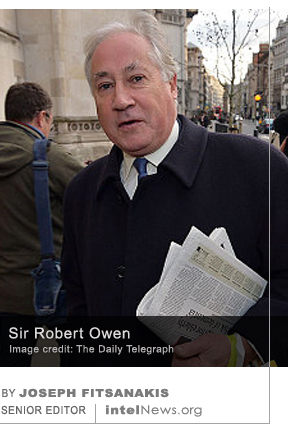
Sir Robert OwenThe British government has taken the unusual step of summoning the Russian ambassador to London, following the conclusion of an official inquest into the death of a former KGB officer who is believed to have been killed on the orders of Moscow. Alexander Litvinenko, an employee of the Soviet KGB and one of its successor organizations, the FSB, defected with his family to the United Kingdom in 2000. But in 2006, he died of radioactive poisoning after meeting two former KGB/FSB colleagues, Dmitri Kovtun and Andrey Lugovoy, in London. A public inquiry into the death of Litvinenko, ordered by the British state, concluded this week after six months of deliberations involving sworn testimony by over 60 witnesses, including British intelligence officers who worked closely with Litvinenko.
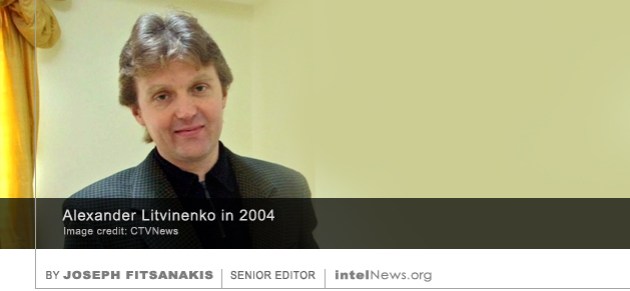
In releasing the inquiry report, the presiding judge, Sir Robert Owen, said it was clear that Kovtun and Lugovoi “were acting on behalf of someone else” when they killed their former colleague in London. He added that members of the administration of Russian President Vladimir Putin, including the Russian president himself, had “motives for taking action” against Litvinenko, “including killing him”. Moreover, President Putin’s systematic protection of Lugovoi, the primary suspect in the case, whom Russia currently refuses to extradite to the UK, “suggest a level of approval for the killing” at the highest levels of the Russian government, said Sir Robert.

Speaking during a session in the British House of Commons on Thursday, the UK’s Home Secretary Theresa May described Litvinenko’s killing as “a blatant and unacceptable breach of the most fundamental tenets of international law and civilized behavior”. On the same day, David Lidington, a Minister of state at the British Foreign Office, who currently serves as the country’s Minister for Europe, summoned the Russian Ambassador to London, Alexander Yakovenko, to file an official protest against Litvinenko’s murder. Meanwhile, the British state has moved to freeze the assets of the two main suspects in the case, while British Prime Minister David Cameron said further punitive measures against Russia were possible. Speaking to reporters in Davos, Switzerland, where he is participating in the World Economic Forum, Cameron said Britain wanted to have “some sort of relationship” with the Kremlin in light of the situation in Syria. But Whitehall would “look very carefully at the report and all the detail” and would proceed “with clear eyes and a very cold heart”, he said.

Author: Joseph Fitsanakis | Date: 22 January 2016 | Permalink

Long-awaited British report to blame Kremlin for ex-KGB spy’s death

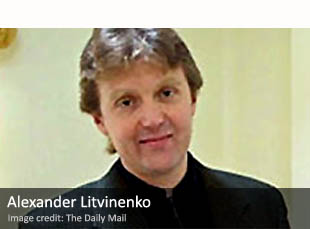
Alexander LitvinenkoThe long-awaited concluding report of a public inquiry into the death of a former Soviet spy in London in 2006, is expected to finger the Russian state as the perpetrator of the murder. Alexander Litvinenko was an employee of the Soviet KGB and one of its successor organizations, the FSB, until 2000, when he defected with his family to the United Kingdom. He soon became known as a vocal critic of the administration of Russian President Vladimir Putin. In 2006, Litvinenko came down with radioactive poisoning after meeting two former KGB/FSB colleagues, Dmitri Kovtun and Andrey Lugovoy, at a London restaurant. In July of 2007, after establishing the cause of Litvinenko’s death, which is attributed to the highly radioactive substance Polonium-210, the British government officially charged the two Russians with murder and issued international warrants for their arrest. Whitehall also announced the expulsion of four Russian diplomats from London. The episode, which was the first public expulsion of Russian envoys from Britain since end of the Cold War, is often cited as marking the beginning of the worsening of relations between the West and post-Soviet Russia.
A public inquiry into the death of Litvinenko, ordered by the British state, has taken over six months to conclude. In the process, the judge in charge, Sir Robert Owen, has heard from 62 witnesses. The latter include members of the Secret Intelligence Service, known commonly as MI6, for which the late Russian former spy worked after his arrival in Britain. The release of the inquiry’s report is expected this week. But British media have quoted unnamed “government sources” as saying that the long-awaited document will point to the Russian state as the instigator, planner and execution of Litvinenko’s death. One source was quoted as saying that the report will identify “a clear line of command” and that “it will be very clear that the orders came from the Kremlin”.

It is not believed, however, that the report will point to Russian President Vladimir Putin as having had a role in the former spy’s murder. Nevertheless, there is speculation in London and Moscow about the British government’s possible response to the inquiry’s report. One unnamed source told the British press that the report’s findings would place Whitehall “in a difficult position”, given London’s current cooperation with Russia in Syria. However, the government of British Prime Minister David Cameron is expected to face renewed pressure from the public and from opposition parties to take action against Russia, should it be confirmed this week that the Kremlin was indeed behind Litvinenko’s killing.

Author: Joseph Fitsanakis | Date: 21 January 2016 | Permalink

Marcus Klingberg, highest-ranking Soviet spy ever caught in Israel, dies

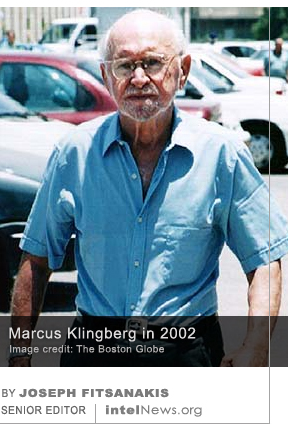
Marcus KlingbergMarcus Klingberg, who is believed to be the highest-ranking Soviet spy ever caught in Israel, and whose arrest in 1983 prompted one of the largest espionage scandals in the Jewish state’s history, has died in Paris. Born Avraham Marek Klingberg in 1918, Klingberg left his native Poland following the joint German-Soviet invasion of 1939. Fearing persecution by the Germans due to his Jewish background, and being a committed communist, he joined the Soviet Red Army and served in the eastern front until 1941, when he was injured. He then received a degree in epidemiology from the Belarusian State University in Minsk, before returning to Poland at the end of World War II, where he met and married Adjia Eisman, a survivor of the Warsaw Ghetto uprising. Together they moved to Sweden, from where they emigrated to Israeli in 1948. It is believed that Klingberg was recruited by the Soviet KGB while in Sweden, and that he moved to Israel after being asked to do so by his Soviet handlers –though he himself always denied it.
Soon after arriving to Israel, Klingberg joined the Israel Defense Force, where he advanced to the rank of Lieutenant Colonel. In 1957, he joined the Israel Institute for Biological Research (IIBR), a government outfit that conducted classified research for Israel’s biological and chemical weapons program. Klingberg worked at Ness Ziona, a top-secret government facility that conducted research on some of the most advanced chemical and biological weapons in the world. Eventually, he rose to the position deputy scientific director at IIBR, a post that he held until 1972. Additionally, Klingberg enhanced his international profile as a leading epidemiologist and conducted research in universities in Europe and the United States. Throughout that time, he was regularly passing classified information to the KGB at meetings with his handlers in Europe.

The Soviets had painstakingly trained Klingberg in espionage tradecraft, a set of skills that came in handy in the early 1960s, when the Shin Bet, Israel’s counterintelligence agency, began suspecting him of spying for a foreign intelligence service. The Shin Bet began systematically monitoring Klingberg. After failing to get results, the agency gave Klingberg a lie detector test, which he passed on the first try. Meanwhile, the Soviet government secretly awarded Klingberg the Order of the Red Banner of Labor, in recognition of the quality of the information he had passed on to the KGB. In 1982, a Soviet defector to Israel confirmed that Klingberg was indeed a KGB spy. Shortly afterwards, the Shin Bet approached Klingberg and asked him to accompany a top-secret team of Israeli technical experts to Malaysia, where a chemical plant had exploded. But instead of taking the scientist to the airport en route to Malaysia, the government car that picked him up from his house drove him to a Shin Bet safe house. After being interrogated there for nearly two weeks, Klingberg confessed to being a Soviet spy, saying he had decided to join the KGB for ideological reasons. However, in a 2014 interview with British newspaper The Observer, Klingberg claimed that he felt morally indebted to the USSR “for saving the world from the Nazis”.

Klingberg was tried in secret and sentenced to 20 years in prison. He then disappeared inside Israel’s prison system, having been given a false name and occupation by the Israeli authorities. He spent the first 10 years of his prison sentence in solitary confinement. In 1998, following pressure from human-rights groups, the Israeli government agreed to place Klingberg under house arrest, providing he was able to cover the financial cost of his detention. In 2003, having served his 20-year sentence, Klingberg was allowed to leave Israel and settle in France, where his daughter and son-in-law were living. He spent the last years of his life in Paris, where he died on November 30. He was 97.

Author: Joseph Fitsanakis | Date: 3 October 2015 | Permalink

Former KGB officer facing deportation voluntarily leaves Canada

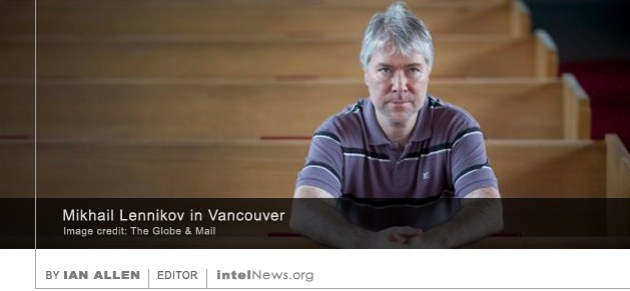
Mikhail LennikovA Russian former officer in the Soviet KGB, who defied deportation orders issued against him by the Canadian government by taking refuge in a Vancouver church for six consecutive years, has voluntarily left the country. Mikhail Lennikov, who spent five years working for the KGB in the 1980s, had been living in Canada with his wife and son since 1992. But in 2009, Canada’s Public Safety Ministry rejected Lennikov’s refugee claim and notified him that he could “be ordered deported from the country in as early as a few weeks”.
Canadian authorities have refused to reveal the precise reason for the decision to issue deportation orders against the former KGB agent. But it is believed that his Soviet intelligence background is perceived by Canadian authorities as a national security threat. Lennikov has consistently rejected accusations that he is a threat to Canada’s national security and has previously stated that he voluntarily revealed his KGB background to Canadian authorities. He has also said that if sent back to Russia he could face imprisonment for having revealed his KGB background to a foreign government. In 2009, the former KGB officer sought refuge at the First Lutheran Church in Vancouver, where he lived until recently. Meanwhile, his wife and children, who have no connections to Soviet or Russian intelligence, were awarded asylum and eventually Canadian citizenship.

Last week, however, it emerged that Lennikov had left the Vancouver church that had been his home for six years. His lawyer, Hadayt Nazami, told reporters that the former KGB officer had left Canada. His departure appears to have taken place after an agreement was struck between him and the Canada Border Services Agency. Nazami said on Sunday that Lennikov had “left at the end of this week and left on his own accord, voluntarily, according to his own wishes and decisions he reached himself”. Canadian media reported that it “no longer seemed to be the case” that Lennikov would face treason charges if he went back to Russia. When asked about Lennikov’s whereabouts, Nazami told journalists that it was “something that I cannot comment on”, but added that his client “feels safe and we are going by that assumption”. Lennikov’s wife and children, who are Canadian citizens, plan to remain in Canada, said Nazami.

Author: Ian Allen | Date: 19 August 2015 | Permalink

KGB spy shares details of his escape to Britain in 1985

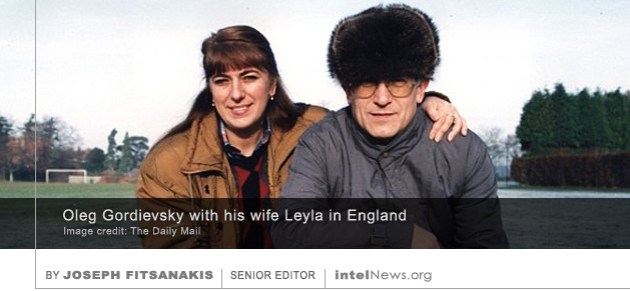
Oleg GordievskyA Soviet double spy, who secretly defected to Britain 30 years ago this month, has revealed for the first time the details of his exfiltration by British intelligence in 1985. Oleg Gordievsky was one of the highest Soviet intelligence defectors to the West in the closing stages of the Cold War. He joined the Soviet KGB in 1963, eventually reaching the rank of colonel. But in the 1960s, while serving in the Soviet embassy in Copenhagen, Denmark, Gordievsky began feeling disillusioned about the Soviet system. His doubts were reinforced by the Soviet invasion of Czechoslovakia in 1968. It was soon afterwards that he made the decision to contact British intelligence.
Cautiously, Britain’s Secret Intelligence Service (known as MI6) communicated with Gordievsky, and in 1974 he secretly became an agent-in-place for the United Kingdom. Eight years later, in 1982, Gordievsky was promoted to KGB rezident (chief of station) in London. While there, he frequently made contact with his MI6 handlers, giving them highly coveted information on Soviet nuclear strategy, among other things. He is credited with informing London of Mikhail Gorbachev’s imminent ascendency to the premiership of the Soviet Union, long before he was seen by Western intelligence as a viable candidate to lead the country.

But in May of 1985, Gordievsky was suddenly recalled to Moscow, where he was detained by the KGB. He was promptly taken to a KGB safe house in the outskirts of Moscow and interrogated for five hours, before being temporarily released pending further questioning. Remarkably, however, Gordievsky managed to escape his KGB surveillance and reappear in Britain less than a week later. How did this happen? On Sunday, the former double spy gave a rare rare interview to The Times, in which he revealed for the first time the details of his escape to London. He told The Times’ Ben Macintyre that he was smuggled out of the USSR by MI6 as part of Operation PIMLICO. PIMLICO was an emergency exfiltration operation that had been put in place by MI6 long before Gordievsky requested its activation in May of 1985.

Every Tuesday, shortly after 7:00, a British MI6 officer would take a morning stroll at the Kutuzovsky Prospekt in Moscow. He would pass outside a designated bakery at exactly 7:24 a.m. local time. If he saw Gordievsky standing outside the bakery holding a grocery bag, it meant that the double agent was requesting to be exfiltrated as a matter of urgency. Gordievsky would then have to wait outside the bakery until a second MI6 officer appeared, carrying a bag from the Harrods luxury department store in London. The man would also be carrying a Mars bar (a popular British candy bar) and would bite into it while passing right in front of Gordievsky. That would be a message to him that his request to be exfiltrated had been received.

Four days later, Gordievsky used his skills in evading surveillance and shook off (or dry-cleaned, in espionage tradecraft lingo) the KGB officers trailing him. He was then picked up by MI6 officers and smuggled out of the country in the trunk of a British diplomatic car that drove to the Finnish border. Gordievsky told The Times that Soviet customs officers stopped the car at the Finnish border and surrounded it with sniffer dogs. At that moment, a British diplomat’s wife, who was aware that Gordievsky was hiding in the car, came out of the vehicle and proceeded to change her baby’s diaper on the trunk, thus safeguarding Gordievsky’s hiding place and masking his scent with her baby’s used diaper. If it hadn’t been for the diplomat’s wife, Gordievsky told The Times that he might have been caught.

After crossing the Soviet-Finnish border, Gordievsky traveled to Norway and from there he boarded a plane for England. Soviet authorities promptly sentenced him to death, but allowed his wife and children to join him in Britain six years later, after British Prime Minister Margaret Thatcher personally lobbied the Soviet government. Gordievsky’s death penalty still stands in Russia. In 2007, the Queen made Gordievsky a Companion of the Most Distinguished Order of St. Michael and St. George for services rendered to the security of the British state.

Author: Joseph Fitsanakis | Date: 6 July 2015 | Permalink: https://intelnews.org/2015/07/06/01-1729/

Murder suspect to give evidence on death of ex-KGB spy in London

Alexander LitvinenkoA Russian former intelligence officer, who is accused by the British government of having killed a former KGB spy in London, has agreed to testify at a public inquiry to be held in the British capital next month. British government prosecutors believe Russian businessman Dmitri Kovtun, who worked for the KGB during the Cold War, poisoned his former colleague in the KGB, Alexander Litvinenko, in 2006. Litvinenko was an officer in the Soviet KGB and one of its successor organizations, the FSB, until 2000, when he defected with his family to the United Kingdom. He soon became known as a vocal critic of the administration of Russian President Vladimir Putin. In 2006, Litvinenko came down with radioactive poisoning soon after meeting Kovtun and another former KGB officer, Andrey Lugovoy, at a London restaurant. He was dead less than two weeks later.

In July of 2007, after establishing the cause of Litvinenko’s death, which is attributed to the highly radioactive substance Polonium-210, the British government officially charged 1 Kovtun and Lugovoy with murder and issued international arrest warrants for their arrest. Soon afterwards, Whitehall announced the expulsion of four Russian diplomats from London. The episode, which was the first public expulsion of Russian envoys from Britain since end of the Cold War, is often cited as marking the beginning of the worsening of relations between the West and post-Soviet Russia.

Since 2007, when they were officially charged with murder, Kovtun and Lugovoy deny the British government’s accusations, and claim that Litvinenko poisoned himself by accident while trading in illegal nuclear substances. The administration of Russian President Vladimir Putin refuses to extradite the two former KGB officers to London, and has denounced the British public inquiry into Litvinenko’s death as “a sham”. However, last March Kovtun unexpectedly wrote to the presiding judge at the inquiry, Sir Robert Owen, offering to testify via a live video link from Moscow. On Monday, Sir Robert issued a statement 2 saying an agreement had been struck between Kovtun and the inquiry, and that the Russian businessman would testify from Moscow, “most likely towards the end of next month”. Kovtun is expected to confirm that he met Litvinenko in London on the day the former KGB spy fell ill, but to insist that he had no role in poisoning him.

Author: Joseph Fitsanakis | Date: 16 June 2015 | Permalink: https://intelnews.org/2015/06/16/01-1715/

Ex-KGB spy killed in London ‘warned Italy about Russian terror plot’

Alexander LitvinenkoBy JOSEPH FITSANAKIS | intelNews.org
A witness has told a British inquiry investigating the murder of ex-KGB officer Alexander Litvinenko that the former spy may have been killed because he warned Italian authorities about an impending Russian terror plot. Litvinenko was an employee of the Soviet KGB and one of its successor organizations, the FSB, until 2000, when he defected with his family to the United Kingdom. He soon became known as a vocal critic of the administration of Russian President Vladimir Putin. In 2006, Litvinenko came down with radioactive poisoning soon after meeting former KGB/FSB colleague Andrey Lugovoy at a London restaurant. Many suspect that the Russian government is behind Litvinenko’s murder.

Speaking in a London court on Monday, Italian newspaper editor and politician Paolo Guzzanti said he believed Litvinenko was murdered by the Kremlin because he was helping Italian authorities assess a series of Soviet and Russian intelligence operations in the country. Guzzanti was speaking as the former president of the so-called Mitrokhin Commission, a parliamentary board set up in 2002 to investigate past intelligence operations by the Soviet KGB in Italy. Most of the work of the Commission stemmed from the revelations in the Mitrokhin Archive, named after Vassili Mitrokhin, who for three decades was the archivist in the KGB’s First Chief Directorate. Mitrokhin defected to the Britain in 1992, taking with him a treasure trove of documents about Soviet intelligence activities that took place abroad during the Cold War.

Guzzanti told the inquiry that Litvinenko had cooperated with the Mitrokhin Committee and had even shared information with one of its consultants, Mario Scaramella, about ongoing attempts by the FSB to organize terrorist strikes in Italy. According to Guzzanti, Litvinenko informed Scaramella that Russian intelligence operatives were helping transport weapons from Ukraine to Italy in order to assassinate Guzzanti and thus sabotage the work of the Mitrokhin Committee. Based on Litvinenko’s information, Scaramella accused Alexander Talik, a Ukrainian former officer of the KGB who lived in Naples, Italy, of helping Russian intelligence operatives smuggle guns into the country. Talik and a number of his accomplices were promptly arrested by Italian authorities after they found several weapons and grenades in their possession. According to Guzzanti, Litvinenko’s role in stopping the alleged assassination attempt against him and other members of the Mitrokhin Committee was what led to the Kremlin’s decision to murder the former KGB spy.

At the end of Monday’s proceedings, the inquiry directors announced the would adjourn until the next provisional hearing, which has been scheduled for July 27.

KGB officer who handled Aussie double spy is now Putin crony

Lev KoshlyakovBy JOSEPH FITSANAKIS | intelNews.org
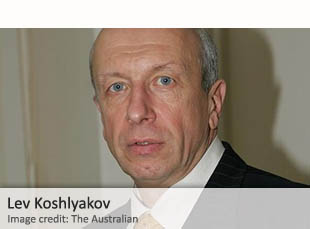
A KGB intelligence officer, who handled an Australian double spy during the closing stages of the Cold War, now holds several prestigious corporate posts in Moscow and is believed to be close to Russian President Vladimir Putin. Lev Koshlyakov, 69, is director of corporate communications for two Russian airline companies, including the state carrier, Aeroflot, and a member of the prestigious Moscow-based Council for Foreign and Defense Policy. But from 1977 until 1984, Koshlyakov served as the press and information officer for the Russian embassy in Australian capital Canberra. Intelligence sources, however, told The Weekend Australian last week that Koshlyakov’s diplomatic status was in fact a cover for his real job, which was station chief for the Soviet KGB. During his stint in Canberra, Koshlyakov is believed to have handled an especially damaging mole inside the Australian Security Intelligence Organisation (ASIO), who was allegedly recruited by his predecessor, KGB station chief Geronty Lazovik. Canberra was alerted to the existence of the mole in 1992, when the United States Central Intelligence Agency (CIA), along with Britain’s’ Secret Intelligence Service (MI6), briefed Australian officials on information acquired from Russian defectors. Soon afterwards, a government-commissioned report produced by Australian former diplomat Michael Cook described Koshlyakov as “one of the most dangerous KGB officers ever posted” to Australia. Eventually, Koshlyakov was assigned to a desk job by the KGB, after his cover was blown in Norway, where he was also serving as KGB chief of station. The Norwegians expelled Koshlyakov in 1991 after accusing him of espionage activities that were incompatible with his official diplomatic status. Since his retirement, however, Koshlyakov has done well for himself, having been appointed to senior corporate positions —some say with the personal backing of Russia’s President Vladimir Putin. As for the ASIO mole he allegedly handled in the 1980s, The Australian reports that he was forced to retire in 1992, after he was identified by the CIA and MI6. There was insufficient evidence to try him, however, so he “lived out his retirement in Australia” looking nervously over his shoulder, says the paper.

Estonia arrests Russian ex-KGB intelligence officers

EstoniaBy JOSEPH FITSANAKIS | intelNews.org
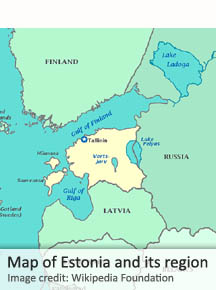
Authorities in Estonia have announced the arrest of two Russian citizens, said to be former employees of the Soviet-era KGB, who allegedly crossed into Estonian territory without a permit. The men have been identified as Alexandr Ladur, 54, and Mikhail Suhoshin, 64, and are reportedly retired intelligence officers. Estonian border police said the two men were apprehended while sailing on the river Narva, which flows from Lake Peipsi into the Baltic Sea and forms part of the border between Estonia and Russia. The two Russian citizens are being held on charges of illegally entering Estonian territory and resisting arrest. This is the second major diplomatic incident between Russia and the Baltic former Soviet republic in recent months. IntelNews regulars will recall that, in early September, the government of Estonia said Eston Kohver, a counterintelligence officer in the country’s Internal Security Service, was abducted by “a team of unidentified individuals from Russia”. The Estonian side claimed that the abduction had occurred at a border-crossing facility in southeastern Estonia. But Russian sources said at the time that Kohver had been detained while on Russian soil. Russian media later reported that the Estonian counterintelligence officer had been captured by Russia’s Federal Security Service, known as FSB, while undertaking an “espionage operation” inside Russia. Reports in the Russian press said Kohver was caught in Russia’s Pskov region, carrying a loaded firearm, €5,000 ($6,500) in cash, “covert video recording equipment”, an “eavesdropping device”, as well as “other items relating to the gathering of intelligence”. British newspaper The Guardian quoted Kalev Stoicescu, Russia expert at the International Center for Defense Studies in Estonian capital Tallinn, who did not rule out that the two alleged former KGB officers may in fact “have been merely fishing”. Read more of this post

Soviet documents ‘identify New Zealand diplomat as KGB spy’

Bill SutchBy JOSEPH FITSANAKIS | intelNews.org
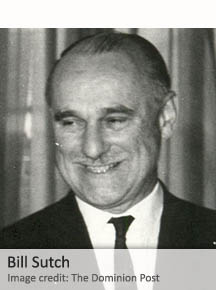
A batch of documents from the so-called ‘Mitrokhin archive’, which were made public late last week, have reportedly identified a former New Zealand senior diplomat as a Soviet spy. William Ball Sutch was born in 1907 and received a PhD in economics from Columbia University in the United States in 1932. Shortly afterwards, he returned to his native New Zealand in the midst of the Great Depression. At around that time he traveled to the Soviet Union, but showed no outward interest in communism. He entered government service, working for several departments, including the Ministry of Supply and the Department of Industries and Commerce, where he rose to the post of secretary in 1958. Prior to that, he had represented Wellington at the United Nations headquarters in New York in the early 1950s. He retired in 1965 as head of New Zealand’s Department of Industries and Commerce, and died in 1975. A year before his death, however, Sutch was the main subject in the most sensational spy scandal in New Zealand during the Cold War. He was arrested in a counterintelligence operation in Wellington while secretly meeting Dimitri Razgovorov, an officer of the Soviet KGB. Sutch, who had been monitored by the New Zealand Security Intelligence Service (NZSIS) for quite some time prior to his arrest, was charged under the country’s Official Secrets Act. But eventually he was found not guilty after an eventful five-day trial, which took place amidst a media blitz in the Kiwi capital. Now, however, the Wellington-based Dominion Post newspaper says it has acquired copies of internal KGB documents that identify Sutch as a KGB recruit. The Australian-owned newspaper says the documents are part of the massive archive transported to the United Kingdom in 1992 by the late Vasili Mitrokhin. Mitrokhin was a Soviet archivist for the KGB, who painstakingly copied tens of thousands of pages of the spy agency’s files prior to defecting to Britain following the dissolution of the USSR. The latest batch of papers, which were made public at Cambridge University’s Churchill College, indicate that the New Zealand diplomat worked for the KGB for 24 years prior to his 1974 arrest. Read more of this post