Revealed: Letters between Margaret Thatcher and KGB defector
January 2, 2015 Leave a comment
 By IAN ALLEN | intelNews.org
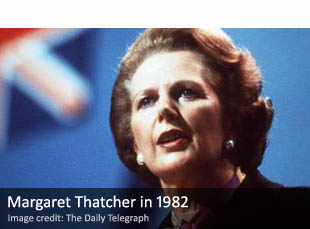
Files released this week have revealed part of the personal correspondence between the late British Prime Minister Margaret Thatcher and one of the Cold War’s most important Soviet spy defectors. Oleg Gordievsky entered the Soviet KGB in 1963. He soon joined the organization’s Second Directorate, which was responsible for coordinating the activities of Soviet ‘illegals’, that is, intelligence officers operating abroad without official diplomatic cover. Gordievsky’s faith in the Soviet system was irreparably damaged in 1968, when Warsaw Pact troops invaded Czechoslovakia. In 1974, while stationed in Danish capital Copenhagen, he made contact with British intelligence and began his career as a double agent for the United Kingdom. In 1985, shortly before he was to assume the post of KGB station chief at the Soviet embassy in London, he was summoned back to Moscow by an increasingly suspicious KGB. He was aggressively interrogated but managed to make contact with British intelligence and was eventually smuggled out of Russia via Finland, riding in the trunk of a British diplomatic vehicle. His defection was announced a few days later by British Prime Minister Margaret Thatcher, who had personally approved his exfiltration from the USSR. Files released this week by the British National Archives show that the British Prime Minister took a personal interest in Gordievsky’s wellbeing following his exfiltration, and even corresponded with him after the Soviet defector personally wrote to her to ask for her intervention to help him reunite with his wife Leila and two daughters, who remained in the Soviet Union. In his letter, written in 1985, Gordievsky told Thatcher that his life had “no meaning” unless he was able to be with his family. On September 7, 1985, the British Prime Minister responded with a letter to the Soviet defector, urging him not to give up. “Please do not say that life has no meaning”, she wrote. “There is always hope. And we shall do all to help you through these difficult days”. She added that the two should meet once the “immediate situation” of the worldwide media attention caused by his exfiltration subsided. Thatcher went on to publicly urge for Moscow to allow Gordievsky’s family to reunite with the Soviet defector, “on humanitarian grounds”. But it was in 1991, after the collapse of communism in the USSR, when Gordievsky’s family was finally able to join him in the UK.








 intelNews.org
Revealed: British prime minister was not told about fourth Cambridge spy ring member
July 24, 2018 by Joseph Fitsanakis Leave a comment
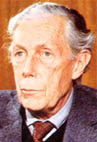
Despite his allegedly full confession, Blunt was never seriously disciplined for his espionage activities against Britain. In return for revealing his spy activities and naming others who had assisted him, he was granted immunity from prosecution. He was also allowed to remain in his academic post and retained his title of Surveyor of the Queen’s Pictures –effectively the curator of Queen Elizabeth II’s art collection. It wasn’t until 1979 when British Prime Minister Margaret Thatcher revealed in a statement to the British House of Commons that Blunt had been the fourth member of the Cambridge Spy Ring. Minutes after the prime minister’s statement entered the public record, Buckingham Palace (which had been made aware of Blunt’s espionage role back in 1964, but had been asked by Britain’s Interior Ministry to not draw attention to the scandal) stripped him of his 1954 knighthood.
It has now been revealed known that, in the days following her House of Commons statement about Blunt, Prime Minister Thatcher received several letters by Henry Brooke, who was serving as home secretary in 1964, when Blunt’s treachery was discovered. In his letters, Brooke (by then Lord Brooke of Cumnoor) expressed his support for the prime minister’s revelation. But the letters, which were previously classified but were published on Tuesday by Britain’s National Archives, also reveal that Brooke kept Blunt’s 1964 confession hidden from the then Prime Minister Sir Alec Douglas-Home. In his 1979 letter to Thatcher, Brooke states that he did not inform the prime minister in 1964 in his “well-meant effort not to add to [Douglas-Home’s] burdens”. But he adds that “I may, with hindsight, have expressed my discretion wrongly”. By that time, Blunt had voluntarily withdrawn from public life and was rarely heard of. Upon his death in 1984, his unfinished memoir was given to the British Library by the executor of his will, under the stipulation that it be kept sealed for 25 years. It was released to the public in 2009.
► Author: Joseph Fitsanakis | Date: 24 July 2018 | Permalink
Filed under Expert news and commentary on intelligence, espionage, spies and spying Tagged with Anthony Blunt, Cambridge Five, Cold War, declassification, espionage, Margaret Thatcher, MI5, News, UK, UK National Archives