Chinese state-owned fishing company is cover for spy activities, report claims
May 20, 2021 Leave a comment
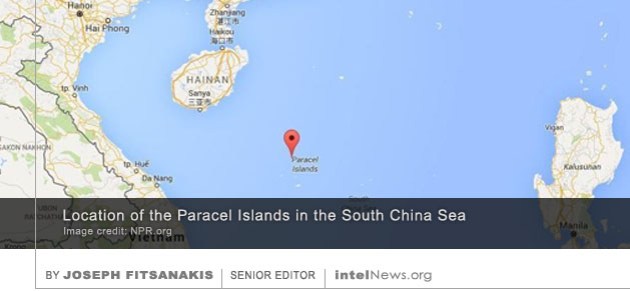
A CHINESE STATE-OWNED fisheries enterprise is in reality a front for military-related intelligence activities in the South China Sea, according to a new investigative report. The report was produced by Radio Free Asia (RFA), which is operated by the United States Agency for Global Media —an arm of the United States government. Entitled “Unmasking China’s Maritime Militia”, the report focuses on the Sansha City Fisheries Development Co., which is based on the island of Hainan, China’s southernmost province.
Established in February of 2015, Sansha City Fisheries Development Co. is a municipal state-owned enterprise that carries out industrial-scale fishing operations in the South China Sea. However, having analyzed official Chinese government data, including corporate records and third-party bidding contracts, RFA claims that “the company’s ships are engaged in more than just fishing”. In reality, the fishing company operates as an undercover arm of a shadowy force known as the Sansha City maritime militia, according to RFA.
The Sansha City maritime militia is believed to be headquartered at Woody Island (also known as Yongxing Island), the largest of the Paracel Islands in the South China Sea. It was allegedly established in 2013, with the goal of protecting China’s maritime claims in a region where Beijing is competing for influence against Malaysia, Philippines, Taiwan and Vietnam, among other regional actors. Today the maritime militia is said to consist of over 100 vessels and nearly 2,000 militiamen and women.
According to RFA, Sansha City Fisheries Development is known to prioritize hiring veterans of the Chinese People’s Liberation Army. Moreover, a number of service contracts signed between the state-owned fishing company and third party providers appear to include “state secrets protection” clauses, which typically refer to classified programs for the Chinese military or intelligence services. In recent years, at least two of the company’s ships were used to test classified information systems and command and communications systems, which “transformed [them into] mobile communications and surveillance platform[s] capable of transmitting intelligence back to the authorities on land”, according to RFA.
It should be noted that the Chinese government disputes these allegations. The RFA report quotes part of a statement by the Chinese embassy in the Philippines, which claims that “[t]here is no Chinese Maritime Militia as alleged”.
► Author: Joseph Fitsanakis | Date: 20 May 2021 | Permalink
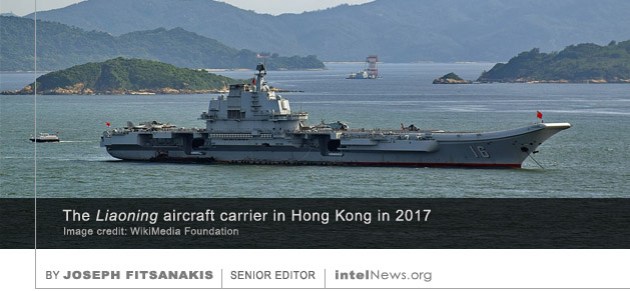 One of China’s most senior shipbuilding executives, who has not been seen in public for nearly two weeks, has been charged with giving secrets about China’s aircraft carriers to the United States. Sun Bo, 57, is general manager of the China Shipbuilding Industry Corporation (CSIC), China’s largest state-owned maritime manufacturer, which leads nearly every major shipbuilding project of the Chinese navy. Most notably, Sun headed the decade-long retrofitting of the Liaoning, a Soviet-built aircraft carrier that was commissioned to the Chinese Navy’s Surface Force after the collapse of the Soviet Union.
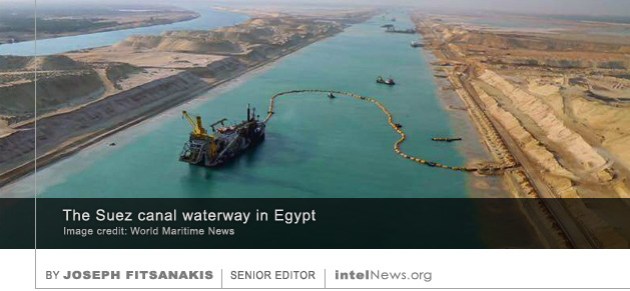 The seizure earlier this year of a North Korean ship secretly carrying thousands of weapons for use by the Egyptian military has revealed the scale of one of Pyongyang’s most profitable money-making ventures: global arms sales. Experts say that the North Korean state continues to supply thousands of tons of Cold-War-era conventional weapons to countries such as Eritrea, Cuba, Burma and Iran, as well as to some American allies, including as Egypt. There is also evidence that at least two non-state militant organizations, including the Lebanon-based group Hezbollah, are among Pyongyang’s customers. The latter take advantage of North Korea’s vast arsenal of weapons produced in the 1960s and 1970s, which are being sold on the international arms market at very low prices.
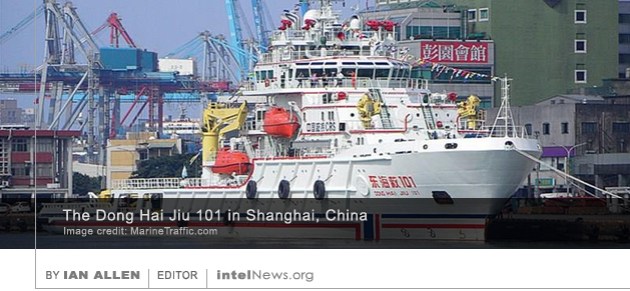 The Chinese embassy in Canberra has strongly denied accusations that a Chinese government ship involved in the international effort to find the missing Malaysia Airlines Flight MH370 is spying on the Royal Australian Navy. The ship, the Dong Hai Jiu 101, is a salvage and rescue vessel built in Shanghai in 2012 and currently sailing under the Chinese flag. In April, the Chinese government contracted the Dong Hai Jiu 101 to join the international search effort for the wreckage of Flight MH370. The Boeing 777 aircraft disappeared over the South China Sea on March 8, 2014, while flying from Kuala Lumpur International Airport in Malaysia, to the Beijing Capital International Airport in China.
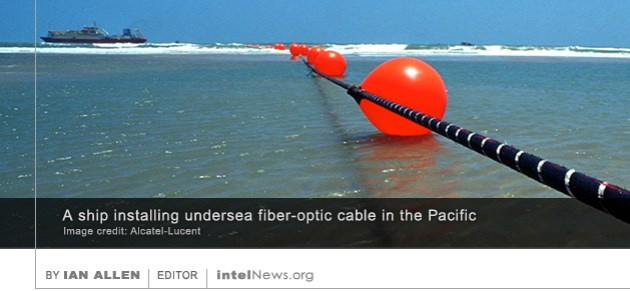 An increased presence of Russian submarines near American territorial waters appears to correspond to the location of undersea Internet cables used for commercial and military communications, according to officials.












 intelNews.org
Russia uses merchant navy fleet for intelligence operations in North Sea, study reveals
June 24, 2024 by Joseph Fitsanakis 10 Comments
HUNDREDS OF RUSSIAN MERCHANT ships have been utilized by the Kremlin for over a decade to carry out intelligence operations in the North Sea, a major new investigation has revealed. Belgian newspaper De Tijd and the investigative journalism website Follow the Money (FTM) carried out the joint investigation, using data provided by Global Fishing Watch, a Google-based international nonprofit organization that gathers information on commercial fishing activities worldwide.
Encompassing 220,000 square miles, the North Sea lies between France, Belgium, the Netherlands, the United Kingdom, Norway, Denmark, and Germany. It hosts many of the world’s major shipping lanes, an extensive network of energy pipelines, as well as key undersea communication cables. The development of large-scale offshore energy production has further-augmented the significance of the North Sea for the security of Europe in recent years. The strategic value of the North Sea has become even clearer since the onset of the Russo-Ukrainian war in 2014.
According to the De Tijd/FTM study, the Russian government has been highly active in the North Sea through a variety of stealthy means –primarily by deploying civilian vessels to collect intelligence and possibly even carry out sabotage operations. The study focused on 1,012 Russian-flagged non-military vessels that have been active in the North Sea since 2014. These consist of oil tankers, scientific research vessels, fishing boats, cargo ships, and even privately owned yachts.
The study identified 60,000 loitering events involving these Russian vessels. In the shipping domain, the term ‘loitering event’ refers to vessels that deviate from their normal route, reduce speed for no obvious reason, drift aimlessly, or circle around a location that may initially appear arbitrary. Loitering and other such peculiar behavior by merchant ships makes no economic sense, as it requires more fuel and results in added compensation for crews. Notably, close to 1,000 loitering events by nearly 170 different Russian ships were found to have taken place within less than a mile from an underground cable or energy pipeline. Read more of this post
Filed under Expert news and commentary on intelligence, espionage, spies and spying Tagged with 2022 Russian invasion of Ukraine, maritime intelligence, News, North Sea, North Sea Security Pact, Russia, sabotage, undersea communications cables