UK military scrambling to rehire retired Russian-language analysts
June 10, 2014 1 Comment
 By JOSEPH FITSANAKIS | intelNews.org
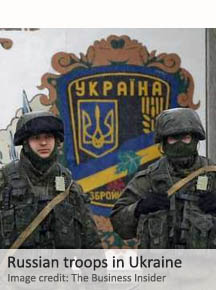
The crisis in Ukraine is causing the British military to reach out to hundreds of retired Russian-language analysts who left the service at the end of the Cold War, according to media reports. British newspaper The Daily Telegraph said on Saturday that Russia’s actions in the Ukraine had exposed significant shortages of Russian-language analysts in the British Armed Forces. The paper said it had seen internal government documents that detailed efforts by military officials to contact associations of retired intelligence personnel in search of qualified Russia experts. The article referenced one recent memorandum from an unnamed senior officer in a military intelligence brigade, which asks retired military personnel to help by contacting retired Russian-language analysts, most of whom are now in their 60s. Other documents suggest that, in addition to analysts, the British military is in need of experts that can help monitor and translate information collected from open-source Russian information channels. The Telegraph places the blame for the shortage on budget cuts implemented by successive British governments on the nation’s Armed Forces. It also faults the defense and security agencies’ “recent focus on the Middle East and Asia”, which is said to have occurred at the expense of Russian linguistic and analytical expertise. The article quotes an unnamed “intelligence source” as saying that Britain’s Ministry of Defense used to offer “extremely good” Russian-language courses, but that “after 9/11” a focus on Arabic displaced Russian and other languages associated with the Cold War. There are also complaints by Russian experts in the British Army that they were “openly derided as being nothing more than a ‘language club’” in the years following 9/11. Read more of this post










 intelNews.org
Analysis: Crimea crisis brings Russian military spies back in the game
July 9, 2014 by Ian Allen Leave a comment
The recent crisis in Ukraine, which resulted in Russia assuming control of Crimean Peninsula, marks the post-Soviet resurgence of Russia’s military intelligence apparatus and points to “a new playbook” in Moscow’s foreign policy strategy, according to a seasoned Russia analyst. In an article published on Monday in Foreign Policy, Mark Galeotti, Professor of Global Affairs at New York University, who specializes in Russian security affairs, said Russia’s military intelligence agency is now “back in the global spook game”. He was referring to Russia’s Main Intelligence Directorate of the General Staff, known commonly as GRU, which he said the Kremlin will be employing increasingly in the years to come as a major foreign-policy tool. It is no secret that, despite its significant role in Cold War intelligence operations, the GRU has been in decline in the post-Soviet era. Its substandard performance in the 2008 Russo-Georgian War convinced Russian President Vladimir Putin that the agency was “unfit” for operations in what Russians call the “near-abroad” —the regions of the former Soviet Republics. In 2003, in addition to facing what Galeotti calls “a savage round of [budget] cuts”, the GRU saw its near-abroad functions taken over by the FSB, Russia’s Federal Security Service. The FSB descends from the domestic component of the Soviet-era KGB, the agency that employed Vladimir Putin before he entered politics (as an aside, the SVR, which is the post-Soviet reincarnation of the KGB’s external intelligence directorates, is legally prevented from operating within the Commonwealth of Independent States). As late as last year there was even a discussion about whether the GRU should be demoted from a main directorate under the Russian Armed Forces’ General Staff to a simple directorate, a move that would have fatally diminished its institutional stature. But in the recent Crimea crisis, says Galeotti, the GRU was able to turn the tables on Kiev by deploying its battle-ready Vostok Battalion, whose members cut their teeth in Chechnya. Read more of this post
Filed under Expert news and commentary on intelligence, espionage, spies and spying Tagged with 0 Analysts touting Ukraine's East-West division are just plain wrong, 0 China to fund Zimbabwe military intelligence base, Analysis, Autonomous Republic of Crimea, GRU, military intelligence, Russia