Details of Albania’s clandestine operatives posted online due to admin error
December 19, 2018 Leave a comment
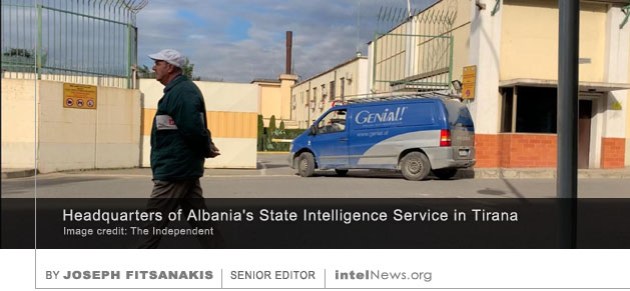 Sensitive information about the identities and activities of Albania’s intelligence operatives appeared online, apparently due to an administrative blunder. The incident has reportedly alarmed officials at the North Atlantic Treaty Organization (NATO), of which Albania has been a member since 2009. British newspaper The Independent, which reported the incident earlier this month, described it as “a dangerous breach that could have international consequences”. The paper quoted a former officer in the United States Central Intelligence Agency who described the breach as “the type of bureaucratic catastrophe that could put lives at risk”.
Until the end of the Cold War, Albania was a communist state aligned with China. Since 1991, however, the former communist country has tried to align itself with the West. As part of this strategy, successive Albanian administrations have tried to combat widespread nepotism and government corruption. A significant aspect of this ongoing anti-corruption campaign involves the daily publication of the financial activities of Albanian government agencies. This information is available in searchable spreadsheets on the website of Albania’s Ministry of Finance and Economy. Recently, however, Vincent Triest, a researcher with British-based investigative website Bellingcat, noticed that the publicly available spreadsheets contained information about the State Intelligence Service, Albania’s spy agency, known as SHISH. In reading through the spreadsheets, Triest was able to find the names, official job titles, salaries and monthly expenses of at least eight senior members of SHISH. Most of them, said Triest, serve under official (diplomatic) cover at Albanian embassies and consulates in Greece, Italy, Belgium, Serbia, and elsewhere in Europe.
In a follow-up article posted yesterday on Bellingcat’s website, Triest said that the spreadsheets on the website of the Albanian Finance Ministry contain names and national identification records of SHISH officers, the agency field offices where they are serving, and even the make and model of the vehicles they drive along with their license plate numbers. A separate spreadsheet lists the construction contractors, plumbers and electricians used by various SHISH field offices, as well as the mechanics that are contracted to service the agency’s vehicles. Remarkably, at least two of the exposed SHISH officers are serving in “sensitive posts at NATO headquarters in Brussels”, writes Triest. This has raised alarms at NATO, as Albanian intelligence officers with access to NATO’s secrets could now become susceptible to possible recruitment by adversary spy agencies, said The Independent. The paper added that it notified the Albanian government of the security breach, and was told that the sensitive data would be promptly removed from government websites.
► Author: Joseph Fitsanakis | Date: 19 December 2018 | Permalink
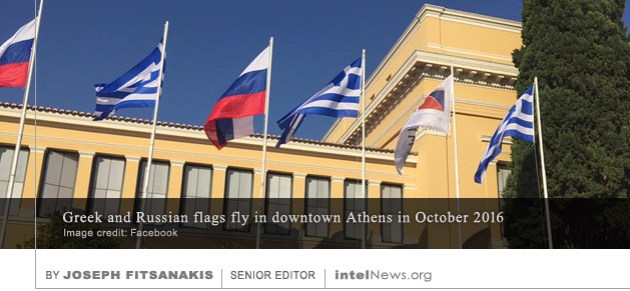 In a rare moment of downturn in relations between Athens and Moscow, Greece has expelled two Russian diplomats and refused to accredit two more, reportedly for “undermining Greek national security”. Greece was not among nearly 30 countries that expelled or refused to accredit over 150 Russian diplomats in March, in an act of solidarity with the United Kingdom. The
  Some North Atlantic Treaty Organization (NATO) member states obtained access to the Soviet Union’s so-called ‘Novichok’ nerve agents in the 1990s, through an informant recruited by German intelligence, according to reports. NATO countries refer to ‘Novichok-class’ nerve agents to describe a series of weaponized substances that were developed by the Soviet Union and post-Soviet Russia from the early 1970s to at least 1993. They are believed to be the deadliest nerve agents ever produced, but Moscow denies their very existence. A type of Novichok agent, described by British scientists as A234, is said to have been used in March of this year by the person or persons who
  The British prime minister said on Monday that it was “highly likely” the nerve agent used to attack a Russian defector in England last week was developed by Russia. But sources in London told the BBC that the British government would not invoke Article 5 of the North Atlantic Treaty Organization (NATO), which states that an attack on one member of the alliance is an attack on all. Theresa May was referring to an
  A group of hardline Bosnian Serbs, some of whom have been trained in military tactics by Russian instructors, are secretly creating a paramilitary group to undermine the territorial integrity of Bosnia, according to reports. Information about the alleged paramilitary group was published on the Friday edition of Žurnal, a nonpartisan investigative newsmagazine. The allegations exposed by Žurnal were later repeated by Dragan Mektić, Bosnia and Herzegovina’s Minister for Security, who is himself a Bosnian Serb. Žurnal’s
  Authorities in Poland have charged three high-level military intelligence officials with acting in the interests of Russia. The three include two former directors of Polish military intelligence and are facing sentences of up to 10 years in prison. The news broke on December 6, when Polish authorities announced the arrest of Piotr Pytel, who was director of Poland’s Military Counterintelligence Service (SKW) from 2014 to 2015. It soon emerged that two more arrests had taken place, that of Pytel’s predecessor, Janusz Nosek, and Krzysztof Dusza, Pytel’s chief of staff during his tenure as SKW director.
 The former director of Poland’s military counterintelligence agency has been questioned by the country’s military police, over allegedly illegal cooperation with Russian intelligence. From 2006 to 2012, General Piotr Pytel was head of Poland’s Military Counterintelligence Service (MCS), which is responsible for domestic security and for ensuring the war-readiness of Poland’s armed forces. According to government prosecutors, General Pytel struck an illegal agreement with the Russian Federal Security Service, the FSB, in 2010. The alleged agreement concerned the return to Poland of troops who had been sent to serve in Afghanistan with the International Security Assistance Force (ISAF). Several hundred Polish troops participated in ISAF, a NATO-led security mission in Afghanistan, established by the United Nations Security Council in 2001.
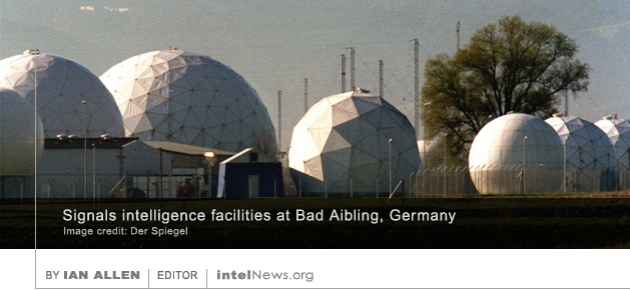 A major parliamentary inquiry into the operations of Germany’s main intelligence agency has concluded that it spied on nearly 3,500 foreign targets in recent years, most of which belonged to allied countries. The inquiry was initiated by the German government in response to a number of recent public controversies involving the Bundesnachrichtendienst, Germany’s Federal Intelligence Service, known as BND.
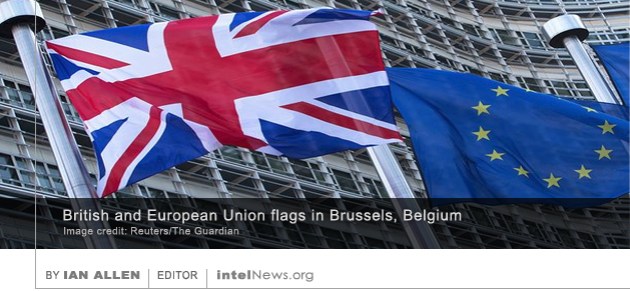 After Thursday’s Brexit vote, European and American security officials have tried to pacify concerns about major disruption of longstanding Western security cooperation arrangements. But experts stress that the international security landscape will be significantly impacted by Britain’s decision to leave the European Union (EU). As early as Thursday night, British defense, military and intelligence officials launched a marathon of phone calls in order to reassure their European and American counterparts that the United Kingdom was not going to retreat from its role in security pacts with Europe and the North Atlantic Treaty Organization (NATO).
 A report by Canada’s primary intelligence agency warns in stark language that Russia is “retooling its military for a fight” and appears to be “mobilizing for war”. The classified report was
 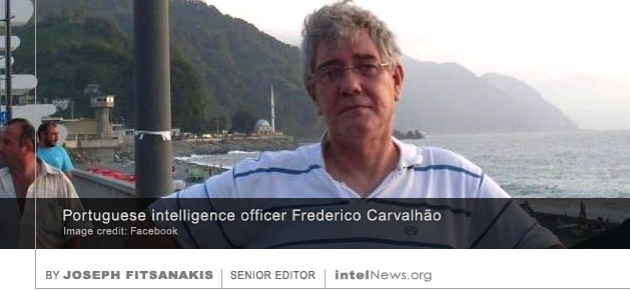 A Portuguese intelligence officer arrested a week ago in Rome, allegedly while passing classified documents to his Russian handler, may have accomplices with access to North Atlantic Treaty Organization (NATO) secrets. IntelNews
 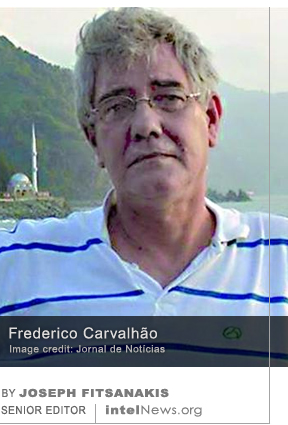 Two intelligence officers, one Russian and one Portuguese, have been arrested by Italian authorities on charges of espionage. The arrests took place in Rome on Monday by Italian police, who were reportedly accompanied by Portuguese counterintelligence officers. It is suggested in Portuguese media that the two men were arrested in the act of exchanging classified documents and money. The Portuguese intelligence officer has been identified in
 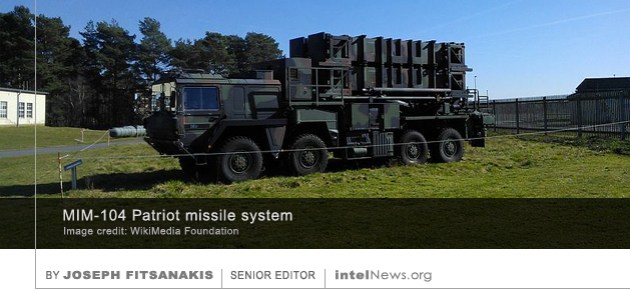 A Patriot missile system stationed in Turkey by the North Atlantic Treaty Organization (NATO) was allegedly hacked by a remote source, according to reports. German magazine Behörden Spiegel
  An American former supreme allied commander of the North Atlantic Treaty Organization has warned that a possible Greek exit from the Eurozone “could become a geopolitical nightmare” for the European Union and NATO. James Stavridis, a retired four-start US Navy admiral, who served as NATO’s 16th Supreme Allied Commander Europe from 2009 to 2013, said solving the Greek crisis should not be left to the central bankers. In an article








Senior Belgian counterintelligence officer arrested on suspicion of spying for Russia
February 18, 2019 by Joseph Fitsanakis 1 Comment
Citing anonymous sources from the General Information and Security Service —Belgium’s military intelligence agency— the paper said that the arrestee has the equivalent rank of major in the General Intelligence and Security Service. Known as GISS, the agency operates as the Belgian equivalent of the United States Central Intelligence Agency or Britain’s Secret Intelligence Service —better known as MI6. GISS officers collect information abroad and are not permitted to operate within Belgium’s borders. The man, a career counterintelligence official, is suspected of having passed secrets to Russia with the help of a woman who claims to be Serbian, but who is in fact believed to be an operative for Russian intelligence. It is not known whether the compromised information included secrets involving the North Atlantic Treaty Organization, of which Belgium is a founding member. In the same article, De Morgen also said that Clement Vandenborre, who serves as chief of GISS’s counterintelligence directorate, has been barred from his office while an investigation is taking place into allegations of mismanagement. He is also accused of having shredded classified government documents without permission. It is not believed that this case is connected with the alleged Russian penetration.
De Morgen quoted a spokesperson for Belgium’s Ministry of Defense, who confirmed that an investigation into alleged foreign espionage targeting a GISS employee was underway, but added that “no comment” would be made on the subject so as “not to hinder” the probe. Ironically, German newspaper Die Welt am Sonntag reported last week that the European Union’s diplomatic agency warned officials in Belgium to watch out for “hundreds of spies” from various foreign countries, including from Russia and China. The warning, issued by the European Union’s diplomatic agency, the European External Action Service (EEAS), said that “approximately 250 Chinese and 200 Russian spies” were operating in Brussels.
► Author: Joseph Fitsanakis | Date: 18 February 2019 | Permalink
Filed under Expert news and commentary on intelligence, espionage, spies and spying Tagged with ADIV (Belgium), Belgian Ministry of Defense, Belgium, Brussels, Clement Vandenborre, counterintelligence, espionage, GISS (Belgium), NATO, News, Russia