Spies seen behind fake Facebook profile of senior NATO commander
March 12, 2012 6 Comments
 By JOSEPH FITSANAKIS| intelNews.org |
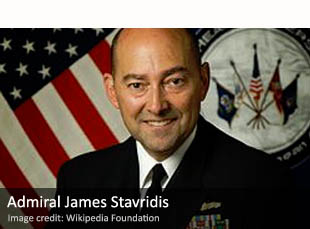
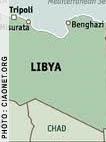
A Facebook account bearing the name of a senior commander of the North Atlantic Treaty Organization was set up by Chinese spies to siphon information from unsuspecting Western military officials, according to a British newspaper. The London-based Daily Telegraph said in an article that the fake Facebook account was discovered a year ago by NATO counterintelligence officers. It bore the name of United States Admiral James Stavridis, who serves as Supreme Allied Commander in Europe and currently leads the Organization’s mission in Libya. The account was reportedly used to befriend Western military officials, primarily in Britain and other European countries, probably in an attempt to collect personal information found on their personal pages on the popular social networking site. This sort of practice is known as ‘spear phishing’, and consists of messages sent to carefully targeted individuals, seemingly sent from a trusted source. The operation involving Admiral Stavridis appears to have been purposely targeted at high-ranking Western officials, a technique sometimes known as ‘whaling’. The London-based daily says NATO officials have been “reluctant to say publicly who was behind the attack”. But the paper claims it has been told that declassified briefings from NATO point to a series of Internet protocol addresses belonging to Chinese government facilities. Organization officials insist —correctly— that the individuals or government agencies behind the operation to falsify Stavridis’ social networking identity are unlikely to have acquired any actual military secrets. However, the information collected from Western military officials befriended online by Admiral Stavridis’ fake Facebook account could aid the compilation of personal and psychological profiles of these officials produced by foreign intelligence agencies. Read more of this post












 intelNews.org
Comment: US helped Canada nab accused spy Jeff Delisle
May 25, 2012 by Joseph Fitsanakis 5 Comments
Back in January of this year, when the Jeffrey Delisle spy affair made headlines around the world, I spoke with several journalists from The Globe & Mail, The Canadian Press, and other Canadian news outlets. Most of them were –rightly– curious about the role of the United States in the affair, in which Sub-Lieutenant Delisle, who had been employed at Canada’s ultra-secure TRINITY communications center in Halifax, was accused of spying for a foreign power. I told them that, given that Trinity handled –aside from Canadian– NATO communications, Canada was in fact obligated to notify all of its NATO partners about the suspected penetration. That aside, I said that it could be “safely assumed” that US counterintelligence agencies were “fully involved in the Delisle case, and probably ha[d] been for several months”. By the latter phrase, I implied that US counterintelligence agencies had been closely involved in helping their Canadian counterparts build their case against Delisle. Now a new report in The Globe & Mail suggests that US counterintelligence officials “supplied vital information” to their Canadian colleagues during “the early days of the investigation” into the Delisle affair. The article says that the full extent of what the Americans told Canadian authorities remains unclear; but it quotes “a source familiar with the matter”, who claims that the US “helped Canada build its investigation”, not necessarily by providing a single tipoff clue, but through “an accumulation of information”. The paper adds that Washington’s involvement in the investigation from an early stage “adds a key new detail to [the] story”. Not necessarily, I would argue. Read more of this post
Filed under Expert news and commentary on intelligence, espionage, spies and spying Tagged with Canada, counterintelligence, espionage, Jeffrey Paul Delisle, Joseph Fitsanakis, NATO, Russia, SIGINT, TRINITY (Canada), United States