Iranian engineer recruited by Holland helped CIA and Mossad deliver Stuxnet virus
September 4, 2019 2 Comments
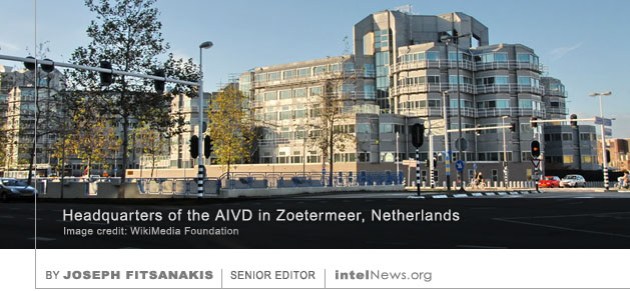 An Iranian engineer who was recruited by Dutch intelligence helped the United States and Israel infect computers used in Iran’s nuclear program with the Stuxnet cyber weapon, according to a new report. Discovered by researchers in 2010, Stuxnet is believed to have been designed with the aim of sabotaging the nuclear program of the Islamic Republic of Iran. The virus targeted the industrial computers —known as programmable logic controllers— that regulated mechanical and electronic hardware in Iranian nuclear installations. By compromising the software installed on these computers, Stuxnet manipulated the rotor speed of nuclear centrifuges at Iran’s Natanz Fuel Enrichment Plant. By increasing the centrifuges’ rotor speed to unmanageable levels, Stuxnet rendered many of these machines permanently inoperable.
Most observers agree that Stuxnet was a joint cyber sabotage program that was devised and executed by the United States and Israel, with crucial assistance from Germany and France. But now a new report from Yahoo News claims that the contribution of Dutch intelligence was central in the Stuxnet operation. Citing “four intelligence sources”, Yahoo News’ Kim Zetter and Huib Modderkolk said on Monday that Holland’s General Intelligence and Security Service (AIVD) was brought into the Stuxnet operation in 2004. In November of that year, a secret meeting took place in The Hague that involved representatives from the AIVD, the United States Central Intelligence Agency, and Israel’s Mossad.
It was known that the Islamic Republic’s nuclear weapons program was crucially assisted by A.Q. Khan, a Pakistani nuclear physicist and engineer. In 1996, Khan sold the Iranians designs and hardware for uranium enrichment, which were based on blueprints he had access to while working for a Dutch company in the 1970s. By 2004, when the Dutch were consulted by the CIA and the Mossad, the AIVD had already infiltrated Khan’s supply network in Europe and elsewhere, according to Yahoo News. It also had recruited an Iranian engineer who was able to apply for work in the Iranian nuclear program as a contractor. This individual was provided with proprietary cover, said Yahoo News, which included two “dummy compan[ies] with employees, customers and records showing a history of activity”. The goal of the AIVD, CIA and Mossad was to have at least one of these companies be hired to provide services at the Natanz nuclear facility.
That is precisely what happened, according to Yahoo News. By the summer of 2007, the AIVD mole was working as a mechanic inside Natanz. The information he provided to the AIVD helped the designers of Stuxnet configure the virus in accordance with the specifications of Natanz’s industrial computers and networks. Later that year, the AIVD mole was able to install the virus on Natanz’s air-gapped computer network using a USB flash drive. It is not clear whether he was able to install the virus himself or whether he was able to infect the personal computer of a fellow engineer, who then unwittingly infected the nuclear facility’s system. The Yahoo News article quotes an intelligence source as saying that “the Dutch mole was the most important way of getting the virus into Natanz”.
It is believed that, upon discovering Stuxnet, the Iranian government arrested and probably executed a number of personnel working at Natanz. The Yahoo News article confirms that there was “loss of life over the Stuxnet program”, but does not specify whether the AIVD mole was among those who were executed. The website said it contacted the CIA and the Mossad to inquire about the role of the AIVD in the Stuxnet operation, but received no response. The AIVD declined to discuss its alleged involvement in the operation.
► Author: Joseph Fitsanakis | Date: 04 September 2019 | Permalink
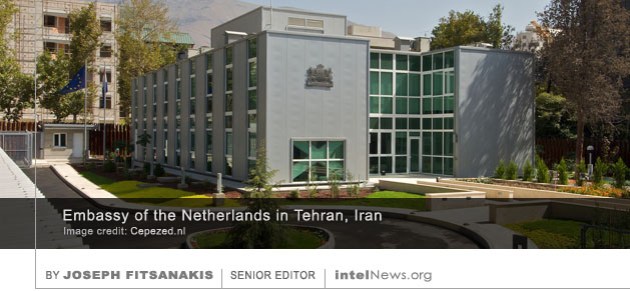 Holland said on Monday that it had recalled its ambassador from Tehran after Iran expelled two Dutch diplomats, in a deepening dispute involving the assassination of two Dutch citizens by alleged Iranian agents. In July of last year, Holland
 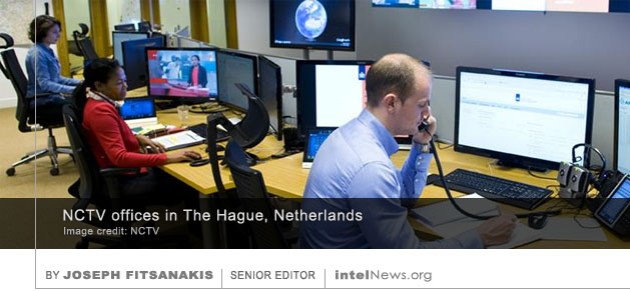 Holland’s chief counterterrorism agency has warned that, despite losing its territories in the Middle East, the Islamic State continues to recruit operatives and is ready to launch attacks in the West “at a moment’s notice”. The warning is contained in a report published last week by the Dutch National Coordinator of Counterterrorism and Security (NCTV). Established in 2005 as the Dutch National Coordinator for Counterterrorism, and renamed in 2012, the NCTV works under Holland’s Justice and Security Minister. It is responsible for analyzing terrorism threats and assessing the country’s domestic terrorism threat level.
 Authorities in Holland have officially accused Iran of ordering the contract murders of two men on Dutch soil in 2015 and 2017, one of them just a block away from the Dutch foreign ministry’s headquarters. The announcement illuminates the reason behind the expulsion of two Iranian diplomats from Holland last year, which the authorities did not explain at the time.
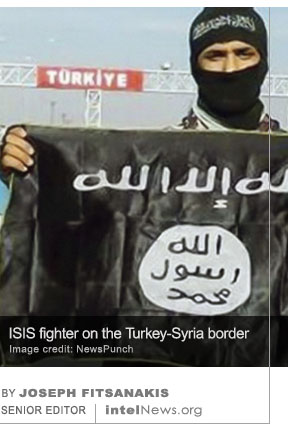 Islamic State cells are using Turkey as a strategic base in which to recuperate, rebuild, and plan an underground war in Europe, according to a new report by Dutch intelligence. This assessment is featured in a
 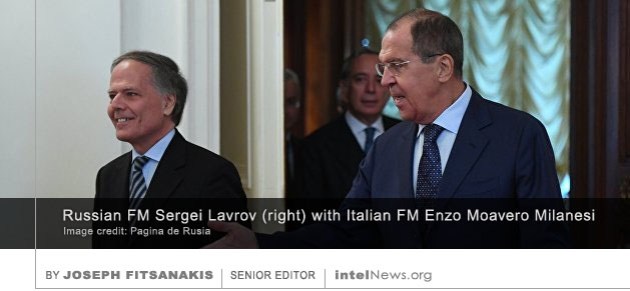 Russia’s minister of foreign affairs has downplayed the arrest and expulsion of four Russian military intelligence officers in Holland last April, saying that the incident was caused by a “misunderstanding”. Last Thursday, the US government named and indicted seven officers of the Main Directorate of the General Staff of Russia’s Armed Forces, known as GRU. The seven are
  Western intelligence agencies thwarted a plot involving two Russians intending to travel to a Swiss government laboratory that investigates nuclear, biological and chemical weapons, and hack its computer systems. According to two separate reports by Dutch newspaper
 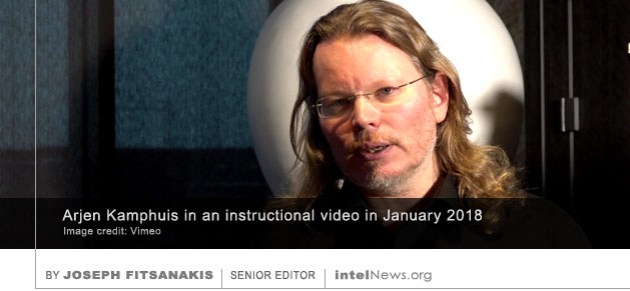 Police in Norway and Holland have opened formal investigations into the whereabouts of a Dutch cybersecurity expert and senior associate of WikiLeaks, who disappeared without trace on August 20. Arjen Kamphuis, a 47-year-old online privacy specialist, is known for his book Information Security for Journalists, which offers advice on investigative reporters working on national security and intelligence matters. Additionally, Kamphuis, who has Dutch citizenship, is a close associate of Julian Assange, founder of the international whistleblower website WikiLeaks.
 Holland has expelled two Iranian diplomats without saying why, leading to speculation that the expulsions may be related to the arrests of members of an alleged Iranian sleeper cell in Belgium, Germany and France last week. On Friday, a spokesperson from Holland’s General Intelligence and Security Service (AIVD)
 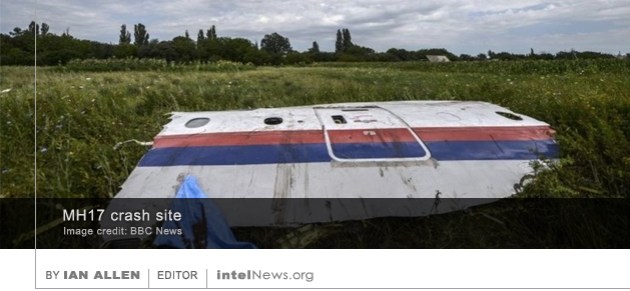 Dozens of Dutch security officers, legal experts, diplomats and other civil servants were systematically spied on by Ukrainian and Russian intelligence services while probing the aftermath of the MH17 disaster, according to a report on Dutch television. Malaysia Airlines Flight 17, a scheduled passenger flight from Amsterdam to Kuala Lumpur, was
 For the past year, the Netherlands has had a new law governing its two secret services, the AIVD and the MIVD. The new Intelligence and Security Services Act (Wet op de inlichtingen- en veiligheidsdiensten or Wiv) was and still is heavily criticized, especially because it allows untargeted access to cable-bound telephone and internet traffic. Under the previous law, which dates from 2002, the intelligence services were only allowed to conduct bulk interception of wireless transmissions, like satellite and radio communications —besides of course the traditional targeted telephone and internet taps aimed at individual targets.
 On March 21, the Dutch public cast their vote about the new Intelligence and Security Services Act, in Dutch
 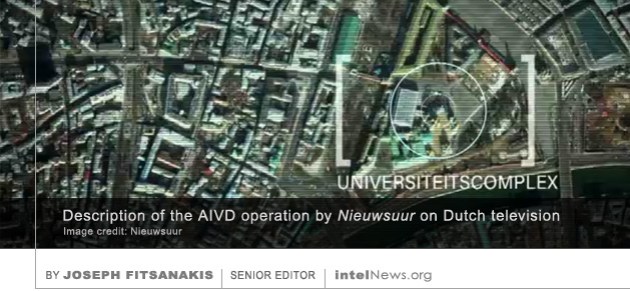 Dutch spies identified a notorious Russian hacker group that compromised computer servers belonging to the Democratic Party of the United States and notified American authorities of the attack, according to reports. In 2016, US intelligence agencies determined that a Russian hacker group known as Cozy Bear, or APT29, led a concerted effort to interfere in the US presidential election. The effort, which according to US intelligence agencies was sponsored by the Russian government, involved cyber-attacks against computer systems in the White House and the Department of State, among other targets. It also involved the theft of thousands of emails from computer servers belonging to the Democratic National Committee, which is the governing body of the Democratic Party. The stolen emails were eventually leaked to WikiLeaks, DCLeaks, and other online outlets. Prior descriptions of the Russian hacking in the media have hinted that US intelligence agencies were notified of the Russian cyber-attacks by foreign spy agencies. But there was no mention of where the initial clues came from.






 intelNews.org
News you may have missed #899
May 24, 2020 by Ian Allen Leave a comment
• The Pandemic’s Geopolitical Aftershocks Are Coming. With most European countries confident that they are past the worst of the coronavirus pandemic, their attention is turning to the chance of its resurgence once society returns to some semblance of normal. But beyond the epidemiological challenges lies a slowly amassing threat that is not pathological in nature, but economic, political, and military. This is the geopolitical second wave, and its power is already starting to concern Western leaders.
• The coming post-COVID anarchy. The former prime minister of Australia, Kevin Rudd (pictured), argues in this article that “China and the United States are both likely to emerge from this crisis significantly diminished […]. Both powers will be weakened, at home and abroad”, he opines. And he goes on to suggest that “the result will be a continued slow but steady drift toward international anarchy across everything from international security to trade to pandemic management […]. The chaotic nature of national and global responses to the pandemic thus stands as a warning of what could come on an even broader scale”.
Author: Ian Allen | Date: 24 May 2020 | Permalink
Filed under Expert news and commentary on intelligence, espionage, spies and spying Tagged with 0 Dutch spies helped Britain break Argentine crypto during Falklands War, 0 The coming post-COVID anarchy, 0 The Pandemic’s geopolitical aftershocks are coming, Coronavirus, COVID-19, Crypto AG, disease intelligence, Maximator Alliance, Netherlands, news you may have missed