New Zealand judge refuses to disclose identities in rare espionage case
September 27, 2021 Leave a comment
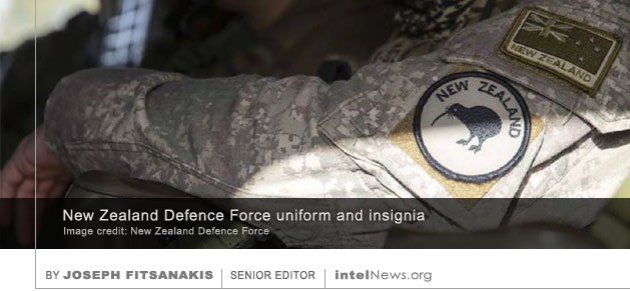
A JUDGE IN NEW Zealand rejected on Monday a request by news media to lift the ban on the identity of a soldier, who was arrested nearly two years ago for allegedly spying for a foreign country. The soldier was arrested in December of 2019, and is being prosecuted under New Zealand’s 1961 Crimes Act. It is the first time in the post-Cold War era that this act has being used to prosecute someone in New Zealand.
The accused is facing a total of 17 charges, including six counts of espionage and attempted espionage, three counts of accessing a computer system for a dishonest purpose, and two counts of possessing an objectionable publication. The latter charge is believed to relate to the accused’s alleged connection with far-right and white nationalist organizations in New Zealand and possibly Australia. This claim has not been confirmed, however.
Since the arrest of the soldier, his name, as well as that of his wife and of multiple witnesses for the government, have been suppressed by the court. Importantly, the country for which the accused allegedly spied for has also been suppressed. This was done at the request of the government of New Zealand, which claims that doing otherwise could imperil “the defense and security of New Zealand”. The government also argues that naming the country for which the accused is believed to have spied could harm New Zealand’s diplomatic relations with that country.
On Monday, during a pre-trial court-martial hearing in Palmerston North, in which the suspect appeared via video-link, the chief judge in the case decided to extend the suppression of the information about the identity of those involved. The judge, Kevin Riordan, said that the name suppression would be extended at least until the next pre-trial hearing, which has not yet been scheduled. The trial was initially due to begin on October 6, but has been postponed indefinitely, due to complications arising from the use of classified evidence that the government’s lawyers intend to present during the court case.
► Author: Joseph Fitsanakis | Date: 27 September 2021 | Permalink
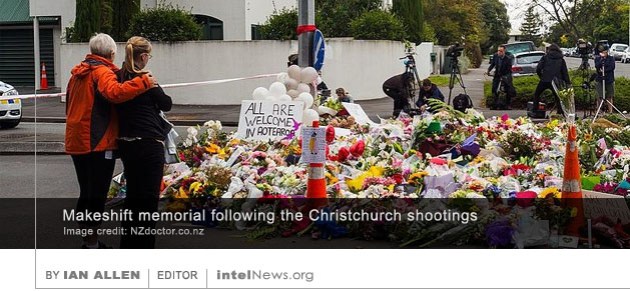 An Australian far-right militant, who killed 51 people at two mosques in New Zealand in 2019, used a commercial drone to spy on his targets and plan his attack months in advance, according to newly released information. On March 15, 2019, Brenton Tarrant killed a total of 51 people at the Al Noor and Linwood mosques, in the city of Christchurch. Using an AR-15 rifle, Tarrant, 29, shot his victims one by one, before being stopped by police as he was on his way to a third mosque in the area.
 The spy agency of New Zealand broke into at least three foreign embassies in Wellington at the request of the United States and Britain, according to an investigative report by the country’s public radio broadcaster. Radio New Zealand reported on Tuesday that the highly controversial break-ins targeted the Indian High Commission and the Iranian Embassy in the late 1980s and early 1990s. A few years earlier, the New Zealand spy agency had allegedly broken into the Czechoslovakian embassy in Wellington.
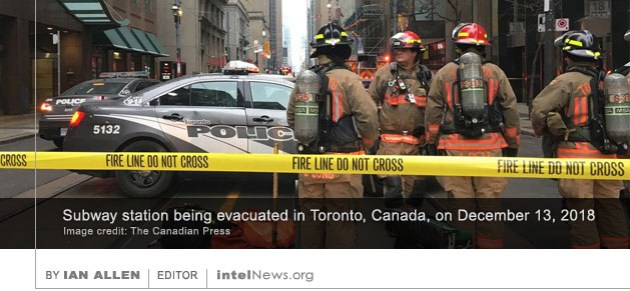 An unprecedented “flood of bomb threats” prompted hundreds of evacuations and closures of private buildings, transport hubs and offices in four countries on Thursday, causing confusion and in some cases panic. The threats —which numbered in the hundreds— were issued throughout the day Thursday against businesses, schools, hospitals and media companies in the United States, Canada, New Zealand and the United Kingdom. It is the first time in history that such a large wave of bomb threats was issued against so many targets internationally.
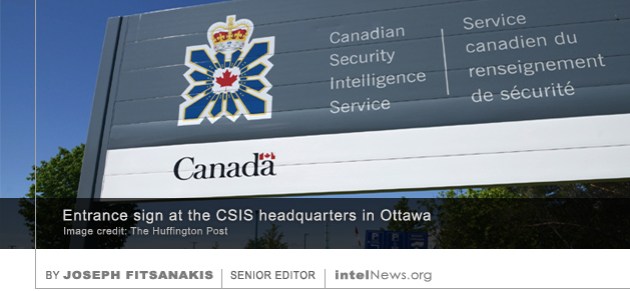 China’s influence in New Zealand is so extensive that it threatens the traditionally close intelligence contacts between New Zealand and its Western allies, according to a report written by the Canadian spy agency. Since World War II, New Zealand has been a member of what is sometimes referred to as the UK-USA Security Agreement. Known also as the UKUSA Agreement or the Five Eyes alliance, the pact, which was strengthened in 1955, provides a multilateral framework for intelligence cooperation between the United Kingdom, the United States, Canada, Australia, and New Zealand. But a new report produced by Canadian intelligence warns that Chinese political and economic influence in New Zealand is making it difficult for the Pacific Ocean island country to continue to operate within the framework of the agreement.
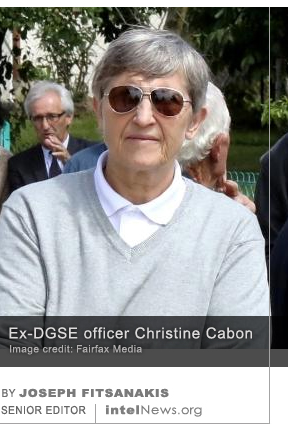 A French spy who infiltrated the environmentalist group Greenpeace and in 1985 helped bomb the organization’s flagship, the Rainbow Warrior, has spoken to the media for the first time. The British-based activist organization had purchased the trawler from the British government in 1977 and used it to carry out maritime research and other operations. In July 1985, the Rainbow Warrior, captained by the American environmental activist Peter Wilcox, was docked at the port of Auckland, New Zealand. It was being prepared to lead a flotilla of vessels to the French Polynesian atoll of Mororoa, in order to try to stop a planned nuclear test by the French military.
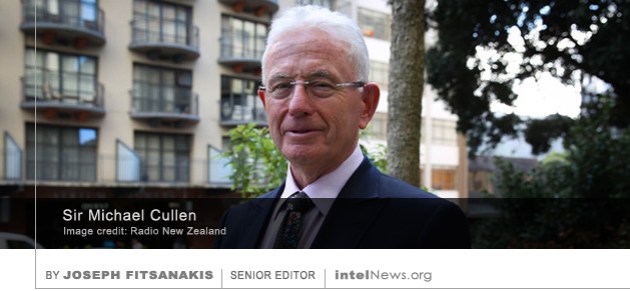 A former deputy prime minister of New Zealand, who is heading a major review of intelligence practices in the country, has said in an interview that spy agencies hurt their mission by practicing excessive secrecy. Sir Michael Cullen served as finance minister, education minister and attorney-General before serving as deputy prime minister of New Zealand, from 2002 to 2008. He was recently appointed by the government to co-chair a broad review of state intelligence agencies, with particular focus on updating the applicable legislative framework and evaluating the oversight exercised by lawmakers and the executive. The review is expected to affect the work of New Zealand’s two most visible intelligence agencies, the Security Intelligence Service and the Government Communications and Security Bureau.

 By IAN ALLEN | intelNews.org







 intelNews.org
Soldier with far-right links becomes first convicted spy in New Zealand history
August 19, 2025 by Joseph Fitsanakis 1 Comment
According to reports, a member of the New Zealand Defence Force, who has not been named, drew the attention of the authorities in the aftermath of the 2019 Christchurch shooting. The attack was carried out by Australian white supremacist Brenton Tarrant, who stormed a mosque with an automatic weapon, killing 51 and injuring nearly 100 people. The terrorist attack sparked a widespread investigation into far-right militancy in the Australian and New Zealand armed forces, which continues to this day.
The soldier was found to have contacts with a number of local far-right groups, including the Dominion Movement and Action Zealandia. Government prosecutors said that, while observing the soldier’s activities, government agents found out that he had “made contact with a third party, indicating that he was a soldier” and signaling his desire to defect to a foreign country. They eventually approached the soldier using an undercover officer who pretended to be a representative of the country whose officials the soldier had previously contacted. The soldier told the undercover officer that he was prepared to “get a covert device into army headquarters” and offered to provide “mapping and photographs” of classified government facilities.
During his trial, the soldier pled guilty, admitting that he had tied to spy for a foreign government, and adding that his ultimate goal was to “leave New Zealand and get to what I thought was safety”. Following the soldier’s conviction, the three-judge military panel said it would announce the sentence later this week. The country for which the convicted soldier offered to spy has not been named.
► Author: Joseph Fitsanakis | Date: 18 August 2025 | Permalink
Filed under Expert news and commentary on intelligence, espionage, spies and spying Tagged with Bill Sutch, Christchurch (New Zealand), counterintelligence, espionage, New Zealand, New Zealand Defence Forces, News, William Sutch