 WEST GERMAN SPIES INFILTRATED the trial of Adolf Eichmann, one of the architects of the Holocaust, in order to limit its damage on the reputation of senior West German politicians who had a Nazi past. Eichmann was the lead author of the system of mass deportation of Jews from ghettos in Nazi-occupied Europe to extermination camps, where millions of them were brutally killed. In 1960, after years of hiding, he was captured in Argentina by agents of the Mossad, Israel’s covert-action agency, and secretly transported to Israel, where he was put to trial and eventually hanged.
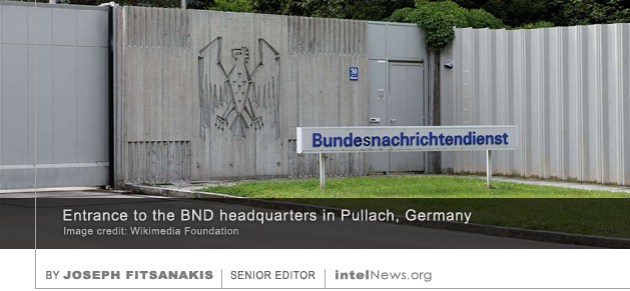
Since 2011, new files on the West German response to Eichmann’s abduction and trial have been uncovered by the Independent Commission of Historians to Research the History of the Federal Intelligence Service, 1945-1968. The Independent Commission consists of professional historians, who have been granted near-complete access into the archives of Germany’s Federal Intelligence Service (BND). Known as Bundesnachrichtendienst, the BND conducts foreign intelligence, making it Germany’s equivalent of the United States Central Intelligence Agency. The project has been praised as a rare case of openness and transparency in historical research into the activities and operations of a still-functioning intelligence agency.
Led by Professor Klaus-Dietmar Henke, the Independent Commission has published 15 volumes of research on the BND. The latest release concerns (among other things) Hans Globke, a senior official in Germany’s Nazi-era Ministry of the Interior, who was eventually appointed to the Office for Jewish Affairs. From that post, Globke helped draft the legislation, known as the Nuremberg Race Laws of 1935. These laws gave legal sanctuary to the exclusion of Germany’s Jewish population from political, commercial and other social activity. The same laws were eventually used to confiscate assets belonging to Jewish German citizens.
After the war, Globke closely aligned himself with the British forces and became testified as a witness in the prosecution of senior Nazi war criminals. He rebuilt his political career, initially on the local level, and eventually as Chief of Staff to the Office of the Chancellor of West Germany. He also served as West Germany’s Secretary of State, promoting a pro-Atlanticist foreign policy that closely aligned Western Germany with the United States.
According to the latest release by the Independent Commission, Globke tasked the BND with infiltrating Eichmann’s trial, in order to limit the details exposed about the Nazi government during the trial proceedings. The primary goal of the operation, according to the new information, was to prevent even the mention of Globke’s name during Eichmann’s trial. If that was not achieved, the aim was to protect Globke’s reputation and shield the public from details about his Nazi past, especially relating to the Holocaust.
When asked about the revelation, a spokesperson for the BND refused to comment on it, saying only that “the draft results of the independent historical commission speak for themselves”. A spokesperson for the German federal government appeared to reject a call to withdraw a number of civilian medals and other honors that Globke was bestowed prior to his death. According to the spokesperson, German law does not have provisions for “posthumous withdrawal” of awards.
► Author: Joseph Fitsanakis | Date: 16 May 2022 | Permalink
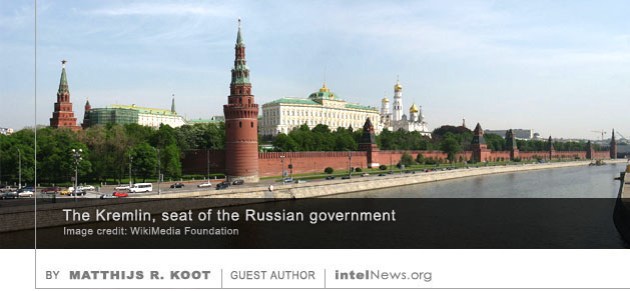 As intelNews reported earlier this week, a joint investigative effort by Dutch and Belgian media exposed details about a group of alleged Russian intelligence officers, who were expelled by Belgium and The Netherlands in March 2022. Dutch state broadcaster NOS and its flagship current affairs program, Nieuwsuur, aired the names, photos and backgrounds of 17 Russian intelligence officers, who were expelled from the Netherlands in March of this year. According to the Dutch government, the expelled diplomats were involved in counterintelligence and in espionage targeting the country’s high-tech sector.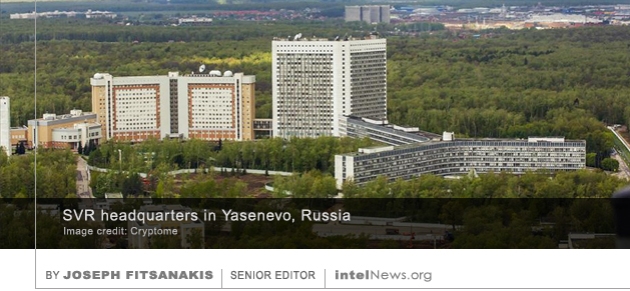
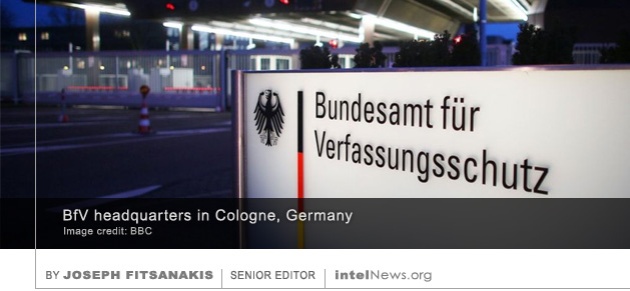 LAST SUMMER, GERMAN EMBASSY staff in Russia issued an entry visa to a Russian national, despite warnings by at least two European security agencies that he was a known intelligence officer, according to a report. The incident has fueled persistent allegations that Berlin’s counterintelligence posture against Russia is ineffective.
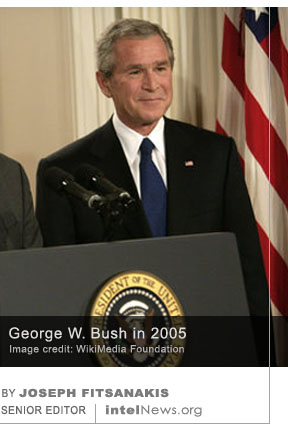 A TIP BY BELGIAN intelligence helped the Federal Bureau of Investigation foil a plot by Iraqi nationals to kill former United States President George W. Bush. American news outlets
 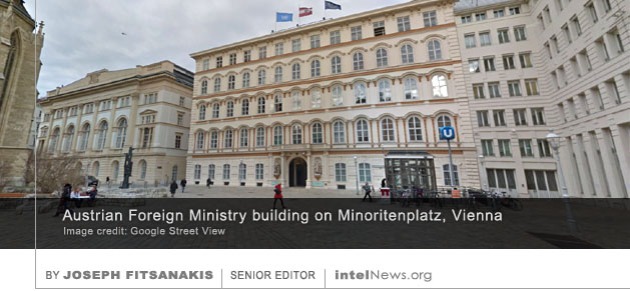 THE AUSTRIAN STATE HAS launched a probe into an attempt by alleged pro-Russian government officials in Vienna to create a brand new intelligence service in 2018, according to news reports. The effort did not succeed.
 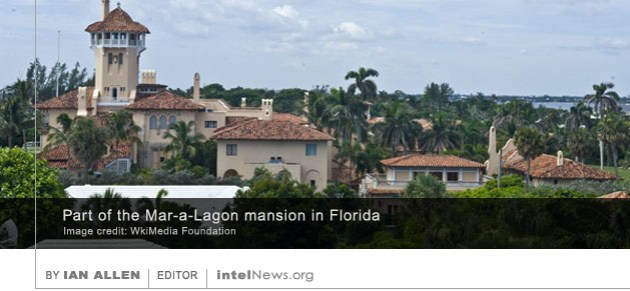 MULTIPLE NEWS OUTLETS CLAIMED on Wednesday that Monday’s search by authorities of a Florida residential compound belonging to former United States President Donald Trump was based on information provided to the Federal Bureau of Investigation by a confidential human source. The source reportedly gave the FBI details about a number of classified documents that were allegedly hidden in Trump’s Florida estate, as well as their precise location.
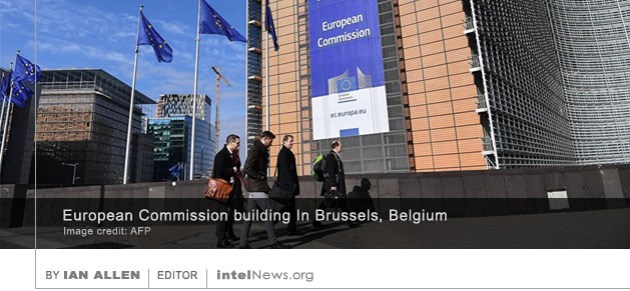 THE POLITICAL FALLOUT OF the Russian invasion of Ukraine is prompting the European Union (EU) to radically upgrade the security of its facilities, according to a series of internal memoranda. On July 14, the EUObserver, an EU-focused news agency based in Brussels,
 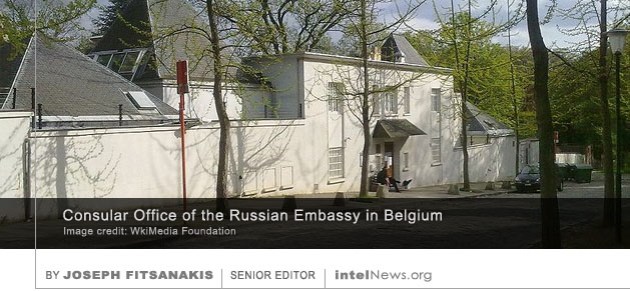 A BRUSSELS-BASED NEWSPAPER has publicized the names and backgrounds of nearly two dozen Russian diplomats, who were recently expelled by the Belgian government on suspicion of espionage. A total of 21 Russian diplomats were expelled from Belgium in April, in co-ordination with dozens of European governments. The move was part of a broader European wave of diplomatic expulsions of Russian diplomatic personnel, in response to the Russian invasion of Ukraine.
 diplomats are expelled in a possible tit-for-tat move by an adversary. It is therefore highly unusual for information concerning expelled diplomatic personnel to be made public. And yet that is precisely what happened earlier this week, when the EUObserver, an English language newspaper based in Brussels, published
  EUObserver said that some of the information about the alleged spies was unearthed by The Dossier Center, a British-based open-source information outlet, which is similar to Bellingcat. The Dossier Center is funded by the oligarch Mikhail Khodorkovsky, who is a critic of the Russian President Vladimir Putin.
 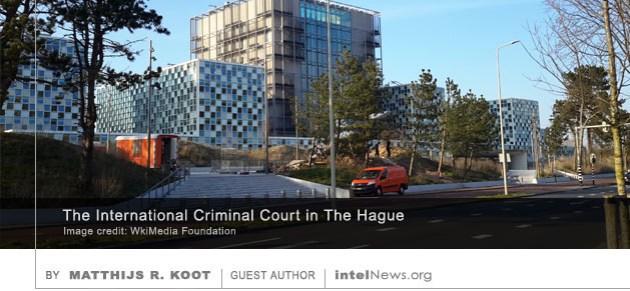 ON JUNE 16, THE Dutch General Intelligence and Security Service (AIVD)
  A GROWING NUMBER OF security observers point to Israel as the most likely culprit behind the assassination of a leading member of the Islamic Revolutionary Guard Corps (IRGC), Iran’s powerful paramilitary force. Brigadier General Hassan Sayyad Khodaei, who was killed in broad daylight in Tehran on May 22, served as deputy director of the Quds Force, a major branch of the IRGC. The mission of the Quds Force is to carry out unconventional warfare, especially in support of IRGC operations against adversaries abroad.
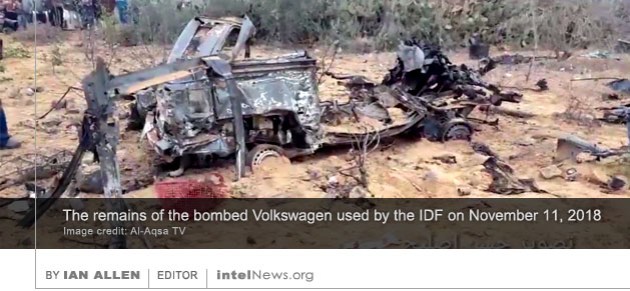 IN A RARE MOVE, Israel released the identity last weekend of a special operations officer who was killed by Islamic Hamas during a 2018 covert mission in the Gaza Strip. As intelNews
 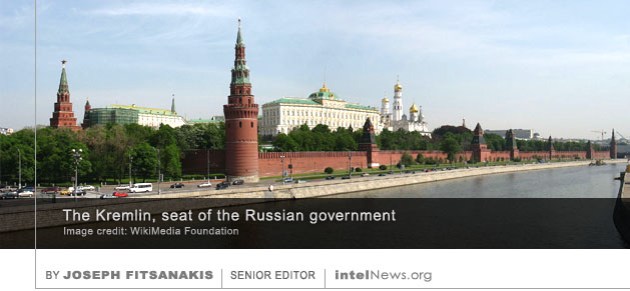 A SERIES OF LARGE-scale incidents of destruction, which have been occurring across Russia in recent days, are prompting speculation that the county may be experiencing a wave of attacks against its strategic infrastructure. The incidents include enormous fires at power plants, munition depots and state-owned storage facilities. The collapse of at least one railway bridge has also been reported. There are additional reports of massive wildfires raging across Siberia, which are imposing heavy demands on Russia’s emergency response infrastructure.
 A NEWLY DISCOVERED CYBER-espionage group appears to target the senior leadership of private corporations involved in large-scale financial transactions, but employs skills and methods that are usually associated with state-sponsored threat actors. The group has been termed “UNC3524” by the American cybersecurity firm Mandiant, which says it discovered it in December of 2019. In a detailed






 intelNews.org
A dramatic kidnap case in Malaysia may point to changes in Mossad’s tactics
October 24, 2022 by intelNews 2 Comments
Omar al-Balbaisi completed a bachelor’s degree in computer science at the Islamic University in Gaza, where he allegedly joined the Izz-ad-Din Al-Qassam Brigades, specializing in hacking mobile phones. In or around 2020, al-Balbaisi left the Gaza Strip for Istanbul, where, according to reports, a Hamas secret intelligence and cyber unit was established in 2020. The unit allegedly operated on instructions from the Hamas leadership in Gaza, without the knowledge of the Turkish authorities.
When al-Balbaisi was kidnapped, he was reportedly returning from lunch with another Palestinian expatriate. According to the report, a white van drove toward the two men. Four people emerged from the van, grabbed al-Balbaisi and dragged him into the vehicle, while yelling at him: “our boss wants to talk to you”. The other Palestinian tried to help al-Balbaisi, but was warned to stay away from the scene. He subsequently filed a report at a police station, reportedly about 40 minutes after his friend was kidnapped.
According to the reports, the kidnapped Palestinian was taken bound and blindfolded to a safe house, where his Malaysian captors tied him to a chair. They then called two men, allegedly Israelis, who told the abductee: “you know why you are here”. According to another report, al-Balbaisi was interrogated, allegedly by two Israelis, believed to be Mossad agents, via a video call. However, the video call was disconnected when Malaysian police officers broke into the safe house.
Upon receiving the information about the kidnapping, Malaysian police immediately sought to locate al-Balbaisi. They subsequently managed to raid the house where the Palestinian was being held, while his interrogation was underway. A source told the Malaysian newspaper that “the Israelis wanted to know about [al-Balbaisi’s] experience in the field of software, about the strengths of Hamas in this field, and the members of the Izz ad-Din al-Qassam Brigades that he knew”. Read more of this post
Filed under Expert news and commentary on intelligence, espionage, spies and spying Tagged with abductions, Hamas, Israel, Izz ad-Din al-Qassam, Lexington Books, Malaysia, Mossad, News, Omar al-Balbaisi, Palestine