News you may have missed #704: Caught-red-handed edition
March 30, 2012 Leave a comment
 By IAN ALLEN | intelNews.org |
►►Would be CIA spy uses Tweeter to attack CIA. Lynnae Williams was on track to become a CIA agent. Today, the 35-year-old aspiring journalist and would-be CIA spy uses Twitter to expose what she feels are corrupt and unethical practices by the mysterious organization. In 2009, Williams spent more than three months training to become a CIA spy. She says she was sent to the CIA’s “psychological prison”, a public mental-health hospital in Virginia. There, she says, doctors pushed drugs for schizophrenia and manic depression in a white-walled environment with inedible food. Eventually, the CIA stopped paying her and suspended her security clearance. She’s now looking to sue the agency for wrongful termination. And in the meantime, she’s using BlogSpot and her @wlynnae account to post tweets.
►►US ambassador says Russia is spying on him. US Ambassador to Russia Michael McFaul suggested yesterday that the Russian government is spying on him. “Everywhere I go [Russian television station] NTV is there”, he tweeted. “Wonder who gives them my calendar? They wouldn’t tell me. Wonder what the laws are here for such things? I respect [the] press’ right to go anywhere and ask any question. But do they have a right to read my email and listen to my phone?”. McFaul also posted on his Twitter feed yesterday: “When I asked these ‘reporters’ how they knew my schedule, I got no answer”.
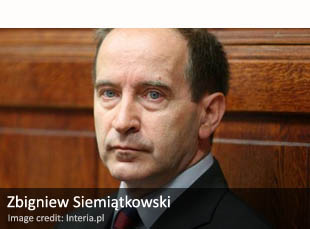
►►Poland ex-spy boss charged over CIA prison. Zbigniew Siemiątkowski, the former head of Poland’s foreign intelligence service faces charges of illegal detention and use of corporal punishment at an alleged secret CIA ‘black site’ used to house high-ranking terrorism suspects. Investigators allege the spy boss exceeded his powers and breached international law through the use of “unlawful deprivation of liberty” and “corporal punishment” against prisoners of war.

















Senior Soviet KGB ex-official found dead in Moscow apartment
April 2, 2012 by Joseph Fitsanakis 1 Comment
Leonid Shebarshin, a retired General of the KGB, who was often referred to as “the last Soviet spy” was found dead in his downtown Moscow apartment over the weekend. Police said a pistol and an apparent suicide note were found next to his body. In a separate statement on Saturday, law enforcement investigators said Shebarshin had shot himself. Born in 1935, Shebarshin was posted as an interpreter at the Soviet embassy in Islamabad, Pakistan, shortly after graduating from the Moscow Institute of International Relations. He eventually became personal assistant to the Soviet Ambassador to Pakistan, who recommended him to the KGB. Shebarshin returned to Moscow in 1962 to attend the KGB’s training school, before being sent back to Pakistan in 1964, this time as an intelligence officer. In 1975, he moved to India, where he became rezident (station chief) of the KGB’s field station in New Delhi. Two years later he was transferred to the KGB’s field station in Tehran, Iran, which he headed through the 1979 Islamic Revolution. In 1982, however, his meteoric rise within the ranks of the KGB was temporarily halted by the defection of Soviet Vladimir Kuzichkin, a Major in the KGB, who escaped to Turkey with the help of the British Secret Intelligence Service —also known as MI6. The British brought Kuzichkin in contact with the CIA, which in turn passed along the defector’s debriefing notes to the government of Iran. This information led to the summary expulsion from Tehran of nearly 20 Soviet KGB field officers, including Shebarshin himself. After a brief period in Moscow, Shebarshin returned to the field, this time to Soviet-occupied Afghanistan, where he traveled at least 20 times. He was in Russia on August 19, 1991, during the so-called ‘August coup’, when a group of hardline communist officials took power in Moscow and temporarily arrested Soviet Premier Mikhail Gorbachev. But, even though he headed the KGB’s First Chief Directorate (now renamed to Foreign Intelligence Service), Shebarshin persisted in remaining neutral during the coup, and spent all of August 19 playing tennis at his summer residence. Read more of this post
Filed under Expert news and commentary on intelligence, espionage, spies and spying Tagged with 1991 Soviet coup d'etat, Cold War, defectors, diplomatic expulsions, history, KGB, KGB First Chief Directorate, Leonid Shebarshin, News, obituaries, Soviet embassy in India, Soviet embassy in Iran, Soviet embassy in Pakistan, USSR, Vladimir Kuzichkin