New book claims former Irish head of government was Provisional IRA informant

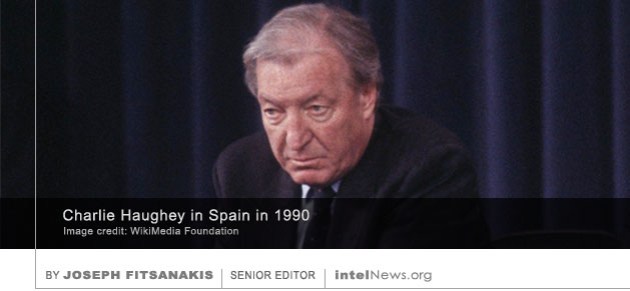
Charlie HaugheyA NEW BOOK BY a veteran Irish journalist claims that the late Taoiseach (prime minister and head of the government of Ireland) Charlie Haughey was in effect an informer of the Provisional Irish Republican Army in the 1960s and 1970s. Written by Kevin O’Connor, the longtime political correspondent of The Sunday Independent, the book also claims that Haughey maintained regular contact with the leadership of the IRA throughout the 1970s.
From the mid-1960s and until his retirement in the early 1990s, Haughey was a towering —and controversial— figure in Irish politics. He was first elected to the Dáil Éireann (Ireland’s parliament) in 1957 with Fianna Fáil, one of Ireland’s two major centrist political parties. Throughout his career, he served as Taoiseach from 1979 to 1981, for a short period in 1982, and from 1987 until his retirement in 1992. He also held scores of ministerial appointments in the 1970s and 1980s.

Haughey’s political career almost ended in 1970, when the so-called ‘arms crisis’ nearly brought down the Irish government. It was sparked by allegations that leading members of the Irish government were involved in a conspiracy to smuggle weapons to British-held Northern Ireland, in an effort to support the activities of the IRA. During the ensuing investigation, Haughey was found to have met with Cathal Goulding, who as chief of staff for the IRA. Consequently, Haughey was among several cabinet ministers who were either fired or voluntarily resigned in the aftermath of the arms crisis.

During the lengthy trial that followed the explosive allegations, Haughey claimed that his meeting with Goulding was nothing more than an unplanned encounter. He was eventually found not guilty. But many were doubtful about his innocence, and there were numerous claims that the Irish government —even the Taoiseach at the time— were fully aware and supportive of the conspiracy.

Now a new book by O’Connor, titled Political Betrayal: How Charlie Haughey Acquired €70 Million, claims that Haughey was closer to the IRA than even his staunchest critics realized. The allegations are based on what the author says are documents from the archives of the Special Branch Unit of the Garda Síochána, the police service of Ireland. The documents allegedly reveal that Haughey was routinely sharing classified information to the IRA, including warnings about government spies that operated within the organization.

In one instance, Haughey allegedly reached out to the IRA for assurances that they would not harm famous English artists who were living in Ireland at the time. Several artists moved there in the 1970s in order to take advantage of the country’s laws guaranteeing tax-free status for artists. This scheme was the brainchild of Haughey, and he was eager to ensure that it did not backfire. Among the famous artists who had taken advantage of these laws was the English journalist and novelist Frederick Forsyth, author of —among other books— The Day of the Jackal, who was a critic of the IRA. According to O’Connor, Haughey feared that the IRA might harm or kidnap Forsyth. But the militant group assured Haughey that Forsyth would not be harmed.

Haughey eventually left politics in 1992, when the government he was leading at the time was found to have illegally wiretapped the telephone lines of at least three investigative journalists. He never returned to politics. Despite his ungraceful fall from power, Haughey continues to be revered among Fianna Fáil supporters in Ireland today.

Author: Joseph Fitsanakis | Date: 09 December 2021 | Permalink

Updated: France arrests, then releases, alleged assassin of Jamal Khashoggi

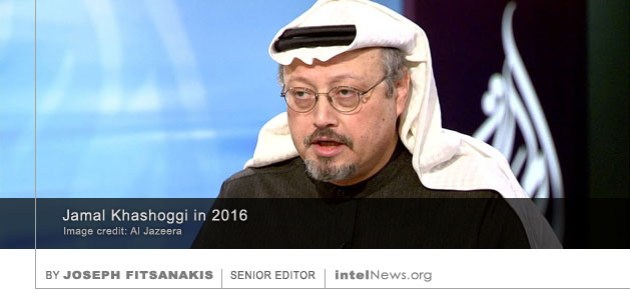
Jamal KhashoggiAN ALLEGED MEMBER OF the assassin squad that killed and dismembered Saudi journalist Jamal Khashoggi in Turkey in 2018, is reportedly under arrest in France, where he was caught trying to board an international flight. Khashoggi, 59, was a Saudi government adviser who became critical of the Kingdom’s style of governance. He moved to the United States and began criticizing Saudi Arabia from the pages of The Washington Post. He was killed on October 2, 2018, by a 15-member Saudi hit squad while visiting the Saudi consulate in Istanbul, Turkey. He had gone there to be issued a certificate of divorce from his former wife in Saudi Arabia.
After several weeks of vehemently denying any role in Khashoggi’s killing, the Saudi government eventually admitted that the journalist was killed inside the Saudi consulate in Istanbul. One of Khashoggi’s alleged killers is Khaled Aedh Alotaibi (or al-Otaibi), a 33-year-old member of the Saudi Royal Guard Regiment, whose mission is to protect the Saudi royal family. Alotaibi has been barred from entering several Western countries, including the United States and the United Kingdom. But Saudi Arabia has rejected a request by Turkey to extradite him to face charges in a Turkish court. The oil kingdom argues that Alotaibi was not among a group of “rogue” intelligence officers” who killed Khashoggi, and have since been punished under Saudi law.

Yesterday several French media outlets reported that Alotaibi had been arrested at the Paris Charles de Gaulle Airport at 9:30 am local time, as he was about to board a commercial flight to the Saudi capital Riyadh. He was apparently traveling under his real passport and not under an assumed identity. He has since been placed under judicial detention, while French authorities are trying to confirm that he is the same person who is wanted for the killing of Khashoggi. If this is confirmed, Alotaibi will be facing a preliminary hearing this week, and a French court will have to decide whether he will be extradited to Turkey.

In a statement published late on Tuesday, the Saudi embassy in France dismissed Alotaibi’s arrest as “a case of mistaken identity” and repeated the official Saudi government stance that all those who participated in Khashoggi’s murder have already faced justice in Saudi Arabia. It is worth noting that Alotaibi’s arrest occurred just days after French President Emmanuel Macron became the first major Western leader to openly meet with Saudi Arabia’s Crown Prince Mohamed Mohammad Bin Salman. The de-facto ruler of the country is believed by many to have ordered Khashoggi’s assassination.

Update: Early on Wednesday, French prosecutors said that the warrant issued by Turkey for the arrest of Alotaibi did not apply to the individual arrested on Tuesday. In a statement released to the press, the prosecutor’s office said: “Extensive checks on the identity of this person showed that the warrant did not apply to him. [Therefore] he was released”.

Author: Joseph Fitsanakis | Date: 08 December 2021 | Permalink

Turkey launches investigation after explosive found under Erdoğan guardsman’s car

Nusaybin TurkeyTURKISH AUTHORITIES HAVE LAUNCHED an investigation after a makeshift explosive device was found under the car of a police officer guarding an open-air speech by President Recep Tayyip Erdoğan. The rally took place on Saturday in Siirt, a Kurdish-majority town located about 90 miles from the Turkish-Syrian border. The town has a symbolic significance for Erdoğan, as it is the hometown of his wife, Emine Erdoğan, and was his constituency for four years. In 2003 he won a by-election there and entered the Turkish Grand National Assembly as a member.

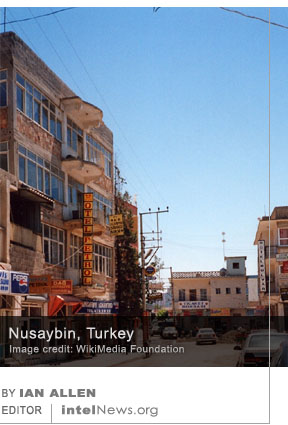
According to pro-government Turkish media, the makeshift bomb was affixed to the undercarriage of a private car. The car belongs to a police officer in the city of Nusaybin (pictured), in the province of Mardin, which is situated on the Turkish-Syrian border. The explosive device was detected by a bomb squad on Saturday morning, as the police officer was preparing to depart for Siirt, where he was going to help secure an outdoor rally by Erdoğan. The purpose of the rally was to gather support for the embattled Erdoğan, as the Turkish economy is undergoing its most serious recession in a generation.

Turkish media said that a specialist bomb squad was dispatched to Nusaybin upon the discovery of the device, and defused it “in a controlled manner”. Later that day, Erdoğan began his speech at the rally in Siirt by mentioning the discovery of the device, saying that the “defeats suffered by the terrorists” were bound to prompt “confessions of treachery and meanness”, which will be “revealed in time”. Southeastern Turkey, where Siirt is located, is a stronghold of the Kurdistan Workers Party (PKK), an armed secessionist group that Turkey has been battling for nearly 40 years.

Author: Ian Allen | Date: 06 December 2021 | Permalink

Israeli Mossad targeted Iran nuclear plant with three-pronged assault, report claims

Natanz Iran

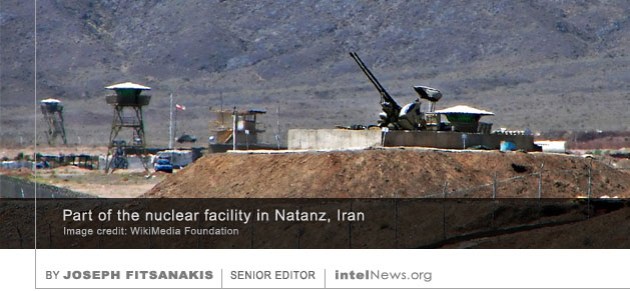
THE NATANZ ENRICHMENT FACILITY, which lies at the heart of the Iranian nuclear program, has repeatedly been the target of a multi-pronged sabotage operation by Israeli intelligence, according to a new report. The existence of the hardened fuel enrichment plant near the city of Natanz, in Iran’s Esfahan Province, was first acknowledged in 2002, when it was revealed by an Iranian whistleblower. In July 2020 and April 2021, Iranian authorities acknowledged that the facility had suffered major damage, reportedly due to acts of sabotage.

New a new report, published on Thursday in the London-based journal The Jewish Chronicle, claims that the Israeli agency Mossad was behind the sabotage in Natanz, which allegedly destroyed 90 percent of the plant’s nuclear centrifuges. The journal said that a team of over 1,000 technicians, intelligence analysts and operations officers was behind the attacks. The latter were carried out in a variety of ways that included infiltrating supply chains, recruiting Iranian scientists, and deploying a so-called suicide drone.

According to the The Jewish Chronicle, in 2019 the Mossad managed to infiltrate the supply chains used by Iran to build additions to several buildings and underground facilities in Natanz. Consequently, Israeli intelligence operatives posing as construction material wholesalers were able to supply building materials to Iranian government officials, which were “filled with […] explosives”. These were detonated remotely in July 2020, causing substantial damage to the nuclear plant.

At around the same time, Mossad officers posing as Iranian dissidents began recruiting Iranian scientists working at Natanz. The Chronicle cites an unnamed source who says that “the scientists’ motivations were all different” and that the Mossad offered each of them “what they deeply wanted in their lives”. The Mossad supplied the recruited scientists with explosives, which were dropped into the Natanz compound by drones, or smuggled inside boxes of catering supplies. The bombs were “remotely set off” in April 2021 and almost completely destroyed Natanz’s A1000 underground centrifuge hall, which is buried beneath 12 meters of reinforced concrete. Following the attack, 10 Iranian scientists were “spirited away to a safe location. All of them are safe today”, according to the unnamed source.

Two months later, a third attack was carried out, this time against a manufacturing facility of the Iran Centrifuge Technology Company in the city of Karaj, which is located 30 miles northwest of the Iranian capital Tehran. The attack was reportedly carried out with the use of a loitering munition —also known as a suicide drone— the size of a motorcycle. Mossad operatives had previously managed to smuggle the device into Iran in small components, which were then re-assembled.

The Chronicle reports that the attacks against the Natanz nuclear plant were carried out by Israeli spies without the participation of American intelligence agencies. The journal also claims that Israel recently put in motion “a new policy of launching covert attacks on Iranian soil in retaliation for its meddling in the region”. This means that “further undercover operations [inside Iran] are in the pipeline”, the report concludes.

Author: Joseph Fitsanakis | Date: 03 November 2021 | Permalink

European report claims Russia has retained Soviet-era assassination capabilities

Gävle Sweden

A REPORT FROM A European intelligence agency claims that the Russian state has retained the same capacity for worldwide extrajudicial executions that it had during the Soviet era. The report was disclosed by a Swedish broadcaster in association with the attempted murder of Tumso Abdurakhmanov, a blogger from the Russian province of Chechnya, who is a vocal critic of the Russian government and the Kremlin-backed governor of Chechnya, Ramzan Kadyrov.

Originally from the Chechen capital Grozny, Abdurakhmanov, 34, lives in Sweden, from where he regularly posts videos on YouTube criticizing Kadyrov and Russian President Vladimir Putin. His YouTube channel has over 250,000 followers. In 2020, a man who traveled to Sweden from Moscow, entered Abdurakhmanov’s apartment in Gävle, Sweden, and tried to kill him with a hammer. It appears that the man was let into Abdurakhmanov’s apartment by a woman with whom Abdurakhmanov had a relationship at the time, and is now believed to have been an accomplice of the would-be-assassin.

Abdurakhmanov survived the attack. The attacker, Ruslan Mamaev, is now serving a 12-year prison sentence, while the woman, Elmira Chapiaeva, is serving an 18-month sentence. Swedish authorities say they are looking for third person, who is believed to have been the would-be-assassins’ logistical link to the Chechen government, and remains at large. According to the Swedish Security Service, known as SÄPO, the operation to kill Abdurakhmanov was organized in Moscow in 2019.

In association with Abdurakhmanov’s attempted assassination, the Swedish broadcaster SVT published yesterday excerpts from an intelligence report, which offers a broad assessment of the Kremlin’s capabilities for extrajudicial killings around the world. According to the SVT, the report was produced by an unnamed “European intelligence agency”. It claims that many of the “instigators, planners, coordinators and operatives of [Russian-organized] extrajudicial killings are usually found in the special units [spetsnaz] of the National Guard of the Russian Federation”. This is primarily the case with spetsnaz units based in Chechnya, according to the report.

The conclusion of the report is that Russia “today has the same capacity as the Soviet Union once had to conduct assassination operations sanctioned by the state” around the world. The Kremlin has used this capability to carry out numerous assassinations and attempted assassinations of dissident expatriates, defectors, and other critics of the Russian government in Europe and beyond, the report concludes.

Author: Joseph Fitsanakis | Date: 02 December 2021 | Permalink

Underground network of spies helped Taliban score decisive victory in Afghanistan

Taliban

THE TALIBAN RELIED ON an extensive network of intelligence operatives and sleeper agents in major Afghan cities, in order to sweep to power with stunning ease last summer, according to a new report. These networks of spies had infiltrated state agencies and civil society organizations throughout Afghanistan over many years. They were quickly able to neutralize opponents of the Taliban from the inside when commanded to do so, according to the Wall Street Journal.

In a lengthy exposé published on Sunday, the newspaper said that Taliban spies had managed to successfully penetrate most government ministries, military and security bodies, as well as business entities over several years. Many Taliban operatives were also present within universities and even inside Western-funded aid organizations, especially those were headquartered in the Afghan capital Kabul, according to the Wall Street Journal.

The two authors of the report, Yaroslav Trofimov and Margherita Stancati, said they spoke about the Taliban’s spy network with Mawlawi Mohammad Salim Saad, a senior Taliban commander who belongs to the Haqqani Network. The Haqqani Network is a Sunni militant group that works closely with the Taliban, but has retained its operational independence over several decades. Saad told the Wall Street Journal that Taliban spies had posed as ordinary Afghan citizens, living in large urban centers without arousing suspicion from other Afghans or foreigners. Most of them had been specifically instructed by their Taliban handlers to adopt Western customs, such as wearing jeans and shaving their beards, said Saad.

But on August 15 of this year, large units of Taliban sleeper agents received simultaneous instructions to access hidden caches of weapons and neutralize government personnel in strategic locations around the country. The Wall Street Journal discusses the example of one such unit of Taliban spies, who quietly stormed a government compound in downtown Kabul and disarmed the stunned guards. Several of these units had specific instructions to stop government personnel from destroying classified and other sensitive documents as the state around them collapsed, according to the article.

Author: Joseph Fitsanakis | Date: 30 November 2021 | Permalink

Trump transition was ‘far and away’ most difficult in CIA history, internal report claims

Donald Trump CIA

THE PERIOD IMMEDIATELY FOLLOWING the electoral victory of Donald Trump in 2016 was “far and away the most difficult” transition between administrations in the history of the Central Intelligence Agency (CIA). This is the conclusion of a recently declassified CIA analysis of how American presidents-elect are briefed. The term ‘president-elect’ refers to individuals who have won the US presidential election, but have yet to assume the presidency. Presidents-elect are briefed by the CIA during the transition period, which typically lasts about 75 days, from early November until late in January of the following year.

The CIA analysis appears in the most recent edition of Getting to Know the President: Intelligence Briefings of Presidential Candidates and Presidents-Elect, 1952–2016. It is authored by John L. Helgerson, a 38-year veteran of the CIA, who retired in 2009 as the Agency’s Inspector General. The volume contains lessons learned by analysts who briefed presidents-elect in over sixty years. Chapter nine of the book, which contains an assessment of Trump as president-elect, was released [pdf] last week.

The chapter chronicles some of the challenges faced by the CIA in the days immediately after Trump’s electoral victory in 2016. Such challenges included CIA analysts having to wait for over a week for the Trump team to begin communicating them, its members “apparently having not expected to win the election”. Additionally, the Trump transition team had not thought of a way to safeguard printed documents shared with them by the CIA, which necessitated the Agency having to install a safe in the Trump transition team’s headquarters.

Eventually, president-elect Trump began receiving the President’s Daily Brief (PDB), a highly sensitive classified document produced each morning for the eyes of the president, vice president and a limited number of senior administration officials. However, unlike his vice-president elect, Mike Pence, Trump did not read the PDB, and eventually told the CIA he wanted a less text-heavy approach to the document if he was going to read it. The CIA complied with the request, as it tries to adapt its briefing method to the intelligence consumers’ preferred mode. Read more of this post

US intelligence reports suggest possible Russian military invasion in Ukraine

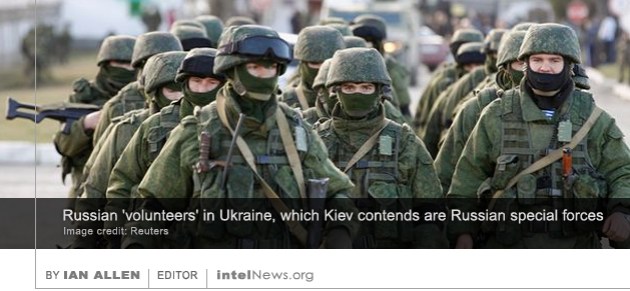
UkraineINTELLIGENCE OFFICIALS IN THE United States are becoming increasingly convinced that Russia is contemplating extensive military action in Ukraine, according to Western insiders. Russian troop concentrations near the Ukrainian border have been “large and unusual” for several weeks, according to observers.

The New York Times reports that American intelligence assessments do not view war in Ukraine as an inevitable outcome of Moscow’s military maneuvers in western Russia. In fact, many suggest that Russian President Vladimir Putin “has not yet decided” how to proceed in Ukraine. Nevertheless, “all the pieces are in place” for a large-scale military invasion, according to experts who spoke to The Times.

The number of American intelligence observers who believe that Moscow’s military maneuvers may represent a bluff is gradually shrinking. Some believe that the Kremlin’s goal is to establish command over a larger and more unified landmass than the one it currently controls in southeastern Ukraine, and thus secure a contiguous land linking Russian soil with the territory it occupies in Ukraine.

Washington has been sharing intelligence on this fast-changing situation with Ukraine, while also briefing its North Atlantic Treaty Organization partners. Last week, the United States Director of National Intelligence Avril Haines visited Brussels for discussions with NATO ambassadors. The unusual visit to Russia by Central Intelligence Agency Director William Burns, which took place in early November, may also be connected to the rising tensions in Ukraine, according to The Times.

Author: Ian Allen | Date: 22 November 2021 | Permalink

Sweden arrests second suspect in high-stakes espionage case involving Iran

Säpo sweden

AUTHORITIES IN SWEDEN HAVE arrested a second suspect in an espionage case that appears to implicate Iranian agents operating inside some of the most secretive units of Swedish civilian and military intelligence. The most recent arrest was announced on Tuesday with statement by the Swedish Security Service (SÄPO), which said that an individual had been arrested in “central Sweden”.

The statement gave no further information about the suspect’s identity, but said that the suspect had been charged with “aggravated espionage”. It added that the arrest was connected with “a similar case” that led to an arrest of an intelligence officer in September, also connected to espionage. The “similar case” mentioned in the statement refers to the arrest of Peyman Kia, a senior civil servant and former intelligence officer, who was arrested in a pre-dawn raid on September 20 of this year.

Kia is believed to have been an officer in SÄPO, as well as in the Office for Special Information Gathering (KSI) of the Swedish Military Intelligence and Security Service (MUST). The KSI is reportedly among the most sensitive branches of the MUST. According to a number of reports in the Swedish media, Kia is of Iranian origin and is accused of having provided Iran with intelligence information. Specifically, he is “suspected of having committed serious crimes against the security of the Swedish state during the period 2011–2015”, according to reports.

The most recent arrest is reportedly directly connected with that of Kia. Swedish counterintelligence officials have described these cases as “complex”, adding that they have been “working on them for a long time”. If the charges hold in court, it will make this the first espionage affair affecting an employee of SÄPO since 1979.

Author: Joseph Fitsanakis | Date: 18 November 2021 | Research credit: A. | Permalink

Recent conviction of Chinese spy in a US court could be game changer, say insiders

Chinese Ministry of State Security

THE RECENT CONVICTION OF a Chinese intelligence officer for espionage in a United States court could be a “seminal moment” for American counterintelligence, according to several former intelligence professionals. They spoke to The Daily Beast’s Shannon Vavra about the case of Yanjun Xu, who is also known as Qu Hui or Zhang Hui. As intelNews and others reported last month, Xu is a deputy division director in the Ministry of State Security (MSS) —China’s intelligence agency.

Xu was arrested by Belgian police in April 2018, while attempting to meet an employee of GE Aviation, a subsidiary of General Electric, whom he had allegedly tried to recruit at an academic conference in China in 2017. The Belgians extradited Xu to the United States, where he was indicted by a federal grand jury for conspiring to commit acts of economic espionage against GE Aviation. During the trial, which took place in Cincinnati, prosecutors successfully made the case that Xu’s espionage activities were part of a broader 10-year plan by the MSS to spy on aviation manufacturers around the world.

Xu’s extradition marked the first time that an employee of a Chinese intelligence agency was tried on American soil. His conviction could be a game changer, says to Bill Evanina, who was director of the United States National Counterintelligence and Security Center until earlier this year. Evanina told The Daily Beast that the case against Xu will almost certainly serve as a “legal template for future cases” by the United States government against Chinese espionage. Evanina’s view was echoed by Jim Olson, former Chief of Counterintelligence for the Central Intelligence Agency. He told The Daily Beast that Xu’s arrest, extradition and conviction “is a huge shakeup for the MSS” and its impact on how China conducts its espionage operations against the United States will be “tremendous”.

Meanwhile China has rejected all accusations against Xu. Liu Pengyu, spokesman for China’s embassy in the United States, told The Daily Beast that the charges against Xu were “pure fabrications”. He added that the Chinese state demands that Washington handles Xu’s case “according to the law and in a just manner”, so that this Chinese citizen’s “rights and interests” would be ensured.

Author: Joseph Fitsanakis | Date: 16 November 2021 | Permalink

Norway charges former Iranian diplomat in 1993 assassination attempt

William NygaardTHE GOVERNMENT OF NORWAY has pressed charges against two men, among them a former diplomat in the Iranian embassy in Oslo, for the attempted murder of a high-profile Norwegian publisher in 1993. The case centers on an attempt against the life of William Nygaard, a Norwegian publisher and former director of the Norwegian Broadcasting Corporation.

In 1989 Nygaard was behind the publication of the Norwegian edition of Salman Rushdie’s novel The Satanic Verses. The bestselling novel was condemned as blasphemous by conservative Muslims, due to its portrayal of the Prophet Muhammad. In the spring of 1989, Iranian Supreme Leader Ruhollah Khomeini issued a fatwa (decree) sentencing to death the novel’s author and all those who had a role in publishing the book, and urging followers of Islam to execute them at will. Nygaard began receiving threats almost immediately, and was given police protection for almost a year.

On the morning of October 11, 1993, Nygaard was shot and left for dead outside his house in the northern outskirts of Oslo. He survived after being rushed to the hospital, where he remained for several months during what became a long and painstaking period of recovery. The police was unable to find the culprits of the attempted murder, and the investigation stalled after a few years, as it was unclear whether the motives were political or personal. Nygaard consistently argued that the attempt on his life was politically motivated.

Nygaard’s claims were revived in 2018, when the Norwegian Police Service said it had pressed charges against two individuals for the attempted murder of the publisher. No information was publicized about the identities of the two suspects. However, a clue emerged when a spokeswoman for Norway’s National Criminal Investigation Service said that the incident “was about more than an attack on one man” and represented “a violent attempt to shut down free speech”.

Since then there have been rumors about the identities of the two suspects. Last week, Iranian dissidents living abroad began claiming that one of the men was a Lebanese national, and the other a retired Iranian diplomat. On Friday, a report by the Norwegian Broadcasting Company stated that the Iranian former diplomat in question is Mohammad Nik-Khah. The report added that Nik-Khah served as first secretary of the Iranian embassy in Norway when Nygaard was shot, and that he now lives in Iran.

Over the weekend, a press statement issued by the Iranian embassy in Oslo confirmed that Nik-Khah served as a diplomat there in the late 1980s and early 1990s. But the statement claimed that Nik-Khah had left Norway several days prior to the attempted killing of Nygaard.

Author: Joseph Fitsanakis | Date: 15 November 2021 | Research credit: LCP | Permalink

Hacker behind attack on popular booking site has ties to US intelligence, paper claims

Booking.comA HACKER WHO TARGETED a major Dutch-based reservations website has ties to intelligence agencies in the United States, according to a new report. The claim was made on Wednesday by three Dutch investigative journalists, Merry Rengers, Stijn Bronzwaer and Joris Kooiman. In a lengthy report published in NRC Handelsblad, Holland’s newspaper of record, the three journalists allege that the attack occurred in 2016. Its target was Booking.com, a popular flight and hotel reservations website, which is jointly owned by Dutch and American venture firms.

The authors argue that the interest Booking.com poses for security services is “no surprise”. The website’s data includes valuable information about “who is  staying where and when, where diplomats are, who is traveling to suspicious countries or regions, where top executives book an outing with their secretary —all valuable information for [the world’s intelligence] services”.

According to the report, the hacker was able to penetrate an insufficiently secured server belonging to Booking.com, and gain access to the accounts of customers, by stealing their personal identification numbers, or PINs. Accordingly, the hacker stole “details of hotel [and flight] reservations” of thousands of Booking.com customers in the Middle East. The report claims that targeted customers included Middle East-based foreign diplomats, government officials and other “persons of interest” to American intelligence.’’

After detecting the breach, Booking.com allegedly conducted an internal probe, which verified that the hacker —nicknamed “Andrew”— had “connections to United States spy agencies”, according to the report. The company then sought the assistance of the Dutch General Intelligence and Security Service (AIVD). At the same time, however, Booking.com consulted with a British-based law firm, which advised it that it was not obligated to make news of the hacker attack public. It therefore chose not to publicize the incident, according to the NRC article.

Author: Joseph Fitsanakis | Date: 12 November 2021 | Permalink

Israel wants United States to lift sanctions on controversial cyber-spy firms

Computer hacking

THE GOVERNMENT OF ISRAEL is pressuring the United States to reverse its recent decision to blacklist two controversial digital surveillance companies, which Israel sees as “a crucial element of its foreign policy”. The US Department of Commerce placed the two firms, NSO Group Technologies and Candiru, on a sanctions list on November 3. According to a statement issued by the US Department of Commerce, the two firms engaged “in activities that are contrary to the national security or foreign policy interests of the United States”.

The move followed revelations of a spy software known as Pegasus, which is marketed by NSO Group. As intelNews and others reported back in July, Pegasus is able to install itself on targeted telephones without requiring their users to click a link or download an application. Upon installation, the software provides the spying party with near-complete control of a targeted telephone. This includes the ability to browse through the device’s contents, such as photographs and videos, record conversations, as well as activate the telephone’s built-in microphone and camera at any time, without its user’s consent or knowledge.

The US is among several Western governments that have criticized the Pegasus software as a malicious tool used by some of NSO Group’s customers to maliciously target government officials, journalists, businesspeople, activists, academics, and embassy workers”. Software tools such as Pegasus have enabled a host of governments around the world to “conduct transnational repression [by] targeting dissidents, journalists and activists outside of their sovereign borders to silence dissent”, according to the US Department of Commerce.

According to The New York Times, however, the government of Israel supports the work of NSO Group and Candiru, and “sees the Pegasus software as a crucial element of its foreign policy”. The Israelis were thus “alarmed” by Washington’s decision to blacklist the two firms, and are determined to lobby the White House on their behalf. The goal of the Israeli government, according to the paper, is to convince the American administration that the activities of NSO and Candiru, “remain of great importance to the national security of both” Israel and the US. In return for the US reversing its decision to blacklist the companies, Israel is willing to exercise “much tighter supervision” of these and other similar firms, through its software-licensing system, according to The Times.

Author: Joseph Fitsanakis | Date: 10 November 2021 | Permalink

US citizen wanted for January 6 attack on Capitol seeks political asylum in Belarus

US Capitol

AN AMERICAN CITIZEN WHO allegedly participated in the January 6, 2021, attack on the United States Capitol appears to have fled abroad and is said to be seeking political asylum in Belarus. Five people died as a result of a concerted attempt by thousands of supporters of the then-President Donald Trump to storm the United States Capitol Complex and invalidate the electoral victory of Joe Biden. Over 650 individuals are now facing federal charges for participating in the insurrection.

According to reports, California resident Evan Neumann was among those participating in the attack. Neumann, 48, is reportedly a handbag manufacturer who until recently lived in the well-to-do city of Mill Valley, near San Francisco. In March of this year, he was charged with six counts of criminal activity, including felonies for participating in a civil disorder and assaulting a police officer. He now appears to have fled the United States and to be seeking political asylum in the former Soviet Republic of Belarus, which is often referred to as Europe’s last dictatorship.

In a widely publicized television news segment aired on November 7, Neumann told the state-owned Belarus 1 news channel that he had been advised by “his lawyer […] to flee to Europe”. He had therefore traveled to northern Europe, ostensibly for business, from where he entered Switzerland by train, before traveling to Germany and Poland. From Poland he entered Ukraine in April, where he rented an apartment and planned to settle permanently. He claims, however, that he was “being followed by agents” of the SBU, the Security Service of Ukraine.

One night in August, Neumann “crossed illegally by foot into Belarus”, trekking through thick forest and swamps, and “dodging wild boars and snakes”. He is now seeking political asylum in Belarus. He is hoping to avoid American justice, given that Belarus does not share an extradition treaty with the United States. Under its authoritarian leader, Alexander Lukashenko, Belarus has faced concerted criticism from Western nations about its human rights record and fraught election practices. In the November 7 news segment, Neumann described the outstanding federal charges against him as “unfounded”, and said that they amounted to “political persecution”.

Author: Joseph Fitsanakis | Date: 09 November 2021 | Permalink

Percentage of unvaccinated US spy agency employees remains unknown: report

COVID-19 Pentagon

MOST AMERICAN INTELLIGENCE AGENCIES will not disclose the percentage of their employees who are vaccinated for COVID-19, or how many are resisting government vaccination mandates for federal workers. All United States federal government employees and federal contractors are required to comply with vaccination mandates by November 22. Those who refuse to get vaccinated without having been granted a medical exemption, are likely to face a suspension for up to 14 days, which could result in permanent dismissal.

The vaccine mandate for government workers is part of a nationwide effort to combat the coronavirus pandemic, which has killed more than 750,000 people in the United States since early 2020. Studies by the United States Centers for Disease Control and Prevention show that unvaccinated virus hosts are 11 times more likely to die from COVID-19 than those who are vaccinated. It is currently estimated that around 80 percent of the adult population of the United States has received at least one dose of the vaccine, and around 70 percent is fully vaccinated.

The percentage of intelligence employees and contractors who are vaccinated against the coronavirus is not known, though it is generally believed to be higher than the percentage among the general population in the country. The Central Intelligence Agency has disclosed that fewer than 3% of its employees are unvaccinated, while the National Reconnaissance Office has stated that about 9 percent of its employees have yet to receive a single shot of the vaccine. No information is available about the 16 other agencies of the United States intelligence community.

Last week, Chris Stewart (R-UT), who is a member of the House of Representatives Permanent Select Committee on Intelligence, claimed that as many as 20 percent of government personnel remain unvaccinated in some of the intelligence agencies. He added that agencies “that are more closely affiliated with the military tended to report lower vaccination rates”. He did not elaborate, but questioned whether suspending or dismissing unvaccinated employees of intelligence agencies was a prudent course of action, given their role in national security.

But other lawmakers expressed support for implementing the government’s vaccination mandate in the intelligence community. Jason Crow (D-CO), who also belongs to the House Permanent Select Committee on Intelligence, said the nation’s intelligence agencies were seeing high rates of vaccination. He added that, if some employees are “not willing to do what’s necessary to protect their own health and the health of their unit, that actually calls into question their ability to effectively do the job” of protecting national security.

In reporting on this story, the Associated Press said last week it had contacted a number of intelligence agencies to inquire about the vaccination rates among their employees, but had received no information. The news agency said that several intelligence organizations, among them the National Geospatial-Intelligence Agency, the Defense Intelligence Agency and the National Security Agency, had “declined to provide their vaccination rate when asked”. Similarly, the Office of the Director of National Intelligence, which coordinates the activities of the intelligence community, also “declined several requests to provide figures for the intelligence community” as a whole.

Author: Ian Allen | Date: 08 November 2021 | Permalink