News you may have missed #465

  • Germany denies secret spy collaboration with the US. Germany’s aerospace center denied Monday that it is working with the US on a $270 million high-tech secret spy program, insisting that its plans for a high-resolution optical satellite have purely scientific and security uses. The denial was in response to US State Department cables obtained by WikiLeaks and revealed by Norwegian daily Aftenposten.
  • Was Iranian nuclear defector tortured? Iranian nuclear scientist Shahram Amiri, who returned to Tehran in July after what he called a “kidnapping” by the CIA, has been held in detention by Iranian authorities for two months and tortured so badly he was hospitalized, according to a dissident Iranian web site.
  • WikiLeaks reveals France leads industrial spying in Europe. France is the country that conducts the most industrial espionage on other European countries, even ahead of China and Russia, according to leaked US diplomatic cables, reported in a translation by Agence France Presse of Norwegian daily Aftenposten‘s reporting.

US denies Ivory Coast coup claim

Emile Guirieoulou

Emile Guirieoulou

By IAN ALLEN | intelNews.org |
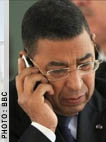
The United States has emphatically rejected assertions by officials in the Ivory Coast that it is plotting to overthrow the government of the West African country. For weeks now, Washington has been echoing calls by the United Nations, the African Union and the European Union for Ivorian President Laurent Gbagbo to stand down, after losing in the November 28 national elections. But Gbagbo’s government, which controls most of the military, rejects the alleged election victory of his political rival Alassane Ouattara, and refuses to hand over power. On December 29, the Ivory Coast’s Minister of the Interior, Emile Guirieoulou, told a press conference that the United States had dispatched at least ten German “mercenaries” to its embassy in Abidjan, as part of a multinational Western plot to overthrow Laurent Gbagbo. He told journalists that the German mercenaries were onboard a US-operated flight from Algiers to Bouake, Ivory Coast’s second-largest city. Read more of this post

News you may have missed #464 (Mossad edition)

News you may have missed #463

  • Iranian spy minister admits hacking emails. Iran’s Intelligence Minister Heydar Moslehi has publicly admitted that the Iranian government has hacked into the emails of Iranian opposition members. He claimed the hacking, conducted by Iran’s Intelligence Ministry, revealed messages exchanged between “foreigners and their elements inside Iran”.
  • Details on CIA officer killed in Afghanistan. An interesting article in The Washingtonian offers an interesting background story on Jennifer Matthews, a CIA officer who was killed nearly a year ago in Afghanistan in a suicide bombing by Taliban double-agent Humam Khalil Abu-Mulal al-Balawi.
  • China jails South Korean alleged spy. China is getting tougher with South Korean spies caught on Chinese soil collecting intelligence on North Korea, and has jailed one of them for more than a year, despite pleas from Seoul, according to news reports.

Israel sabotaged Egypt’s Internet, says alleged Mossad spy

Undersea Internet cable

Undersea cable

By IAN ALLEN | intelNews.org |
Israeli sabotage was behind the nationwide crippling of Egypt’s Internet in 2008, according to an alleged Mossad agent. The accused agent, Abdel Razeq Hussein Hassan, is an Egyptian businessman who was arrested earlier this year by Egyptian counterintelligence and is accused of working for the Israeli spy agency. Two of his alleged Israeli handlers, Joseph Daymour and Idid Moushay, are reportedly on the run and are wanted by the Egyptian government.  Hassan is due to go on trial next month, but transcripts of his interrogation records have been leaked to Egyptian media. In one instance, Hassan appears to tell his police interrogators that a team of Mossad operatives deliberately cut two undersea cables about 5 miles off the north Egyptian port city of Alexandria, disrupting the country’s Internet service for several days. Read more of this post

Germany launches probe into poisoning of ex-KGB colonel

KGB seal

KGB seal

By JOSEPH FITSANAKIS | intelNews.org |
An official government probe into the alleged poisoning of a Russian former KGB colonel and his wife has been launched in Berlin, German officials have announced. Regular intelNews visitors will recall the recent case of Viktor Kalashnikov, a former colonel and authority on military matters for the Soviet KGB, who was taken in critical condition to a Berlin hospital along with his wife, Marina. The two were found to have over ten times the highest permissible level of mercury in their blood, which, according to medical experts, points to a deliberate poisoning attempt. The case intrigued German officials, since the Kalashnikovs, who moved to Germany last September, are known in Russia as vocal critics of the Putin-Medvedev administration. The two have co-authored scathing critiques accusing Moscow of manipulating the separatist Chechen movement in order to create “a national security state” in Russia. Read more of this post

News you may have missed #461

  • London expels Russian diplomat for spying. Britain’s troubled relations with Moscow suffered another blow on Tuesday, when London announced the expulsion of an unnamed Russian diplomat in London following “clear evidence” of spying. The request was communicated to the Kremlin on December 10, and was reportedly countered by Russia with a tit-for-tat expulsion of a British diplomat from the country.
  • Syria saw Israel behind aide’s assassination, leaked cables show. Syria suspected Israel of carrying out the murder of Brigadier General Mohammed Sleiman, a top security aide of President Bashar al-Assad, who was assassinated by a sniper in August of 2008, according to US diplomatic cables leaked by WikiLeaks. The killing empowered hardliners in Syria and put an end to moves by President al-Assad for rapprochement between Damascus and Tel Aviv, according to the cables.
  • Israel to publicly press for release of spy held in US. Israeli Prime Minister Benjamin Netanyahu plans to officially and publicly appeal to US President Barack Obama in the coming days for the release of Jonathan Jay Pollard, an American serving a life term in a US jail for spying on the US for Israel.

WikiLeaks revelations keep coming, but few pay attention

WikiLeaks

WikiLeaks

By JOSEPH FITSANAKIS | intelNews.org |
Most Western news outlets are now focusing almost exclusively on the fate of WikiLeaks founder Julian Assange. Few are paying attention to the details of Assange’s rape allegations in Sweden, which have sparked an interesting —though limited— debate about possible links between Assange’s accusers and American intelligence. Even fewer are paying attention to the actual US diplomatic cable revelations by WikiLeaks, which keep appearing daily, mostly in British quality broadsheet The Guardian (The New York Times has largely lost interest at this point). One such revelation, published on Monday, concerns allegations by the Director of the Shabat, also known as Shin Bet (Israel’s internal security service), that Palestinian group Fatah asked Israel to attack rival Palestinian group Hamas, in 2007. The leaked cable claims Shin Bet director Yuval Diskin told US diplomats that Fatah, the secular Palestinian nationalist faction that controls the West Bank, was “demoralized” and “desperate” to halt the rapid rise of Islamic Hamas, which controls the Gaza Strip. Diskin further told US officials that Fatah understood it could only survive with Israeli support, and had thus directly “asked us [Israel] to attack Hamas”. Perhaps more importantly, the leaked cable appears to confirm intense speculation among some intelligence observers that Fatah is “actively gathering information on behalf of Israeli intelligence”. Read more of this post

Israel silent on alleged Mossad spy ring uncovered in Egypt [updated]

Mossad seal

Mossad seal

By IAN ALLEN | intelNews.org |
Israeli government officials have refused comment on charges announced yesterday against an alleged Mossad spy ring in neighboring Egypt. Less than a week after the discovery of what appear to be Israeli surveillance devices hidden in the mountains around Lebanese capital Beirut, two Israelis have been charged with espionage by the Egyptian government and are reportedly on the run. (Update: the names of the two Israelis, as reported on their arrest warrants, are Joseph Daymour and Idid Moushay). A third member of the alleged ring, Egyptian businessman Tareq Abdel Razeq Hussein Hassan, 37, will be facing similar charges in court soon, according to Egypt’s State Prosecutor Hisham Badawi. According to Badawi, Hassan set up an import-export business in Egypt to act as a front company, under instructions by Israeli intelligence agency Mossad, after he met with Mossad officers in Thailand in 2007. He then allegedly used his company regional business activities as an alibi in order to travel to Syria and Lebanon and establish close contacts with telecommunications personnel throughout the region, in exchange for money from the Israelis. Read more of this post

Mystery ‘spy devices’ found in Lebanon mountains

Surveillance device

Spy device

By IAN ALLEN | intelNews.org |
A statement issued by the Lebanese armed forces last week details the discovery of at least two mysterious spy devices located in mountain ranges around the Lebanese capital Beirut. The discovery, which was apparently made early last week, concerns two allegedly Israeli-made electronic devices hidden under two fake boulders. According to the statement, the two devices were found carefully concealed in the mountain of Sannine, directly north of Beirut, and Barouk, which is adjacent to the city’s southern suburbs. There were also reports last Wednesday of a loud explosion in Sidon, a port in southern Lebanon, which some news media said was an operation by unknown assailants to destroy a third surveillance device before it was discovered by the Lebanese security forces. The two devices captured by the Lebanese forces consist of surveillance cameras, electronic transmitters, as well as satellite signal reception systems. One of them was even connected to a third fake boulder, containing long-lasting batteries, which powered the device. Read more of this post

News you may have missed #460

Leaked cable confirms end of US-NZ spy quarrel

Hillary Clinton

Hillary Clinton

By JOSEPH FITSANAKIS | intelNews.org |
To regular readers of this blog, this is not so much a revelation, as it is a confirmation. Back in October of 2009, we wrote about a peculiar comment made Hillary Clinton. The United States Secretary of State had told a press conference that “we [the US] are resuming our intelligence-sharing cooperation [with New Zealand], which we think is very significant”. Resuming? When had it been disrupted, and why? Most intelligence observers agree that the only glitch that could have caused the cooperation to end would have been New Zealand’s nuclear ban. It was in 1984 when, under mounting popular pressure, the Labour government of David Lange voted to bar nuclear-powered or nuclear-armed ships from entering New Zealand territorial waters. At the time, the ban was heralded by the global nuclear disarmament movement as a major victory. But Washington did not see it that way. Successive US administrations pressured Wellington to repeal the nuclear-free legislation and allow US warships to make use of strategic New Zealand ports. Washington’s pressure increased in the years after 9/11, culminating in 2006, when it threatened to cancel a free-trade agreement between the two countries if New Zealand refused to repeal the ban. It appears that, at some point in time, possibly after 9/11, the US actually terminated intelligence sharing between the two countries in order to force New Zealand to comply. Read more of this post

Largest Afghan narcotrafficker was CIA, DEA informant

Haji Juma Khan

Haji Juma Khan

By JOSEPH FITSANAKIS | intelNews.org |
The history of operational collision between the Central Intelligence Agency and illicit narcotics traders is both long and largely documented. But new revelations published in The New York Times this week come to add a new chapter in this ever-expanding saga. The revelations this time concern Haji Juma Khan, perhaps the most notorious of Afghanistan’s drug lords, who has been described by US federal officials as arguably the most dangerous narcotrafficker in Central Asia. In 2008, Khan was finally arrested in New York, where he was charged with conspiracy to fund terrorist operations through trading in narcotics. American prosecutors allege that Khan literally “helped keep the Taliban in business”, providing them with weapons and cash on a systematic basis. But The Times reveal that, over a number of years, Khan also acted as an informant for both the CIA and the Drug Enforcement Administration and was “paid a large amount of cash” in return for his services. Read more of this post

German police probe poisoning of ex-KGB colonel

KGB seal

KGB seal

By JOSEPH FITSANAKIS | intelNews.org |
Police in Berlin are investigating a possible attempt to assassinate a Russian former KGB operative and his wife, through mercury poisoning. According to German newsmagazine Focus, Viktor Kalashnikov, a former colonel and authority on military matters for the Soviet KGB, was taken in critical condition to a Berlin hospital along with his wife, Marina. The two were found to have over ten times the highest permissible level of mercury in their blood, which, according to medical experts, points to a deliberate poisoning attempt. Colonel Kalashnikov, who arrived in Germany three months ago, is known as one of the Russian government’s harshest critics. He became famous in the 1990s, when he joined other former KGB operatives —most notably the late Alexander Litvinenko, who was assassinated in 2007, and whose widow is also named Marina— in accusing the Russian administration of Vladimir Putin of manipulating the separatist Chechen movement in order to solidify his vision of “a national security state” in Russia. Read more of this post

Three more Latin American countries recognize Palestinian state

Israel, Palestine

Israel, Palestine

By IAN ALLEN | intelNews.org |
Three more Latin American countries officially recognized the state of Palestine last week, prompting harsh diplomatic responses from Israel and the United States. The recognitions were announced by the governments of Brazil, Argentina and Uruguay, which make up the majority of Mercosur, a South American common market area modeled after the European Union. All three nations said they officially recognized a Palestinian state based on internationally established borders prior to the 1967 Six Day War, during which Israel illegally occupied the West Bank and Gaza. The official recognitions were immediately endorsed by Riyad al-Maliki, Foreign Affairs Minister of the Palestinian National Authority (PNA) in the West Bank, who said that the PNA expected Paraguay —Mercosur’s fourth member— to follow suit early next year. The new recognitions by Brazil, Argentina and Uruguay follow earlier similar moves by Nicaragua, Venezuela, Costa Rica and Cuba. Diplomatic observers expect Palestine to soon be officially recognized by the vast majority of Latin American nations, with Colombia, Peru and a handful of Central American states being the few exceptions. Read more of this post