Man caught with pistol and ammunition is Turkish spy, German prosecutor says

MIT Turkey

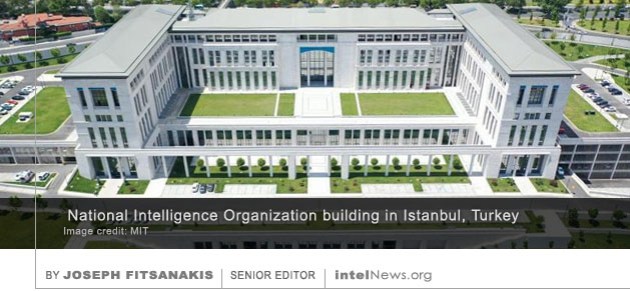
GERMAN AUTHORITIES ARE TREATING the arrest of a Turkish citizen, who was found with a pistol and 200 rounds of ammunition, “as a case of suspected espionage on behalf of the Turkish state” according to reports. The case was revealed late last week by Germany’s Federal Prosecutor General, Peter Frank, who said that the suspected spy was arrested at a hotel in the western German city of Düsseldorf during a raid that took place on September 17.

Local reports said the hotel raid was carried out by members of the Spezialeinsatzkommando (SEK), a police tactical unit, who stormed the building and used an armored vehicle to barricade its front door. They emerged from the hotel with the suspect, who has been identified in German media reports only as “Ali D.”, a Turkish citizen. He is now under investigation for collecting information on alleged supporters of the so-called Gülen movement. The Gülen movement consists of supporters of Muslim cleric Fethullah Gülen, who runs a global network of schools, charities and businesses from his home in the United States. The government of Turkey has designated Gülen’s group a terrorist organization and claims it was behind the failed 2016 coup against Turkey’s President, Recep Tayyip Erdoğan.

The Federal Prosecutor General’s office has said that Ali D. was acting “on behalf of and under the guidance” of the National Intelligence Organization (MİT), which is the state intelligence agency of Turkey. It also claims that “sufficient evidence” has emerged to establish this case as a “counterintelligence matter”. In his statement to the press, Frank said Ali D. was found in possession of a pistol, 200 rounds of ammunition and documents containing names and other personal information of alleged supporters of the Gülen movement. Some reports suggest that the police has linked this case with a suspected planned attack against Gülen supporters in Düsseldorf and Cologne.

The investigation of Ali D. has now officially been moved from the Düsseldorf Prosecutor’s office to the office of the Federal Prosecutor General.

Author: Joseph Fitsanakis | Date: 04 October 2021 | Permalink

Man killed by Belarusian KGB in shootout was US citizen, reports claim

Minsk Belarus

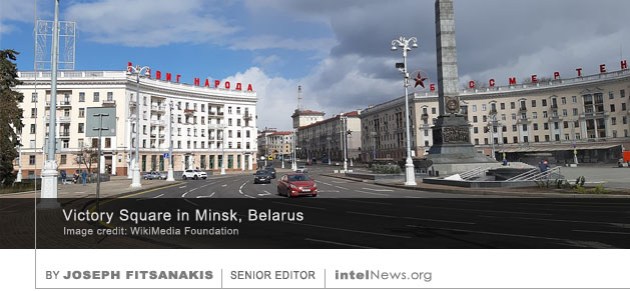
A MAN WHO WAS killed earlier this week by the intelligence service of Belarus worked for an American software company and may have been a citizen of the United States, according to some reports. Belarusian media reported late on Tuesday that an armed man had died in a shootout in the capital Minsk, which also left an intelligence officer dead and another one wounded. The man had allegedly opened fire with a hunting rifle against members of the Belarusian state security service —known as the KGB. After the man was shot dead, his wife was reportedly taken into custody.

Late on Tuesday, state television stations aired video footage showing plainclothes KGB officers storming an apartment and coming under heavy fire from inside the premises. In a statement issued on Thursday, the KGB did not identify the man, which it described as a “31-year-old terrorist”, and said he had been “liquidated with return fire”, after resisting arrest and shooting at the KGB officers in Minsk. But some media reports cited a member of the exiled opposition, who identified the deceased as Andrei Zeltser and said he worked for the American software company Epam Systems. Other reports suggested that Zeltser was a citizen of the United States, but this has not been confirmed.

Also on Thursday, the Belarusian state-owned news agency Belta claimed that the dead man was a member of the opposition movement, which views the country’s authoritarian President, Alexander Lukashenko, as illegitimate. Later on the same day, it was reported that the KGB had arrested at least 50 people for “insulting a government official” or “inciting social hatred”. Opposition figures claimed that the arrests were connected to comments in support of Zeltser that appeared on social media.

Author: Joseph Fitsanakis | Date: 01 October 2021 | Permalink

Hamas publishes photo, name and address of Israel’s incoming security chief

Nadav Argaman

THE PALESTINIAN MILITANT GROUP Hamas has published the name, address and photograph of an individual believed to be the incoming director of Israel’s security service. Known as Shin Bet, and referred also by its Hebrew acronym Shabak, the organization is among the leading agencies of Israel’s intelligence community, which also includes the Mossad and Aman. As is the case with other intelligence agencies, Israeli media are not permitted to publicize the identity of the Shin Bet’s director without permission from the government.

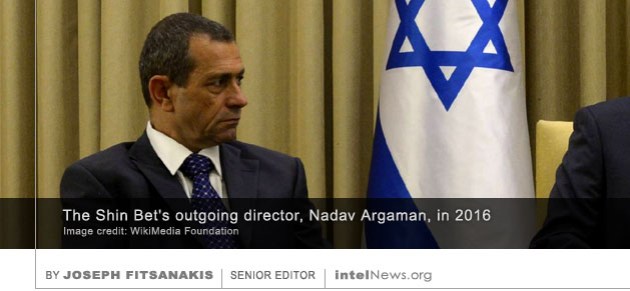
The incoming head of the Shin Bet has been referred to in Israeli media reports simply as “R”. He reportedly is in his mid-50s and he and his wife have three children. He is a graduate of Tel Aviv University, where he studied political science and philosophy, and has a Master’s degree from Harvard University in the United States. He rose through the ranks of the Shin Bet, and has been serving as the agency’s deputy director since 2018. Earlier this month, Israel’s Prime Minister, Naftali Bennett, nominated him to replace the Shin Bet’s current director, Nadav Argaman (pictured), who is set to retire in two weeks’ time.

On Sunday evening, following the outbreak of heavy clashes between Palestinians and Israeli forces in the West Bank, several pro-Hamas Palestinian websites published R’s alleged name, address and photograph, alongside the phrase “wanted criminal”. An accompanying article, published in Arabic and Hebrew, said the information about R. was “leaked by the Palestinian resistance” and warned that the senior leadership of the Shin Bet was being “monitored by us in the resistance”. The article went on to claim that R. “is on the wanted list and the arms of the resistance will pursue him”.

According to Israeli newspaper The Jerusalem Post, which published news of the leak, Israeli security forces are not concerned. An anonymous government source told Israel’s KAN news agency that, despite the official ban imposed by the state, R. is “widely known in Israel’s security sector” and the photograph of him that was published by Palestinian websites was “taken at a public event, [so] there is no cause for concern”.

Author: Joseph Fitsanakis | Date: 28 September 2021 | Permalink

New Zealand judge refuses to disclose identities in rare espionage case

New Zealand Defence Force

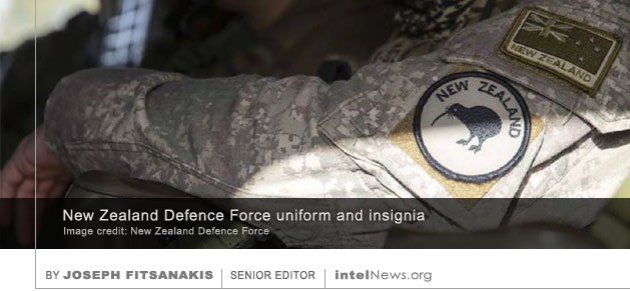
A JUDGE IN NEW Zealand rejected on Monday a request by news media to lift the ban on the identity of a soldier, who was arrested nearly two years ago for allegedly spying for a foreign country. The soldier was arrested in December of 2019, and is being prosecuted under New Zealand’s 1961 Crimes Act. It is the first time in the post-Cold War era that this act has being used to prosecute someone in New Zealand.

The accused is facing a total of 17 charges, including six counts of espionage and attempted espionage, three counts of accessing a computer system for a dishonest purpose, and two counts of possessing an objectionable publication. The latter charge is believed to relate to the accused’s alleged connection with far-right and white nationalist organizations in New Zealand and possibly Australia. This claim has not been confirmed, however.

Since the arrest of the soldier, his name, as well as that of his wife and of multiple witnesses for the government, have been suppressed by the court. Importantly, the country for which the accused allegedly spied for has also been suppressed. This was done at the request of the government of New Zealand, which claims that doing otherwise could imperil “the defense and security of New Zealand”. The government also argues that naming the country for which the accused is believed to have spied could harm New Zealand’s diplomatic relations with that country.

On Monday, during a pre-trial court-martial hearing in Palmerston North, in which the suspect appeared via video-link, the chief judge in the case decided to extend the suppression of the information about the identity of those involved. The judge, Kevin Riordan, said that the name suppression would be extended at least until the next pre-trial hearing, which has not yet been scheduled. The trial was initially due to begin on October 6, but has been postponed indefinitely, due to complications arising from the use of classified evidence that the government’s lawyers intend to present during the court case.

Author: Joseph Fitsanakis | Date: 27 September 2021 | Permalink

Leaked documents show Georgian intelligence service spied on Western diplomats

Tbilisi

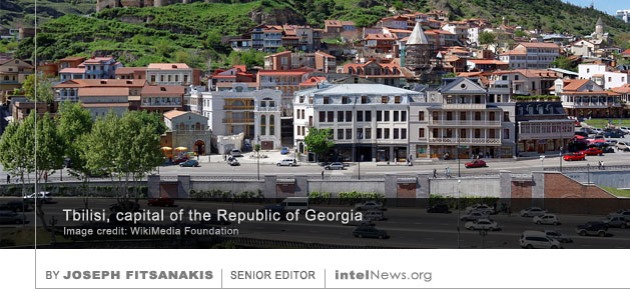
THE EUROPEAN UNION HAS summoned the chief Georgian envoy to Brussels, in response to allegations that European, American and other diplomats were spied on by the Georgian security services. The allegations have emerged from an extensive collection of documents, which were released to the media by an anonymous whistleblower earlier this month.

The documents appear to confirm long-held suspicions among many in the former Soviet Republic, that the Georgian State Security Service (SSS) has been spying on members of the clergy, as well as on opposition politicians, journalists and others. But the documents also allege that the SSS has been spying on diplomats from the European Union, the United States, Israel, and other countries, who are stationed in the Georgian capital Tbilisi. Among those who have allegedly been targeted is the European Union’s ambassador to Georgia, Carl Hartzell.

The European External Action Service, which is the European Union’s foreign-policy diplomatic and foreign office, described the revelations as “a very serious matter”, and added that they have “implications in the framework of the Vienna Convention [on] Diplomatic Relations”. On Wednesday, the European Union reportedly summoned Georgia’s ambassador to Brussels, Vakhtang Makharoblishvili, in order to issue a formal complaint. Ambassador Hartzell said that the “volume and nature” of the alleged espionage went “beyond the normal activities of security services” and “raised serious questions about the relationship” between Georgia and the West.

Meanwhile, Georgia’s Prime Minister, Irakli Gharibashvili, described revelations in the leaked documents as “fabrications and falsifications”, and blamed his government’s political opponents for leaking them to the press. He also defended the conduct of the SSS, saying that the agency “conducts [only] legitimate wiretaps within the limits established by [Georgian] law”.

Author: Joseph Fitsanakis | Date: 23 September 2021 | Permalink

Venezuelan ex-spy chief captured in Madrid after two years on the run

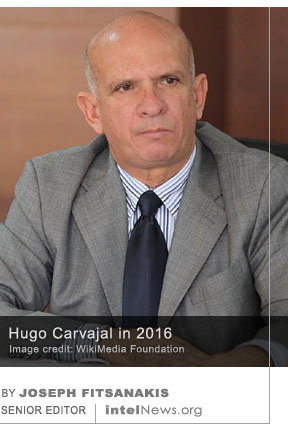
Hugo CarvajalTHE FORMER DIRECTOR OF Venezuela’s military spy agency has been captured in Madrid after two years on the run, and is now likely to be extradited to the United States, where he will face drug trafficking charges. Hugo Carvajal is a retired general and former diplomat, who was a member of the late Venezuelan President Hugo Chávez’s inner circle. From 2004 to 2011, under Chávez’s tutelage, Carvajal headed Venezuela’s Directorate General of Military Counterintelligence (DGCIM).


In 2008 the American government named Carvajal as a major facilitator of international drugs trafficking and imposed financial sanctions on his assets around the world. Washington accused Carvajal of assisting the paramilitary group known as the Revolutionary Armed Forces of Colombia (FARC) transport drugs from Latin America to Mexico, and from there to the US. Things took an interesting turn, however, when in February of 2019, Carvajal posted a video on social media in which he denounced Chávez’s successor, President Nicolás Maduro, and sided with his arch-nemesis, Juan Guaido, the President of the National Assembly of Venezuela.

In his video, Carvajal urged the Venezuelan armed forces to stop siding with Maduro and support Guaido as Venezuela’s acting president. Guaido is openly supported by the United States and dozens of other Western countries. Soon after making his announcement, Carvajal fled to Spain, where he was promptly arrested pursuant to a warrant issued by the US Department of Justice. The US then filed a formal request for the former spy chief’s extradition to America. However, amidst a series of contradictory decisions by Spanish courts, Carvajal disappeared in November of 2019. Since that time, he has been making statements on social media while remaining on the run.

All that changed on September 9, however, when Spanish police and US Drug Enforcement Administration agents forcibly entered an apartment in Madrid, and soon afterwards apprehended Carvajal. The former spy was reportedly wielding a knife until he was convinced by agents to disarm. According to media reports, it is now highly likely that Carvajal will be extradited to the United States, where he will face two choices: spend the rest of his life in prison or cooperate in a large-scale investigation of Venezuelan government officials and their connections to the FARC’s narcotics-trafficking operations.

Author: Joseph Fitsanakis | Date: 22 September 2021 | Permalink

Croatia to extradite whistleblower who alleged Dutch oil firm spent millions in bribes

Monaco

A WHISTLEBLOWER WHO CLAIMS that a major Dutch oil firm paid millions in bribes to officials in return for lucrative contracts, is to be extradited to Monaco, following his arrest in Croatia last summer. Jonathan Taylor, of Southampton, United Kingdom, was a lawyer working for SBM Offshore, a Netherlands-based group of companies that provide services to the global offshore oil and gas industry. In 2012, he leaked documents allegedly showing that SBM Offshore “paid €185 million [$217 million] in bribes in several countries between 2005 and 2011”, in return for being awarded service contracts.

But SBM Offshore accused him of extortion and claimed that he stole proprietary documents and then tried to blackmail his employer, asking for $3 million in exchange for staying silent about the alleged bribes. Following this accusation, authorities in Monaco, which hosts an SBM Offshore regional facility, issued an Interpol “red notice” for Taylor’s detention. A red notice is essentially a request to law enforcement worldwide to locate and provisionally detain a person of interest, pending a possible extradition.

In July of this year, Taylor was arrested in Dubrovnik, Croatia, where he was holidaying with his family, by local police acting on the Interpol’s red notice. Immediately following his arrest, the government of Monaco sought to have him extradited there “for questioning”, even though he had not been charged with a crime. According to Monegasque police, Taylor was wanted “for questioning to determine whether or he should be charged” with a crime.

Taylor and his lawyers deny the claims against him, which they describe as acts of retaliation for him having blown the whistle on SBM Offshore. Now, however, authorities in Monaco have summoned Taylor to appear before a magistrate, after the Supreme Court of Croatia upheld an extradition ruling that was issued by a lower court earlier this year. This means that Croatian authorities should soon be extraditing Taylor to Monaco, as per the principality’s request. However, Taylor currently remains in Croatia and he and his supporters have urged the Croatian authorities to not comply with Monaco’s extradition request.

Author: Joseph Fitsanakis | Date: 21 September 2021 | Permalink

Israel killed Iranian nuclear scientist using advanced robotic device, report claims

Mohsen Fakhrizadeh

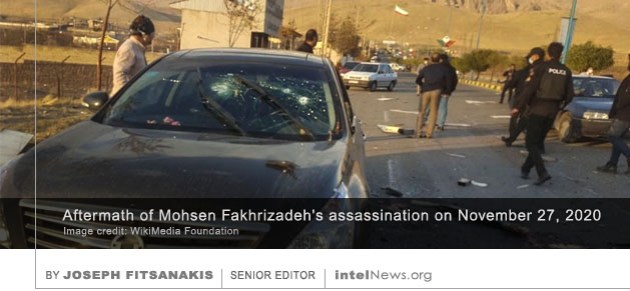
ISRAEL’S PRIMARY EXTERNAL INTELLIGENCE agency, the Mossad, assassinated the lead military scientist behind Iran’s nuclear program using a remote-controlled robot, according to a new report. Mohsen Fakhrizadeh was a brigadier general in the Islamic Revolutionary Guard Corps (IRGC), Iran’s elite paramilitary force. He was assassinated along with his wife on November 27, 2020, in an armed assault that took place in the eastern outskirts of Tehran. The attack, which lasted no more than 3 minutes, took place in broad daylight. No arrests have been made in connection with the killings.

Shortly after Fakhrizadeh’s assassination, Iranian authorities claimed that the Mossad had orchestrated his killing, and Iranian media carried reports about the alleged identities of the killers. But in February of this year, the London-based weekly newspaper The Jewish Chronicle claimed that the Mossad had killed the IRGC general using a “one-ton remote-controlled gun smuggled into Iran piece by piece over eight months”. There has been no confirmation of that report, and the details behind Fakhrizadeh’s killing remain vague.

On Saturday, however, an article by The New York Times’ Ronen Bergman and Farnaz Fassihi supported the view that the Fakhrizadeh was killed by a remote-controlled advanced robotic device. According to the new report, the apparatus had been fitted by Mossad operatives into the bed of a blue Zamyad, a popular Iranian-built Nissan pickup truck model. A Belgian-made FN MAG 7.62-mm machine gun was hidden beneath decoy construction material and a heavy tarpaulin, said the article. It repeated the The Jewish Chronicle’s claim that the device had been smuggled into Iran by Mossad operatives in pieces, over an extensive period of time.

According to Bergman and Fassihi, Fakhrizadeh’s assassins operated remotely, and there was no Mossad hit squad on the ground in Tehran when the assassination occurred. In fact, the Mossad team that installed the advanced robotic apparatus “had already left Iran” by the time the trigger was pulled. Artificial intelligence was employed to ensure that the remote sniper’s actions were successful. However, the explosives that were meant to destroy the apparatus following Fakhrizadeh’s assassination partly malfunctioned, thus allowing the Iranians to access the partly damaged vehicle, machine gun and control mechanism, said the Times.

In an article published late on Saturday, Israeli English-language newspaper The Jerusalem Post said it was in a position to “confirm the accuracy of the Times report.

Author: Joseph Fitsanakis | Date: 20 September 2021 | Permalink

Controversy over missing intelligence officer deepens constitutional crisis in Somalia

Mohamed Abdullahi FarmajoTHE SOMALI CAPITAL MOGADISHU remains tense today, after the country’s president and prime minster, who are supported by rival militias, leveled accusations at each other over an intelligence officer’s disappearance. Ikran Tahlil, 25, who works for the Somali National Intelligence and Security Agency (NISA), disappeared in June. She was reportedly last seen entering a government vehicle outsider her home in Mogadishu. The NISA said that Tahlil had been abducted and probably executed by al-Shabaab, an East African affiliate of al-Qaeda.

However, al-Shabaab, which usually relishes opportunities to kill Somali security and intelligence personnel, denied that it had anything to do with Tahlil’s disappearance. Reacting to this unexpected turn of events, the Prime Minister, Mohamed Hussein Roble, denounced the NISA and fired its Director, Fahad Yasin. According to the Prime Minister’s office, Yasin had failed to respond to an official request about Tahlil’s whereabouts.

On Wednesday, however, the country’s President, Mohamed Abdullahi Farmajo (pictured), reinstated Yasin, after claiming that the prime minister was not authorized by the Constitution to fire members of the intelligence services. Farmajo also accused the Roble of “taking reckless steps that could lead to a political and security crisis” in the volatile country. Later on Wednesday, the Office of the Prime Minister announced that Roble did not intend to abide by the president’s order, because it directly violated the constitution.

President Farmajo responded on Thursday, by announcing that the prime minister’s powers to appoint and dismiss government officials would be withdrawn until the upcoming national elections. These are scheduled to begin on October 1, and end on November 25. Once again, Prime Minister Roble said he would not abide by the president’s decision, which he described as “unlawful”. He also accused Farmajo of inciting armed conflicts in the streets of Mogadishu.

Meanwhile the president has appointed a new ad hoc commission with the task of carrying out an official inquiry into Tahlil’s disappearance. But members of the missing woman’s family said they did not trust the commission and asked instead for an investigation to be carried out by the Somali military.

Author: Joseph Fitsanakis | Date: 17 September 2021 | Permalink

United States reaches agreement with ex-NSA staff who helped Emirates hack targets

US Department of JusticeThree former employees of American spy agencies, who helped the United Arab Emirates hack targets around the world, including United States citizens, have agreed to cooperate with the investigation into their activities. The US Department of Justice said on Tuesday that it had reached a “deferred prosecution agreement” with the three Americans, Ryan Adams, Marc Baier and Daniel Gericke. At least two of them are believed to have worked for the US National Security Agency before transferring their skills to the private sector.

According to US government prosecutors, the three men initially worked for a US-owned private cyber firm, before being hired by another firm that is registered to the UAE, which offered them “significant increases in their salaries”. According to the book This Is How They Tell Me the World Ends, by New York Times reporter Nicole Perlroth, the UAE firm was behind Project RAVEN, a highly intrusive cyber-espionage campaign against domestic and international critics of the UAE monarchy.

As intelNews reported earlier this year, the existence of Project RAVEN was revealed by the Reuters news agency in 2019. Its extensive list of targets included foreign governments, officials of international bodies, as well as lawyers, human rights activists and suspected terrorists. Several of those targets were reportedly American citizens. Perlroth claims in her book that among Project RAVEN’s targets was former First Lady Michelle Obama.

The information released this week by the US Department of Justice details an agreement between the three defendants and the US government, according to which they are required to cooperate fully with the investigation into their activities. They are also required to pay a combined total of nearly $1.7 million to the US government as a form of restitution for violating military export-control standards. Moreover, they are banned from holding security clearances in the future, and are subject to a number of employment restrictions.

Several US news outlets described the agreement between the US government and the three defendants as the first of its kind. Meanwhile, a number of US government officials, including Bryan Vorndran, assistant director of the FBI’s Cyber Division, warned other former US government employees to not violate “export-controlled information for the benefit of a foreign government or a foreign commercial company”.

Author: Joseph Fitsanakis | Date: 16 September 2021 | Permalink

CIA sees early signs of al-Qaeda regrouping in Afghanistan, says US official

David CohenAMERICAN INTELLIGENCE AGENCIES ARE noticing early signs that al-Qaeda may be regrouping in Taliban-controlled Afghanistan, according to the deputy director of the United States Central Intelligence Agency. The presence of al-Qaeda in Afghanistan was the primary reason behind the invasion of the country by the United States in 2001. In subsequent years, the militant group, which was behind the terrorist attacks of September 11, 2001, suffered heavy losses, and saw its members disperse across the region. Many others were captured or killed.

Now, however, with the Taliban back in power in Afghanistan, there are concerns that al-Qaeda may make a comeback in the war-torn country. Under the leadership of Osama bin Laden, al-Qaeda worked closely with the upper echelons of the Taliban in the 1990s and early 2000s. Contacts between the two groups continue to exist, and could potentially deepen following the exit of the United States and its Western allies from Afghanistan.

On Tuesday, David Cohen, who serves as deputy director of the CIA, said that American intelligence agencies are closely monitoring the situation. Speaking at the Intelligence and National Security Summit in Washington, DC, Cohen acknowledged that the shuttering of the United States embassy in Kabul, as well as the closure of a network of CIA stations across Afghanistan, had “diminished” the ability of American intelligence agencies to assess conditions on the ground. He added, however, that current intelligence reports indicate “some potential motion of al-Qaeda [returning] to Afghanistan”.

Cohen added that much of the intelligence that has been collected in recent weeks comes from “over-the-horizon platforms”, meaning that the collection is taking place from countries that border Afghanistan. However, the CIA in particular is already working to develop “methods to work within the horizon”, he said. At the moment, the United States intelligence community estimates that it could take al-Qaeda between one and two years to amass its former strike capability, so as to directly threaten American interests.

Author: Joseph Fitsanakis | Date: 15 September 2021 | Permalink

Chinese-linked hacker group breached Indonesian spy agency’s networks

Indonesian State Intelligence Agency

A GROUP OF COMPUTER hackers with links to the Chinese state is likely behind a major breach of networks belonging to at least ten Indonesian government ministries and agencies, including the country’s primary intelligence service. The breach was first reported on September 10 by cybersecurity firm Insikt Group, whose researchers say they have been monitoring the hacks since April of this year.

Insikt Group said experts in its threat research division noticed that a number of PlugX malware command and control servers were regularly communicating with hosts inside the networks of the Indonesian government. After forensically examining the communication patterns, the researchers concluded that the initial contact between the command and control servers and the Indonesian government networks was made in March of this year, if not earlier. The technical details of the intrusion are still being determined, according to Insikt Group.

The firm said that the breach was perpetrated by Mustang Panda, a mysterious advanced persistent threat actor, which is also known as BRONZE PRESIDENT, HoneyMyte, and Red Lich. In the past, Mustang Panda has been particularly active in Southeast Asia, targeting servers in Mongolia, Malaysia and Vietnam. The targets of this latest breach included the Indonesian State Intelligence Agency, known as BIN. According to Insikt Group, BIN was “the most sensitive target compromised in the campaign”.

The company said it notified the Indonesian government twice about these intrusions, in June and July. Although no response was forthcoming from the Indonesian government, changes in its computer networks since that time may be taken as evidence that the authorities took steps to “identify and clean the infected systems”, according to Insikt Group’s report.

Author: Ian Allen | Date: 14 September 2021 | Permalink

Mystery arrest of Russian mercenaries in Belarus ‘was US-Ukrainian sting operation’

Belarus KGB

THE BIZARRE CASE OF the arrest of three dozen Russian mercenaries in Belarus in 2020, allegedly for trying to destabilize the country, was in reality a joint Ukrainian-American sting operation that went awry, according to a new report. IntelNews readers will remember the puzzling July 2020 announcement by Belarusian authorities of the arrest of 33 Russians, who were said to be employees of Wagner Group, a Kremlin-backed private military firm.

The 33 Russians were charged with terrorism against the government of Belarussian strongman Alexander Lukashenko, who was then seeking a sixth term in office. Soon afterwards, the Belarussian State Security Committee (KGB) said the Russians had entered the country as part of a 200-strong group of mercenaries working for Wagner, in order to “destabilize the situation during the election campaign” of Lukashenko. That, however, made little sense, given that Lukashenko is one of Moscow’s strongest international allies. To add to the mystery, the Russians were quietly released from custody just a few days later.

What was behind that mysterious case? According to the American news network CNN, the bizarre incident was part of an international sting operation set up by the Ukrainian intelligence services with the support of the United States Central Intelligence Agency (CIA). Citing three former high-ranking Ukrainian military intelligence officials, CNN claims that the sting operation aimed to lure, and eventually arrest, Russian mercenaries who have participated in the Kremlin’s invasion of eastern Ukraine since 2014.

The news network claims that the Ukrainian intelligence services set up a fake Russian private military company and used it to advertise $5,000-a-month contracts to provide security for Venezuelan oil facilities. Hundreds of Russian would-be contractors sent in applications. When quizzed by the fake company about their bona-fides, the applicants freely provided evidence of their participation in the ongoing Russo-Ukrainian War.

The ultimate goal of the sting operation was to sign up the Russian contractors and offer to transport them to Turkey, from where they would supposedly fly to Caracas and begin working. In reality, however, the Russians would be transported to Ukraine, where they would face arrest and potential imprisonment for war crimes. However, the COVID-19 pandemic prevented their transportation via air. Instead, the sting organizers chose to transport them by bus to neighboring Belarus, from where they planned to transport them to Ukraine. However, the presence of 33 burly Russians in a hotel sanatorium outside of Minsk raised suspicions, and led to their eventual arrest by the Belarussian security forces.

The report by CNN claims that the CIA provided the Ukrainian intelligence services with “cash, technical assistance and advice”. But the news network also says that United States officials “deny having a direct role” in the sting operation.

Author: Joseph Fitsanakis | Date: 13 September 2021 | Permalink

Russia denies rumors that its chief security official met with CIA director in India

Russian embassy India

A RUSSIAN GOVERNMENT SPOKESMAN has denied reports Moscow’s Security Council Secretary met secretly this week with the director of the United States Central Intelligence Agency in the India. The United States, however, has not commented on the reports.

As intelNews and others reported yesterday, General Nikolai Patrushev, Secretary of the Security Council of the Russian Federation, arrived in Delhi on September 7, “for high-level consultations on Afghanistan”, according India’s Ministry of External Affairs. General Patrushev, who is Russia’s highest-ranked security official, traveled to India at the invitation of his counterpart there, National Security Adviser Ajit K. Doval.

Interestingly, The Hindu, one of India’s two newspapers of record, reported on Tuesday that “an American delegation of intelligence and security officials” were visiting Delhi, and had already “held consultations” with officials. According to the newspaper, the American delegation was led by no other than CIA Director William Burns, who is said to be touring the region, and is also expected to visit Islamabad in the coming days.

Like General Patrushev, Burns met with National Security Adviser Doval about “issues arising from the Afghanistan evacuation effort and Taliban government formation”, said The Hindu. But unlike the Russian delegation’s visit, which was announced by the Indian government, the alleged American delegation’s visit remains speculative, and has not been officially confirmed by either Delhi or Washington.

It was not long before Indian media began to report that the American and Russian teams had met in secret, allegedly in order to discuss the situation in Afghanistan. On Wednesday, however, a spokesman for the Russian Security Council flatly refuted the rumors of a meeting between Burns and Patrushev. The Russian-government owned TASS news agency quoted Russian Security Council spokesman Yevgeny Anoshin as saying that “Patrushev did not plan to, and did not meet, with the CIA head in Delhi”.

The United States government has yet to comment on these reports.

Author: Joseph Fitsanakis | Date: 09 September 2021 | Permalink

High-level American, Russian intelligence delegations visit India on the same day

Nikolai PatrushevHIGH LEVEL DELEGATIONS OF intelligence officials from the United States and Russia visited India on the same day this week, for talks with Indian officials about the situation in Afghanistan, according to news reports. This development highlights the frantic pace with which Moscow and Washington are maneuvering around the region, following the dramatic takeover of Afghanistan by the Taliban last month.

India’s Ministry of External Affairs announced on Tuesday that General Nikolai Patrushev (pictured), Secretary of the Security Council of the Russian Federation, would be in Delhi “for high-level consultations on Afghanistan” between September 7 and 8. General Patrushev —Russia’s highest-ranking security official— is traveling to India at the invitation of his Indian counterpart, National Security Adviser Ajit K. Doval, according to the announcement. He was scheduled to meet with, aside from Doval, Indian Prime Minister Narendra Modi and External Affairs Minister S. Jaishanka.

Late yesterday, however, the Chennai-based English-language newspaper The Hindu reported that “an American delegation of intelligence and security officials” had visited Delhi on Tuesday, and had “held consultations” with officials there. According to the newspaper, the American delegation was led by Central Intelligence Agency (CIA) Director William Burns, who is touring the region and is also expected to visit Islamabad in the coming days. The report also said that Burns spoke at length with Doval about “issues arising from the Afghanistan evacuation effort and Taliban government formation”.

It is worth noting that India’s Ministry of External Affairs and the embassy of the United States in Delhi declined to confirm or deny the news about the CIA director’s visit to the country.

Author: Joseph Fitsanakis | Date: 08 September 2021 | Permalink