Large-scale cyberattacks, Internet disruptions, reported on Belarus election day
August 10, 2020 Leave a comment
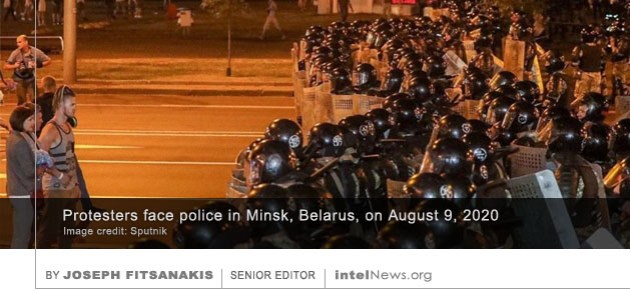 Belarus experienced large-scale cyberattacks that crippled many government websites, while parts of the Internet were inoperative during a national election on Sunday, as large-scale demonstrations erupted all over the country. The demonstrations, which went on late into Sunday night, were sparked by reports that the country’s authoritarian leader, Alexander Lukashenko, had secured a record sixth term in office, despite facing a serious challenge from opposition leader Sviatlana Tsikhanouskaya. Tsikhanouskaya is married to Syarhey Tsikhanouski, a jailed blogger with substantial social-media following among young voters.
On Sunday afternoon, the National Computer Incident Response Center of Belarus (CERT) reported that the servers of the State Security Committee (KGB), the country’s spy agency, had come under sustained attack. The Internal Affairs Ministry’s website and servers had also been affected by what CERT called “a large wave” of cyberattacks. These were first noticed on Saturday, but continued well into the evening of Sunday, according to reports. Other government websites and services were subjected to distributed denial of service (DDoS) attacks, during which online servers crashed after being flooded with requests for information.
Meanwhile, Internet and cell phone users reported having difficulty accessing popular websites like Google, and social media services, including Telegram and Signal. Internet-based cell phone service was almost completely down throughout the country by Sunday afternoon. Beltelecom, the state-owned telephone service provider, said its systems were “experiencing interruptions in access” and “congestion of channels due to foreign traffic in large quantities”. It added that its technicians had not yet determined “whether people or machines” were behind the disruptions in service.
Late last month, the Belarusian secret services arrested 33 Russian citizens, who were allegedly members of the Wagner Group, a Kremlin-backed private military firm. The government of Belarus accused the group of trying to subvert the presidential elections on behalf of Moscow. The 33 Russians were charged with terrorism against the state. Russia has denied claims by the Belarussian government that it is behind an effort to destabilize the former Soviet Republic.
► Author: Joseph Fitsanakis | Date: 10 August 2020 | Permalink
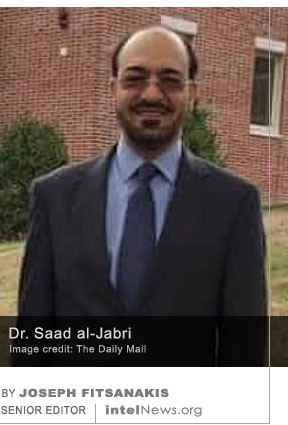 Canadian border guards thwarted a sophisticated plot to kill a Saudi former senior intelligence official, who has been targeted by the oil kingdom’s crown prince because he served a rival member of the royal family, according to a lawsuit filed in an American court.
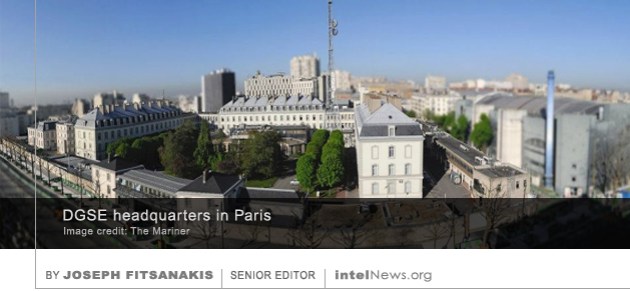 The Paris prosecutor has charged three officers of France’s external spy agency with a mysterious plot to kill a woman, after two of them were caught driving a stolen vehicle and in possession of weapons. The three men are reportedly operations officers in the Directorate-General for External Security, known as DGSE. The service operates as France’s equivalent of the United States Central Intelligence Agency (CIA). Like the CIA, the DGSE is not permitted to carry out operations inside France.
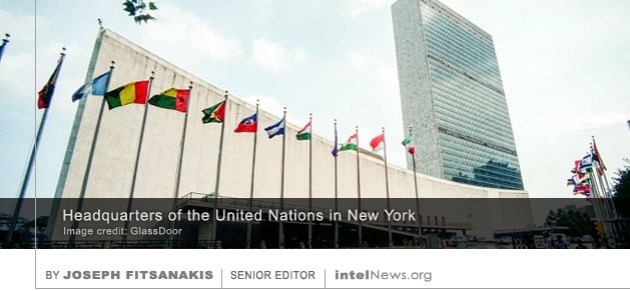 Computer hackers working for North Korea launched cyberattacks against carefully selected officials of national delegations belonging to the United Nations Security Council, according to a soon-to-be released report. The report is expected to be submitted early next month to the UN Security Council Sanctions Committee on North Korea.
 A rare declassified budgetary report shows that Israel’s primary external intelligence agency, the Mossad, has received large increases in funding since 2016. The report was released on Monday by the Office of the State Comptroller. It covers a two-year period starting from August 2016. It is extremely rare for any document on Mossad’s internal affairs, including its budget, to be made available for public viewing.
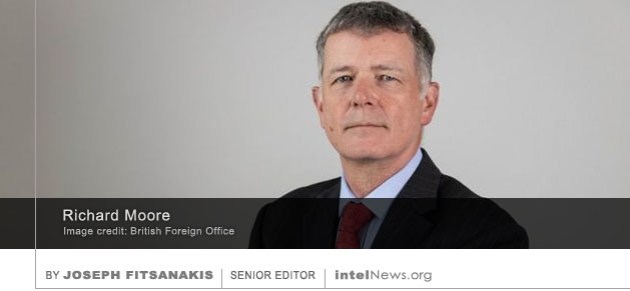 The grandfather of the incoming director of Britain’s main external intelligence agency was a member of the Irish Republican Army and was awarded a medal by Irish separatists for fighting against British rule in Ireland. British Foreign Secretary Dominic Raab
 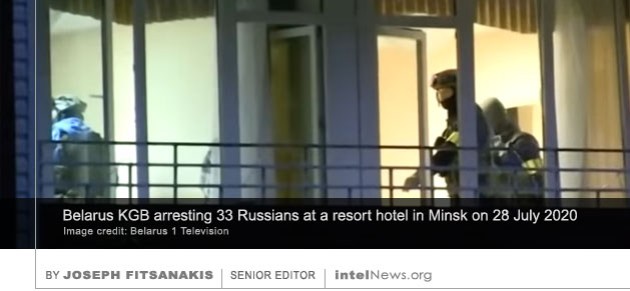 Belarussian secret services announced on Wednesday the arrest of 33 Russian citizens, who are allegedly members of a Kremlin-backed private military firm. The government of Belarus accuses the Russians of trying to subvert next month’s presidential elections on behalf of Moscow. The 33 Russians were charged with terrorism against the state on Thursday. They are allegedly employees of Wagner Group, a private Russian military company that some believe is in reality a private paramilitary wing of the Russian Armed Forces. However, the Kremlin has denied these accusations and says it has no connections with Wagner.
 Two days after dropping charges against three Saudi men for spying on American soil, United States prosecutors submitted a new indictment that restates the two original charges and adds five more. The original complaint was filed by the Federal Bureau of Investigation in November of last year in San Francisco, California. It accused three men of “acting as unregistered agents” of Saudi Arabia since 2015. The phrase is used in legal settings to refer to espionage.
 In a surprising move, the United States government is seeking to dismiss espionage charges it filed last year against three men, including a member of staff of Saudi Arabia’s royal family, who were caught spying on American soil. Last November, the Federal Bureau of Investigation
  Turkey’s spy agency systematically downplayed the Islamist views of men seeking to join a Syrian rebel group, which was supported by the United States Central Intelligence Agency on account of its moderate leanings. The United States
 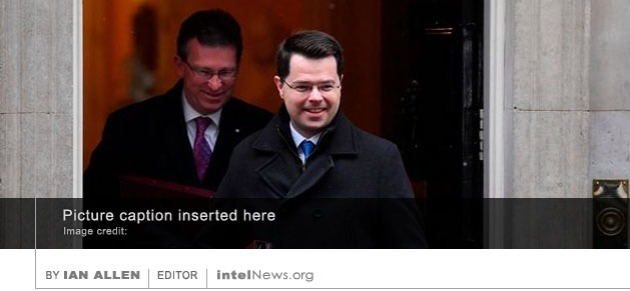 Senior United Kingdom officials have said the country will seek to “modernize” its laws on counterespionage, after a long-awaited parliamentary report criticized the government for failing to stop Russian spy operations. Earlier this week saw the release of the report by the British Parliament’s Intelligence and Security Committee. The
 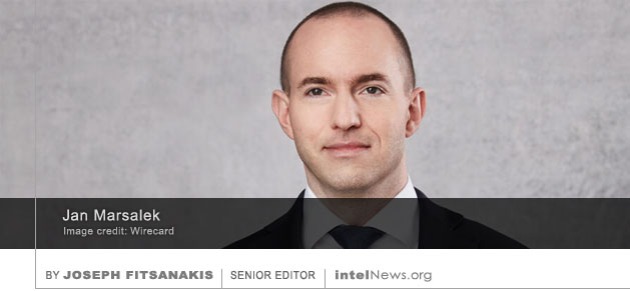 An Austrian financier, who disappeared following the outbreak of a massive financial scandal in Germany last month, and is wanted by several Western spy agencies, is reportedly hiding under Russian protection. The financier, Jan Marsalek, dubbed by some as “the world’s most wanted man”, is connected with the sudden collapse of Wirecard AG in Germany last month.
 United States military officials are raising concerns about the rate of increase of COVID-19 cases in the Armed Forces, which appears to be growing at
  Belgium’s spy services were aware of financial rewards that Russia allegedly offered to the Taliban in exchange for killing American and other Western troops in Afghanistan, according to Belgium’s defense minister. Late last month, three leading American newspapers, The New York Times, The Washington Post and The Wall Street Journal






 intelNews.org
Slovakia expels three Russian diplomats in connection with 2019 murder in Berlin
August 11, 2020 by Joseph Fitsanakis 1 Comment
The three diplomats are stationed at Russia’s embassy in Bratislava. They are believed to be intelligence officers operating under diplomatic cover. A spokesman from the Slovak Foreign Ministry issued a statement on Monday, citing “information from the Slovak intelligence services”, according to which the three Russians engaged in “activities [that] were in contradiction with the Vienna convention on diplomatic relations”. Additionally, said the statement, Slovak authorities had uncovered “an abuse of visas issued at the Slovak general consulate in St. Petersburgh, and in this connection a serious crime was committed on the territory of another European Union and North Atlantic Treaty Organization member state”.
The statement did not elaborate on the specifics of the “serious crime”, but Slovak media report that it refers to the killing last August of Zelimkhan Khangoshvili, a leading figure in the Second Chechen War, which pitted the Russian military against groups of Muslim fighters in the North Caucasus between 1999 and 2009. Khangoshvili, a Muslim born in Georgia, was a bodyguard of Aslan Maskhadov, the self-described leader of the Muslim separatists in the Northern Caucasus. In 2015, Khangoshvili sought political asylum in Germany after two men tried to kill him in Tbilisi. The German authorities initially placed him on a terrorism watch list, but removed him after he began to collaborate with German counterterrorist agencies and participate in programs designed to de-radicalize Muslim youth. He was shot in broad daylight in Berlin by a man wearing a wig and carrying a pistol fitted with a silencer. Officials from the Berlin prosecutor’s office said at the time there were “indications the deed was pre-planned and may have political motives behind it”. It is now believed that at least one of the men suspected of involvement in planning Khangoshvili’s killing had traveled from Russia to the European Union on a visa issued by the Slovakian consulate in St. Petersburgh.
The three Russian diplomats have reportedly been told that they have until this coming Sunday to leave Slovakia. The Russian embassy in Bratislava said it would not comment on the expulsions. Kremlin officials have strongly denied that the Russian government had any ties to the killing of Khangoshvili. Moscow has vowed to expel an equal number of Slovak diplomats from the Russian capital in the coming days.
► Author: Joseph Fitsanakis | Date: 11 August 2020 | Permalink
Filed under Expert news and commentary on intelligence, espionage, spies and spying Tagged with assassinations, diplomatic expulsions, Germany, News, Russia, Russian embassy in Slovakia, Slovakia, Zelimkhan Khangoshvili