Danish military spy chief ‘relieved of duty’ following whistleblower revelations
August 26, 2020 Leave a comment
 The director of Denmark’s military intelligence service has been “relieved of duty for the time being”, following a series of whistleblower revelations, according to the country’s Ministry of Defense. Little is known about the precise nature of the revelations, but they are believed to relate to large-scale intelligence collection of information belonging to Danish citizens, which the spy agency is prohibited from accessing.
The news was revealed on Monday by the Danish Oversight Board, known as TET, which is responsible for supervising the work of Denmark’s intelligence agencies. The TET said that “whistleblower complaints” had revealed information that pointed to improper intelligence collection practices by the Danish Defense Intelligence Service (FE, or DDIS in English). Moreover, when confronted by the TET, the DDIS “withheld key information” about its collection practices and even gave “incorrect information relating to the collection and disclosure of information”, according to the watchdog.
The press release by the TET said that the DDIS had carried out “operational activities” that violated Danish law and violated the privacy of Danish citizens. It also said that the illegal “operational activities” had taken place “for as many as six years”. However, the watchdog added that, given the “classified content” of the intelligence service’s mission and activities, it could “not provide further information to the public”. It is believed, however, that the controversy involves a system of mass surveillance of telecommunications, which somehow collected information exchanged domestically between Danish citizens, or between them and foreign nationals. The DDIS is forbidden by law to spy on the domestic activities of Danes.
The Danish Ministry of Defense announced on Monday that DDIS Director Lars Findsen, had been “relieved of duty for the time being”, while officials investigated a multi-volume report produced by TET investigators about the alleged improprieties by the spy agency. The ministry added that two more senior DDIS officials had been placed on leave, but said they could not be named for reasons of national security.
► Author: Joseph Fitsanakis | Date: 26 August 2020 | Permalink
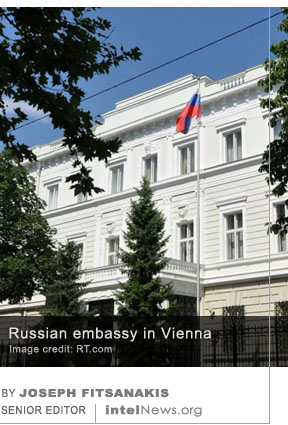 Russia has expelled a diplomat stationed at the Austrian embassy in Moscow, just hours after the Austrian Ministry of Foreign Affairs expelled a Russian diplomat from Austria, allegedly for engaging in espionage. Austrian officials reportedly gave the unnamed Russian diplomat until Tuesday, September 1, to leave Austrian soil, in a move that surprised observers, given the close relations between Austria and Russia in recent years.
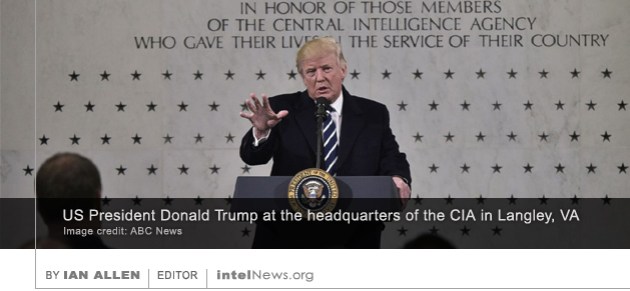 A group of former United States senior intelligence and national security officials, who support the Republican Party, launched today a campaign to deny Donald Trump a second term as president. Calling itself Former Republican National Security Officials for Biden, the group
 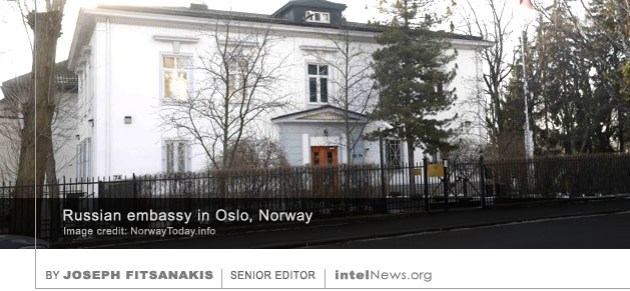 The government of Norway expelled a Russian diplomat on Wednesday, accusing him of committing espionage in a case that involves a Norwegian citizen, who has been arrested on charges of spying for Russia. Meanwhile local media named the Norwegian citizen involved in the case, while the Russian diplomat was also named yesterday in media reports.
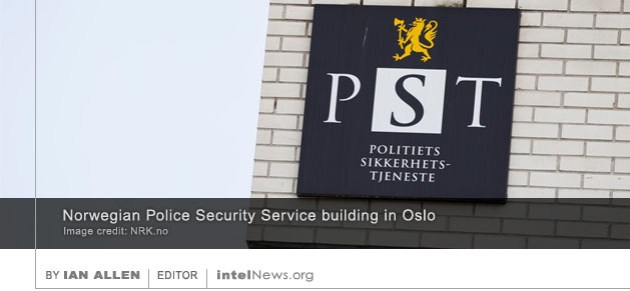 Authorities in Norway will not release the name of a man who was arrested on Saturday, reportedly after he met with a Russian intelligence officer in Oslo. The arrest of the unnamed man, who is a Norwegian citizen, was announced on Monday by the Norwegian Police Security Service, Norway’s counterintelligence agency.
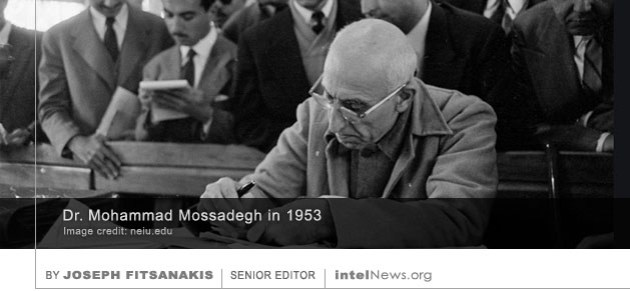 British researchers have found a lost interview by a senior British intelligence officer who led the joint Anglo-American coup in Iran in 1953. The coup overthrew the democratically elected government of Prime Minister Dr. Mohammad Mossadegh and reinstalled the shah (king) of Iran, Mohammad Reza Pahlavi, a close Western ally. London was alarmed by Dr. Mossadegh’s decision to nationalize the Anglo-Iranian Oil Company (later renamed to British Petroleum, or BP), which would deny Britain its lucrative stake in the Middle Eastern energy market. The British also viewed Dr. Mossadegh as being too close to the Soviet Union.
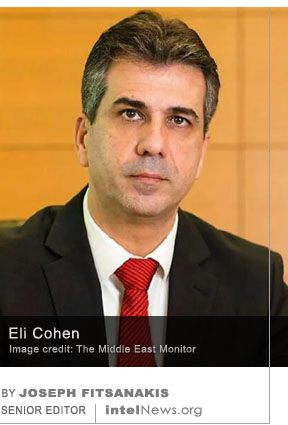 Israel’s minister of intelligence has said Bahrain and Oman could follow the United Arab Emirates in establishing diplomatic relations with Israel, following last week’s historic announcement. Israel said on Thursday that the UAE had
  French media have released new information on a puzzling murder conspiracy by three operations officers in France’s external intelligence agency, who planned to kill a middle-aged woman in Paris. As intelNews
 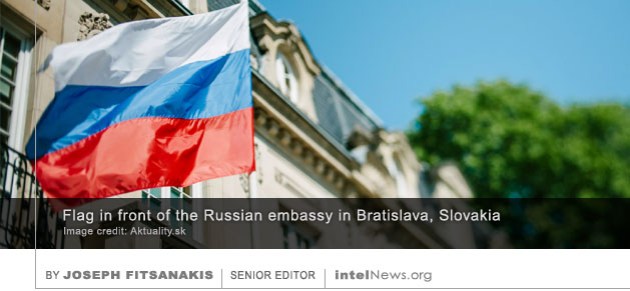 Three Russian diplomats have been ordered to leave Slovakia, reportedly in connection with the killing in Germany of a Chechen former separatist, which many believed was ordered by Moscow. On Monday, the Foreign Ministry of Slovakia confirmed media reports that three Russian diplomats had been declared ‘unwanted persons’ and ordered to leave the country.
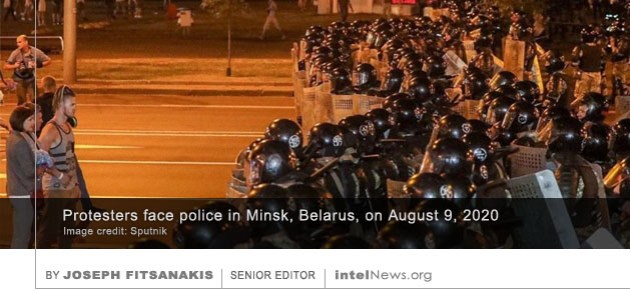 Belarus experienced large-scale cyberattacks that crippled many government websites, while parts of the Internet were inoperative during a national election on Sunday, as large-scale demonstrations
 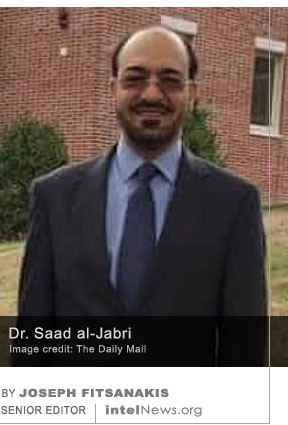 Canadian border guards thwarted a sophisticated plot to kill a Saudi former senior intelligence official, who has been targeted by the oil kingdom’s crown prince because he served a rival member of the royal family, according to a lawsuit filed in an American court.
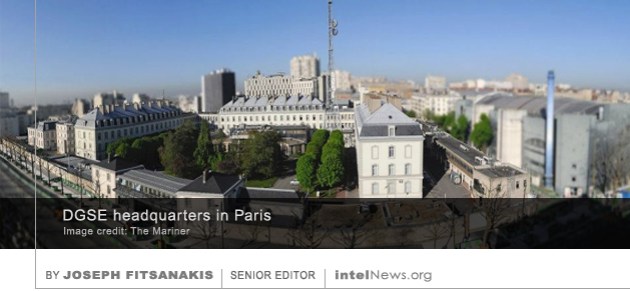 The Paris prosecutor has charged three officers of France’s external spy agency with a mysterious plot to kill a woman, after two of them were caught driving a stolen vehicle and in possession of weapons. The three men are reportedly operations officers in the Directorate-General for External Security, known as DGSE. The service operates as France’s equivalent of the United States Central Intelligence Agency (CIA). Like the CIA, the DGSE is not permitted to carry out operations inside France.
 Computer hackers working for North Korea launched cyberattacks against carefully selected officials of national delegations belonging to the United Nations Security Council, according to a soon-to-be released report. The report is expected to be submitted early next month to the UN Security Council Sanctions Committee on North Korea.
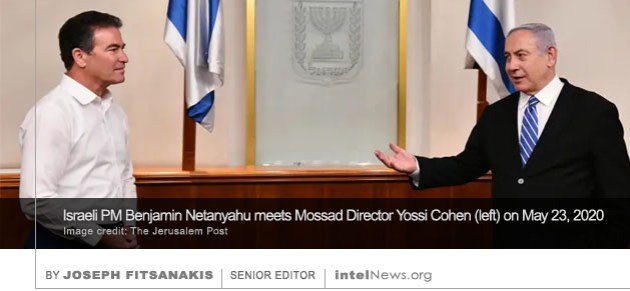 A rare declassified budgetary report shows that Israel’s primary external intelligence agency, the Mossad, has received large increases in funding since 2016. The report was released on Monday by the Office of the State Comptroller. It covers a two-year period starting from August 2016. It is extremely rare for any document on Mossad’s internal affairs, including its budget, to be made available for public viewing.








Christchurch shooter used commercial drone to spy on targets, court told
August 27, 2020 by Ian Allen 1 Comment
Shockingly, Tarrant livestreamed the killings on Facebook from a GoPro camera he had previously attached to a helmet he wore during the attack. The livestream lasted for over 17 minutes, until Facebook moderators terminated the broadcast. The attack marked the worst mass murder in the history of New Zealand, and led to several new pieces of legislation, including strict gun control policies, which have since come into effect. Meanwhile, a manifesto that Tarrant wrote while planning his attack, titled “The Great Replacement”, has become wildly popular among neo-Nazi and other far-right circles worldwide.
According to revelations made public during Tarrant’s trial this week, the 29-year-old far-right militant planned his attacks for months, using sophisticated technology at every opportunity in the process. The prosecutors told the court that Tarrant made use of a commercially available drone to film the grounds of at least one of the mosques, which he later attacked. He allegedly used the drone footage to study the entry and exit points of the building and to carefully map his arrival and departure. He also made use of Internet applications and databases to study maps and the buildings themselves, as well as visuals of the insides of the mosques, prior to launching his attack. According to the prosecutors, Tarrant also studied Islamic religious customs and practices so as to ensure that the mosques would be packed with worshipers when he launched his armed assault.
According to the Australian Financial Review, which published this information, the use of technology by Tarrant to plan his attack was previously unknown to the public. It was revealed earlier this week in court, as prosecutors discussed it openly for the first time. Yesterday Tarrant was sentenced to life in prison without parole, becoming the first person in the history of New Zealand to receive such a sentence. Tarrant reportedly showed no emotion during the court proceedings.
► Author: Ian Allen | Date: 27 August 2020 | Permalink
Filed under Expert news and commentary on intelligence, espionage, spies and spying Tagged with Brenton Tarrant, commercial drones, domestic terrorism, New Zealand, News, rightwing extremism