Russia flew unmarked military aircraft to Libya to evacuate mercenaries, US claims

Libyan National Army LibyaThe United States has alleged that the Russian military flew over a dozen unmarked aircraft to Libya, in an attempt to provide air support for Russian mercenaries who are fighting in Tripoli. If true, this development marks a major escalation of Russia’s military intervention in the Libyan civil war.

The war has been raging in Libya since 2011, when a popular uprising backed by the West and its allies led to the demise of the country’s dictator, Muammar Gaddafi. Much of the east of the country is controlled by the United States-backed Tobruk-led Government, which is affiliated with the Libyan National Army (LNA) and its commander, Field Marshal Khalifa Haftar. Russia also backs the LNA and is vying with the United States for influence among Haftar’s commanders and troops. The LNA is fighting against the United Nations-recognized Libyan Government of National Accord (GNA), which is supported by Qatar and Turkey.

On Tuesday, the Africa Command of the United States Department of Defense alleged that Russian pilots had flown military planes to Jufra, an LNA stronghold. The Americans claimed that the jets had been repainted in Syria to hide their Russian Federation insignia, before being flown first to Tobruk, in Libya’s east, and from there to Jufra. According to the Pentagon, the Russian planes were flown to Libya in order to provide air support to over 1,000 Russian mercenaries who are fighting alongside the LNA.

The mercenaries reportedly belong to the PMC Wagner (also known as the Wagner Group), a Russian security contractor with presence on the ground in Syria, eastern Ukraine, the Central African Republic, and elsewhere. Western officials allege that Russian private contractor firms like Wagner could not operate without permission from the Kremlin. According to recent reports, Wagner personnel have been participating in the LNA’s year-long effort to take Tripoli from the hands of the GNA and by doing so put an end to the Libyan civil war. But the offensive has not been going well in recent days, and Wagner forces were reportedly pushed back by Turkish- and Qatari-supported GNA troops.

The US Pentagon alleged that Moscow sent the Russian military aircraft to Libya in order to “provide close air support and offensive fires for the Wagner Group PMC that is supporting the LNA’s fight”. Other commentators have argued that the main purpose of the mission was to reach the outskirts of Tripoli and airlift the Russian mercenaries to safety. But Ahmed Mismari, a spokesman for the LNA, rejected reports of the arrival of Russian military aircraft to Libya as “media rumors and lies”. He said that all aircraft used by the LNA were “repaired […] old Libyan jets”. The Russian military has not commented on the allegations by the US Pentagon.

Author: Joseph Fitsanakis | Date: 28 May 2020 | Permalink

Exiled former intelligence official says Saudi government abducted his children

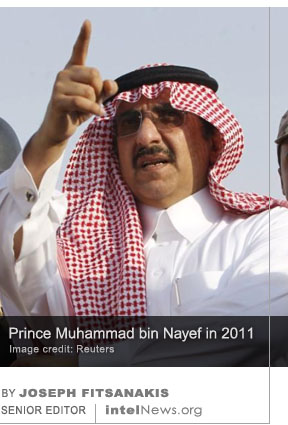
Muhammad bin NayefA Saudi government official, who served as a senior advisor to the oil kingdom’s former Crown Prince, has accused the Saudi monarchy of abducting his children in order to force him to end his self-exile in Canada. With a doctorate in artificial intelligence from the University of Edinburgh, Dr. Saad al-Jabri was until 2015 a rare example of a highly educated government administrator among Saudi Arabia’s ruling elite. Dr. al-Jabri rose in the ranks of the Saudi aristocracy in the 1990s under the tutelage of his patron, Crown Prince Muhammad bin Nayef (pictured). Prince bin Nayef is the grandson of Saudi Arabia’s founding monarch, King Abdulaziz, and until 2015 was destined to succeed King Abdullah and occupy the kingdom’s throne. Eventually, bin Nayef appointed Dr. al-Jabri as Minister of State and made him his most senior and trusted adviser on matters of security and intelligence.

Western intelligence officials credit Dr. al-Jabri with transforming the Saudi security establishment in the 2000s, by introducing scientific methods in investigations, associated with digital forensics, data mining and other advanced techniques. Thanks to his British upbringing and education, Dr. al-Jabri operated with ease and comfort in Western capitals. He soon became the primary link between Saudi Arabia and the so-called “Five Eyes Alliance” —a longstanding intelligence-sharing agreement between the United States, Britain, Canada, Australia and New Zealand. Read more of this post
Israeli prime minister publicly thanks Mossad chief for help with COVID-19

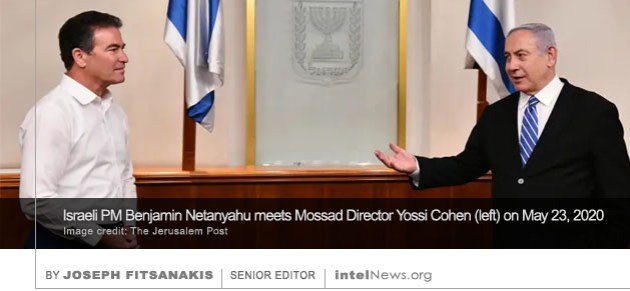
Yossi Cohen MossadThe embattled Prime Minister of Israel, Benjamin Netanyahu, met publicly with the Director of the Mossad, Yossi Cohen, and thanked him for leading the country’s procurement efforts during the COVID-19 crisis. The meeting was a rare public acknowledgement of the central role that the secretive spy agency played during the pandemic.

Early on during the COVID-19 outbreak, it was reported that the intelligence agencies of Israel were playing an increasingly important role in the Jewish state’s effort to combat the effects of the coronavirus in its territory. In an uncharacteristic move, the government went out of its way to advertise the participation of its secretive spy agencies in the national effort to limit the spread of the virus.

In a television interview, an unnamed official for Israel’s external intelligence agency, the Mossad, said the agency had managed to secure 100,000 coronavirus testing kits, 25,000 N-95 masks and 100 ventilators. The material had been acquired “from unnamed countries” by Mossad officers, he said. The officers had to “race to [foreign] factories” and secure these critical supplies after they had been “ordered by other countries”, he added. The agents then had to coordinate secret airlifts so that the medical material could be transported to Israel in time.

But many of the coronavirus testing kits procured by the Mossad turned out to be incomplete. According to local media reports, when the kits arrived in Israel from “an unidentified Gulf state”, scientists realized that they were useless. That was because they arrived without the chemical reagents that were required to carry out complete tests on subjects. These reagents were eventually procured from South Korea and arrived in Israel nearly a month later, when demand for them was far less urgent. The Mossad was heavily criticized for this operation.

But last weekend, Prime Minister Netanyahu publicly thanked the Mossad director for leading the nation’s Joint Procurement Command Center during the COVID-19 pandemic. He told Director Cohen that he had carried out his tasks “exceptionally well [and] the results speak for themselves”. The meeting took place to mark the return of the procurement centers’ command to the Ministry of Health. But the Mossad may be asked to step in again, said Netanyahu: “we are currently passing the torch”, said the prime minister. However, “we do not know what the next day, or the next month, will bring. Since you have acquired the experience, remember it, we may need it again”, he told Cohen.

Author: Joseph Fitsanakis | Date: 26 May 2020 | Permalink

US threatens to end intelligence sharing if Australian state joins Chinese venture

Belt and Road InitiativeThe United States has warned that it might be forced to stop sharing intelligence with Australia if the country’s second most populous state enters into a much-heralded investment agreement with China. The Australian state of Victoria has said it intends to join Beijing’s Belt and Road Initiative, a worldwide investment venture that was announced with much fanfare by Chinese President Xi Jinping in 2013.

The initial goal of the venture was to encourage economic cooperation between China and countries of the Eurasian region. Eventually, the project’s scope expanded to include agreements with countries in Asia, Africa and Europe, mostly through the Chinese-led construction of telecommunications and transportation networks, which trace the trading routes of the Silk Road of ancient times.

Although Australia is not a participant in the Belt and Road Initiative, the Australian state of Victoria announced its decision to join the project in late 2019. The decision has been criticized by senior Australian federal officials, including Prime Minister Scott Morrison and Home Affairs Minister Peter Dutton. These officials argue that any interference by China in the Australian national telecommunications network could compromise the national security of the country as a whole.

On Sunday, the US Secretary of State Mike Pompeo warned Australia that Washington would look “incredibly closely” at aspects of the Belt and Road Initiative affecting telecommunications. Pompeo, who was Director of the Central Intelligence Agency before his current post, told Sky News that some aspects of the project were designed to “build up the capacity of the Chinese Communist Party to do harm” around the world.

In his interview, Pompeo referred to the so-called “Five Eyes” alliance (also known as “UKUSA”), which is a longstanding intelligence-sharing agreement between the United States, Britain, Canada, Australia and New Zealand. He added that the US government was concerned that the Victoria state government’s decision to participate in the Chinese venture project could “have an adverse impact on our ability to protect telecommunications from our private citizens, or security networks for our defense and intelligence communities”.

If that were to happen, said Pompeo, then the US would “not take any risks to our telecommunications infrastructure, [or] any risk to the national security elements of what we need to do with our Five Eyes partners”. In the US government determined that these risks were real, “we simply disconnect, we will simply separate”, Pompeo concluded.

Author: Joseph Fitsanakis | Date: 25 May 2020 | Permalink

Popular beer app used to trace movements of military and intelligence personnel

Untappd appResearchers have been able to uncover the identities and track the movements of military and intelligence personnel by using visual and geo-locational information found on a popular smartphone application for beer aficionados. The information uncovered included the home addresses of United States government personnel, some of whom were found to be working at a secret Central Intelligence Agency (CIA) facility.
The application, or “app” in question is Untappd, which is arguably the most popular social media platform for beer aficionados in the United States and much of Western Europe. The app is believed to have over 8 million users worldwide, with many of whom serving in the armed forces or intelligence agencies. Untappd users are able to rate beers, share reviews of breweries and bars, post photographs, and discuss their findings with other users.

Earlier this week, a team of researchers working for the investigative website Bellingcat said that visual and geo-locational information collected from Untappd users compromised the movements and whereabouts of military and intelligence personnel who used the app.

Much of the information was collected by monitoring the activity of app users at bars or breweries located near known facilities belonging to intelligence agencies or the military —including the Pentagon. In one case, the movements of an individual user were traced all the way from his home to the Armed Forces Experimental Training Activity (AFETA). Known as Camp Peary, AFETA is a United States Department of Defense facility that is believed to be home to the CIA’s training grounds.

In other instances, photographs of beers posted by Untappd users contained snippets of US government employee badges, sensitive or classified documents, and even credit card and other personal information. Used collectively, the data extracted from the app could be utilized to build travel and habit profiles of users, including the work and home locations of military and intelligence personnel, said Bellingcat.

Author: Joseph Fitsanakis | Date: 21 May 2020 | Permalink

German court stops spy agencies from conducting mass surveillance of foreigners

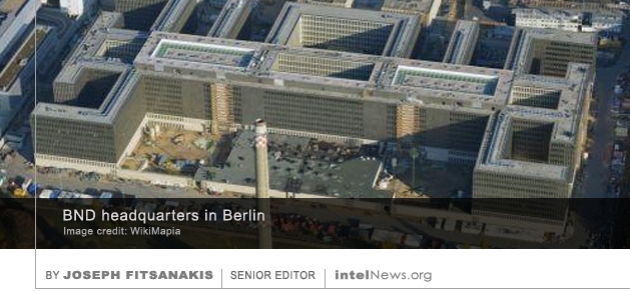
BND GermanyGermany’s Federal Court of Justice has ruled that the country’s intelligence agencies are not entitled to spy en masse on the telecommunications exchanges of foreign citizens. The ruling comes in response to a lawsuit filed by several journalist groups, including the German chapter of Reporters Without Borders. The groups partnered with the German-based Society for Civil Rights and argued in their lawsuit that existing law did not prevent German spy agencies from spying at will on the communications of journalists. This could potentially allow the intelligence agencies to identify trusted sources that journalists use in their work, and even share that information with intelligence agencies of other countries, they argued.

Germany’s foreign intelligence agency, the Federal Intelligence Service, or BND, is uniquely positioned with access to a vast volume of telecommunications data and content. This is because Germany hosts some of the busiest and highest-capacity Internet exchange points in the world. The country’s extensive telecommunications infrastructure includes the so-called DE-CIX exchange in Frankfurt, believed to be the world’s second-busiest Internet node. It is believed that the DE-CIX Internet exchange alone carries over a trillion messages per day to and from Western Europe, Russia, the Middle East and North Africa.

The BND is not allowed to spy on the communications of German nationals. However, according to German media reports, the agency had until now assumed that Internet messages sent by foreigners, which passed through German-based exchanges, were fair game for interception and analysis. This was because, according to the BND, foreign nationals were not protected under Germany’s Basic Law —a term that refers to the German Constitution— which means they and their communications had no privacy protections under German law.

But this assumption was dispelled on Tuesday by the Federal Court of Justice, which is Germany’s highest court. The court ruled that telecommunications surveillance against foreigners is subject to Article 10 of Germany’s Basic Law, which affords German citizens the right to privacy. In other words, the law also protects the telecommunications of foreigners, according to the court, which means that surveillance of foreign communications should be carried out only in a targeted fashion, in response to specific cases or to target specific individuals. The court challenged the mass-surveillance —as opposed to a targeted surveillance— model of the BND’s data collection, and said that it the spy agency’s activities required more stringent oversight, especially in relation to the communications of reporters and lawyers. Finally, the court agreed with the plaintiffs that the constitutional safeguards against the BND’s ability to share its intercepted data with foreign spy agencies were insufficient.

In its ruling, the court gave the German government until December of 2021 to propose a new law governing telecommunications surveillance against foreigners, which will be compliant with the German Constitution.

Author: Joseph Fitsanakis | Date: 20 May 2020 | Permalink

UAE arming Libyan warlord using covert flights, United Nations panel concludes

Libyan National Army LNAThe United Arab Emirates is behind a “covert air bridge” to supply weapons to Libyan warlord Khalifa Haftar, according to a leaked report by a United Nations investigative panel. A war has been raging in Libya since 2011, when a popular uprising backed by the West and its allies led to the demise of the country’s dictator, Muammar Gaddafi. Much of the east of the country is controlled by the United States-backed Tobruk-led Government, which is affiliated with the Libyan National Army (LNA) and its commander, Field Marshal Khalifa Haftar (pictured). The LNA is fighting against the UN-recognized Libyan Government of National Accord.
In February of 2011, the UN Security Council adopted Resolution 1970, which —among other things— forbids the export of war materiel to Libya. The resolution was further-strengthened in 2014 and remains in place today. But weapons keep flowing into Libya. In 2017, it was disclosed that the LNA was receiving secret military assistance from the UAE and Saudi Arabia, in violation of the embargo. Now another report alleges that much of the military assistance to the LNA arrives in Libya via a “covert air bridge” operated by the UAE. According to the Bloomberg news agency, the information comes from a leaked report by a UN panel, excerpts of which were presented to the US Security Council earlier in May.

The report is said to allege that there has been a substantial increase in “secret flights” from airports in the UAE and from the Gulf country’s military airbase in Eritrea. In early January alone, at least 37 of these secret flights landed at Libyan airfields in areas under the control of the LNA, said the report. These secret deliveries were operated by “a complex network for companies”, which were registered in the UAE, the British Virgin Islands and Kazakhstan, according to the UN panel.

Bloomberg contacted the ambassador of the UAE to the UN, Lana Nusseibeh, who blasted the claims as “false” and said that the government of the UAE denied them “in their entirety”. She added that UAE officials would continue to work with UN panels investigating alleged violations of UN Resolution 1970. Bloomberg said it also contacted LNA officials with questions about the alleged secret UAE flights, but received no response.

Author: Joseph Fitsanakis | Date: 19 May 2020 | Permalink

Malta protests French media claims that its Brussels embassy is bugged by China

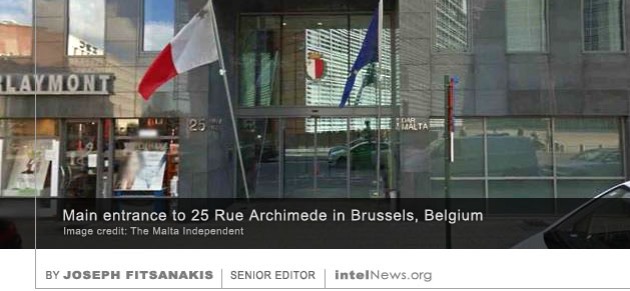
25 Rue ArchimedeThe Maltese government has strongly denied allegations, made by a leading French newspaper, that the island nation’s embassy in Brussels is being used by China to spy on European Union institutions. The allegations concern a nine-story building located at 25 Rue Archimede, in one of downtown Brussels’ most desirable areas. The building houses the Embassy of Malta in Belgium, as well as Malta’s Permanent Representation to the European Union. It is conveniently located across the street from Le Berlaymont —the headquarters of the European Commission, which is the European Union’s executive branch. It is also around the corner from the headquarters of the European Council, which operates as the collective presidency of the European Union.
Last Friday, leading French newspaper Le Monde, alleged that China had installed concealed surveillance equipment throughout the building at 25 Rue Archimede. The paper claimed that the Chinese had supplied the funds to buy and refurbish the building as a gift to Malta, a country with which Beijing has had traditionally warm relations since 1972, when Malta became the world’s first nation to formally recognize the People’s Republic of China. The paper also alleged that Belgium’s state security services had long suspected that the building “harbored technical [surveillance] equipment” planted by Chinese intelligence with the aim of spying on nearby European Union facilities located nearby. The report added that the Belgians had previously been initially alerted by British intelligence about the use of 25 Rue Archimede as a “spy tower” by the Chinese.

According to Le Monde, this information had been relayed to the Belgian Ministry of Foreign Affairs by Alain Winants, when he served as Director of Belgium’s State Security Service (SV/SE). However, both Winants and his successor, Jaak Raes, declined to comment when asked by Le Monde. The paper said that the Belgian Ministry of Foreign Affairs also declined an opportunity to comment, saying that “such affairs relate to the state affairs of Belgium”.

Over the weekend, the Maltese government issued a formal statement denying the clams by Le Monde, and protesting the “incorrect allegations” in the paper’s report. Additionally, Maltese officials told local media that the building in question had undergone successive “internal and external audits” by the Maltese Security Service and the European Council, and had been found to be clear of bugs every time. Another Maltese government source said that 80% of the building’s furniture had been “disposed of” in the past two years and replaced with “new furniture procured from Malta”.

Other sources told Maltese media that the allegations in Le Monde could be a form of retaliation against the government of Malta for seeking to withdraw from Operation IRINI, a European Union naval operation aimed at enforcing an international weapons embargo imposed on Libya. According to these claims, the embargo is preventing weapons from Turkey from reaching the United Nations-recognized Libyan Government of National Accord. If the embargo were to be lifted, or not thoroughly implemented, it could potentially strengthen the Libyan government, and thus hamper the efforts of Libyan warlord General Khalifa Haftar. Haftar is backed by France, among other Western powers.

Author: Joseph Fitsanakis | Date: 18 May 2020 | Permalink

News you may have missed #897

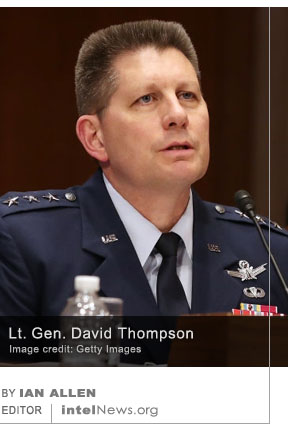
Coronavirus not slowing Russian, Chinese space activities, US general says. Lt. Gen. David Thompson (pictured), the US Space Force vice commander, said this week that Russia and China continue to launch military rockets and test space weapons amid the coronavirus pandemic. Russia tested a satellite-killing missile last month, drawing scorn from US military leaders. Meanwhile in April, a Chinese rocket carrying an Indonesian satellite failed to reach orbit, according to sources.
US security clearances become more lucrative amid pandemic. Security clearances will almost certainly become an even more valuable credential as the US economy transforms amid the COVID-19 pandemic. While well over 30 million Americans have filed initial unemployment claims since mid-March, those employed in jobs that require a security clearance remain largely insulated from the economic volatility caused by the pandemic. The ever-increasing desirability of a security clearance has raised the stakes for those looking to gain or maintain a clearance in these economically uncertain times.
Michigan cancels legislative session to avoid armed protests. Michigan closed down its capitol in Lansing on Thursday and canceled its legislative session rather than face the possibility of an armed protest and death threats against Democratic Governor Gretchen Whitmer. The gathering, meant to advocate opening the state for business despite the coronavirus pandemic, followed one April 30 that resulted in pictures of protesters clad in military-style gear and carrying long guns crowding the statehouse. They confronted police and taunted lawmakers. The debate grew more tense in recent days as some lawmakers read about threats to the governor’s life on social media, which were published in the Detroit Metro Times.

Author: Ian Allen | Date: 16 May 2020 | Permalink

Czech media name alleged Russian spy behind poison plot against Prague officials

Andrei KonchakovNews media in the Czech Republic have named a Russian diplomat who allegedly transported poison to Prague last month, in what officials claim was a foiled plot to kill as many as three high-profile Czech politicians. Late last April, the Czech weekly investigative magazine Respekt reported that a Russian assassination plot had been foiled by authorities in the capital Prague.

Respekt said a Russian citizen carrying a diplomatic passport had arrived in Prague in early April. The man allegedly had with him a suitcase with a concealed quantity of ricin —a deadly toxin. His alleged mission was to assassinate Prague mayor Zdeněk Hřib, as well as Pavel Novotny and Ondřej Kolář, two of Prague’s three district mayors. All three men are known as fervently anti-Russian. Earlier this year, Hřib led a nationwide effort to rename the square in front of the Russian Embassy in Prague after Boris Nemtsov, a Russian opposition activist who was gunned down in Moscow in 2015. Kolář has been advocating for years for the removal of Soviet-era statues from Prague’s public spaces.

This past Sunday, Czech state television’s flagship investigative program 168 Hodin (168 Hours) claimed that the Russian diplomat who tried to smuggle poison into the country is Andrei Konchakov (pictured). Konchakov, 34, directs the Russian Center for Science and Culture in Prague, which is an extension of the Russian Embassy there. Citing “intelligence sources” 168 Hodin said Czech counterintelligence officials believe Konchakov is a actually an non-official-cover intelligence officer for Russian intelligence. Konchakov is alleged to have arrived at Prague’s Vaclav Havel International Airport on in April, where he was picked up by a Russian Embassy car and driven to the compound of the Russian diplomatic representation in the Czech capital.

Soon after the allegations against him emerged, Konchakov spoke to the Czech news website Seznam Zprávy. He strongly denied the accusations against him and told the website that the suitcase he was carrying with him during upon his arrival in Prague contained “disinfectant and candies”. He added that he would not, for the time being, respond to further questions, as he would first have to be granted permission to do so from the Russian government. Meanwhile, the Russian Embassy in Prague released a statement claiming that it had asked Czech authorities to provide police protection for Konchakov, because of “credible threats” he had received following the allegations against him by 168 Hodin.

Author: Joseph Fitsanakis | Date: 13 May 2020 | Permalink

INTERPOL issues red notice for alleged ex-CIA officer wanted in Britain

Harry DunnA so-called ‘red notice’ has been issued by INTERPOL for Anne Sacoolas, an alleged former employee of the United States Central Intelligence Agency, who is accused of causing an accident that killed a man in the United Kingdom last year. The accident victim is Harry Dunn, 19, who died on August 27, 2019, after a collision with a automobile that was being driven by Sacoolas. British police have said that Sacoolas’ car was being driven on the wrong side of the street at the time of the accident.
The accident took place a few yards from the entrance to the Royal Air Force base in Croughton, where Sacoolas’ husband was stationed at the time. He is thought to have been working at the US Air Force listening station, which is located inside the base. The American family had been in the United Kingdom for less than a month when the accident happened. British police charged Sacoolas with dangerous driving that led to the death of Dunn. However, the Sacoolas family left the country two weeks later, allegedly with the consent of the British Foreign Office. The Foreign Office reportedly agreed with the US government’s argument that Sacoolas had diplomatic immunity due to her husband’s work, and could not be tried for the accident.

Later, however, the diplomatic immunity claim was strongly disputed by Dunn’s family. Eventually British Prime Minister Boris Johnson and Foreign Secretary Dominic Raab requested Sacoolas’ extradition to the United Kingdom. But the White House refused to grant the request and suggested instead that financial compensation be paid to the family. The White House also proposed a meeting between US President Donald Trump and the parents of Harry Dunn, which they refused to participate in. In the meantime there were allegations in British and American media that Sacoolas used to work for the CIA and that her husband is an intelligence officer.

Now INTERPOL, the International Police Organization, has issued a red notice for Sacoolas, which theoretically means she could be arrested if she were to leave American territory. Speaking on Monday, Radd Seiger, a lawyer for Dunn’s parents, argued the INTERPOL move means that Sacoolas did not have diplomatic immunity at the time of the accident, since red notices “are not served on valid diplomats”, he said. He also called for the British parliament to launch an inquiry into the accident and into Sacoolas’ subsequent departure from the United Kingdom.

Author: Ian Allen | Date: 12 May 2020 | Permalink

COVID-struck Iraq sees ‘biggest ISIS resurgence’ since group’s defeat in 2017

ISIS IraqIraq is currently witnessing the largest resurgence of the Islamic State since December of 2017, when the Iraqi government declared it had defeated the group, according to local and international observers. The Sunni militant group, which became known as the Islamic State of Iraq and Syria (ISIS), is exploiting a moment of opportunity, as Iraqi security forces, Shia militias and American troops are essentially sheltering in place to avoid the effects of COVID-19.

Iraq has been on involuntary lockdown since March 22 in response to the outbreak of the coronavirus pandemic. The country’s security forces are busy providing humanitarian relief to communities under lockdown. Additionally, large numbers of soldiers and police officers are either sick or sheltering in place with their families and are not turning up for work. Furthermore, United States forces have significantly scaled back their presence in the country following the assassination of Iranian military commander Qasem Soleimani in January of this year, in an effort to avoid armed confrontations with Iraq’s pro-Iranian militias.

These conditions are allowing Islamic State fighters to emerge from hiding and conduct operations in nearly every province of Iraq. Last week the militant group launched a series of coordinated attacks in nearly 30 different locations across Iraq, which left dozens of Iraqi security forces and Shia militia members dead. Additionally, Islamic State saboteurs destroyed several power lines across northeastern Iraq, disrupting electricity supply to tens of thousands of homes in the region.

On Tuesday, Iraqi security forces teamed up with the Popular Mobilization Forces —a mostly Shia paramilitary group— to launch several operations against the Islamic State. The operations aimed to neutralize known Islamic State enclaves in mostly Sunni regions of northern and western Iraq. They also aimed to capture Islamic State regional commanders, most of whom operate along Iraq’s borders with Saudi Arabia, Turkey and Syria.

But nobody knows how this campaign will end up in light of the coronavirus. The pandemic is causing major disruption on the Iraqi economy, while the historic drop in oil prices is dramatically reducing the nation’s primary source of income. The Islamic State thrives in conditions of instability, which is precisely what many fear, as the effects of the pandemic are continuing to manifest in the Middle East.

► Author: Joseph Fitsanakis | Date: 11 May 2020 | Permalink

Seeking to expand, French spy agency is frustrated with poor quality of job applicants

dgse franceFrance’s primary external intelligence agency has expressed frustration with the overall poor quality of job applicants, as it tries to expand its staff by 20 percent in the coming years. The Direction Générale de la Sécurité Extérieure, known as DGSE, is France’s equivalent to the United States’ Central Intelligence Agency and the United Kingdom’s Secret Intelligence Service, or MI6. It is tasked with procuring secret political, military and economic information from foreign targets.

During the past decade, the DGSE has nearly doubled the size of its personnel. In 2008, it employed fewer than 4,500 people. By 2019, its staff size had grown to over 7,000, including many thousands of operations officers serving secretly abroad. Last year, the agency announced that it planned to grow its personnel size to 8,500 by 2022. To do so, it launched an unprecedented recruitment campaign, which French security experts described as nothing short of revolutionary. The staunchly reclusive DGSE sent recruiters to job fairs across France —mostly at universities— and began advertising its job vacancies online, primarily on YouTube and LinkedIn.

As a result of its efforts, the agency said that it received 400 applications for 14 positions that were advertised in January. Of those 14 positions, 10 required advanced knowledge and understanding of foreign affairs and geopolitical developments, while two sought candidates with logistical and administrative expertise. The remaining two positions equired fluency in Arabic.

But, according to the British newspaper The Times, the French spy agency struggled to fill the positions. On Thursday the paper cited a DGSE report, which said that the performance of candidates during the selection process “revealed critical shortcomings”. Candidates appeared for interviews severely under-prepared and their level of knowledge, as demonstrated in interviews, was “unacceptable for someone wishing to join the ranks of the DGSE”, said the report. It added that job candidates showed “markedly limited grasp” of global geopolitics, while their knowledge of intelligence work was even more limited. Even minimum requirements, like a résumé free of spelling mistakes were rarely met, it said.

Consequently, and despite the fact that majority of the applicants had graduate degrees, the DGSE struggled to fill the positions, with the process taking much longer than expected. The report said that 12 of the 14 job posts were eventually filled. The remaining two posts —requiring fluency in Arabic— remain unfilled “for want of suitable candidates”, noted The Times.

Author: Joseph Fitsanakis | Date: 08 May 2020 | Permalink

Venezuelan television airs US ex-soldier’s confession of role in alleged coup

Luke DenmanVenezuelan state television aired on Wednesday an interview with one of two Americans facing charges of having participated in a failed armed plot to overthrow the government of President Nicolás Maduro. Venezuelan media have been referring to the failed plot as “enfrentamiento en El Junquito” (“El Junquito raid”), or “Operación GEDEÓN”.

GEDEÓN refers to a failed coup plot that was carried out on May 3 and 4 by a group of up to 60 armed men. It is alleged that the coup was masterminded by Major General Clíver Alcalá Cordones, a retired member of Venezuela’s Bolivarian Army. Alcalá, who is wanted in the United States for drug trafficking, has been living in Colombia since at least 2019. It is also alleged that the coup was launched from Colombia with the support of Silvercorp USA, a private security group led by Jordan Goudreau, a Canadian-born former sergeant in the US Green Berets.

On May 3, several alleged coup plotters sailed on speed boats from Colombia, heading for the coast of La Guaira, 20 miles north of Venezuelan capital Caracas. At least six coup plotters who participated in the first phase of the operation are believed to have been killed by the Venezuelan armed forces. Many more were arrested before being able to reach a number of safe houses that had allegedly been set up by their supporters inside Venezuela. At least two of arrestees, Airan Berry and Luke Denman, are believed to be American citizens and former soldiers. Meanwhile, a number of Venezuelan opposition figures in Colombia have since claimed that several cells of coup supporters have been activated inside Venezuela. A nationwide operation to neutralize these cells is currently underway with the participation of tens of thousands of Venezuelan soldiers.

On Wednesday, Venezuelan state television aired excerpts of an interview (video) with Luke Denman, in which he appears to claim that he was part of a group of coup plotters whose mission was to take control of the Simón Bolívar International Airport. Also known as Maiquetía, the airport is located 13 miles north of the center of Caracas. Denman also appears to say in the interview that his instructions were to help transport a captured President Maduro by plane to the US.

On Tuesday, the Venezuelan government claimed that coup had been sponsored by the White House, the US Drug Enforcement Administration, the Colombian government, and Juan Guaidó, President Maduro’s principal rival, who is seen by the US and most Western European countries as the rightful leader of Venezuela. But Washington and its allies have denied that they had any involvement in the alleged coup plot. On Wednesday, Daniel Hoffman, a former Central Intelligence Agency operations officer, said that the coup plot had very likely been penetrated by pro-Maduro spies during its planning stages.

Author: Joseph Fitsanakis | Date: 07 May 2020 | Permalink

US could withdraw intelligence assets from the UK due to Huawei’s role in 5G

HuaweiThe United States could end all sensitive intelligence operations and withdraw its intelligence assets from the United Kingdom if a leading Chinese company is hired to upgrade the country’s telecommunications network. The British government has come under relentless pressure by Washington to not hire Huawei Technologies, one of the world’s leading telecommunications hardware manufacturers, to build the United Kingdom’s 5th generation cellular communications infrastructure.

Many Western intelligence agencies view Huawei as being uncomfortably close to the Communist Party of China. Washington has been leading a worldwide campaign to limit Huawei’s ability to build the infrastructure for 5G, the world’s next-generation wireless network. Along with some if its allies, notably Australia and Canada, the US is concerned that the Chinese telecommunications giant may facilitate global wiretapping on behalf of Beijing’s spy agencies. Last year, Washington warned two of its main European allies, Britain and Germany, that it would stop sharing intelligence with them if they allowed Huawei to compete for 5G contracts.

Now the White House appears to be considering a more drastic step. According to the British newspaper The Daily Telegraph, the Trump administration has ordered a review of whether it should curtail its intelligence assets and operations on British soil if the Chinese firm were hired to build the UK’s 5G network. Citing “half a dozen” current and former British and American officials, the paper said that the review is still in the works. It is being conducted under the auspices of the National Security Council, America’s highest decision-making body, which is chaired by the president himself.

The Daily Telegraph reports that, among the topics being looked at in the review is whether US intelligence operations and hardware —both civilian and military— would be compromised by Huawei’s involvement in the telecommunications infrastructure. The hardware includes military installations and surveillance platforms, such as a number of RC-135 reconnaissance aircraft, which operate out of the Royal Air Force Mildenhall in Sussex, near England’s southern coast. The paper notes that the report and its recommendations could result in drastic chances for the so-called “special relationship” between the US and the UK.

Author: Joseph Fitsanakis | Date: 06 May 2020 | Permalink