Pakistan bars its former spy chief from leaving the country over controversial book

Asad DurraniPakistan has officially barred a former director of its powerful intelligence agency from leaving the country, after he co-authored a controversial book with his Indian counterpart. Asad Durrani is a retired Pakistani Army general who served as director-general of Pakistan’s Directorate for Military Intelligence between 1988 and 1989. From 1990 to 1992, he served as director of the Inter-Services Intelligence Directorate, arguably Pakistan’s most powerful government institution. Durrani, 77, has been severely criticized in some Pakistani circles for co-authoring a book entitled The Spy Chronicles: RAW, ISI and the Illusion of Peace, with his Indian counterpart, A.S. Daulat. Daulat, 78, headed India’s Research and Analysis Wing from 1999 to 2000.

The book, which was edited by the widely respected Indian journalist Aditya Sinha, has prompted heavy criticism of its two co-authors in nationalist circles in the two rival regional powers. But Durrani’s position became more tenuous on Monday, after the government of Pakistan announced that he had been placed under formal investigation. Pakistani Army spokesman Major General Asif Ghafoor told reporters in Islamabad on Monday morning that the revelations made in Lieutenant General Durrani’s book would be investigated by a formal court of inquiry, headed by a three-star general. He also said that Durrani had been urgently summoned to the Pakistani Army’s headquarters to answer allegations that he violated the Pakistani military’s code of conduct. Additionally, Ghafoor announced that Durrani had been placed on an official government-administered “exit control list”, which means that he is not allowed to leave Pakistan until further notice.

The Pakistani armed forces have not explained the precise reasons why Durrani is under investigation. His book makes several controversial allegations relating to Islamabad’s intelligence operations. A large part of the book contains details about Pakistan’s systematic efforts to foment armed unrest in the heavily Muslim Indian state of Kashmir, for instance by funding and training a host of Islamist paramilitary organizations that operate in the disputed region. The book also claims that the Pakistani government was aware of the whereabouts of Osama bin Laden in 2011, and that it cooperated closely with the United States to kill the co-founder of al-Qaeda. Islamabad has consistently denied allegations that it knew of bin Laden’s hideout in the city of Abbottabad, and that it gave permission to US Special Forces troops to raid his compound. If Durrani is charged with having violated the Pakistani military’s code of conduct, he could face a minimum of two years in prison.

Author: Joseph Fitsanakis | Date: 30 May 2018 | Permalink

France arrests two intelligence officers on charges of spying for China

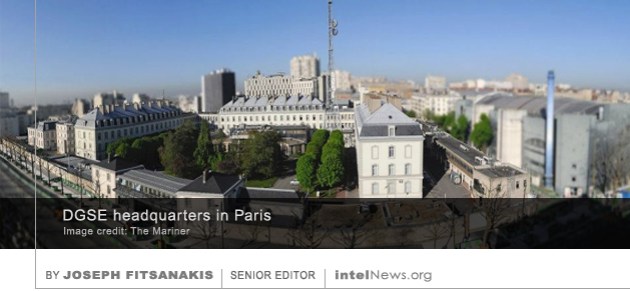
dgse franceFrance has confirmed the arrest of two French intelligence officers who are accused of spying for the Chinese government. It appears that the two officers were captured and charged in December. However, their arrests were not publicized at the time, because French counterintelligence officials wanted to avoid alerting more members of a possible spy ring, which some say may include up to five French citizens. It was only last Friday, a day after French media published leaked reports of the arrests, that the French government spoke publicly about the case.

France’s Minister of the Armed Forces, Florence Parly, told France’s CNews television on Friday that two French intelligence officers were “accused of extremely serious acts of treason” against the French state. The two officers had been charged with delivering classified information to a foreign power”, she said. Parly added that the spouse of one of the officers was also being investigated for participating in acts of espionage on behalf of a foreign country. When asked to identify the country that the two officers are accused of spying for, the minister refused to respond. But the Agence France Presse news agency cited an anonymous “security source”, who said that the two intelligence officers were being suspected of spying for China and that they had been captured following a sting operation by French counterintelligence officers.

French television station TFI1 said on Friday that both spy suspects are officers in the General Directorate of External Security (DGSE), France’s primary external intelligence agency. The station added that at least one of the two suspects was stationed at the embassy of France in Beijing when French counterintelligence became aware of the alleged espionage. According to some reports, the two suspects had retired from the DGSE by the time they were arrested, but committed their alleged espionage while still in the service of the spy agency. French government officials have refused to provide information about the length of the alleged espionage or the nature of the classified information believed to have been compromised. Additionally, no information is available about whether the two alleged spies were working in cooperation with each other. The BBC asked China last week about the arrests in France, but the Chinese Ministry of Foreign Affairs said it was not aware of the incident.

Author: Joseph Fitsanakis | Date: 28 May 2018 | Research credit: E.W. and P.C.  | Permalink
High-level MI6 spy inside al-Qaeda writes book detailing his work

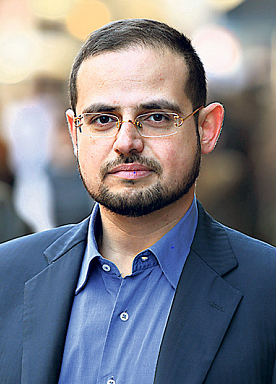
Aimen Dean, a.k.a. Ramzi

Aimen Dean, a.k.a. Ramzi

A Saudi-born man, who some refer to as the most valuable British-run spy inside al-Qaeda, has authored a soon-to-be-published book about his experiences. Aimen Dean, known in al-Qaeda circles simply as ‘Ramzi’, became radicalized in the first half of the 1990s in response to the Bosnian War. At that time, he traveled from his home country of Saudi Arabia to Bosnia, where he joined large numbers of foreign Muslim fighters who fought in support of Bosnian-Muslim forces. In subsequent interviews, Dean has said that he continues to view his participation in the Bosnian War as an “ethical and moral” act in defense of a “defenseless population”. Following the end of the Bosnian War, Dean joined many foreign-born fighters who followed al-Qaeda co-founder Osama bin Laden to Afghanistan. While there, he pledged allegiance to bin Laden and gained his trust.

Dean’s task in Afghanistan was to train new al-Qaeda recruits in Islamic theology and history. But he was also tasked with combat duties, which included bomb-making. He witnessed the drastic shift in al-Qaeda’s raison d’être from a group ostensibly fighting to defend Muslims under attack, to a center of a violent campaign against the West. Dean has stated that during his first period in Afghanistan, he sincerely believed that the West was involved in a systematic campaign to destroy Islam and Muslims. Gradually, however, Dean’s views began to conflict with those of al-Qaeda’s leaders. He especially objected to the use of suicide bombers and the deliberate targeting of civilians by al-Qaeda fighters. His disillusionment with al-Qaeda peaked in August of 1998, when the organization targeted the United States embassies in Kenya and Tanzania in coordinated strikes.

During a leave of absence from al-Qaeda’s Afghanistan stronghold, Dean was approached by the United Kingdom’s Secret Intelligence Service, more commonly known as MI6. He says that he quickly agreed to work as a spy for the British agency and did so from 1998 until 2007, when he claims that his cover was blown. Dean has now written a book, co-authored with two CNN reporters, Paul Cruickshank and Tim Lister. Entitled Nine Lives: My Time As MI6’s Top Spy Inside al-Qaeda, the book is due to appear in stores on June 7.

Author: Ian Allen | Date: 25 May 2018 | Permalink

US alerts its diplomatic staff in China over ‘abnormal sounds and symptoms’

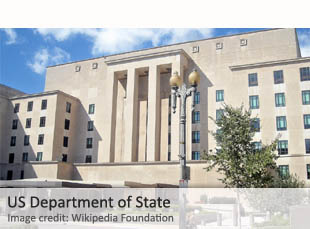
US Department of StateThe United States Department of State has warned its personnel stationed in China of the danger of experiencing “unusual acute auditory or sensory phenomena accompanied by unusual sounds or piercing noises”. The warning, issued on May 23, has prompted comparisons to similar phenomena that were reported by US diplomatic personnel in Cuba in 2016. Last September, Washington recalled the majority of its personnel from its embassy in Havana and issued a travel warning advising its citizens to stay away from the island. These actions were taken in response to allegations made by the United States that at least 21 of its diplomatic and support staff stationed in Cuba suffered from sudden and unexplained loss of hearings, causing them to be diagnosed with brain injuries. In April, the Canadian embassy evacuated all family members of its personnel stationed in Havana, over similar health concerns.
Now a similar warning has been issued by the US Department of State for its staff stationed in China. In a statement, the Department said that a member of staff at its consulate in the Chinese city of Guangzhou reported experiencing “subtle and vague, but abnormal, sensations of sound and pressure”. The unnamed individual reportedly suffered these physical symptoms between late 2017 and April 2018, said the statement. At that time, the individual was flown back to the US where they eventually were diagnosed with “mild traumatic brain injury”. The statement went on to state that the cause of these symptoms remains unknown, and that the US government has no information about other such incidents affecting Americans in China.

Late on Wednesday, however, speaking before the Committee on Foreign Affairs of the US House of Representatives, US Secretary of State Mike Pompeo said that the incident in China was “medically similar” to the 2016 incidents in Cuba. Some US government sources have blamed these medical symptoms on unspecified “sonic weapon attacks” from a foreign country, aimed at US diplomatic facilities.  But Washington has so far refrained from accusing China of having a role in such attacks, either in Cuba or in China itself. Pompeo said on Wednesday that Washington had dispatched a medical team to Guangzhou to inspect American diplomats stationed there. The Chinese government said yesterday that it was probing the incident “in a very responsible manner” and “would protect the lawful rights and interest of foreigners in China”. However, China’s Minister of Foreign Affairs, Wang Yi, warned that the case in Guangzhou should not be “magnified, complicated or even politicized” by Washington.

Author: Joseph Fitsanakis | Date: 23 May 2018 | Research credit: Nikki P. | Permalink

Spy collection program using fake mobile phone apps linked to Pakistani military

Cellular telephoneThe Pakistani military is suspected of having orchestrated a lucrative intelligence collection campaign using mobile phones, which targeted diplomats from India, Israel and Australia, as well as from North Atlantic Treaty Organization (NATO) member countries such as the United States and Britain. Others targeted in the operation include officials from Iraq, Iran and the United Arab Emirates. News of the alleged spy operation was published earlier this month by Lookout Mobile Security, a security software company based in the United States.
The company said that the perpetrators of the operation managed to hack into a number of diplomats’ phones by creating a number of fake applications for Android and iOS mobile phone systems. The applications, called Tangelo (for iOS) and Stealth Mango (for Android), took control of mobile phone devices once their owners downloaded them through fake third-party app stores advertising online. According to Lookout, the two apps were designed by a consortium of freelance software developers who have close links with the Pakistani military establishment. The technical report published by Lookout points to the use of IP addresses that lead to a server housed in Pakistan’s Ministry of Education in the country’s capital, Islamabad. Lookout also said that it managed to trace the identity of the person who was the main developer of the two fake mobile phone applications. He is reportedly a full-time government employee who “moonlights as a mobile app developer”. The group that built the fake apps is known for creating legitimate apps, said Lookout, but also works for hire creating surveillanceware for mobile phone systems. In the past, the same group has been found to target military and civilian government officials in India, according to Lookout.

In its technical report, the Lookout security team describes how the Pakistani hackers collected a variety of data from their victims, by having it stealthily transmitted from compromised mobile phones to servers in Islamabad. The data included photos and videos, lists of contacts, logs of phone calls and texts, as well as detailed calendar entries. German and Australian diplomats had their travel plans stolen, and a letter from the United States Central Command to Afghanistan’s assistant minister of defense for intelligence was also acquired by the hackers. The latter also gained access to the contents of an entire database of pictures of traveler passports —many of them diplomatic— from the Kandahar International Airport in southern Afghanistan. The report said it was impossible to know for certain when Tangelo and Stealth Mango were first developed and utilized. However, the most recent version of the apps was released in April of this year.

Author: Joseph Fitsanakis | Date: 22 May 2018 | Permalink

Spy agencies warn Turkish president of assassination attempt during Bosnia visit

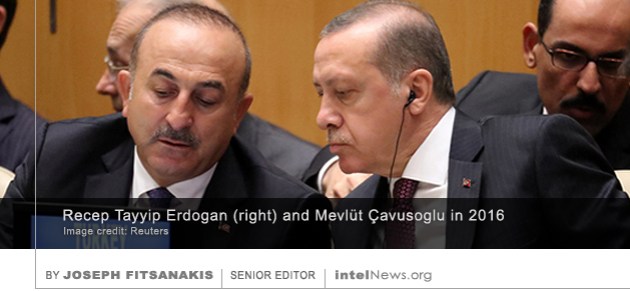
Erdogan and CavusogluA number of European intelligence agencies have reportedly warned the Turkish government of a possible assassination attempt against the country’s president, Recep Tayyip Erdoğan, during an official state visit to Bosnia and Herzegovina. On Sunday the Turkish leader embarked on a week-long visit to the Balkans, beginning with Bosnia, which along with Albania is seen as Turkey’s strongest political ally in Europe. During his visit to Bosnia, Mr. Erdoğan is scheduled to meet with Bakir Izetbegovic, one of the country’s three presidents. He is also scheduled to address a rally of expatriate Turks in the Bosnian capital Sarajevo, held in support of his ruling Justice and Development Party.

On Saturday night, Turkey’s state-owned TRT broadcaster reported that the Turkish president’s delegation had been warned about a possible assassination attempt against him. According to TRT, the information came initially from the intelligence services of the Republic of Macedonia, another state of the former Yugoslavia, which, like Bosnia, has a large Muslim population. Turkish intelligence were reportedly warned that a group of militant opponents of Mr. Erdoğan living in the Balkans were planning to kill him, said the report. It was allegedly followed by similar warnings issued by unnamed “Western intelligence agencies”. TRT did not provide further details about the alleged plot, but said that an “in-depth investigation” was underway by Turkish intelligence.

The Turkish president is facing one of the most direct challenges of his political career in less than two weeks, when Turks will go to the polls to elect a new parliament and —potentially— a new president. Some political commentators believe that, come June 2, Mr. Erdoğan may be removed from power after 15 years in the country’s leadership. But members of his government appeared unphased. One of them, Deputy Prime Minister Bakir Bozdag, tweeted on Saturday that warnings about Mr. Erdoğan’s life were “not new, and have always been there. Our President Recep Tayyip Erdogan is not a person who will be afraid of the threats and change his policy”, wrote Mr. Bozdag. And he continued: “Those, who have not understood that yet, are fools”.

Author:  Joseph Fitsanakis | Date: 21 May 2018 | Permalink

NATO obtained Soviet Novichok nerve agents through German intelligence in 1990s

Sergei SkripalSome North Atlantic Treaty Organization (NATO) member states obtained access to the Soviet Union’s so-called ‘Novichok’ nerve agents in the 1990s, through an informant recruited by German intelligence, according to reports. NATO countries refer to ‘Novichok-class’ nerve agents to describe a series of weaponized substances that were developed by the Soviet Union and post-Soviet Russia from the early 1970s to at least 1993. They are believed to be the deadliest nerve agents ever produced, but Moscow denies their very existence. A type of Novichok agent, described by British scientists as A234, is said to have been used in March of this year by the person or persons who tried to kill Sergei Skripal in Salisbury, England. Skripal is a former Russian military intelligence officer who spied for Britain in the early 2000s and has been living in England ever since he was released from a Russian prison in 2010.
On Thursday, two German newspapers, Die Süddeutsche Zeitung and Die Zeit, and two regional public radio broadcasters, WDR and NDR, said that the NATO alliance has had access to the chemical composition of Novichok nerve agents since the period immediately following the collapse of the USSR in 1991. Specifically, the reports claimed that the access was gained through a Russian scientist who became an informant for the German Federal Intelligence Service, known as the BND. The scientist struck a deal with the BND: he provided the spy agency with technical information about the Novichok agents in exchange for safe passage to the West for him and his immediate family. Initially, the German government was reluctant to get its hands on material that was —and remains— classified as a weapon of mass destruction by international agencies. But eventually it asked for the chemical composition of the Novichok nerve agents and even acquired samples from the Russian informant.

According to media reports, the BND proceeded to share information about the chemical composition of the Novichok nerve agents with key NATO allies, including Sweden, France, Britain and the United States. The sharing of such a sensitive substance was approved by the then German Chancellor Helmut Kohl, said the reports. In the following years, a handful of NATO countries proceeded to produce what media reports described as “limited quantities” of Novichok agents, reportedly in order to experiment with various defense measures against them and to produce antidotes. Russia has denied accusations that it was implicated in Skripal’s poisoning and has argued that other countries, some of them NATO members, have the capacity to produce Novichok agents.

Author: Joseph Fitsanakis | Date: 18 May 2018 | Permalink

China gave ex-CIA officer “hundreds of thousands of dollars in cash” to spy on US

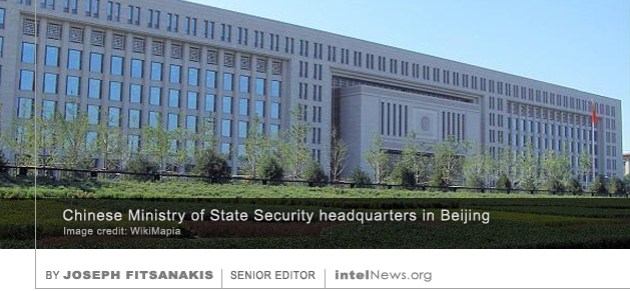
 Chinese Ministry of State SecurityChinese intelligence operatives gave a former officer of the United States Central Intelligence Agency “hundreds of thousands of dollars in cash” in exchange for carrying out espionage, according to court papers. The Federal Bureau of Investigation arrested Jerry Chun Shing Lee, 53, on January 15, accusing him of possessing classified information that included lists of real names of foreign assets and addresses of CIA safe houses. Lee, 53, was reportedly arrested after a lengthy FBI sting operation, which included creating a fictional job in the US in order to entice Lee to travel to New York from Hong Kong, where he had been living after leaving the CIA in 2007.

Lee is now scheduled to appear before a US circuit court judge on Friday morning, in order to be officially charged with one count of conspiracy to deliver national defense information to aid a foreign government and two counts of unlawfully retaining information pertaining to national defense. According to the indictment, in April of 2010 Lee met two officers of China’s Ministry of State Security. The meeting allegedly took place in Shenzhen, a city in southern China that borders Hong Kong. During that encounter, the indictment claims that Lee was offered “a gift of $100,000 in cash” in exchange of providing the Ministry of State Security with information about his career in the CIA. He was also told by the two Chinese intelligence officers that China would “take care of him for life” if he continued to cooperate with them.

In May of 2010, Lee deposited about $17,000 into one of his HSBC accounts in Hong Kong. Court documents allege that the deposit was the first of many that followed, and that they amounted to “hundreds of thousands of dollars”. These deposits continued to occurr until the end of 2013, when Lee made his last substantial cash deposit in Hong Kong. Throughout that time, Lee received regular written instructions from the Ministry of State Security, asking him to provide information about CIA operations. Lee did so at least 21 times, says the indictment. In one instance, he drew the floorplan of a CIA facility abroad and gave it to the Chinese, according to the indictment. Lee is expected to plead not guilty on Friday.

Author: Joseph Fitsanakis | Date: 16 May 2018 | Permalink

Russia tried to kill ex-double spy because he trained Eastern European agencies

Sergei SkripalRussia may have made the decision to kill former double spy Sergei Skripal because he continued to provide counterintelligence assistance to Eastern European governments, according to media reports from Prague. Skripal, 66, a veteran military intelligence operative who spied for Britain in the early 2000s, has been living in England since 2010. He was recently released from hospital after he was poisoned with what London claims was a military-grade nerve agent. As soon as Skripal and his daughter, Yulia, fell critically ill in March of this year, some observers expressed skepticism at the suggestion that Moscow may have tried to assassinate the former double spy. Their argument was that Skripal was pardoned by the Kremlin in a spy-swap deal, in which ten Russian intelligence operatives were handed over to Moscow in exchange for four agents of United States and British intelligence organizations.
Typically a spy who has been pardoned as part of an authorized spy-swap will not need to worry about being targeted by the agency that he betrayed. If it indeed tried to kill Skripal, Russia may therefore have broken the unwritten rules of the espionage game, some argued. But according to the reputable Czech investigative newsmagazine Respekt, the Kremlin tried to kill Skripal because he broke the rules of his release, namely that he would not participate in any intelligence-related activities against Russia. Specifically, Respekt claimed on Sunday that Skripal traveled extensively in Eastern Europe, where he advised local intelligence agencies on how to defend against Russian espionage. According to the Prague-based newsmagazine, Skripal’s travels to countries like the Czech Republic and Estonia were facilitated by the British Secret Intelligence Service (known commonly as MI6). The British agency thus killed two birds with one stone, said Respect: on the one hand it cultivated friendly relations with Eastern European spy agencies, while at the same time it provided the out-of-work Russian defector with a steady income.

Skripal’s information was at times dated, said Respekt, but it was deemed valuable enough to entice intelligence officers from Estonia, the Czech Republic, and possibly other European intelligence agencies, to regularly travel to the United Kingdom and further-consult with Skripal. Skripal’s contacts with Eastern European intelligence personnel were kept strictly secret in order to protect him from the ire of the Kremlin. But Moscow found out about Skripal’s activities somehow, and decided to kill the former double spy, said Respekt. The Russian government has vehemently denied all allegations that it was behind an attempt to kill Skripal and his daughter.

Author: Joseph Fitsanakis | Date: 15 May 2018 | Permalink

Joint US-Iraqi intelligence operation used cell phone app to trap senior ISIS figures

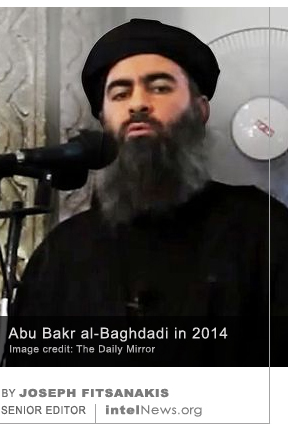
Abu Bakr al-BaghdadiAn joint operation conducted by American and Iraqi intelligence officers employed a popular messaging app on the phone of a captured Islamic State commander to apprehend four very senior figures in the organization, according to reports. The Reuters news agency said on Thursday that the ambitious intelligence operation began in February, when Turkish authorities captured a close aide to Abu Bakr al-Baghdadi, the Iraqi-born leader of the group known as Islamic State of Iraq and Syria (ISIS). According to Hisham al-Hashimi, security advisor to the government of Iraq, the ISIS aide was Ismail al-Eithawi, also known by his alias, Abu Zaid al-Iraqi. Iraqi officials claim that al-Eithawi was appointed by al-Baghdadi to handle the secret transfer of ISIS funds to bank accounts around the world.

It appears that al-Eithawi had managed to escape to Turkey when the United States-led coalition shattered ISIS’ self-proclaimed caliphate. But he was captured by Turkish counterterrorism forces and handed over to Iraqi authorities. Baghdad then shared the contents of al-Eithawi’s cell phone with US intelligence officers. The latter were able to help their Iraqi counterparts utilize the popular messaging app WhatsApp, a version of which was installed on al-Eithawi’s cell phone. According to al-Hashimi, the Iraqis and Americans made it seem like al-Eithawi was calling an emergency face-to-face meeting between senior ISIS commanders in the area. But when these Syria-based commanders crossed into Iraq to meet in secret, they were captured by Iraqi and American forces.

According to al-Hashimi, those captured include a Syrian and two Iraqi ISIS field commanders. More importantly, they include Saddam Jamal, a notorious ISIS fighter who rose through the ranks to become the organization’s governor of the Euphrates’ region, located on Syria’s east. Al-Hashimi told reporters on Thursday that Jamal and al-Eithawi were the most senior ISIS figures to have ever been captured alive by US-led coalition forces. The Iraqi government advisor also said that al-Eithawi’s captors were able to uncover a treasure trove of covert bank accounts belonging to ISIS, as well as several pages of secret communication codes used by the militant group.

Author: Joseph Fitsanakis | Date: 11 May 2018 | Permalink

US government prosecutors confirm CIA officer passed information to China

CIAA case officer in the United States Central Intelligence Agency, who was arrested in January of this year for violating the Espionage Act, shared classified information with China, according to an official indictment. The Federal Bureau of Investigation arrested Jerry Chun Shing Lee, 53, on January 15, accusing him of possessing classified information that included lists of real names of foreign assets and addresses of CIA safe houses. Lee, 53, was reportedly arrested after a lengthy FBI sting operation, which included creating a fictional job in the US in order to entice Lee to travel to New York from Hong Kong, where he had been living after leaving the CIA in 2007. However, the initial FBI complaint did not indict Lee for passing the top-secret information to anyone. There was speculation at the time that this was because the FBI had not been able to conclusively prove that Lee carried out espionage.
On Tuesday, however, Lee was formally indicted on conspiracy to gather and deliver national defense information to aid a foreign government. That charge came in addition to a previously stated charge of unlawfully retaining material related to American national defense. The indictment repeats earlier allegations that Lee was found to be in possession of classified documents that included the real names of CIA assets (foreign citizens who are recruited by CIA case officers to spy for the United States abroad) and the locations of “covert facilities” –safe houses that are typically used by CIA personnel to meet with assets in privacy. In what can be described as the most descriptive allegations that have surfaced against Lee, the indictment proceeds to claim that he was approached by two Chinese intelligence officers in 2010, three years after he left the CIA. The officers allegedly offered to give Lee a substantial amount of money in exchange for access to classified information. Additionally, according to the court documents, Lee was provided by his Chinese handlers with email addresses that he could use to communicate with them covertly, and did as instructed “until at least 2011”.

The documents further state that Lee made “numerous […] cash deposits”, which he struggled to explain when questioned by American counterintelligence officials. On several instances, Lee lied during questioning in order to cover up his financial activities, according to the indictment. Lee’s defense lawyer, Edward MacMahon, told the court on Tuesday that his client was “not a Chinese spy”, but “a loyal American who loves his country”. He also pointed out that Lee served in the US military and the CIA. The Chinese government has made no comment about the case.

Author: Joseph Fitsanakis | Date: 10 May 2018 | Permalink

Was Dubai ruler’s daughter kidnapped by UAE and Indian Special Forces?

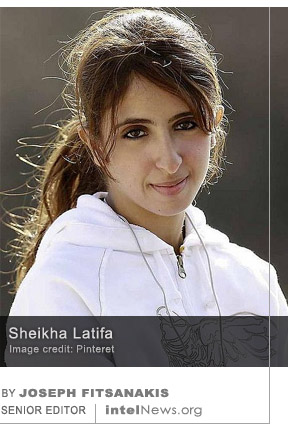
Sheikha LatifaThe international advocacy group Human Rights Watch has joined calls for information on the whereabouts of Sheikha Latifa, a member of the royal family of the United Arab Emirates, who some say was abducted in international waters by Emirati and Indian special forces. Princess Latifa, 32, is the daughter of Sheikh Mohammed bin Rashid Al Maktoum, ruler of the Emirate of Dubai and Prime Minister of the UAE. But she has fallen out with the royal family and has repeatedly issued public calls for democratic reforms and more rights for women. In 2002, when she was just 18, she attempted to leave the UAE but was forcibly repatriated by her father’s bodyguards. In recent years, Princess Latifa has continued to vocalize her opposition to her father’s rule, whom she has accused of deploying “death squads” to suppress dissent within the UAE royal family.
It is believed that on February 24, Princess Latifa was joined by Tiina Jauhiainen, a Finnish martial arts instructor who has lived and worked in the Middle East, with the aim of implementing an elaborate escape plan. The two women traveled to neighboring Oman and used jet skis to transport themselves to international waters. There they boarded a yacht captained by Hervé Jaubert, a French former intelligence officer who also has United States citizenship. Jaubert became internationally known in 2009 for escaping from the UAE without a passport, after authorities there accused him of owing money to investors. Jaubert’s yacht, The Nostromo, sailed from the Arabian Gulf toward India with the two women and three Filipino crew members onboard. On February 26, Princess Latifa posted several messages on social media, including a video in English, explaining her reasons for leaving her home country. But soon afterwards, The Nostromo went missing while sailing toward the coastal Indian state of Goa. It didn’t reappear again until March 20, when it sailed for Sri Lanka with its captain and crew, but without the two women on board.

Jaubert has since told reporters that his ship was intercepted in international waters by “two unmarked speedboats” carrying between six and eight commandos. They used stun guns and smoke grenades to neutralize the yacht’s crew, which they proceeded to handcuff and blindfold. The soldiers then took the two women. Notably they spoke to Princess Latifa in English, prompting Jaubert to conclude that they were Indian, not Arab. Some reports later claimed that a minimum of five Indian and Emirati warships, as well as two military airplanes and a helicopter, participated in the attack on The Nostromo. Jauhiainen, who was eventually released and is now back in Europe, confirmed Jaubert’s account.

But the Indian authorities have rejected these claims, arguing that they have no knowledge of such a military or paramilitary operation off the coast of Goa. Human Rights Watch recently issued a formal call on the Indian and Emirati governments to reveal the precise whereabouts of Princess Latifa, who has not been seen since the raid. “Failure to disclose the whereabouts and status of the princess could qualify as an enforced disappearance, given the evidence suggesting that she was last seen as UAE authorities were detaining her”, said the international advocacy group. The government of the UAE has not responded to media requests for comment.

Author: Joseph Fitsanakis | Date: 07 May 2018 | Permalink

Pakistan denies it plans to release doctor who helped CIA find bin Laden

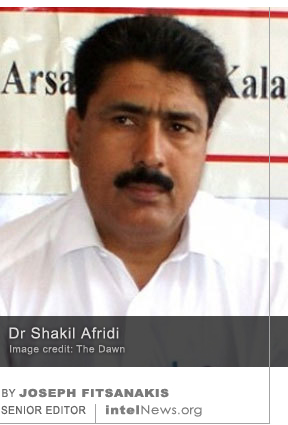
Dr Shakil AfridiAuthorities in Pakistan have dismissed rumors that a medical doctor who helped the United States Central Intelligence Agency find and kill al-Qaeda founder Osama bin Laden in 2011 is to be released from prison. Dr. Shakil Afridi was arrested in 2011, soon after bin Laden was killed in a CIA operation in the Pakistani city of Abbottabad. In the weeks following the CIA raid, it emerged that a team of local doctors and nurses had helped the American spy agency confirm bin Laden’s presence in the compound. The team of nearly 20 healthcare workers participated in a fake vaccination scheme carried out in Abbottabad, whose true purpose was to collect DNA samples from the residents of the compound where the CIA believed bin Laden was hiding.

Pakistani authorities fired 17 healthcare workers who participated in the CIA scheme and arrested its head, Dr. Afridi. Bizarrely, Dr. Afridi was arrested for having alleged links with an Islamist group that operates in the region, known as Lashkar-e-Islam. He then faced charges for alleged medical malpractice, which, according to the prosecution, resulted in the death of one of his patients. He is currently serving a 33-year prison sentence in Pakistan’s northwestern border city of Peshawar. Ever since his arrest, the US has pressured Pakistan to release Dr. Afridi, and Pakistani media often publish sensational reports about alleged covert attempts by the CIA to free the imprisoned medical doctor. Last week, Dr. Afridi was transported by helicopter from Peshawar to a jail near the village of Adiala, located near Pakistan’s border with the Indian region of Kashmir. Dr. Afridi’s move, which took place amid heavy security, sparked rumors in the media that the alleged CIA agent was about to be released and transported to America.

But on Thursday, Muhammad Faisal, a spokesman for Pakistan’s Ministry of Foreign Affairs, dismissed intense media speculation that Dr. Afridi was about to be released. He also denied that Islamabad was attempting to swap Afridi with Pakistani nationals living in the US, including Aafia Siddiqui, who is serving an 86-year prison term in the US for killing an American soldier in Afghanistan. Additionally, Faisal described as “nonsense” media reports of an alleged failed CIA attempt to organize a jailbreak in Peshawar, in order to free Dr. Afridi.

Author: Joseph Fitsanakis | Date: 4 May 2018 | Permalink

Senior North Korean counterintelligence official believed to have defected

Chilbosan HotelOne of North Korea’s most senior intelligence officials, who played a major role in building Pyongyang’s nuclear weapons program, has disappeared and is believed to have defected to France or Britain, according to sources. South Korean media identified the missing official as “Mr. Kang”, and said he is a colonel in North Korea’s State Security Department (SSD), also known as Ministry of State Security. Mr. Kang, who is in his mid-50s, enjoyed a life of privilege in North Korea, because he is related to Kang Pan-sok (1892-1932), a leading North Korean communist activist and mother to the country’s late founder, Kim Il-sung.
According to South Korean reports, Kang was in charge of North Korea’s counter-espionage operations in Russia and Southeast Asia, including China. He is also believed to have facilitated secret visits to Pyongyang by foreign nuclear scientists, who helped build North Korea’s nuclear weapons program. In recent years, Kang was reportedly based in Shenyang, the largest Chinese city near the North Korean border, which is home to a sizeable ethnic Korean population. According to reports, Kang led Unit 121, an elite North Korean hacker group based in Shenyang, with the aim of carrying out cyber-attacks without implicating North Korea. The South Korean-based DailyNK website said on Wednesday that Kang had been based at the Zhongpu International Hotel in Shenyang (until recently named Chilbosan Hotel), which has historically been operated through a joint Chinese-North Korean business venture and is known to host numerous North Korean government officials.

But according to DailyNK, Kang disappeared from Shenyang in February and is now believed to have defected, possibly “to France or Great Britain”. The Seoul-based website said Kang took “a lot of foreign currency with him” as well as “a machine capable of printing American dollars”. Following Kang’s disappearance, the government in Pyongyang launched a worldwide manhunt for him, sending at least 10 agents to assassinate him before he is given political asylum in the West, said DailyNK. Pang’s family, including his wife and children, are believed to still be in Pyongyang.

Author: Joseph Fitsanakis | Date: 3 May 2018 | Permalink

Another US diplomat detained in Pakistan over traffic accident that injured two

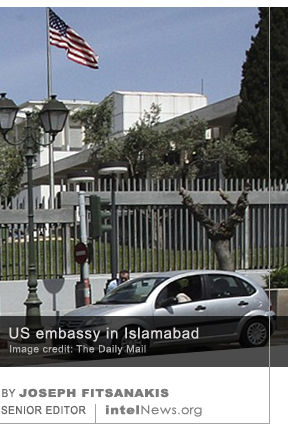
US embassy Islamabad PakistanAnother American diplomat was detained in Pakistan last week, following the second serious traffic accident involving United States diplomatic personnel in Islamabad in less than a month. The incidents are said to be contributing to ongoing diplomatic tensions between the United States and Pakistan. Many in the South Asian country remain angry about a controversial episode in 2011, when a Central Intelligence Agency officer serving at the US consulate in Lahore killed two men by shooting them in the head with a Glock pistol. The CIA officer, Raymond A. Davis, told Pakistani police that the two men had tried to rob him. He was eventually released from detention due to his diplomatic immunity, but only after the personal intervention of the then Secretary of State John Kerry, and after Washington offered monetary compensation to the two dead men’s families.

In the latest incident, Pakistani authorities detained an American diplomat on Sunday, after his Toyota SUV ran over two men riding on a motorcycle in Islamabad. The diplomat, identified in Pakistani media as the US embassy’s Second Secretary Chad Rex Ausburn, was accused by police of having been involved in a hit-and-run incident in the Pakistani capital. According to local reports, Ausburn refused to emerge from his vehicle immediately following the accident, but eventually stepped out and identified himself to police officers. They then took him into custody and impounded his vehicle, which is believed to belong to the US embassy. Ausburn was released once the Pakistani Ministry of Foreign Affairs confirmed his diplomatic status, which grants him immunity from prosecution. The two men injured in the accident are said to be in stable condition at a nearby hospital. Police have reportedly charged the driver of the motorcycle with reckless driving.

However, Pakistani authorities have also charged Taimur Iqbal Pirzada, a security adviser for the US embassy in Islamabad, with seeking to obstruct the police investigation into Sunday’s incident. Pirzada stands accused of trying to stop police officers from detaining Ausburn and impounding his vehicle. He was released on bail on Monday and is currently awaiting trial. US State Department spokesman Nolen Johnson told The New York Times on Monday that the issue involving Ausburn had been “resolved” and that the US government had been “in close contact with Government of Pakistan officials on this matter”. This past April, Pakistani authorities barred another American diplomat from leaving the country, after the car he was driving was involved in an accident in Islamabad, which left a motorcyclist dead. The US embassy’s military attaché, Colonel Joseph E. Hall, remains in Pakistan. Authorities there have demanded that the US Department of State rescinds his diplomatic immunity, so he can face a criminal trial. But the US government has so far refused to grant Islamabad’s request.

Author: Joseph Fitsanakis | Date: 01 May 2018 | Permalink | Research credit: C.F.