Britain to set up intelligence unit to combat ‘fake news’ by foreign states
January 25, 2018 1 Comment
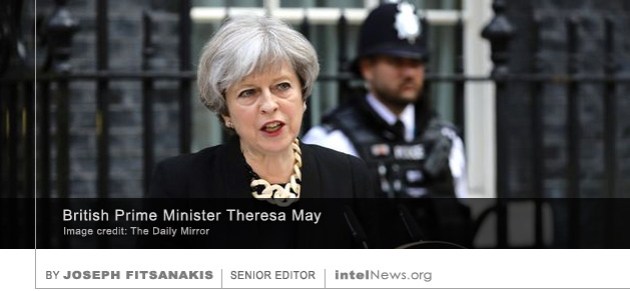 The British government has announced that it will form a new intelligence unit tasked with preventing the spread of so-called “fake news” by foreign states, including Russia. The decision was revealed earlier this week in London by a government spokesman, who said that the new unit will be named “National Security Communications Unit”. The spokesman added that the unit will be responsible for “combating disinformation by state actors and others”. When asked by reporters whether the effort was meant as a response to the phenomenon often described as “fake news”, the spokesman said that it was.
According to The Times newspaper, the proposal for a National Security Communications Unit was presented during a scheduled meeting of the country’s National Security Council earlier this week. It was put forward by its strongest proponent, Sir Mark Sedwill, Britain’s former ambassador to Afghanistan and current national security adviser to the government. The unit will be directly accountable to the Cabinet Office, the government department that is responsible for providing support to the Prime Minister and her Cabinet. It will be staffed with professionals from Britain’s intelligence and security agencies, but will also rely on contributions from external experts in cybersecurity, communications and public relations. The unit will also include a “rapid response unit” that will be tasked with countering “fake news” in real time, according to The Times.
The move follows a similar development in the United States. In December of 2016, the then President Barack Obama signed a new law that designated $160 million to set up a government center for “countering foreign propaganda and disinformation”. The law, entitled “Countering Foreign Propaganda and Disinformation Act”, authorized the departments of State and Defense to work with other federal agencies in establishing the new body. According to a statement by the White House, the goal of the Center would be to collect and analyze “foreign government information warfare efforts” and to “expose and counter foreign information operations” directed against “US national security interests”.
On Wednesday it was announced in London that the British Secretary of Defense, Gavin Williamson, will be providing further details about the National Security Communications Unit in a speech to the House of Commons “within the next few days”.
► Author: Joseph Fitsanakis | Date: 25 January 2018 | Permalink
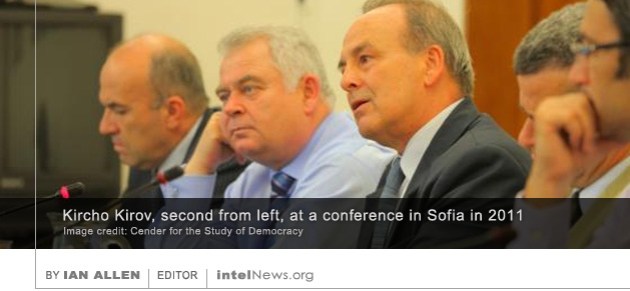 A former director of Bulgaria’s intelligence service, who headed the agency for nearly a decade, has been jailed for embezzling millions of dollars from public funds. General Kircho Kirov, 67, was director of the Bulgarian National Intelligence Service (NIS) from February 2003 until January 2012. After stepping down from his post he was appointed national security advisor to Bulgaria’s Prime Minister, Boiko Borissov. But he soon fell out with Borrisov and was fired after just two months on the job. Now Borissov’s administration has
 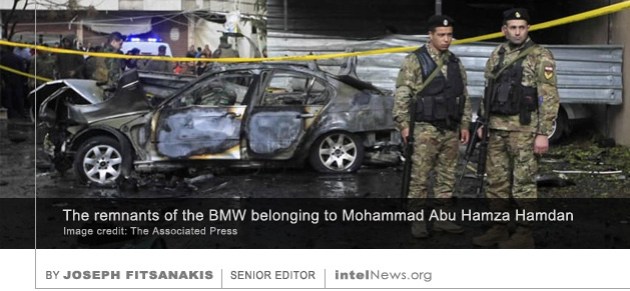 Media reports from Lebanon claim that Israel was behind a
 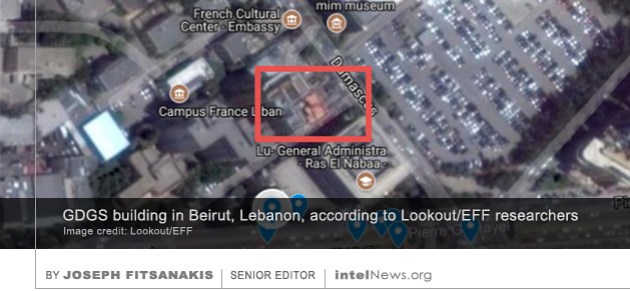 The spy agency of Lebanon used a virus designed for the Android mobile operating system to compromise the cell phones of thousands of people in at least 20 countries, according to a new mobile security report. The 50-page
 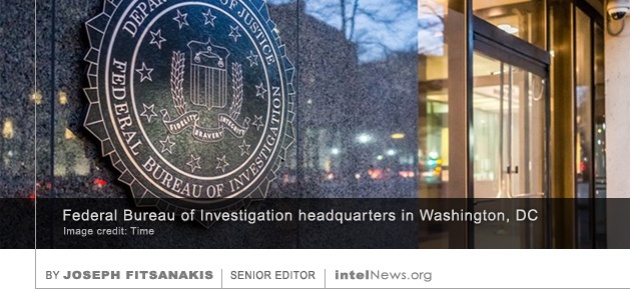 A former case officer in the Central Intelligence Agency, who was arrested this week for violating the United States Espionage Act, was lured back to America from Hong Kong at least once by counterintelligence investigators, according to reports. Jerry Chun Shing Lee, 53, served in the CIA from 1994 to 2007. He was
 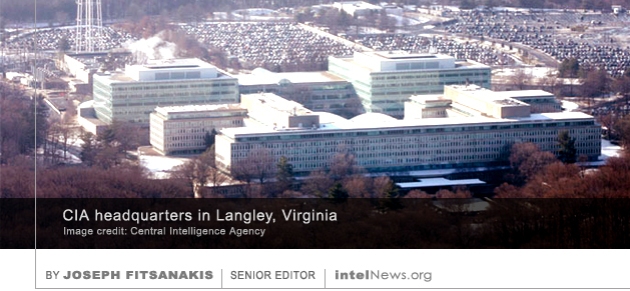 A former operations officer in the United States Central Intelligence Agency has been arrested on charges of illegally possessing top secret information, including lists of real names of foreign assets and addresses of CIA safe houses. The news emerged on Tuesday, as the US Department of Justice announced that the Federal Bureau of Investigation had filed a criminal complaint over the weekend. The complaint identifies the former case officer as Jerry Chun Shing Lee, also known as Zhen Cheng Li. Lee, a 53-year-old naturalized American, served in the CIA from 1994 to 2007 “in various overseas positions and locations”, according to court documents. Lee has
 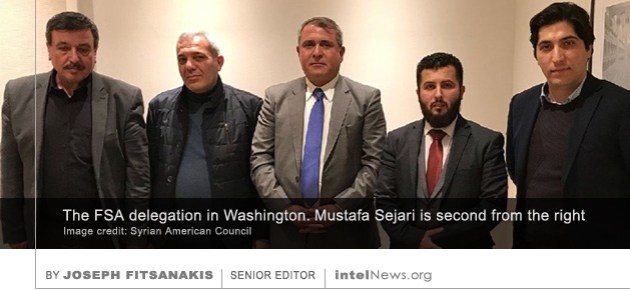 A delegation of Syrian rebels is currently in Washington to ask that that United States President Donald Trump authorizes the Central Intelligence Agency to resume giving them military assistance. In 2013, the then-US President Barack Obama instructed the CIA to provide covert support to fighters in Syria. The CIA promptly began to assist fighters affiliated with the Free Syrian Army (FSA), whose goal was to topple the regime of Syrian President Bashar al-Assad. Under the project, which was codenamed TIMBER SYCAMORE, CIA personnel trained FSA fighters and gave them light weaponry. But in July of last year, President Trump
  A group of hardline Bosnian Serbs, some of whom have been trained in military tactics by Russian instructors, are secretly creating a paramilitary group to undermine the territorial integrity of Bosnia, according to reports. Information about the alleged paramilitary group was published on the Friday edition of Žurnal, a nonpartisan investigative newsmagazine. The allegations exposed by Žurnal were later repeated by Dragan Mektić, Bosnia and Herzegovina’s Minister for Security, who is himself a Bosnian Serb. Žurnal’s
 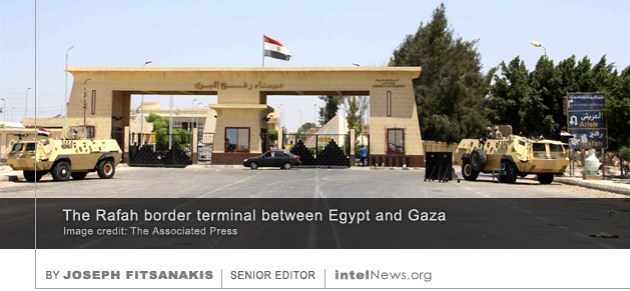 The Islamic State in Egypt’s Sinai Province has declared war on the Palestinian militant group Hamas, in a move that experts say will furhter-complicate an already volatile security situation in eastern Egypt. Many observers see the group, Wilayat Sinai, as the
 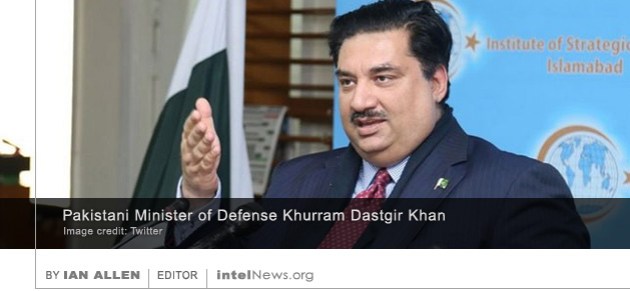 Pakistan said on Tuesday that it had suspended military and intelligence cooperation with the United States in the wake of Washington’s decision to stop security assistance to Pakistan. On Tuesday, Pakistan’s Minister of Defense, Khurram Dastgir Khan, said that his country had terminated all cooperation with the US in the areas of defense and intelligence. He said that the move was a response to the announcement by US President Donald Trump last week that Washington would stop providing security assistance to Pakistan. American officials stated that the change in policy took place because Pakistan had allegedly deceived America in the global war on terrorism. On Thursday last week, the President Trump
  A man who attended the “Unite the Right” rally in Charlottesville, Virginia, with members of a neo-Nazi organization, has been charged with terrorism offences after he tried to derail a passenger train. Taylor M. Wilson, of St. Charles, Missouri, was arrested by federal law enforcement officials on October 22, after he
 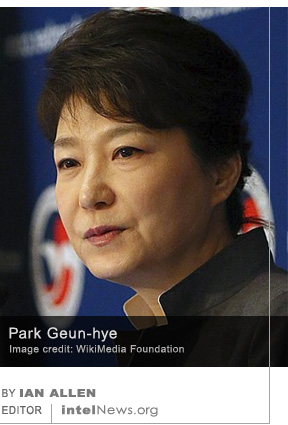 South Korea’s disgraced former president, Park Geun-hye, has been charged with accepting bribes amounting to millions of dollars from the country’s spy agency, according to reports. Park made history in 2013, by becoming the first woman president in South Korean history. However, almost as soon as she assumed office, her administration became embroiled in successive corruption scandals. By 2016, Park’s presidency had been brought to a standstill due to mass protests urging her removal from power, while increasing numbers of officials and administrators were refusing to work with her. She was eventually impeached in 2017, after the Constitutional Court of Korea found that she had violated the country’s laws by promoting the interests of personal friends and private corporations in return for cash and favors. She is currently in custody awaiting trial for 18 different charges, including abuse of power, coercion, blackmail and bribery.
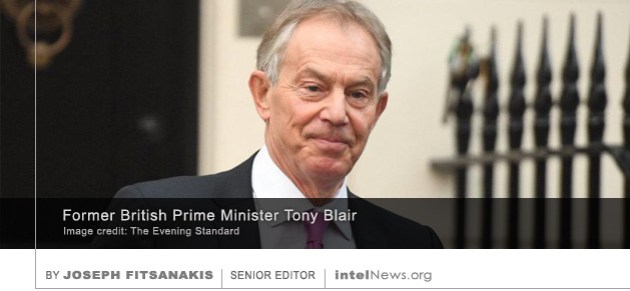 A spokesman for Tony Blair has dismissed as “categorically absurd” allegations that the former British Prime Minister warned the White House that President Donald Trump was targeted by British spy agencies. The claims are made in the book Fire and Fury: Inside the Trump White House, which is due to be published next week. Its author, Michael Wolf, says he based the information in the book on more than 200 interviews that he held with President Trump and members of his inner circle during the past year.
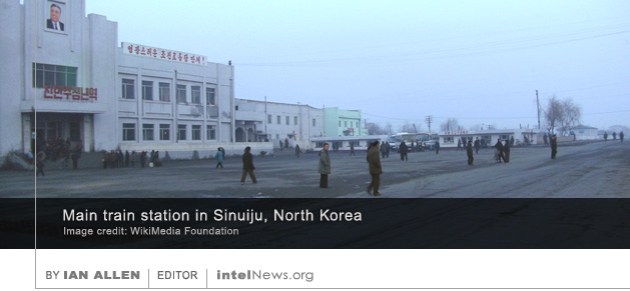 A North Korean nuclear scientist who defected to China but was involuntarily sent back to North Korea in November reportedly killed himself in his North Korean cell hours before he was due to be interrogated. Information about the scientist’s alleged suicide was issued on Thursday by Radio Free Asia (RFA), a multilingual news service based in Washington, DC, which is funded by the United States government. The service said its reporters spoke to an anonymous source in North Hamgyong province, North Korea’s northernmost region that borders China. The source identified the late scientist as Hyun Cheol Huh, but cautioned that this may not be his real name, because the North Korean security services are known to “use […] fake names when referring to important persons” in their custody.








News you may have missed #894: Economic warfare edition
January 26, 2018 by Ian Allen 2 Comments
►►Giuseppe Gagliano, director of the Centro Studi Strategici Carlo De Cristoforis in Italy, argues that economic warfare has been practiced for centuries. While examining the concept of economic intelligence in contemporary French strategic thinking, Professor Gagliano, explains that the concept of economic warfare has deep historical roots. He argues that, in its contemporary form, economic warfare originates in the period immediately after the end of World War II. Traditionally, it has defensive and offensive applications: Nations strive to limit outsourcing in order to preserve their industrial resources; at the same time, they seek to conquer international markets and, when able, resources. Although outsourcing has played a major role in economic warfare, the financial crisis of 2008 significantly upped the stakes and renewed the central role of the state in economic warfare theory and practice, argues Gagliano.
►►It should perhaps be noted that economic warfare does not operate simply an appendage to traditional warfare. In fact, it often takes place in the absence of traditional warfare, or indeed between wars. David Katz, senior analyst at the United States Special Operations Command and a career Foreign Service Officer, argues that economic warfare can, if used substantially and effectively, deter proxy warfare. In an article [pdf] published last year in Parameters, the quarterly journal of the United States Army War College, Katz suggests that the principles of economic warfare could be used “independently and within campaigns” by state actors. He also argues that the US should not hesitate to employ economic warfare to preempt the non-traditional warfare capabilities of its adversaries.
► Author: Ian Allen | Date: 26 January 2018 | Permalink
Filed under Expert news and commentary on intelligence, espionage, spies and spying Tagged with David J. Katz, economic intelligence, financial warfare, Giuseppe Gagliano, News, news you may have missed, Qatar