Prominent Putin critic poisoned with unknown substance, say doctors

Vladimir Kara-MurzaA prominent member of the Russian opposition and vocal critic of the Kremlin, is fighting for his life in a Moscow hospital as a result of “acute poisoning from an undefined substance”, according to his doctors. Vladimir Kara-Murza, 35, is a senior figure in the Open Russia Foundation, a political pressure group founded by Mikhail Khodorkovsky. Khodorkovsky, an ultra-wealthy Russian businessman who was once estimated to be worth over $15 billion, has been living in Switzerland since 2013. Immediately prior to that, he served a 10-year prison sentence in Russia for tax evasion. In 2013, Kara-Murza was a member of a network of Putin critics who helped organize opposition protests in Moscow and Saint Petersburg. He also co-authored a number of reports accusing the administration of Russian President Vladimir Putin of corruption.

For several years now, Kara-Murza, his wife and three young children have been living in the United States. But he frequently travels back to Russia to meet with opposition activists and other organizers. For the past few weeks, Kara-Murza had been traveling in his homeland to help launch a new documentary film about the life and death of scientist and opposition figure Boris Nemtsov. Nemtsov served as Russia’s deputy prime minister for a few months in 1998, under Russian President Boris Yeltsin. After 2000, he became a vocal critic of the Putin administration. In late February 2015, Nemtsov was shot four times in the back and killed while walking with his girlfriend near Moscow’s Red Square. Opposition groups, including members of the Open Russia Foundation, claim that his murder was organized by the Kremlin.

Kara-Murza’s wife, Yevgeniya, said yesterday that her husband woke up suddenly in the early hours of last Thursday, finding it difficult to breathe. He was rushed to a Moscow hospital where he has been under a medically induced coma since Tuesday. His family said that, while visiting Russia in 2015, Kara-Murza was hospitalized with similar symptoms, and was diagnosed with “kidney failure in connection with poisoning”. He later claimed that he survived an attempt on his life by people in power who wanted to silence him. This time, said Kara-Murza’s wife, the family has sent blood samples to specialists in Israel and France, hoping that the poison that is allegedly inside his body can be identified.

Author: Joseph Fitsanakis | Date: 08 February 2017 | Permalink

Iran sentences professor at Belgian university to death for spying

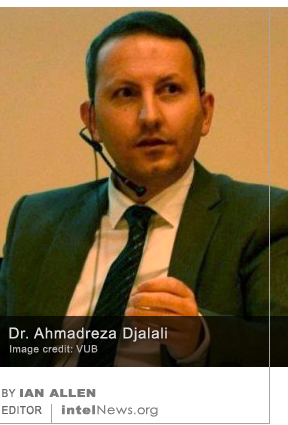
Ahmadreza DjalaliAn Iranian scientist who works at a university in Belgium has been sentenced to death in Iran, allegedly for spying. According to his family and his employer in Belgium, Dr. Ahmadreza Djalali is currently in prison in Tehran. Dr. Djalali, 45, is professor of disaster medicine at the Vrije Universiteit Brussel (VUB), a Dutch-speaking university located in the Belgian capital. For the past few years, Dr. Djalali has been based in Italy, where he teaches in the VUB’s European Master’s program in Disaster Medicine. According to an announcement on the VUB’s website, Dr. Djalali is now awaiting execution, which has been scheduled to take place later this month.

It is believed that the professor was arrested in April of last year, while visiting his family in Iran. But his family in Europe chose not to publicize his arrest, in hopes of getting him released. They spoke to the media only after Dr. Djalali was given a death sentence last week. The reason for the scientist’s arrest has not been made clear, but it is thought to relate to his collaboration with other researchers in Belgium and Italy, some of whom are Israeli citizens. Iran considers Israel an “enemy entity” and does not allow its citizens to interact with Israeli citizens. Officials at VUB claim that Dr. Djalali is has not been involved in political campaigns or discussions, and that his contacts with foreign scientists are solely research-driven.

According to his family, Dr. Djalali has protested his detention by launching hunger strikes on three separate occasions, which have severely affected his health. He also claims that he was not allowed access to lawyers and that he was not given a trial. Instead, he said he was interrogated and forced to sign a confession admitting to an offence that he does not recognize. Iranian authorities have refused comment on the matter.

Author: Ian Allen | Date: 07 February 2017 | Permalink
Observers speak of uncertainty as North Korean leader fires spy chief

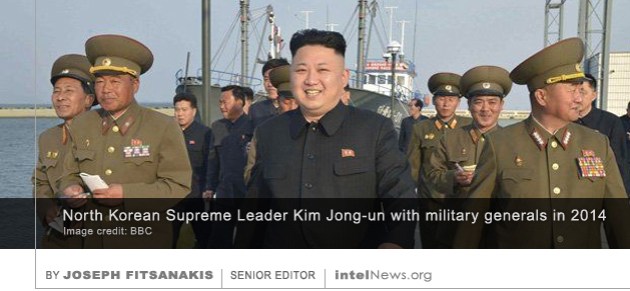
kim jong unObservers of North Korean politics raised alarm bells over the weekend, as it emerged that Supreme Leader Kim Jong-un fired his spy chief, interfering for the first time with a state institution that had not until now experienced major purges. The news circulated on Friday, following a report by South Korea’s Ministry of Unification —Seoul’s government department responsible for promoting the reunification of Korea. The ministry said that, according to its sources in the North, General Kim Won-hong had been dismissed from his post as Minister for State Security.
Kim is believed to have joined the Korean People’s Army (KPA) in 1962, at age 17. He rose through the ranks of the military to become a commander and a commissar (political officer) with the KPA’s General Political Bureau. In 1998, Kim was elected to North Korea’s Supreme People’s Assembly, which functions as the country’s parliament. In 2003, the North Korean leadership appointed Kim to director of the Military Security Command —the North Korean Army’s intelligence directorate. By 2009, Kim had been made a General and had entered the personal circle of Kim Jong-un. In 2011, when Kim Jong-un became supreme leader of North Korea, General Kim was widely viewed as one of his most trusted advisors. Few were surprised, therefore, when Kim was made State Security Minister, in April 2012. From that position, General Kim oversaw the activities of the regime’s secret state police, North Korea’s most powerful security institution, which is answerable only to the country’s supreme leader.

But it now appears that General Kim was dismissed from his powerful post two weeks into 2017, allegedly on charges of corruption and abuse of state power. Some reports suggest that his dismissal may be related to the defection of Thae Yong-ho, a senior North Korean diplomat who defected with his family while serving in the country’s embassy in London last year. It is also believed that Kim was demoted from a four-star to a one-star general.

Since he assumed power in the country in late 2011, Kim Jong-un has purged several layers of elite government apparatchiks. But he has not interfered in the country’s intelligence and security agencies. Thus, if General Kim was indeed dismissed, it would mark the first major demotion of a senior official in the Ministry of State Security in over six years. Some observers suggest that Kim’s demotion may mark the beginning of a major round of purges in the country’s security and intelligence services. But others think that that Kim was demoted by the country’s supreme leader in a pre-emptive action aimed at preventing a possible military coup against him.

Author: Joseph Fitsanakis | Date: 06 February 2017 | Permalink

Mismanagement plagues US online program against ISIS, say sources

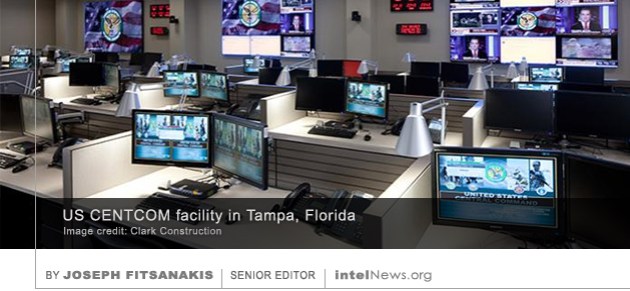
CENTCOM military computersWhistleblowers say mismanagement, amateurism and cronyism are plaguing a multimillion-dollar American psychological operation aimed at countering online propaganda by the Islamic State. The program, known as WebOps, was established by the United States Department of Defense during the administration of US President Barack Obama. Its stated goal is to counter efforts by the Islamic State (also known as the Islamic State of Iraq and Syria —ISIS) to spread propaganda and recruit followers using online social media. Since its creation, it has been administered by the US Central Command’s Information Operations Division. But its implementation has been contracted to Colsa Corporation, a private company based in the US state of Alabama. The company specializes in providing services for US government agencies, some of which include the use of specialized software that utilizes information found on social media.
According to the Associated Press news agency, WebOps staff consists of civilian analysts who speak Arabic. Every day, using fabricated online profiles, they browse social media platforms like Facebook and Twitter looking for pro-ISIS activity to counter. But the news agency said on Tuesday that it spoke to several people with knowledge of the program, who claim that it is plagued by incompetence, mismanagement and cronyism. They allege that analysts involved in WebOps have limited experience in counter-propaganda, incomplete understanding of Islam, and little more than a basic command of Arabic. Consequently, they have been known to make crucial errors when posting messages online. The latter end up amusing their readers instead of countering ISIS propaganda. In one case, a WebOps analyst confused the Arabic word for “authority” (as in Palestinian Authority) with the similarly sounding word “salad”, thus ending up with “Palestinian salad” instead of “Palestinian Authority”. Rather than managing to counter ISIS propaganda, the message was ridiculed on social media.

The report also cited “four current or former workers” who claimed that they personally witnessed “data being manipulated” to make the WebOps program seem more successful than it has been. They also claim that the program’s administrators have purposely resisted efforts by the Department of Defense to exercise independent oversight of the program’s performance. The Associated Press said it contacted US Central Command, the Pentagon outfit that is responsible for WebOps, on January 10. But it said that no response has been received from anyone there.

Author: Joseph Fitsanakis | Date: 01 February 2017 | Permalink

Trump removes DNI, reinstates CIA on the National Security Council

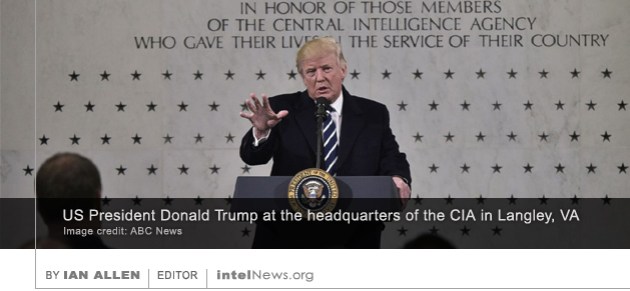
Trump CIAThe White House announced on Monday a revised policy that reinstates the Central Intelligence Agency on the National Security Council. Chaired by the president, the NSC was established 70 years ago as a forum to provide the commander-in-chief with advice from senior civilian and military officials before making key decisions on domestic and foreign affairs. Principal attendees of the NSC include the US vice president, the secretaries of state, defense, and energy, the chair of the Joint Chiefs of Staff, and the director of national intelligence. Last week, the White House removed the chair of the Joint Chiefs of Staff and the director of national intelligence from the Principals Committee —the core participants— of the NSC. A statement from the White House said that they would be invited to join the Principals Committee only when “issues pertaining to their responsibilities and expertise are to be discussed”.
On Monday, a new statement by the White House revised last week’s memorandum, by listing the director of the CIA as a “regular attendee” in NSC meetings. When asked by journalists about the change, White House Press Secretary Sean Spicer explained that “[t]he president has such respect for [CIA] Director [Mike] Pompeo and the men and women of the CIA, that today the president is announcing that he will amend the memo to add the CIA back into the NSC”.

Throughout the Cold War, the CIA was viewed as the most powerful and influential agency in the US Intelligence Community. It answered directly to the president and its director mediated between the White House and all of the nation’s intelligence agencies. That changed in 2005, when the administration of George W. Bush established the Office of the Director of National Intelligence as the central coordinating body of the US Intelligence Community. In the same year, the Bush administration replaced the CIA director’s place in the NSC with the DNI. Since that time, the DNI has acted as the de facto intelligence representative on the NSC. But Monday’s memorandum changes that, by essentially removing the DNI from the NSC and replacing him with the director of the CIA. Some believe that the change is bound to create tension between the DNI and the CIA, two agencies that have had a stormy relationship in the past decade. The CIA and the ODNI have not yet commented on the amended memorandum issued by the White House.

Author: Ian Allen | Date: 31 January 2017 | Permalink

US spies fear Trump travel ban will hurt recruitment of Muslim assets

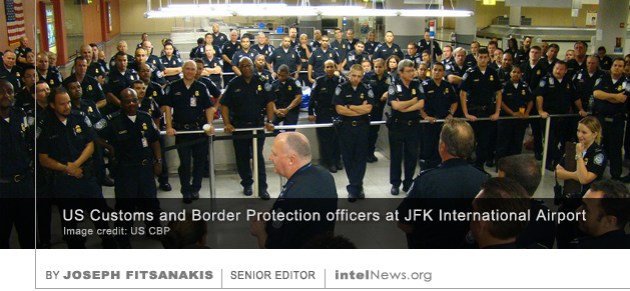
US Customs and Border Protection officers at JFK International AirportIntelligence veterans have raised concerns that the temporary ban on immigrants and refugees from seven Muslim-majority nations, which has been imposed by the White House, will significantly hinder American efforts to recruit intelligence assets and sources in Muslim countries. United States President Donald Trump signed an executive order on Friday, banning entry into the United States of citizens of Iran, Iraq, Syria, Yemen, Sudan, Somalia and Libya. According to the White House, the goal of the temporary ban is to help increase domestic security in the US. But according to Jeff Stein, a former intelligence officer and veteran intelligence correspondent, many in the US Intelligence Community view the travel ban as counterproductive and potentially fatal for their ability to operate.
In an article for Newsweek, Stein explains that, ever since the Cold War, American intelligence agencies have guaranteed to their assets —foreigners who agree to spy for the US— that they and their families will be exfiltrated to America if their lives are in danger. In other cases, assets or their family members are given costly medical treatment or educational opportunities in the US. The promise of eventual resettlement in America is a core recruiting tool used by case officers working in agencies such as the Central Intelligence Agency or the Defense Intelligence Agency. It is especially valuable in Muslim countries, where American spy agencies have traditionally found it difficult to operate, and where asset recruitment is arduous and dangerous. If current and potential assets are in any way concerned that they may not be able to enter the US, or not respected once they enter, their willingness to cooperate with their American spy handlers can quickly evaporate. Stein quotes Cindy Storer, who served 20 years as an analyst in the CIA, mostly on counterterrorism, and was in the agency team that led the successful hunt for al-Qaeda founder Osama bin Laden. Storer exclaimed that the travel ban “hurts, capital H-U-R-T-S” the CIA’s ability to collect intelligence. Another CIA veteran, Phillip Lohaus, who also served in the US Special Operations Command, lamented the “reduced likelihood that those in countries targeted by the ban will work with us in the future”.

Henry Miller-Jones, who worked for many years as a CIA operations officer in the Middle East, warned that the travel ban was likely to damage the flow of useful intelligence collected by US agencies from “students, professors, visiting businessmen and others” from Muslim countries. The latter are often recruited by US intelligence agencies when visiting America. Additionally, said Miller-Jones, Americans who travel or live in the Muslim world would now “get the cold shoulder” from potentially valuable contacts in those regions. He told Stein that CIA case officers often struggle to convince potential assets that America respects their religion and culture. The travel ban, no matter how geographically limited or temporary, will make it even more difficult to convince these potential assets to work for US intelligence now, he said.

Author: Joseph Fitsanakis | Date: 30 January 2017 | Permalink

UK may stop intelligence sharing with the US if Trump brings back torture

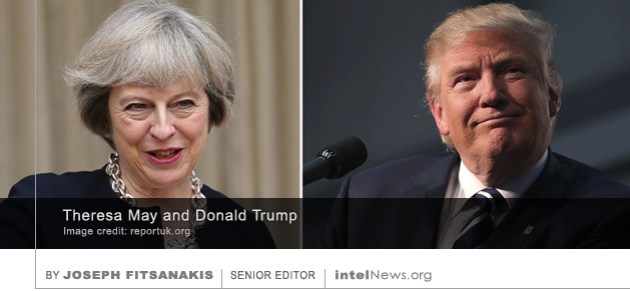
Theresa May Donald TrumpThe British government may limit or end intelligence cooperation with the United States, if Washington revives its post-9/11 torture program, according to reports. On Wednesday, US President Donald Trump said he had asked “people at the highest level of intelligence […], does torture work?” and had received the answer “yes, absolutely”. He added that he was considering reviving some of the torture techniques that were used in the “war on terrorism”, including waterboarding and, in his words, “a hell of a lot worse”.
But on Thursday, the British Prime Minister Theresa May warned that her government might be forced to reexamine its intelligence-sharing relationship with Washington, if the US reinstituted torture as a method of interrogation. Speaking to journalists during a flight to the US to meet President Trump, the British prime minister stressed that the United Kingdom “absolutely condemn[ed] the use of torture” and that she would deliver that message to her American counterpart. According to British law, government officials and intelligence personnel are forbidden from sharing intelligence with countries that are known to employ torture against detainees. They are also not allowed to use intelligence gathered by other countries through the use of torture.

Thursday’s comments by Theresa May point to a potentially serious rift between American and British, as well as European intelligence agencies, whose attitudes toward so-called ‘enhanced interrogation’ differ widely from those of President Trump. British newspaper The Daily Mail quoted Matt Tait, a former information security specialist for Government Communications Headquarters, Britain’s signals intelligence agency, who warned of a potential split between British and American spy agencies. If Trump reinstituted torture as a form of interrogation, it would mean that the United States Intelligence Community would “intentionally engage in war crimes”, said Tait. That would “make it impossible” for the UK to cooperate with the US “across a range of intelligence programs”, he added.

Author: Joseph Fitsanakis | Date: 27 January 2017 | Permalink

Lebanon claims arrests of five Israeli spies holding third country passports

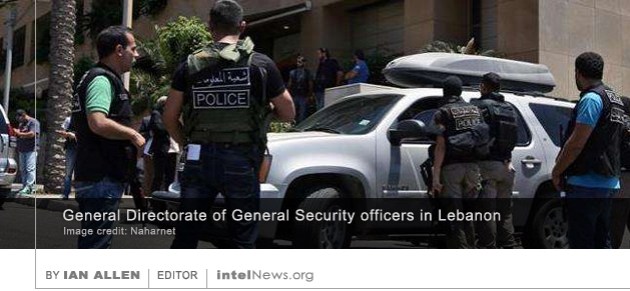
GDGS LebanonThe security services of Lebanon announced on Wednesday that they had arrested five foreign nationals who were allegedly spying of Israel. A brief statement issued by Lebanon’s General Directorate of General Security (GDGS, also known as the General Security Directorate) said the five individuals were members of a “spy ring” set up by the Mossad, Israel’s external intelligence agency. The five —three men and two women— are accused of contacting Israeli embassies in countries in the Middle East, Europe and Asia, with the aim of passing information about domestic Lebanese affairs.
The statement from the GDGS said the alleged spy ring consisted of two male holders of Lebanese passports, a Palestinian Arab man (passport not specified), and two women with Nepalese passports. It said that the five foreigners were interrogated and “confessed to the charges”, which include “spying for Israeli embassies abroad”. According to articles in the Lebanese media, the members of the alleged spy ring admitted that they had dialed telephone numbers that were operated by the embassies of Israel in: Amman, Jordan; Ankara, Turkey; London, United Kingdom; and Kathmandu, Nepal. The reports state that the five foreigners said the reason they contacted the Israeli embassies was to “pass on information”, but no specifics were offered.

According to An Nahar, Lebanon’s leading daily newspaper, the two Nepalese women had been tasked with recruiting other Nepalese women working in Israel as maids or nannies. The recruits were allegedly instructed to call telephone numbers belonging to Israel’s embassy in Nepal and share information about their employers’ activities. No information has been given about the identity and occupation of those who employed the domestic workers. The GDGS statement said that the agency was seeking to arrest “the rest of the culprits”, but did not specify whether these were members of the same alleged spy ring.

Author: Ian Allen | Date: 26 January 2017 | Permalink

Some at CIA wonder whether to share sources and methods with Trump

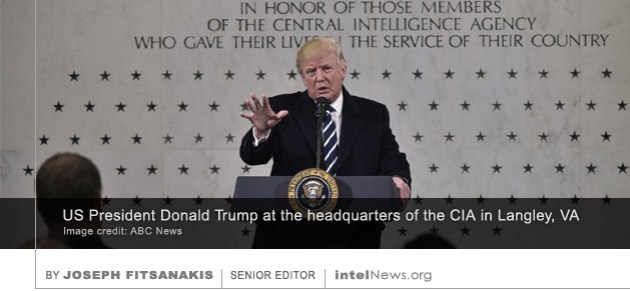
Donald Trump CIAOfficials at the United States Central Intelligence Agency have questioned whether it is safe for them to reveal the sources of their information about Russia to America’s new President, Donald Trump, according to a report. The implication is that some at the CIA are concerned that Trump’s allegedly close ties with Russian officials may put CIA operations officers in danger. The information was shared on Monday by Mary Louise Kelly, national security correspondent for National Public Radio (NPR). She told the Washington-based station that relations between the CIA and the new American president remain cool, despite the apparent rapprochement between the two sides last Saturday, when Trump gave a speech at the CIA headquarters.
Kelly cited Steve Hall, a former CIA operations officer who retired from the agency in 2015 after three decades in the National Clandestine Service, which is runs intelligence operations around the world. Hall spent time in Europe, Latin America and Central Eurasia, and some believe he was CIA station chief (America’s senior intelligence representative) in Moscow for a number of years. Hall retired as a member of the CIA’s Senior Intelligence Service, which consists of the most senior members of the National Clandestine Service. In her report, Kelly identified Hall as the CIA’s former “chief of Russia operations”. She told NPR that Kelly had responded with skepticism to President Trump’s speech at the CIA headquarters last weekend. He wondered, she said, what would happen if the CIA collected “a stellar piece of intelligence that […] puts [Russian President] Vladimir Putin in a bad light?”. Presumably the Agency would have to brief the US leader about the finding. But what if the president inquired about the source? The CIA would have to reveal its methods and sources, because that information cannot be kept from the president. According to Kelly, Hall asked: “How can you say no, we don’t trust you with the sourcing of that information?”. And continued: “[t]hat is a live question today at Langley”, referring to the location of the CIA headquarters in the US state of Virginia.

Last month, Hall wrote a guest column in The Washington Post in which he touched on the importance of sources and methods for the CIA. He wrote that the agency’s collection capabilities “could be rendered useless in one news cycle if disclosure is not handled correctly. [And] if it were human sources that provided the information, they could lose their lives”. Hall went on to argue that, if the CIA revealed its information about Russia’s alleged attempts to influence last November’s US presidential election, additional information would be demanded of it. “Questions like, ‘How exactly did you get that information?’ or ‘Where did that come from?’ and ‘When precisely did you know that?’ will inevitably be asked —and the protection of sources and methods will begin to erode”, wrote the retired CIA operations officer.

Author: Joseph Fitsanakis | Date: 25 January 2017 | Permalink

Brazil launches probe into plane crash that killed senior corruption investigator

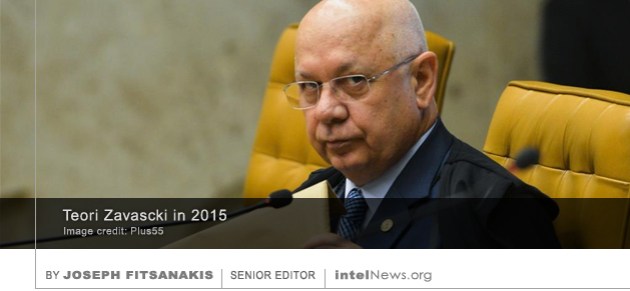
Teori ZavasckiBrazilian authorities have launched an investigation into last week’s plane crash that killed the leading judge in the largest corruption probe in the nation’s history, involving government officials and two giant companies. Supreme Court judge Teori Zavascki died last Thursday with two other people, when the small airplane they were on crashed into the Atlantic Ocean. The Beechcraft King Air C90 that was carrying Zavascki went down near the Brazilian town of Paraty, located 300 miles east of Sao Paulo. Zavascki, was appointed to Brazil’s Supreme Court in 2012, at the age of 64. He soon earned a nationwide reputation for being a relentless prosecutor of Brazil’s notoriously corrupt governmental and corporate elite. In 2015, his reputation soared even further, after he ordered the arrest of Delcídio do Amaral, a leading member of the ruling Workers’ Party, who was serving as Senate speaker and head of the Senate’s Committee on Economic Affairs. Amaral was found guilty of having received bribes from Brazil’s state-owned oil company, Petrobras, and removed from the Senate.
In October 2016, Zavascki ordered the arrest of Eduardo Cunha, President of Brazil’s Chamber of Deputies, and the man who had a few months earlier led the impeachment of Brazil’s disgraced former President, Dilma Rousseff. Cuhna’s arrest was part of so-called Operation Carwash, an enormous corruption investigation involving dozens of leading Brazilian politicians, who are accused of having taken bribes from Petrobras and Odebrecht, Brazil’s largest construction company. This coming February, Zavascki was scheduled to publicize a series of plea-bargain settlements, involving nearly 80 Odebrecht senior executives. It is believed that the plea bargains will implicate a large number of well-known Brazilian politicians, including Brazil’s President, Michel Temer, and his two immediate predecessors, Rousseff and Luiz Inácio Lula da Silva.

Shortly after Thursday’s plane crash, there was widespread speculation on social media that Zavascki’s death was not an accident. Several notable public figures in Brazil expressed concern about the timing of the judge’s death. They included detective Márcio Anselmo, the senior federal police investigator in Operation Carwash. On Friday, authorities launched an official investigation into the plane crash, which will inevitably remain in the news headlines for weeks, as the Supreme Court struggles to keep Operation Carwash alive. Several public figures have expressed strong concern about possible delays in the investigation, which could enable those being probed to evade justice. In a bizarre twist of fate, President Temer will now be expected to nominate a judge to take Justice Zavascki’s place on the Supreme Court, while knowing that his own name may be implicated in the ongoing corruption investigation.

Author: Joseph Fitsanakis | Date: 23 January 2017 | Permalink

Pakistani doctor who helped CIA find bin Laden will stay in jail, says Islamabad

Dr Shakil Afridi

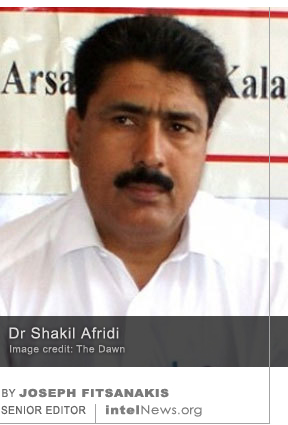
A Pakistani doctor who helped the United States find al-Qaeda founder Osama bin Laden in 2011 will remain in prison, despite calls by Washington to have him released, according to a government official in Islamabad. Dr Shakil Afridi was arrested in 2011, soon after bin Laden was killed during a Central Intelligence Agency operation in a residential compound in the city of Abbottabad, located 70 miles north of the Pakistani capital. In the weeks following the CIA raid, it emerged that a team of local doctors and nurses had helped the American agency in its efforts to confirm bin Laden’s presence in the compound. The team of nearly 20 healthcare workers participated in a fake vaccination scheme carried out in Abbottabad, whose true purpose was to collect DNA samples from residents of the compound where the CIA believed bin Laden was hiding.

In February 2012, the then CIA Director, Leon Panetta, publicly admitted that the vaccination scheme had been funded by the CIA. By that time, Pakistani authorities had fired 17 healthcare workers who had participated in the CIA scheme and arrested its head, Dr. Afridi. Prior to his arrest, Dr. Afridi was employed as a surgeon by the government of the Khyber Agency, a Federally Administrated Tribal Area along Pakistan’s border with Afghanistan. Bizarrely, Dr. Afridi was arrested for having alleged links with an Islamist group that operates in the region, known as Lashkar-e-Islam. In 2012, he was given a 33-year sentence for having links with terrorist groups. When his conviction was quashed in 2013, the doctor was ordered to remain in prison, and faced new charges, this time for alleged medical malpractice, which, according to the prosecution, resulted in the death of one of his patients.

Many American officials believe that the real reason for Dr. Afridi’s arrest is his collaboration with the CIA. In May of last year, Donald Trump said that, if elected US president, he would make Pakistan free Dr. Afridi, saying characteristically that he could achieve that “within two minutes”. But his comments prompted a strong response from Islamabad. On Tuesday, Pakistan’s Minister for Law and Justice, Zahid Hamid, reiterated that Dr. Afridi would not be freed just because Washington wishes it. Speaking in response to a question from a member of the Pakistani Parliament’s upper house, Hamid said that Dr. Afridi “worked against [Pakistani] law and our national interest” and would face a trial, as planned, despite Trump’s pre-election pledge. There was no comment yesterday from the US president-elect’s team.

Author: Joseph Fitsanakis | Date: 19 January 2017 | Permalink

Leaked EU intelligence report says Islamists were not behind Turkey coup

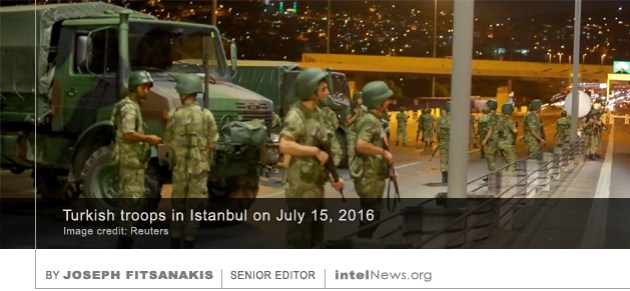
Turkey coupA leaked report by a European Union intelligence body states that Islamist forces were not behind last July’s failed coup in Turkey, and that the ruling party used the coup to neutralize its few remaining political rivals. The government of Turkish President Recep Tayyip Erdoğan accuses members of the so-called Gülen movement of orchestrating the coup, which included an armed attack on the country’s parliament and the murder of over 200 people across Turkey. The Gülen movement consists of supporters of Muslim cleric Fethullah Gülen, who runs a global network of schools, charities and businesses from his home in the United States. The government of Turkey has designated Gülen’s group a terrorist organization and claims that its members have stealthily infiltrated state institutions since the 1980s.
But a report compiled by the EU Intelligence and Situation Centre, known as IntCen, states that Gülenists had nothing to do with the coup, and that the current crackdown against them by the government was planned years in advance. Founded in 2012, IntCen is the intelligence-sharing body of the EU. Its reports are the results of collaborative efforts of intelligence officers from all EU states. They are distributed on a confidential basis to senior EU officials and to the ambassadors of EU states in Brussels, Belgium. The report on the coup in Turkey is entitled “Turkey: The Impact of the Gülenist Movement”. It was issued on August 24 and is marked “confidential”. But it was accessed by British newspaper The Times, which published extracts on Tuesday.

According to the leaked document, it is “unlikely” that the Gülen movement had the “capabilities and capacities” to launch a coup against Erdoğan. It is even more unlikely, it suggests, “that Gülen himself played a role” in the operation. A far more plausible explanation is that the coup was launched by a relatively small group of Kemalists (secular Turks who oppose President Erdoğan’s religiously-based politics), some Gülenists, and various opportunists within the ranks of the military. Once the coup began to unfold, a few low-level military officers with Gülenist sympathies may have “felt under pressure” to participate in order to ensure its success. That was mostly because they knew that, if the coup failed, the Erdoğan government would go after them and accuse them of staging it, states the report.

Indeed, once the coup failed, the Erdoğan administration launched a coordinated campaign designed to dismantle the Gülen movement, which was its “one and only real rival” in Turkey. Since the end of the failed coup, the Turkish state has initiated a nationwide political crackdown against alleged supporters of the coup. An estimated 100,000 people have been fired from their jobs, while hundreds of thousands have been demoted, censured or warned. Another 35,000 are believed to be in prison, charged with supporting the failed coup or with being members of the Gülen network. But the IntCen report suggests that the crackdown against Erdoğan’s opponents had been conceived and designed years in advance. Last July’s coup acted as a catalyst and was “exploited” by the government to neutralize all its political opponents, says IntCen. The lists used to arrest individuals across the country had been complied by the Turkish intelligence services many years ahead of the failed coup, according to the IntCen report.

Author: Joseph Fitsanakis | Date: 18 January 2017 | Permalink

Russian official accuses US of trying to blackmail Russian diplomat

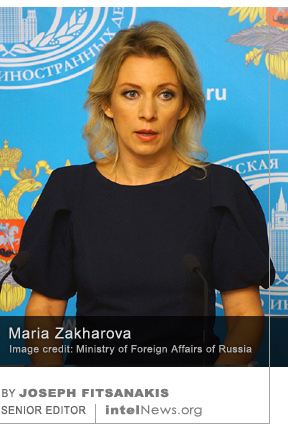
first-post-vA senior Russian official has accused the United States Federal Bureau of Investigation of trying to blackmail a Russian diplomat who was attempting to purchase anti-cancer drugs in an American pharmacy. The allegation was made Sunday on live Russian television by Maria Zakharova, spokeswoman for Russia’s Ministry of Foreign Affairs. She was being interviewed on Sunday Night with Vladimir Solovey, a popular politics roundtable show on Russia’s state-owned Rossiya 1 television channel. Zakharova told Solovey that, a few years ago, the Russian government authorized one of its diplomats in the United States to purchase several thousand dollars’ worth of anti-cancer drugs. The drugs were to be used by Yevgeny Primakov, Russia’s prime minister in the late 1990s, who was battling liver cancer.
According to Zakharova, the Russian diplomat was supplied with funds through an official money transfer from Moscow. Meanwhile, Primakov’s “health certificates and medical prescriptions” were supplied to a pharmacy in Washington, DC, where the Russian diplomat purchased the medicine. However, shortly after the Russia diplomat completed his purchase, he was accosted by American intelligence officers —presumably from the Federal Bureau of Investigation— who demanded to speak with him. The diplomat was then allegedly taken to the basement of the pharmacy, where, according to Zakharova, there was no cellular reception. The Russian diplomat was thus unable to contact his superiors at the Russian embassy. Zakharova claims that the two American officers kept the diplomat in the basement “for an hour” and attempted to turn him into a double agent, by accusing him of “illicit drug trafficking” and threatening to expel him from the country.

Zakharova said the Russian diplomat refused to cooperate and was allowed to return to the Russian embassy. However, the drugs were confiscated and the money paid by the diplomat to the pharmacy has not been “returned to this day”, she said. Eventually, according to Zakharova, the diplomat was deported from the United States, despite the intervention of Secretary of State John Kerry, who stepped in to try to resolve the episode. Primakov died in 2015 of liver cancer. The United States government and the Russian embassy in Washington, DC, did not comment on Zakharova’s allegations.

Author: Joseph Fitsanakis | Date: 17 January 2017 | Permalink

New Zealand spy agency warns of persistent foreign espionage threats

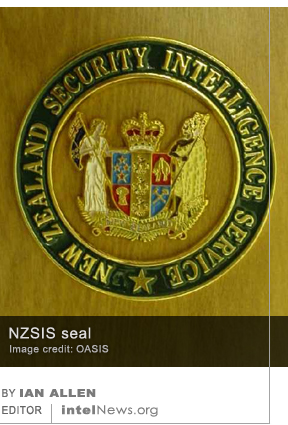
NZSIS New ZealandThe intelligence agency of New Zealand has issued a report warning that the country is being targeted by foreign spies who operate using fake covers. Many of them aim to infiltrate some of the highest levels of the government, according to the agency. The warning appeared in the annual report of the New Zealand Security Intelligence Service (NZSIS), the country’s main national intelligence organization, which is responsible for intelligence, counterintelligence and counter- terrorism. The NZSIS’ latest report covers the 12 months leading up to June 30, 2016. The unclassified version of the report was presented last week to the New Zealand House of Representatives, which must by law be kept informed about the activities of the NZSIS.
The report warns that “[f]oreign powers continue to conduct espionage activity and other hostile state-sponsored activities, including foreign interference, against New Zealand”. To illustrate this point, the report mentions the case of an alleged “foreign intelligence officer” who entered New Zealand under a “cover identity”, presumably in 2016. The officer approached and met senior New Zealand government officials, including some “with high level security clearances”, claims the report. The undercover officer also came in contact with individuals who worked in “key New Zealand business facilities” and sensitive industries, according to the document. However, NZSIS was able to identify the officer and subsequently contacted all New Zealand government officials that came in contact with the officer. The officials were debriefed and advised to be “cautious in their conversations” with foreign nationals, said the report.

The case study may point to efforts by foreign intelligence agencies to gain insights or manipulate the operations of New Zealand’s government and business community, said NZSIS. However, when asked by reporters, the agency refused to provide further details of the case of the foreign undercover officer. An agency spokesman said simply that the case highlights “some of the security threats that New Zealand currently faces”. The NZSIS is currently in the middle of a hiring spree, after its budget was raised last year. It is estimated that the agency’s staff has increased by nearly a fifth since late 2015.

Author: Ian Allen | Date: 16 January 2017 | Permalink

Israeli officials were advised not to share intelligence with Trump’s White House

Donald TrumpAmerican intelligence officials allegedly warned their Israeli counterparts not to share intelligence with Washington once Donald Trump becomes president of the United States. The reason was that, according to the US officials, there was no guarantee that the intelligence would not be leaked to Russia. There was also the danger, they claimed, that the compromised intelligence would end up in the hands of Russia’s ally Iran, a regional adversary of Israel. The claim was made on Thursday by Ronen Bergman, senior political and military analyst for Israel’s largest-circulation daily newspaper, Yedioth Ahronoth.

According to Bergman, the American intelligence officials spoke in depth with their Israeli counterparts during a recent meeting between the two sides. He did not give details about the time and location of the meeting, so as “to protect the sources of the report”, he said. During the meeting, the US officials allegedly “voiced despair” over Trump’s electoral victory and his apparently poor relationship with the US Intelligence Community. They also suggested that Israeli intelligence officials should “be careful” when sharing intelligence with the White House or the US National Security Council, which is chaired by the president. The reason was that the intelligence —including sources and methods— might end up in the hands of the Kremlin, they said, and from there to Israel’s regional adversaries, such as Iran —and presumably Syria, though Bergman does not mention that.

The American officials further recommended that the Israelis wait until a clearer picture emerges of the alleged connections between Russia and the Trump campaign. It was also implied during the meeting that Trump may be subject to blackmail by Moscow and forced to reveal sensitive information relating to America and its allies, including Israel. According to Bergman, the Israelis are concerned about the Trump-Russia controversy and there are even some in Tel Aviv who raise fears of exposure of information given to the US by the Israeli intelligence community “over the past 15 years”. There has been no comment on the subject from Israel or Trump’s transition team.

Author: Joseph Fitsanakis | Date: 13 January 2017 | Permalink