Arrested contractor may have worked for NSA’s elite cyber spy unit

NSAA United States federal contractor, who remains in detention following his arrest last summer for stealing classified documents, may have worked for an elite cyber espionage unit of the National Security Agency. The man was identified by The New York Times last week as Harold Thomas Martin III, a 51-year-old employee of Booz Allen Hamilton, one of the largest federal contractors in the US. The paper said that, prior to joining Booz Allen Hamilton, Martin served as a US Navy officer for over a decade, where he specialized in cyber security and acquired a top secret clearance. But last August, agents of the Federal Bureau of Investigation raided Martin’s house in Maryland and arrested him on charges of stealing government property and illegally removing classified material.

Media reports suggest that the FBI discovered significant quantities of classified information, some of it dating back to 2006, on a variety of electronic devices that Martin had stored —though apparently not hidden— in his house and car. Another interesting aspect of the case is that there is no proof at this point that Martin actually shared the classified information with a third party. There is some speculation that he may be behind a disclosure of a collection of NSA hacking tools, which were leaked in August of this year by a previously unknown group calling itself “the Shadow Brokers”. But some speculate that Martin may have taken the classified material home so he could write his dissertation for the PhD he is currently undertaking at the University of Maryland’s Information Systems program.

A few days ago, The Daily Beast quoted an unnamed former colleague of Martin who said that the NSA contractor was a member of one of the agency’s elite cyber spy units. The existence of the secretive unit, which is known as the NSA’s Office of Tailored Access Operations, was revealed in June 2013 by veteran NSA watcher Matthew M. Aid. Writing in Foreign Policy, Aid cited “a number of highly confidential sources” in alleging that the NSA maintained a substantial “hacker army” tasked with conducting offensive cyber espionage against foreign targets. More information on NSA’s TAO was provided in January 2014 by German newsmagazine Der Spiegel. If The Daily Beast’s allegations about Martin are accurate, they would explain why anonymous government sources told The Washington Post last week that some of the documents Martin took home “could be expected to cause exceptionally grave damage to the national security of the United States”. The case also highlights the constant tension between security and the privatization of intelligence, which was also a major parameter in the case of Edward Snowden, another Booz Allen Hamilton contractor who defected to Russia in 2013.

Meanwhile, Martin remains in detention. If he is convicted, he will face up to 11 years behind bars.

Author: Joseph Fitsanakis | Date: 10 October 2016 | Permalink

Germany’s most famous spy on trial for tax evasion, claims money is not his

Werner MaussThe most famous intelligence operative in Germany went on trial last week after his name was linked to dozens of offshore bank accounts and shell companies. But he claims he used these accounts to rescue hostages as part of his undercover work. Werner Mauss became known in 1997, when he was arrested in Colombia while using a forged passport. He had traveled to the Latin American country to secure the release of a German woman who had been kidnapped by leftist guerrillas. The Colombian authorities eventually released him, following heavy diplomatic pressure from the German government. But the German media began investigating his background, and it soon became known that he was working for the Federal Intelligence Service, specializing in negotiating the release of hostages.

Now, in his mid-70s, Mauss enjoys celebrity status in Germany. He claims on his personal website that he was directly involved in neutralizing over 100 criminal gangs and that his work led to the capture of 2,000 criminals and spies. He also claims to have helped prevent dangerous chemical substances from falling into the hands of terrorist groups.

Last Monday, however, Mauss appeared in court in the North Rhine-Westphalian city of Bochum, accused of placing millions of euros in undeclared offshore accounts. The German state prosecutor accuses the spy of having dozens of accounts in his name in offshore tax havens such as the Bahamas, Turks and Caicos, and Panama. Government investigators say Mauss hid nearly €15 million (approximately $23 million) in secret accounts between 2002 and 2013. It appears that at least some of the accounts had been opened under aliases that Mauss used during his spy operations.

According to reports in the German media, Mauss first appeared on the government’s radar several years ago, when investigators in North Rhine-Westphalia purchased a CD from a whistleblower who worked in Luxembourg’s UBS bank. Earlier this year, Mauss’ name appeared again, this time in the so-called Panama papers, the massive data leak of documents belonging to Panamanian law firm Mossack Fonseca that specialized in offshore wealth management.

According to his lawyers, Mauss did nothing wrong, and claims that he used the shell companies and offshore bank accounts to channel funds to kidnappers in order to secure the release of hostages. Mauss’ legal team also claims that the 76-year-old former spy cannot properly defend himself because he is prevented from speaking freely by the clandestine nature of his work for the government. It is believed that the trial will continue until the end of this year.

Author: Ian Allen | Date: 3 October 2016 | Permalink

FBI seeking former Syrian intelligence officer reportedly hiding in Florida

Moustafa Abed AyoubA Syrian former intelligence officer, who was given American citizenship several years ago, is being sought by authorities in the United States. The man was named by the Federal Bureau of Investigation last week as Moustafa Abed Ayoub, a 75-year-old resident of Fort Lauderdale, Florida. A statement by the FBI said the wanted man is believed to be hiding in southern Florida, possibly in the Miami area. A reward is now offered for information leading directly to Ayoub, according to the FBI press release. The release did not specify whether the former intelligence officer is wanted in connection with the ongoing civil war in Syria.
The FBI press release described Ayoub as a former brigadier general in Syria’s powerful Mukhabarat, the Military Intelligence Directorate, which operates under the auspices of the country’s Ministry of Defense. He is reported to have served in the Mukhabarat for nearly 20 years, from the early 1980s to the late 1990s. According to the FBI release, Ayoub served initially in Hama and Homs before he was transferred to Damascus. It appears that Ayoub is accused by the FBI of procuring American citizenship unlawfully, after giving deliberately false testimony during his naturalization proceedings. To be eligible for American citizenship, an applicant must have lived in the US for at least 30 months during the period leading to his or her naturalization application. Ayoub is accused of not telling immigration authorities that he had spent over 1,000 days outside the US in the months leading to his application for citizenship.

The FBI said it issued a warrant for Ayoub’s arrest in Florida, where he is believed to be hiding. However, the FBI release noted that Ayoub may have returned to Syria, or may be currently residing in the Lebanese capital Beirut.

Author: Ian Allen| Date: 30 September 2016 | Permalink

Public event held in Cuba for the first time to demand release of US spy

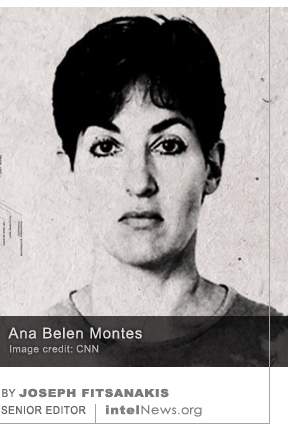
Ana Belen MontesA public event has been held for the first time in Havana to demand the release Ana Belen Montes, an American former intelligence analyst who is serving a 25-year prison term for spying on the United States for Cuba. The event appeared to be sanctioned by the Cuban government and is bound to reignite rumors that a deal between Washington and Havana to release Montes may be in the works.
Montes grew up in Kansas. In 1985 she joined the US Defense Intelligence Agency, which collects and analyzes military-related information from abroad. Montes quickly distinguished herself in the DIA, and by the mid-1990s she was seen as one of the US government’s most knowledgeable and capable Cuba experts. She was the main author of nearly every major assessment on Cuba that was produced by the US Intelligence Community in the 1990s. But on September 21, 2001, Montes was arrested by the Federal Bureau of Investigation and charged with having committed espionage for Cuba. During her trial, US government prosecutors argued that Montes had been recruited by Cuban intelligence before she joined the DIA, and that she eventually compromised every US intelligence collection program targeting the Caribbean island. The former DIA analyst was also accused of having given Havana the identities of US intelligence officers who had secretly operated in Cuba. In 2002, Montes was sentenced to 25 years in prison, after pleading guilty to having committed espionage throughout her 16-year career in the DIA.

In recent months, there has been speculation that Montes could be released and allowed to relocate to Cuba. In return, Havana would reportedly extradite to the US Assata Shakur, a former member of militant black nationalist groups in the United States, who is accused of the 1973 murder of a state trooper in New Jersey. These rumors were denied by the US Department of State in August. Last week, however, the first public event took place in Havana to demand Montes’ release. The event featured performances by artists, as well as a keynote speech by Manuel David Orrio, a retired officer in the Cuban General Intelligence Directorate (DGI). Orio told those present at the event in downtown Havana that committees to demand Montes’ release had been formed in several Cuban provinces, as well as in Sweden, France, Puerto Rico and the Dominican Republic. He added that formally requesting Montes’ release would be an “extremely complex” and delicate affair for the Cuban government, but that social pressure groups were free to press US officials.

In the past, the Cuban government has been silent about Montes’ case, and very few Cubans are aware of her existence. The fact that the government is now mobilizing popular committees and other pressure groups may point to a change of policy in Havana.

Author: Joseph Fitsanakis | Date: 28 September 2016 | Permalink

Swiss vote to give unprecedented surveillance powers to spy agencies

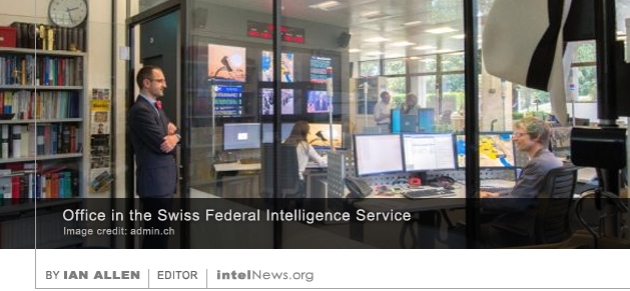
Federal Intelligence Service SwitzerlandVoters in Switzerland have strongly approved a proposed law that aims to expand the surveillance powers of Swiss intelligence agencies. The move is uncharacteristic of the Swiss, who have historically been skeptical of giving far-reaching surveillance powers to their government. In the late 1980s, Swiss public opinion was shocked by the revelation that the country’s Federal Military Department had spied without permission on tens of thousands of Swiss citizens for many decades under a top-secret project codenamed P-27. In response to the revelations, P-27 was ended, the Swiss intelligence agencies were reorganized, and stricter parliamentary controls were imposed on their activities. Today, even CCTV cameras are rarely used in Switzerland, while Google has not been given permission to incorporate the country’s streets into its Streetview application due to strict local privacy laws.
Opponents of the proposed law warned that it would end Switzerland’s long history of protecting civil liberties and would increase cooperation between Swiss and foreign spy agencies, thus harming the country’s tradition of political neutrality. But terrorist attacks in nearby Belgium and France have shaken public opinion in the small alpine country, which is home to numerous international agencies, including a regional branch of the United Nations. Consequently, nearly 66 percent of voters backed the proposal in elections on Sunday, which saw a 41 percent rate of participation. The result will allow the Swiss intelligence and security services, such as the Federal Intelligence Service, to put suspects under electronic surveillance using wiretaps, internet-based software, and hidden devices such as cameras and microphones.

Despite its long history of political neutrality, Switzerland is not unaccustomed to espionage scandals. In 2009, Switzerland’s Neue Zürcher Zeitung newspaper said that a number of listening devices, most likely of Israeli origin, had been discovered in a room designated for sensitive meetings on disarmament issues at the United Nations building in Geneva. In June 2013, the Swiss parliament blocked legislation designed to help the United States identify tax evaders, just days after it was revealed that the US Central Intelligence Agency had conducted an espionage operation targeting a Swiss bank executive. And in 2015, the Swiss Federal Prosecutor launched an investigation into claims that the country’s largest telecommunications provider, Swisscom AG, had been spied on by a consortium of German and American intelligence agencies.

Author: Ian Allen | Date: 26 September 2016 | Permalink

Britain’s MI6 to increase its size by 40% in four years

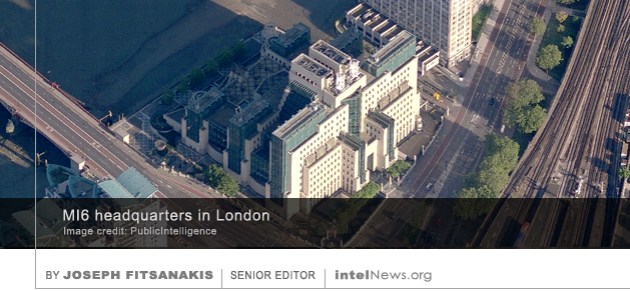
MI6Britain’s primary external intelligence agency, MI6, will see a 40 percent increase in personnel numbers in the next four years, according to a new report. The agency, which is formally known as the Secret Intelligence Service, currently employs about 2,500 people. But the BBC said on Wednesday that the number of MI6 employees will rise to approximately 3,500 by 2020. The broadcaster said that no public announcement had been made about the planned increase, but that it had verified the information “via Whitehall sources”, referring to the official seat of the British government.
If the BBC’s report is accurate, the planned increase will be the biggest personnel boost for MI6 since the Cold War. It reflects a renewed emphasis in foreign intelligence collection using human sources, which is the primary task of the spy agency. The broadcaster said that the increase in personnel has been “made necessary by the development of the Internet and technology” in recent years. Earlier this week, the director of MI6, Alex Younger, said during a panel presentation in Washington, DC, that the operating environment of MI6 had fundamentally changed due to “the information revolution”. The latter, he said, presented the agency with “an existential threat” and a “golden opportunity” at the same time.

The reported increase is consistent with an announcement made by the then British Prime Minister David Cameron in November 2015, that London would boost significantly the size of its intelligence services. Cameron made the announcement shortly after the terrorist attacks in Paris, which killed over 130 people and injured 700. In a subsequent report, called the 2015 Strategic Defence and Security Review, the British government said it would incorporate 1,900 additional staff to its intelligence and security services. It now appears that over half of these new recruits will join MI6, while the Security Service (MI5), the Government Communications Headquarters (GCHQ) and the Metropolitan Police’s Counter Terrorist Command will hire the remaining 900 people.

A similar rise in personnel numbers occurred after the July 7 London bus bombings in 2005. Following those attacks, the MI5, which focuses on domestic security and counterterrorism, saw its personnel size increase by approximately 35 percent.

Author: Joseph Fitsanakis | Date: 23 September 2016 | Permalink

Informer accuses Sinn Féin leader of ordering British spy’s murder

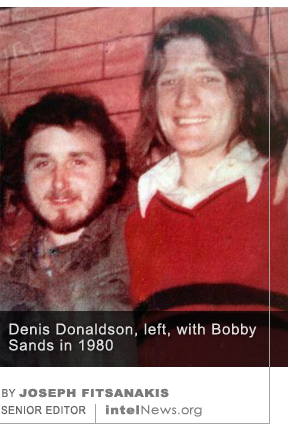
Denis DonaldsonA former member of the Provisional Irish Republican Army, who was an agent for the British security services, has alleged that Gerry Adams, leader of the second-largest political party in Northern Ireland, ordered the killing of a British spy in 2006. The former agent was referring to the killing of Denis Donaldson, a senior member of the Provisional IRA, who was found dead months after it was revealed that he had been secretly spying on the republican organization on behalf of British intelligence.

In December 2005, Adams announced at a press conference in Dublin, Ireland, that Donaldson had been a spy for the British government inside the Provisional IRA and its political wing, Sinn Féin. Soon after Adams’ revelation, Donaldson read a prepared statement on Ireland’s RTÉ television station, admitting that he had been recruited as a spy by the British Security Service (MI5) and the Special Branch of the Royal Ulster Constabulary (known today as the Police Service of Northern Ireland). Following his public admission, Donaldson was nowhere to be found. However, in March 2006, a reporter for a British tabloid newspaper found Donaldson living in a remote farmhouse in Northern Ireland’s County Donegal. Weeks later, Donaldson was shot dead in his cottage by persons unknown. In 2009, the Real IRA, a Provisional IRA splinter group that disagreed with the Good Friday Agreement and subsequent cessation of hostilities, took responsibility for Donaldson’s killing.

On Tuesday, a man who claims he was an informant for British intelligence inside Sinn Féin and the Provisional IRA alleged that Donaldson’s killing was ordered by Adams himself. The man, who spoke on the BBC’s Spotlight program, could not be identified due to concerns about his personal safety. He said during a televised interview that he knew from his “experience in the IRA that murders have to be approved by […] the leadership of the IRA and the military leadership of the IRA”. When asked by the report who he was “specifically referring to”, the former informant answered: “Gerry Adams. He gives the final say”. On Wednesday, Adams denied any involvement in the killing, saying he wished to “specifically and categorically refute these unsubstantiated allegations”. The leader of Sinn Féin went on to claim that the accusations against him were “part of the British security agencies’ ongoing attempts to smear republicans and cover-up their own actions”. Adams’ lawyer said late on Wednesday that his client was considering launching a lawsuit against the BBC for defamation.

Author: Joseph Fitsanakis | Date: 22 September 2016 | Permalink

British judge denies request to name alleged new member of Cambridge spy ring

Corpus Christi College CambridgeA document that allegedly contains the name of a man who could be connected to one of the most sensational spy rings of the Cold War is to remain secret after a judge rejected a request to have it released. The man is believed by some to have been associated with the so-called ‘Cambridge spy ring’, a group of upper-class British graduates of Cambridge University, who spied for the USSR from the 1930s until the 1960s. Among them was Guy Burgess, Donald Maclean and H.A.R. “Kim” Philby, all of whom eventually defected to the Soviet Union. In 1979, it was revealed that Anthony Blunt, an art history professor who in 1945 became Surveyor of the King’s Pictures and was knighted in 1954, was also a member of the group. A fifth member, career civil servant and former intelligence officer John Cairncross, was publicly outed as a Soviet in 1990, shortly before his death.
Over the years, more individuals have been suggested by historians as potential members of the group, including intelligence officers Leo Long and Guy Liddell, academics Ludwig Wittgenstein and Andrew Gow, and physicist Wilfrid Mann. But according to British newspaper The Daily Mail, another individual may be identified in a classified document as a possible member of the Cambridge spy ring. The document was allegedly traced by Andrew Lownie, who authored the recently published Stalin’s Englishman: The Lives of Guy Burgess. Lownie filed a Freedom of Information request to have the document, which is held at the National Archives in London, released. But the request was denied, and a judge has now upheld the decision.

In denying the request, the judge argued that the man named in the document is still alive and that a possible release of the document could “jeopardize […] personal relationships”. He also contended that the case is too old to warrant immediate public interest, and thus there was “no pressing need” to declassify the file. The Mail speculates that the individual named in the document could have cooperated with the British government in the past in return for protection, or that the file in question may contain details that could embarrass the British government.

Author: Joseph Fitsanakis | Date: 20 September 2016 | Permalink

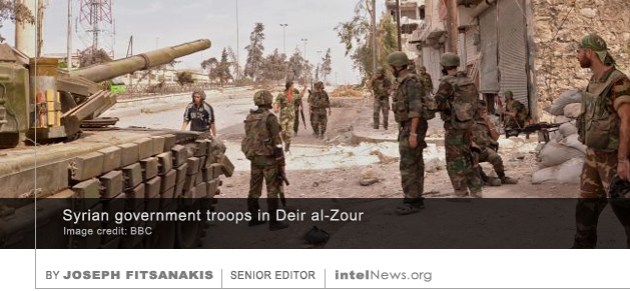
Cease-fire near collapse after US airstrike kills 62 and injures 100 Syrian troops

Deir al-Zour SyriaA cease-fire that was launched with much fanfare by the United States and Russia last week appeared in tatters on Sunday night, after Washington acknowledged it mistakenly killed over 60 Syrian troops on Saturday. American officials expressed regret for the alleged error, but Syrian and Russian officials accused Washington of deliberately sabotaging the cease-fire agreement. Russian sources said the US air strike killed 62 and injured over 100 Syrian government troops who were engaged in a battle against Islamic State forces in Syria’s eastern province of Deir al-Zour. American military officials insisted that the pilots, who flew into Syria from bases in Iraq, believed they were targeting Islamic State forces. The operation was allegedly aborted as soon as US forces were notified by the Russian military that Syrian government troops were being targeted.
According to media reports, the US government has apologized to Damascus though Russian intermediaries for the “unintentional loss of life of Syrian forces”. But the incident has incensed Moscow, as it marks the first known engagement between US and Syrian forces since American military forces began fighting the Islamic State in 2014. The incident was described by The Washington Post late on Saturday as having sparked “one of the most hostile diplomatic exchanges between Washington and Moscow in recent years”. Soon after the US airstrike, Russia called an emergency meeting of the United Nations Security Council, during which the Russian delegation accused the United States of deliberately trying to derail the cease-fire. According to reports, the American delegation stormed out of the closed-door meeting and denounced it as a “stunt” after the Russians openly accused Washington of aiding the Islamic State and al-Qaeda in Syria.

American officials have launched an investigation into Saturday’s incident and are so far refusing to speculate whether it was caused by human error or an intelligence failure. In Washington, a State Department spokesman insisted that “coalition forces would not intentionally strike a known a Syrian military unit”. But in a statement issued on Saturday, Russian Major General Igor Konashenkov said that, if the US air strike was in error, it was a “direct outcome of the US side’s stubborn unwillingness to coordinate its activities  in Syria with Russia”.

Author: Joseph Fitsanakis | Date: 19 September 2016 | Permalink

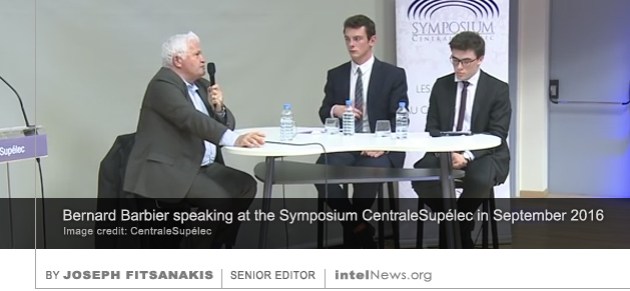
France’s ex-cyber spy chief speaks candidly about hacking operations

Bernard BarbierThe former director of France’s cyber spy agency has spoken candidly about the recent activities and current state of French cyber espionage, admitting for the first time that France engages in offensive cyber operations. Between 2006 and 2013, Bernard Barbier was director of the technical division of the General Directorate for External Security, France’s external intelligence agency, which is commonly known as DGSE. During his tenure at DGSE, the organization’s technical division witnessed unprecedented financial and administrative growth. Today it is said to employ over 2500 people, nearly half of DGSE’s total personnel.
Earlier this month, Barbier was interviewed on stage during a symposium held by the CentraleSupélec, a top French engineering university based in Paris. He spoke with surprising candor about France’s cyber espionage operations. In the first part of his interview, which can be watched on YouTube, he recounted the history of what he described as “France’s cyber army”. He said that France began to build “teams of hackers” in 1992. Around that time, the DGSE purchased an American-built Cray supercomputer, said Barbier, and soon discovered that it could use the machine’s immense computing power to break passwords. More recently, said the former cyber spy chief, the DGSE has been trying to “catch up” with its American and British counterparts, the National Security Agency and the Government Communications Headquarters, by increasing its annual budget to over half a billion and hiring hundreds of young hackers. Many of these new employees have little to no university education, said Barbier, and are instead self-taught, having started hacking in their teenage years.

Like most governments, France will not officially admit to conducting offensive cyber operations using computer hacking and other techniques. But Barbier said during his interview that France was behind an offensive cyber operation that targeted Iran in 2009. He added that the DGSE has also directed cyber operations against Canada, Ivory Coast, Algeria, Norway, as well as its European Union partners Spain and Greece. He also complained that French government executives do not understand the importance of cyber operations and are not aiming high enough when it comes to planning, direction and hiring. The DGSE’s technical division still needs between 200 and 300 more staff members, Barbier argued in his interview.

Author: Joseph Fitsanakis | Date: 16 September 2016 | Permalink

US spy agencies are significantly expanding operations against Russia

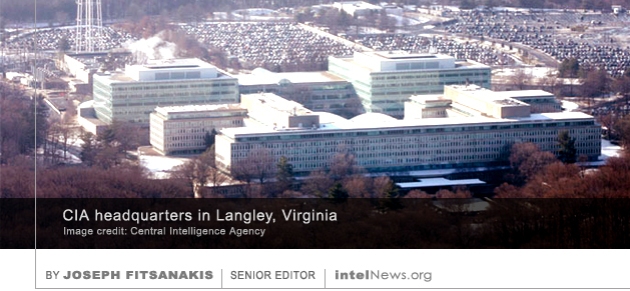
CIAAmerican intelligence agencies are diverting counterterrorist resources to Russian accounts, prompting some commentators to describe the move as the greatest expansion of spy operations against Russia since the Cold War. In a leading article published on Wednesday, The Washington Post’s Greg Miller cites unnamed United States officials in describing “a shift in resources across spy services”. The shift allegedly reflects an increasing emphasis on Russia, with many of the resources coming from accounts focusing on terrorism threats and war zones in the Middle East and Central Asia, which were created in the aftermath of 9/11.
In contrast to the Cold War, when US intelligence agencies devoted most of their resources to the Soviet Union and its allies around the world, today the US Intelligence Community designates “at most 10 percent” of its budget on espionage targeting Russia, according to Miller. But this is now beginning to change, he says, as the Office of the Director of National Intelligence has now “moved Russia up the list of intelligence priorities for the first time since the Soviet Union’s collapse” in 1991. This move, which reflects current national-security priorities in the White House, will have a spiraling effect on the resources devoted to Russia by every American intelligence agency. There will be more human intelligence collection conducted by the CIA against Russian targets, more attention paid by the National Security Agency to Russian communications, and more reconnaissance activity over Russia by satellites operated by the National Reconnaissance Office, among other changes.

This change in direction comes after a prolonged period of tension between Washington and Moscow, which has been marked by America’s intervention in North Africa during the Arab Spring, which Moscow strongly objected to, Russia’s annexation of Crimea, the Syrian Civil War, and numerous instances of cyber espionage. As a result, says Miller, “surging tensions now cut across nearly every aspect of the US-Russia relationship”. He adds that some voices in Washington have raised concerns about the slow response by the US Intelligence Community to Russia’s resurgence as a world actor, especially in Eastern Europe and the Middle East. He quotes one unnamed senior US intelligence official as saying that American spy agencies are now “playing catch-up big time with Russia”. However, some US officials stress that, given the level of reduction in US intelligence capabilities targeting Russia since 1991, it will take years to rebuild them. Regardless, they say, there is no desire in Washington to return to Cold War levels of intelligence activity any time soon.

Author: Joseph Fitsanakis | Date: 15 September 2016 | Permalink

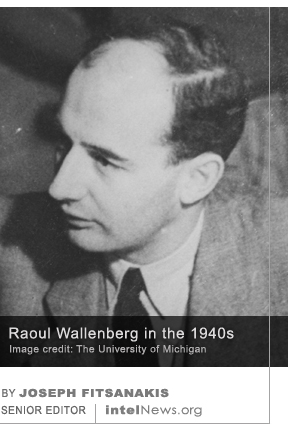
Soviet memoirs suggest KGB abducted and murdered Swedish diplomat

Raoul WallenbergThe recently discovered memoirs of a former director of the Soviet KGB suggest that a senior Swedish diplomat, who disappeared mysteriously in the closing stages of World War II, was killed on the orders of Joseph Stalin. The fate of Swedish diplomat Raoul Wallenberg is one of the 20th century’s unsolved espionage mysteries. In 1944 and 1945, the 33-year-old Wallenberg was Sweden’s ambassador to Budapest, the capital of German-allied Hungary. During his time there, Wallenberg is said to have saved over 20,000 Hungarian Jews from the Nazi concentration camps, by supplying them with Swedish travel documents, or smuggling them out of the country through a network of safe houses. He also reportedly dissuaded German military commanders from launching an all-out armed attack on Budapest’s Jewish ghetto.
But Wallenberg was also an American intelligence asset, having been recruited by a US spy operating out of the War Refugee Board, an American government outfit with offices throughout Eastern Europe. In January of 1945, as the Soviet Red Army descended on Hungary, Moscow gave orders for Wallenberg’s arrest on charges of spying for Washington. The Swedish diplomat disappeared, never to be seen in public again. Some historians speculate that Joseph Stalin initially intended to exchange Wallenberg for a number of Soviet diplomats and intelligence officers who had defected to Sweden. According to official Soviet government reports, Wallenberg died of a heart attack on July 17, 1947, while being interrogated at the Lubyanka, a KGB-affiliated prison complex in downtown Moscow. Despite the claims of the official Soviet record, historians have cited periodic reports that Wallenberg may have managed to survive in the Soviet concentration camp system until as late as the 1980s.

But the recently discovered memoirs of Ivan Serov, who directed the KGB from 1954 to 1958, appear to support the prevalent theory about Wallenberg’s demise in 1947. Serov led the feared Soviet intelligence agency under the reformer Nikita Khrushchev, who succeeded Joseph Stalin in the premiership of the USSR. Khrushchev appointed Serov to conduct an official probe into Wallenberg’s fate. Serov’s memoirs were found in 2012 by one of his granddaughters, Vera Serova, inside several suitcases that had been secretly encased inside a wall in the family’s summer home. According to British newspaper The Times, the documents indicate that Wallenberg was indeed held for two years in the Lubyanka, where he was regularly interrogated by the KGB. The latter were certain that the Swedish diplomat was an American spy who had also been close to Nazi Germany’s diplomatic delegation in Hungary. Soviet Premier Joseph Stalin considered exchanging him for Soviet assets in the West. But eventually Wallenberg “lost his value [and] Stalin didn’t see any point in sending him home”, according to Serov’s memoirs. The KGB strongman adds that “undoubtedly, Wallenberg was liquidated in 1947”. Further on, he notes that, according to Viktor Abakumov, who headed the MGB —a KGB predecessor agency— in the mid-1940s, the order to kill Wallenberg came from Stalin himself.

In 2011, Lt. Gen. Vasily Khristoforov, Chief Archivist for the Russian Federal Security Service (FSB), one of two successor agencies to the old Soviet KGB, gave an interview about Wallenberg, in which he said that most of the Soviet documentation on the Swedish diplomat had been systematically destroyed in the 1950s. But he said that historical reports of Wallenberg’s survival into the 1980s were “a product of […] people’s imagination”, and insisted that he was “one hundred percent certain […] that Wallenberg never was in any prison” other than the Lubyanka. An investigation by the Swedish government into the diplomat’s disappearance and eventual fate is ongoing.

Author: Joseph Fitsanakis | Date: 13 September 2016 | Permalink

Flow of foreign fighters to ISIS drops to near zero, intel assessments show

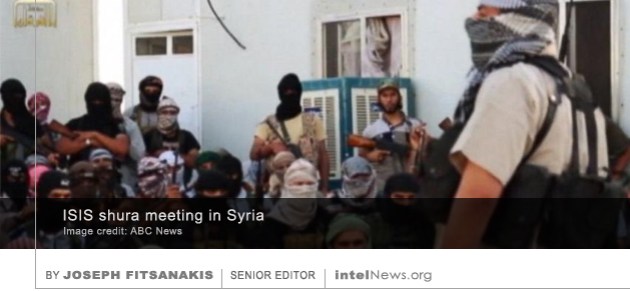
ISIS meetingThe transfer of foreign fighters into Iraq and Syria to join the Islamic State and other Sunni militant groups has been all but eliminated in countries across the world, according to intelligence assessments. In previous years, it has been estimated that nearly as many as 2,000 foreign recruits, both men and women, crossed into Syria each month, mainly from Turkey, with the intention of joining armed Sunni groups. By the end of 2015, it was believed that over 30,000 foreign nationals from close to 90 countries had entered Syria and Iraq to fight for one of the Sunni-inspired opposition groups taking part in the Syrian civil war. Most of these foreign recruits joined the Islamic State, which is also known as the Islamic State of Iraq and Syria (ISIS).
But current intelligence assessments produced by analysts in the US Intelligence Community suggest that the total inflow of foreign recruits has trickled down to a total of just 50 since the beginning of 2016. Many European countries, notably Belgium and Britain, have not seen any of their nationals leaving for Syria or Iraq this year, while fewer than 10 Americans have done so since January. According to The Washington Post, which last week published a report on the subject, this unprecedented trend is largely attributable to the shrinking territory —and presumably operational strength— of the Islamic State. Some experts note that, like al-Qaeda before it, the Islamic State is now seen as “failing entity” by Sunnis, prompting many aspiring jihadists to not wish to be associated with the group. It has also becoming more difficult for individuals to enter Syria, as Western governments and Turkey have grown progressively vigilant of young men and women seeking to travel to regional warzones. The Islamic State has also lost its control over regions that are adjacent to Turkey’s borders, which discourages Turkish and Syrian smugglers from attempting to transfer people across the notoriously porous border.

But even though the decline is sustainable, and marks “an important milestone” in multinational endeavors to combat the growth of the Islamic State, The Washington Post notes that it also raises critical questions about the future of Western security. Specifically, the paper wonders whether the terrorism threat from the Islamic State is easing, or if it is “morphing into a more dangerous new phase”, in which potential recruits are instructed to attack Western targets and former recruits disperse into conflict-prone areas across the world to spread the jihad there.

Author: Joseph Fitsanakis | Date: 12 September 2016 | Permalink

FBI arrests two more members of hacker group that targeted CIA director

Computer hackingTwo more members of a computer hacker group that targeted senior United States intelligence officials, including the director of the Central Intelligence Agency, have been arrested by the Federal Bureau of Investigation. The arrests of Justin Liverman, 24, and Andrew Boggs, 22, took place on Thursday in Morehead City and North Wilkesboro, in the US state of North Carolina. They are accused by the FBI of being members of Crackas With Attitude (CWA) an international group of computer hackers that specialized in targeting American intelligence and law enforcement officials.

Last October, the international whistleblower website WikiLeaks published personal emails and documents belonging to CIA Director John Brennan. The documents included a 47-page application for security clearance that Brennan had submitted to the US government a few years earlier. It was apparently found on his personal America Online (AOL) email account, which had been hacked by the CWA hacker group. Members of the group, who are all in their late teens or early 20s, routinely employed a method known as ‘social engineering’ to gain access to their victims’ information. The method refers to impersonating technicians or other service provider company personnel to gain access to private email or telephone accounts.

CWA members used these techniques to target dozens of senior US government officials from October 2015 until February 2016. Their targets included the Director of National Intelligence James Clapper and the Deputy Director of the FBI, Mark Giuliano. The hackers also gained access to electronic databases belonging to the US Department of Justice, from where they obtained the names, personal telephone numbers and home addresses of nearly 30,000 employees of the FBI and the Department of Homeland Security. That information was eventually published online by the hacker group.

In February, a 16-year-old hacker known as ‘Cracka’, who is the purported ringleader of CWA, and whose name cannot be released due to his young age, was arrested in the East Midlands region of Britain. It is believed that information on the teenager’s electronic devices eventually led the FBI to the capture of Liverman and Boggs. The two men have been charged with computer crime and are expected to appear in court in the US state of Virginia next week.

Author: Joseph Fitsanakis | Date: 09 September 2016 | Permalink

Palestinian leader Mahmoud Abbas was KGB agent, researchers claim

Mahmoud Abbas

Mahmoud Abbas

Two Israeli researchers claim that a document from the archives of the Cold-War-era KGB identifies the current president of the Palestine Authority, Mahmoud Abbas, as a Soviet agent. The document was found in the United Kingdom, and was smuggled out of Russia by a former senior archivist of the Soviet KGB. Abbas is the leader of the largely secular Palestinian group Fatah, which controls the West Bank. Unlike Hamas, which is designated a terrorist group by Israel and its allies, Fatah is seen by Tel Aviv as the legitimate representative of the Palestinian people. That is disputed by Hamas, a religiously inspired group, which controls the Gaza Strip and maintains a tense relationship with Fatah and Abbas himself.

The allegation about Abbas’ past emerged on Wednesday in the Israeli media, after two local academic researchers disclosed the contents of a KGB document discovered at Cambridge University’s Churchill Archives Centre in Britain. The researchers, Gideon Remez and Isabella Ginor, of the Truman Institute at the Hebrew University of Jerusalem, said the document dates from 1983. It was found among thousands of similar documents that were secretly smuggled out of Russia in the early 1990s by British intelligence, following the defection of Vasili Mitrokhin, an archivist in the First Chief Directorate of the KGB during the Cold War. Some of the documents later formed the basis of a two-volume edition on the activities of Soviet intelligence, which was edited by Cambridge University Professor Christopher Andrew.

According to Remez and Ginor, the document identifies Mahmoud Abbas as a “KGB agent” based in Damascus, Syria, codenamed krotov, which in Russian means ‘mole’. Abbas was born in Palestine in 1935, but his family fled to Syria in 1948, following the establishment of the state of Israel and the outbreak of the first Arab-Israeli war. The young Abbas grew up in Damascus, where he went to university and joined the local branch of the PLO, the Palestinian Liberation Organization, of which Fatah is a member. If true, the allegation that Abbas worked for the KGB will not come as a surprise to observers of Palestinian politics. For most of the Cold War, the PLO was known to be close to Moscow, while Abbas was intimately involved with the Palestinian-Soviet Friendship Association, a pro-Moscow group that was widely seen as an agent of communist influence in the Palestinian territories. But the document from the Mitrokhin archives may be the first concrete evidence that Abbas was handled by the KGB.

Palestinian officials quickly dismissed the document on Wednesday as a fabrication and a deliberate slander. Mohammed al-Madani, a member of the central committee of Fatah, and a close associate of Abbas, said the allegation was part of a “clear effort to damage [Abbas] by various actors, including the government of Israel”.

Author: Joseph Fitsanakis | Date: 08 August 2016 | Permalink




