French citizens killed in Malta plane crash were intelligence officers
October 27, 2016 1 Comment
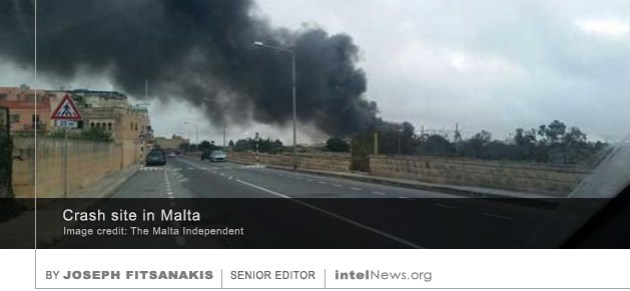 Despite initial denials, it appears that at least three of the five French citizens who were killed in an airplane crash in Malta earlier this week were employees of the country’s external intelligence agency. The crash happened in the early hours of Monday near the village of Luqa in southern Malta. Early reports identified that the plane as a light aircraft and was carrying five French citizens when it crashed, shortly after taking off from the nearby Malta International Airport. Initial statements from Maltese and French government officials said the plane was on a local flight route and had not been scheduled to land outside of the Mediterranean island. The five passengers were identified in press statements as “customs officers” who were conducting a joint project with their Maltese counterparts.
Subsequent reports in the French media, however, said that at least three of the five French passengers who perished in the crash were officers of the General Directorate for External Security, France’s external intelligence agency, which goes by the initials DGSE. It is also believed that the airplane was registered in the United States and was operated by a Luxembourg-based company. Reports from Libya state that the plane’s mission is “shrouded in mystery”. Some articles suggest that it was heading to the city of Misrata in northern Libya, or that it may have been conducting a reconnaissance operation over the Mediterranean, aimed at gathering intelligence on smuggling activities originating from Libya.
The French intelligence services are known to be active on the ground in Libya, where several Sunni Islamist groups, including the Islamic State, control territory. In July of this year, Paris acknowledged for the first time that it had Special Forces and intelligence operatives in Libya, after three DGSE officers were killed in a helicopter crash in the North African country. The latest air crash was not preceded by an explosion, according to French media. The French government has launched an investigation into the incident.
► Author: Joseph Fitsanakis | Date: 27 October 2016 | Permalink
 At least 35 Turkish nationals with diplomatic passports have applied for political asylum in Germany following last July’s failed military coup in Turkey, according to German authorities. The administration of Turkish President Recep Tayyip Erdoğan accuses members of the so-called Gülen movement of orchestrating the coup, which included an armed attack on the country’s parliament and the murder of over 200 people across Turkey. The Gülen movement consists of supporters of Muslim cleric Fethullah Gülen, who runs a global network of schools, charities and businesses from his home in the United States. The government of Turkey has designated Gülen’s group a terrorist organization and claims its members have stealthily infiltrated state institutions since the 1980s.
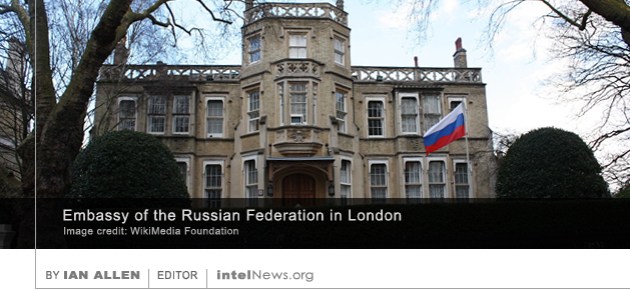 Russia’s ambassador to the United Kingdom has accused the British Foreign Office of deliberately delaying the issuance of visas for its diplomatic officials who have been assigned to join the Russian embassy in London. Alexander Yakovenko, Russia’s former Deputy Minister of Foreign Affairs, who has been heading the Russian embassy in London since 2011,
 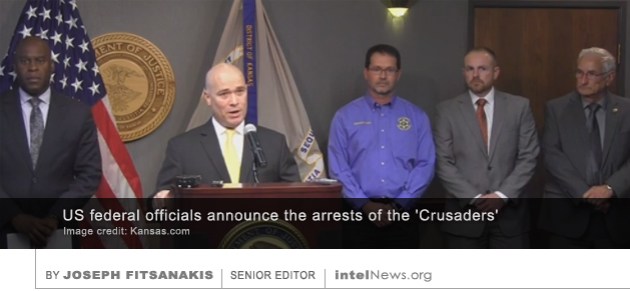 Federal authorities in the United States have charged three men with conspiring to use a weapon of mass destruction with the intention of blowing up an apartment complex in a predominantly Muslim neighborhood in Kansas. The men, Patrick Eugene Stein, Curtis Allen and Gavin Wright, who called themselves ‘the Crusaders’, allegedly wanted to spark a religious war between Christians and Muslims in the United States. They were arrested last week in simultaneous raids conducted by the Federal Bureau of Investigation, after they obtained guns and chemicals for making bombs.
 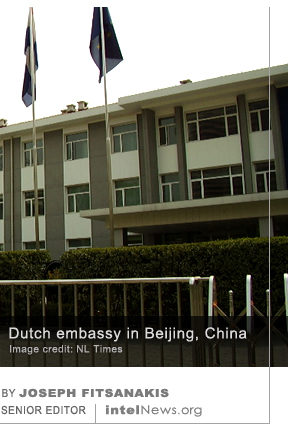 The Dutch government has suspended its ambassador to China and has launched an official investigation into an alleged secret relationship between the ambassador and a female Chinese employee at the Dutch embassy. The ambassador, Ron Keller, is a career diplomat and senior member of the Dutch foreign service corps, who has served in Russia and Turkey among other international posts. He assumed duties as Holland’s ambassador to China in late 2015. In December of that year, he arrived in Beijing and took command of one of the largest Dutch embassies in the world.
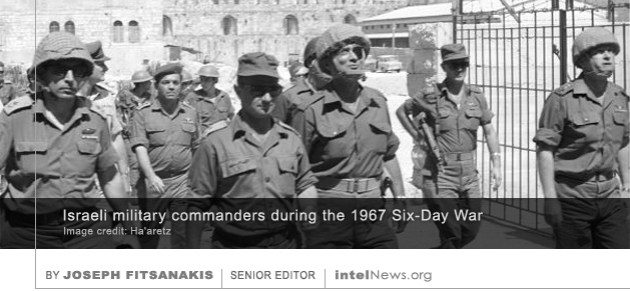 Israel’s intelligence services had access to recordings of secret talks between Arab heads of state in 1965, which helped the Jewish state win the Six-Day War, according to the former director of the country’s Military Intelligence Directorate. The brief but important conflict, which is also known as the Third Arab-Israeli War, broke out on June 5, 1967, when the Egyptian, Syrian and Jordanian armies attacked Israel. But within hours the Jewish state had managed to decimate the assailants’ air forces, and went on to deliver fatal blows to its adversaries. By the end of the war, Israel’s territory had increased threefold and Israeli troops were in control of the West Bank, the Gaza Strip and the Sinai Peninsula, among other areas.
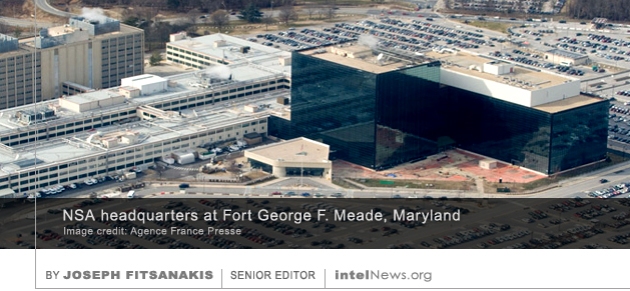 A United States federal contractor, who was charged with espionage after he was found to have stolen classified documents, was able to remove both electronic and printed files from his office at the National Security Agency, according to a report. The man was
 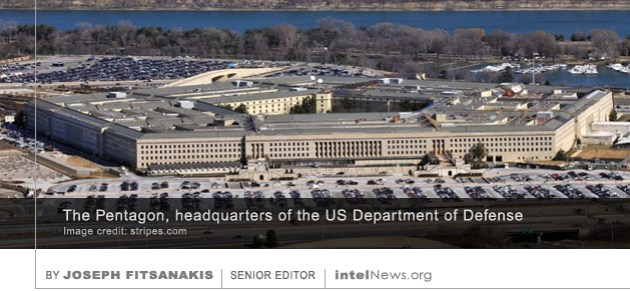 In a development that is expected to contribute to the downward spiral in Turkish-American relations, the United States government has reportedly filed espionage charges against three Department of Defense contractors with Turkish background. The three are believed to have been charged with transferring US military secrets abroad and are currently in prison.
 The most famous intelligence operative in Germany went on trial last week after his name was linked to dozens of offshore bank accounts and shell companies. But he claims he used these accounts to rescue hostages as part of his undercover work. Werner Mauss became known in 1997, when he was
  A Syrian former intelligence officer, who was given American citizenship several years ago, is being sought by authorities in the United States. The man was named by the Federal Bureau of Investigation last week as Moustafa Abed Ayoub, a 75-year-old resident of Fort Lauderdale, Florida. A
 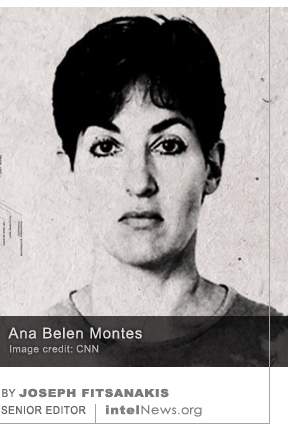 A public event has been held for the first time in Havana to demand the release
 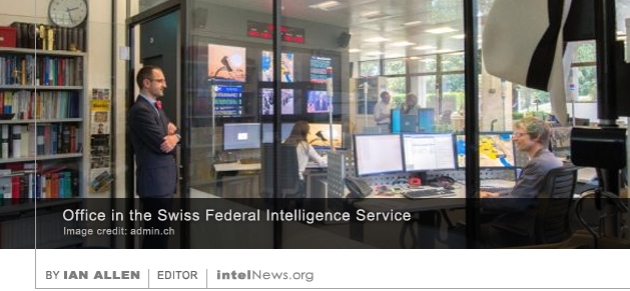 Voters in Switzerland have strongly approved a proposed law that aims to expand the surveillance powers of Swiss intelligence agencies. The move is uncharacteristic of the Swiss, who have historically been skeptical of giving far-reaching surveillance powers to their government. In the late 1980s, Swiss public opinion was shocked by the revelation that the country’s Federal Military Department had spied without permission on tens of thousands of Swiss citizens for many decades under a top-secret project codenamed P-27. In response to the revelations, P-27 was ended, the Swiss intelligence agencies were reorganized, and stricter parliamentary controls were imposed on their activities. Today, even CCTV cameras are rarely used in Switzerland, while Google has not been given permission to incorporate the country’s streets into its Streetview application due to strict local privacy laws.








NSA contractor accused of spying stole real names of US undercover officers
October 28, 2016 by Joseph Fitsanakis 3 Comments
Last week, after prosecutors alleged that the information Martin removed from the NSA was the equivalent of 500 million pages, a judge in the US state of Maryland ruled that the accused might flee if he is released on bail. Soon afterwards, Martin’s legal team filed a motion asking the judge to reconsider his decision to deny him bail. That prompted a new filing by the prosecution, which was delivered to the court on Thursday. The document alleges that the information found in Martin’s home and car includes “numerous names” of American intelligence officers who currently “operate under cover outside the US”. The court filing adds that Martin’s removal of the documents from secure government facilities constitutes “a security breach that risks exposure of American intelligence operations” and “could endanger the lives” of undercover intelligence officers and their agents abroad.
It is alleged that Martin told the FBI he never shared classified information with anyone, and that he removed it from his office at the NSA in order to deepen his expertise on his subject. His legal team argues that Martin suffers from a mental condition that compels him to be a hoarder. But prosecutors for the government argue in court documents that Martin appears to have communicated via the Internet with Russian speakers, and that he was learning Russian at the time of his arrest. The case is expected to be tried later this year.
► Author: Joseph Fitsanakis | Date: 28 October 2016 | Permalink
Filed under Expert news and commentary on intelligence, espionage, spies and spying Tagged with Booz Allen Hamilton, Harold Thomas Martin III, lawsuits, News, non-official-cover, NSA, United States