Germany’s most famous spy on trial for tax evasion, claims money is not his
October 3, 2016 Leave a comment
 The most famous intelligence operative in Germany went on trial last week after his name was linked to dozens of offshore bank accounts and shell companies. But he claims he used these accounts to rescue hostages as part of his undercover work. Werner Mauss became known in 1997, when he was arrested in Colombia while using a forged passport. He had traveled to the Latin American country to secure the release of a German woman who had been kidnapped by leftist guerrillas. The Colombian authorities eventually released him, following heavy diplomatic pressure from the German government. But the German media began investigating his background, and it soon became known that he was working for the Federal Intelligence Service, specializing in negotiating the release of hostages.
Now, in his mid-70s, Mauss enjoys celebrity status in Germany. He claims on his personal website that he was directly involved in neutralizing over 100 criminal gangs and that his work led to the capture of 2,000 criminals and spies. He also claims to have helped prevent dangerous chemical substances from falling into the hands of terrorist groups.
Last Monday, however, Mauss appeared in court in the North Rhine-Westphalian city of Bochum, accused of placing millions of euros in undeclared offshore accounts. The German state prosecutor accuses the spy of having dozens of accounts in his name in offshore tax havens such as the Bahamas, Turks and Caicos, and Panama. Government investigators say Mauss hid nearly €15 million (approximately $23 million) in secret accounts between 2002 and 2013. It appears that at least some of the accounts had been opened under aliases that Mauss used during his spy operations.
According to reports in the German media, Mauss first appeared on the government’s radar several years ago, when investigators in North Rhine-Westphalia purchased a CD from a whistleblower who worked in Luxembourg’s UBS bank. Earlier this year, Mauss’ name appeared again, this time in the so-called Panama papers, the massive data leak of documents belonging to Panamanian law firm Mossack Fonseca that specialized in offshore wealth management.
According to his lawyers, Mauss did nothing wrong, and claims that he used the shell companies and offshore bank accounts to channel funds to kidnappers in order to secure the release of hostages. Mauss’ legal team also claims that the 76-year-old former spy cannot properly defend himself because he is prevented from speaking freely by the clandestine nature of his work for the government. It is believed that the trial will continue until the end of this year.
► Author: Ian Allen | Date: 3 October 2016 | Permalink
 A Syrian former intelligence officer, who was given American citizenship several years ago, is being sought by authorities in the United States. The man was named by the Federal Bureau of Investigation last week as Moustafa Abed Ayoub, a 75-year-old resident of Fort Lauderdale, Florida. A
 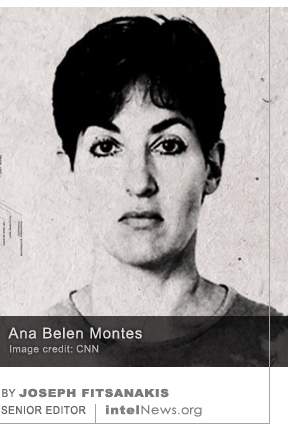 A public event has been held for the first time in Havana to demand the release
 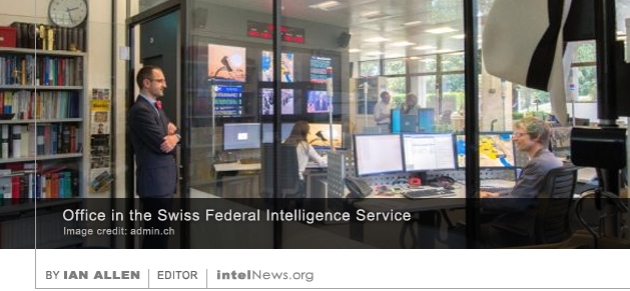 Voters in Switzerland have strongly approved a proposed law that aims to expand the surveillance powers of Swiss intelligence agencies. The move is uncharacteristic of the Swiss, who have historically been skeptical of giving far-reaching surveillance powers to their government. In the late 1980s, Swiss public opinion was shocked by the revelation that the country’s Federal Military Department had spied without permission on tens of thousands of Swiss citizens for many decades under a top-secret project codenamed P-27. In response to the revelations, P-27 was ended, the Swiss intelligence agencies were reorganized, and stricter parliamentary controls were imposed on their activities. Today, even CCTV cameras are rarely used in Switzerland, while Google has not been given permission to incorporate the country’s streets into its Streetview application due to strict local privacy laws.
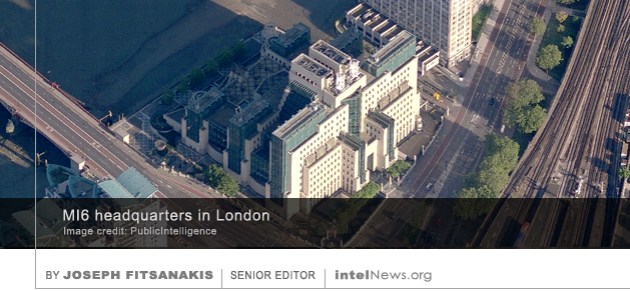 Britain’s primary external intelligence agency, MI6, will see a 40 percent increase in personnel numbers in the next four years, according to a new report. The agency, which is formally known as the Secret Intelligence Service, currently employs about 2,500 people. But the BBC said on Wednesday that the number of MI6 employees will rise to approximately 3,500 by 2020. The broadcaster said that no public announcement had been made about the planned increase, but that it had verified the information “via Whitehall sources”, referring to the official seat of the British government.
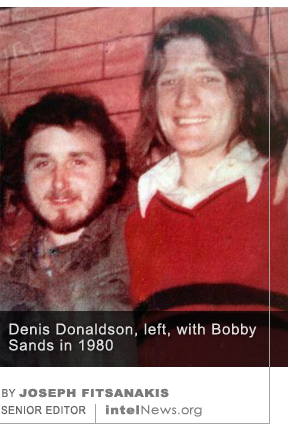 A former member of the Provisional Irish Republican Army, who was an agent for the British security services, has alleged that Gerry Adams, leader of the second-largest political party in Northern Ireland, ordered the killing of a British spy in 2006. The former agent was referring to the killing of Denis Donaldson, a senior member of the Provisional IRA, who was found dead months after it was revealed that he had been secretly spying on the republican organization on behalf of British intelligence.
 A document that allegedly contains the name of a man who could be connected to one of the most sensational spy rings of the Cold War is to remain secret after a judge rejected a request to have it released. The man is believed by some to have been associated with the so-called ‘Cambridge spy ring’, a group of upper-class British graduates of Cambridge University, who spied for the USSR from the 1930s until the 1960s. Among them was Guy Burgess, Donald Maclean and H.A.R. “Kim” Philby, all of whom eventually defected to the Soviet Union. In 1979, it was revealed that Anthony Blunt, an art history professor who in 1945 became Surveyor of the King’s Pictures and was knighted in 1954, was also a member of the group. A fifth member, career civil servant and former intelligence officer John Cairncross, was publicly outed as a Soviet in 1990, shortly before his death.
 A cease-fire that was launched with much fanfare by the United States and Russia last week appeared in tatters on Sunday night, after Washington acknowledged it mistakenly killed over 60 Syrian troops on Saturday. American officials expressed regret for the alleged error, but Syrian and Russian officials accused Washington of deliberately sabotaging the cease-fire agreement. Russian sources
 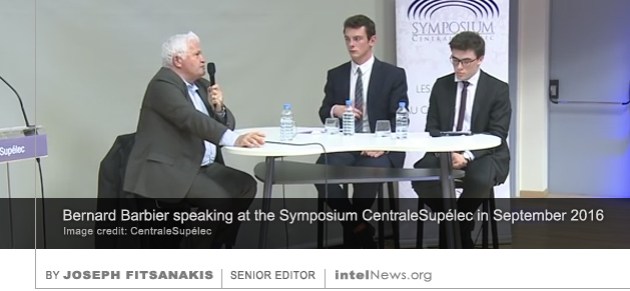 The former director of France’s cyber spy agency has spoken candidly about the recent activities and current state of French cyber espionage, admitting for the first time that France engages in offensive cyber operations. Between 2006 and 2013, Bernard Barbier was director of the technical division of the General Directorate for External Security, France’s external intelligence agency, which is commonly known as DGSE. During his tenure at DGSE, the organization’s technical division witnessed unprecedented financial and administrative growth. Today it is said to employ over 2500 people, nearly half of DGSE’s total personnel.
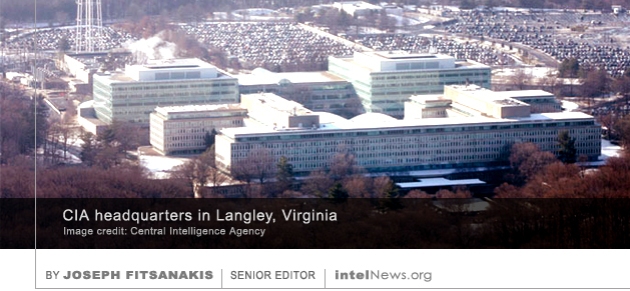 American intelligence agencies are diverting counterterrorist resources to Russian accounts, prompting some commentators to describe the move as the greatest expansion of spy operations against Russia since the Cold War. In a leading
 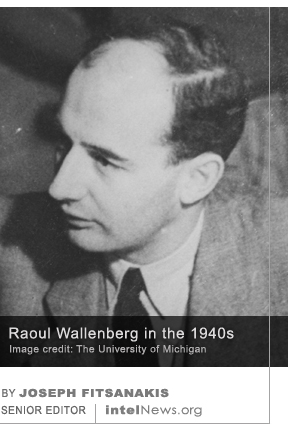 The recently discovered memoirs of a former director of the Soviet KGB suggest that a senior Swedish diplomat, who disappeared mysteriously in the closing stages of World War II, was killed on the orders of Joseph Stalin. The fate of Swedish diplomat Raoul Wallenberg is one of the 20th century’s unsolved espionage mysteries. In 1944 and 1945, the 33-year-old Wallenberg was Sweden’s ambassador to Budapest, the capital of German-allied Hungary. During his time there, Wallenberg is said to have saved over 20,000 Hungarian Jews from the Nazi concentration camps, by supplying them with Swedish travel documents, or smuggling them out of the country through a network of safe houses. He also reportedly dissuaded German military commanders from launching an all-out armed attack on Budapest’s Jewish ghetto.
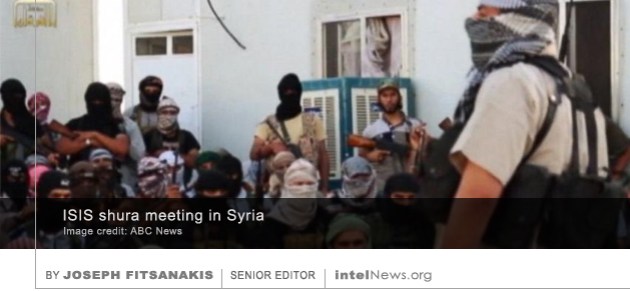 The transfer of foreign fighters into Iraq and Syria to join the Islamic State and other Sunni militant groups has been all but eliminated in countries across the world, according to intelligence assessments. In previous years, it has been estimated that nearly as many as 2,000 foreign recruits, both men and women, crossed into Syria each month, mainly from Turkey, with the intention of joining armed Sunni groups. By the end of 2015, it was believed that over 30,000 foreign nationals from close to 90 countries had entered Syria and Iraq to fight for one of the Sunni-inspired opposition groups taking part in the Syrian civil war. Most of these foreign recruits joined the Islamic State, which is also known as the Islamic State of Iraq and Syria (ISIS).
 Two more members of a computer hacker group that targeted senior United States intelligence officials, including the director of the Central Intelligence Agency, have been arrested by the Federal Bureau of Investigation. The arrests of Justin Liverman, 24, and Andrew Boggs, 22, took place on Thursday in Morehead City and North Wilkesboro, in the US state of North Carolina. They are








Arrested contractor may have worked for NSA’s elite cyber spy unit
October 10, 2016 by Joseph Fitsanakis Leave a comment
Media reports suggest that the FBI discovered significant quantities of classified information, some of it dating back to 2006, on a variety of electronic devices that Martin had stored —though apparently not hidden— in his house and car. Another interesting aspect of the case is that there is no proof at this point that Martin actually shared the classified information with a third party. There is some speculation that he may be behind a disclosure of a collection of NSA hacking tools, which were leaked in August of this year by a previously unknown group calling itself “the Shadow Brokers”. But some speculate that Martin may have taken the classified material home so he could write his dissertation for the PhD he is currently undertaking at the University of Maryland’s Information Systems program.
A few days ago, The Daily Beast quoted an unnamed former colleague of Martin who said that the NSA contractor was a member of one of the agency’s elite cyber spy units. The existence of the secretive unit, which is known as the NSA’s Office of Tailored Access Operations, was revealed in June 2013 by veteran NSA watcher Matthew M. Aid. Writing in Foreign Policy, Aid cited “a number of highly confidential sources” in alleging that the NSA maintained a substantial “hacker army” tasked with conducting offensive cyber espionage against foreign targets. More information on NSA’s TAO was provided in January 2014 by German newsmagazine Der Spiegel. If The Daily Beast’s allegations about Martin are accurate, they would explain why anonymous government sources told The Washington Post last week that some of the documents Martin took home “could be expected to cause exceptionally grave damage to the national security of the United States”. The case also highlights the constant tension between security and the privatization of intelligence, which was also a major parameter in the case of Edward Snowden, another Booz Allen Hamilton contractor who defected to Russia in 2013.
Meanwhile, Martin remains in detention. If he is convicted, he will face up to 11 years behind bars.
► Author: Joseph Fitsanakis | Date: 10 October 2016 | Permalink
Filed under Expert news and commentary on intelligence, espionage, spies and spying Tagged with Booz Allen Hamilton, cyberespionage, espionage, Harold Thomas Martin III, News, NSA, NSA Office of Tailored Access Operations, United States