FBI warns against alleged Russian campaign to destabilize US elections

Putin and ObamaThe Federal Bureau of Investigation is among several intelligence agencies in the United States that have expressed concerns about an alleged Russian campaign to destabilize November’s presidential elections. The Washington Post, which revealed the FBI’s concerns on Monday, claimed that Moscow recently launched an “active measures” operation aimed at covertly sabotaging the integrity of the US election process. Russia’s goal, said the paper, was to “counter US leadership and influence in international affairs”, thus subverting America’s image, especially in countries of the former Eastern Bloc or former Soviet republics.

According to The Post, the FBI and other US intelligence agencies have “no definitive proof” that Moscow is attempting to promote public distrust in American political institutions. But there are strong indications that have made this topic “a priority” for intelligence officials from the FBI, the Department of Homeland Security, the National Security Agency and the Central Intelligence Agency, said the paper. These indications include the hack of the computer systems at the Democratic National Committee, the official governing body of the US Democratic Party, which was revealed in June. The hack resulted in the disclosure of over 20,000 internal emails and led to the resignation of Debbie Wasserman-Schultz, the DNC’s Chairwoman. According to The Post, the hack is “not yet officially ascribed by the US government to Russia”, but US intelligence officials are convinced that Moscow was behind it.

The DNC hack prompted the FBI to send a so-called “flash alert” to US election officials in July, urging them to remain vigilant against “attempts to penetrate election systems”, which have been detected in several states, according to the report. The unprecedented FBI alert did not expressly name Russia as a national-security threat, nor did it give details of electoral sabotage. But it urged state election officials to “be on the lookout for intrusions into their election systems”. Citing unnamed intelligence officials, The Post said that the investigation into alleged Russian operations against the US Presidential election is being coordinated by James Clapper, the US Director of National Intelligence.

Author: Joseph Fitsanakis | Date: 07 August 2016 | Permalink

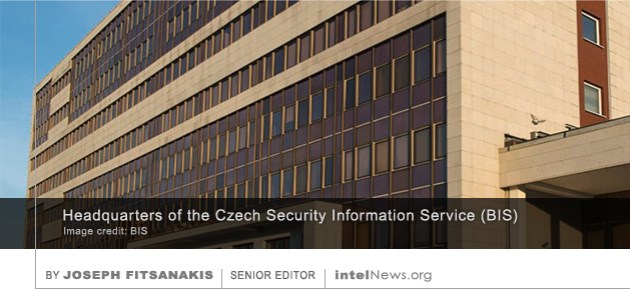
Czech spy service accuses Russia of waging ‘information war’

Czech Security Information ServiceThe intelligence agency of the Czech Republic has accused Russian spy services of waging a “war of information” aimed at destabilizing the eastern European country. The agency has also warned that Russia continues to maintain a large intelligence presence in the Czech Republic, 25 years after the country, which was formerly known as Czechoslovakia, exited the Soviet sphere of influence and joined the European Union (EU) and the North Atlantic Treaty Organization (NATO).

These claims are included in the annual report of the Security Information Service of the Czech Republic, known as BIS. The report, which was published on Thursday, singles out Russia and China for allegedly operating the two most active intelligence apparatuses in the Czech Republic today. It also claims that Russia’s embassy in Prague, which exceeds in size that of any other country in the Czech capital, serves as a base for dozens of spies. The latter are among the 140 diplomatic personnel stationed at the Russian embassy, operating under diplomatic cover, according to BIS.

In addition to collecting intelligence and recruiting spies, Russia’s undercover efforts in the Czech Republic focus on “creating or promoting inter-societal and inter-political tensions” in the country, said the report. That is allegedly one in many ways, including covert support for domestic extremist and populist organizations –both rightwing and leftwing, according to BIS. There are also organizations in the country, described by the Czech intelligence agency as parts of a network of “puppet” groups, which tend to hold consistently pro-Russian stances on domestic and international issues. They are also highly critical of NATO and the EU, and promote the view that, like Britain, the Czech Republic should seek to exit the EU.

The report suggests that the main focus of the current phase of the alleged “information war” is to advertise the Russian viewpoint on the civil wars in Ukraine and Syria. However, “the infrastructure created for achieving these goals will not disappear with the end of the two conflicts” and “can be used to destabilize or manipulate Czech society […] at any time, if Russia wishes to do so”, the report states.

Author: Joseph Fitsanakis | Date: 02 September 2016 | Permalink
CIA agent was among Watergate burglars, documents reveal

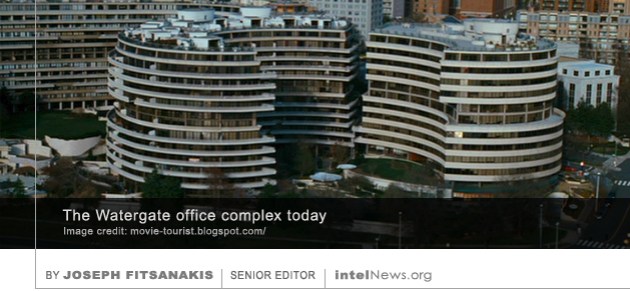
Watergate One of the men caught burglarizing the offices of the United States Democratic Party in 1972, a ploy that led to the resignation of President Richard Nixon, was an agent of the Central Intelligence Agency, according to a newly declassified document. The revelation is included in a narrative history of the Watergate scandal, produced over 40 years ago by the CIA to assess its own role in the affair. It recounts the events of the early morning hours of June 17, 1972, when a security guard saw five men dressed in black breaking into the headquarters of the Democratic National Committee at the Watergate office complex in Washington, DC. When the five men were arrested by police, it was discovered that one of them was connected with the Committee for the Re-Election of the President, a fundraising organization set up by US President Richard Nixon. The remaining four burglars had CIA contacts. They included E. Howard Hunt, a retired CIA operations officer who in 1961 had played a leading role in the failed Bay of Pigs invasion. It was eventually discovered that the burglary had been authorized by President Nixon himself, as part of a broader program to sabotage his political opponents.
Soon after the Watergate scandal erupted, the CIA produced an internal report entitled “CIA Watergate History – Working Draft”. Much of the 150-page document was authored by CIA officer John C. Richards, who had firsthand knowledge of the Watergate scandal. When Richards died unexpectedly in 1974, the report was completed by a team of officers based on his files. A few years ago, a Freedom of Information Act request was filed by Judicial Watch, a conservative legal watchdog, which petitioned to have the document released. The release was approved by a judge in early 2016 and was completed in July.

Despite numerous reductions throughout, the document gives the fullest public account of the CIA’s role in the Watergate scandal. Its pages contain the revelation that one of the men arrested in the early hours of June 17, 1972, was an active CIA agent. The man, Eugenio R. Martinez, has been previously identified as an “informant” of the CIA —a term referring to an occasional source. But the newly released document refers to Martinez as an agent —an individual who is actively recruited and trained by a CIA officer acting as a handler. It also states that Martinez was on the payroll of the agency at the time of his arrest, making approximately $600 per month in today’s dollars working for the CIA. Additionally, Martinez, a Cuban who had participated in the Bay of Pigs invasion, retained his contacts with the CIA and kept the agency updated about the burglary, his arrest and the ensuing criminal investigation.

Interestingly, the internal document reveals that the CIA was contacted about Martinez by the Watergate Special Prosecution Force, which was set up by the Department of Justice to investigate the scandal. But the CIA’s General Counsel, John S. Warner, told the prosecutors that it was against the CIA’s code of practice to turn over an agent, and that “under no circumstances” would the CIA agree to do so. Senior CIA officials, including its then Director, Richard Helms, continued to refuse to cooperate with investigators, including agents of the Federal Bureau of Investigation, even after President Nixon’s resignation.

Martinez, who is reportedly in his mid-90s and lives in Miami, Florida, has never spoken publicly about this role in the Watergate scandal or his alleged contacts with the CIA.

Author: Joseph Fitsanakis | Date: 31 August 2016 | Permalink

Conflicting details on Iranian nuclear negotiator arrested for espionage

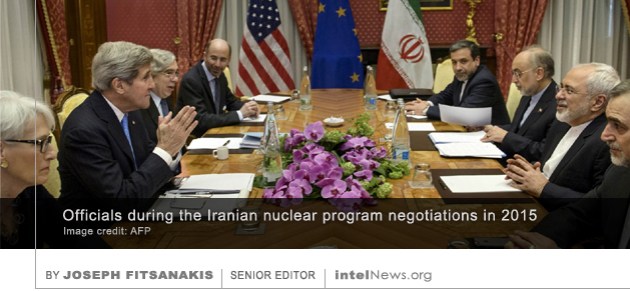
Iran nuclear negotiationsIranian officials have confirmed reports from earlier this month that a member of the country’s team of nuclear negotiators has been arrested for engaging in espionage for a foreign country. But there are conflicting details about the case in Iranian media reports. Rumors about the identity of the individual began to circulate on August 16, after the office of the Iranian prosecutor announced that a dual national with Iranian citizenship had been arrested for spying on Tehran for a foreign intelligence service. The individual was not named, but some reports connected him with Britain’s Secret Intelligence Service, known as MI6.
On Sunday, Iran’s judiciary spokesman, Gholamhossein Mohseni Ejeie, identified the man as Abdolrasoul Dorri Esfahani. Ejeie was specifically asked about the espionage case during his weekly press conference, and responded saying that an “espionage infiltration” had indeed been detected and that “legal action” was being taken against Esfahani. He did add, however, that the arrest and concurrent investigation had not yet resulted in a case that could stand in court, thus Esfahani had been released on bail. When asked whether Esfahani would be charged, Ejeie said that official charges had not been filed, because “the charge against [Esfahani] has not been proven yet”. He implied, however, that charges would eventually be filed.

There are also conflicting reports about Esfahani’s background and involvement with the Iranian government. Early reports suggested that he is a dual citizen of Canada and Iran. But subsequent reports stated that he holds both Iranian and British passports, and that he had been recruited by MI6. Some unconfirmed reports claimed that Esfahani received payments from both British and American intelligence agencies. What appears more certain is that Esfahani is an accountant with some involvement in the financial aspects of the recent nuclear negotiations between Iran and foreign powers. It is also believed that he was not a core member of Iran’s negotiating team, but provided a supporting role on financial aspects of the negotiations.

The recently concluded negotiations, were aimed at bridging the differences between the Islamic Republic and a group of nations that have come to be known as P5+1, representing the five permanent members of the United Nations Security Council plus Germany. In March 2015, Hossein Motaghi, a media advisor to the Iranian president Hassan Rouhani, who was in Switzerland to cover the negotiations, defected and filed an application for political asylum in Switzerland.

Author: Joseph Fitsanakis | Date: 30 August 2016 | Permalink

US denies it plans to free top intelligence analyst who spied for Cuba

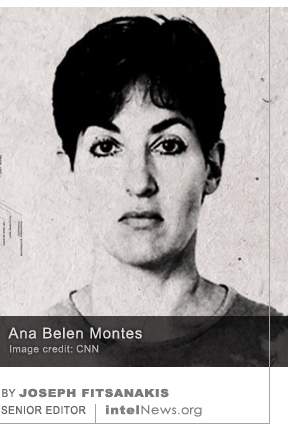
Ana Belen MontesThe White House has no plans to release an American former military analyst who spied for the government of Cuba, according to an official letter sent to a member of the United States Congress. The denial came weeks after some media reports in Miami and Cuba suggested that Washington was examining a request by Havana to release Ana Belen Montes, an American intelligence analyst and expert on Cuba, who is serving a 25-year prison sentence for spying on the United States on behalf of Cuba.
Montes, who is the daughter of an American military doctor, grew up in Kansas. In 1985 she joined the Defense Intelligence Agency, a US Department of Defense body that collects and analyzes military-related information abroad. Montes quickly distinguished herself in the DIA, and by the mid-1990s she was seen as one of the US government’s most knowledgeable and capable Cuba experts. She was the main author of nearly every major assessment on Cuba that was produced by the US Intelligence Community in the 1990s. But on September 21, 2001, Montes was arrested by the Federal Bureau of Investigation and charged with having committed espionage for Cuba. During her trial, US government prosecutors argued that Montes had been recruited by Cuban intelligence before she joined the DIA, and that she eventually compromised every US intelligence collection program targeting the Caribbean island. The former DIA analyst was also accused of having given Havana the identities of US intelligence officers who had secretly operated in Cuba. In 2002, Montes was sentenced to 25 years in prison, after pleading guilty to having committed espionage throughout her 16-year career at the DIA.

But in recent months, there has been speculation that Montes could be released and allowed to relocate to Cuba. In return, Havana would reportedly extradite to the US Assata Shakur, a former member of militant black nationalist groups in the United States, who is wanted for the 1973 murder of a state trooper in the state of New Jersey. Shakur, whose birth name is JoAnne Deborah Byron, escaped from an American prison in 1979 and resurfaced in Cuba in 1984. The island’s socialist government gave Shakur political asylum, but the FBI has designated her a terrorist.

The rumors about a possible exchange between Montes and Shakur prompted US Representative Devin Nunes, a Republican from California, who chairs the House Permanent Select Committee on Intelligence, to voice concern. In a letter to US President Barack Obama, Nunes urged against Montes’ release. The Congressman described the imprisoned former intelligence analyst as “one of the most brazen traitors in US history” and remarked that she “richly deserved her 25-year prison sentence, and must serve every day of it”. According to El Nuevo Herald, Nunes received a written response from the US Department of State, which said that “the United States government has no intention of releasing or exchanging Montes”. According to the Florida-based, Spanish-language newspaper, the State Department letter “assured” Nunes that it was “responding on the president’s behalf”, suggesting that the Obama administration has no plans to release Montes.

Author: Joseph Fitsanakis | Date: 29 August 2016 | Permalink

Turkey has more spies in Germany than Stasi had during Cold War: expert

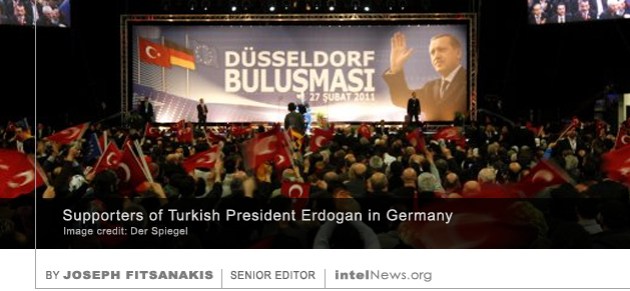
Turks in GermanyThe Turkish intelligence service currently employs more operatives in Germany than the East German spy agency did at the height of the Cold War, according to a German expert on espionage. The comment was made following the disclosure that Turkey maintains close to 6,000 informants and other intelligence operatives in Germany. An unnamed German security official told German newspaper Die Welt on Monday that the informants are operational throughout Germany and are handled by Turkey’s National Intelligence Organization, known as MİT.
According to Die Welt, many of these informants are tasked with keeping tabs on Germany’s large Kurdish community, which Ankara views as domestic threats to Turkish national security. More recently, however, MİT operatives in Germany have been instructed to infiltrate groups of supporters of the charismatic Muslim cleric Fethullah Gülen who lives in the United States. A former ally of Turkish President Recep Tayyip Erdoğan, Gülen and his millions of supporters around the world now oppose the Turkish government and are described as terrorists by Ankara. President Erdoğan has personally accused “Gülenists” of orchestrating the failed July 15 coup in Turkey. In addition to infiltration, MİT informants in Germany are allegedly engaged in psychological operations against perceived opponents of the Turkish government, and sometimes engage in blackmail and intimidation of targeted individuals or groups, according to Die Welt.

Erich Schmidt-Eenboom, one of Germany’s best known independent researchers on intelligence, and a widely published author, said he was surprised that the number of alleged MİT operatives in Germany is this high. If the number of 6,000 operatives is accurate, said Schmidt-Eenboom, it would place the MİT above the level of the Stasi during the Cold War. He was referring to the Ministry for State Security, the intelligence agency of communist-era East Germany, which was known for its extensive networks of informants during the Cold War. Schmidt-Eenboom said that, according to Stasi records, the agency handled approximately 10,000 operatives in West Germany, a country that at the time had a population of 60 million. In contrast, the 6,000 MİT operatives in Germany are primarily tasked with monitoring the Turkish and Kurdish immigrant community there, which numbers no more than 3 million. Consequently, said Schmidt-Eenboom, there are 500 potential human targets for each present-day MİT operative, whereas there were 6,000 West German citizens for every Stasi operative during the Cold War.

The article in Die Welt did not specify whether the alleged MİT informants are paid agents or simply supporters of the Turkish government who have volunteered their services. As intelNews reported earlier this week, some members of the German Bundestag’s Committee on Parliamentary Oversight, including its chairman, Clemens Binninger, plan to launch an official investigation into the activities of Turkish intelligence in Germany. Of particular interest to the committee is the alleged cooperation between German and Turkish intelligence agencies following the failed coup in Turkey this past July.

Author: Joseph Fitsanakis | Date: 26 August 2016 | Permalink

Did domestic snooping by Canadian spy agency increase 26-fold in a year?

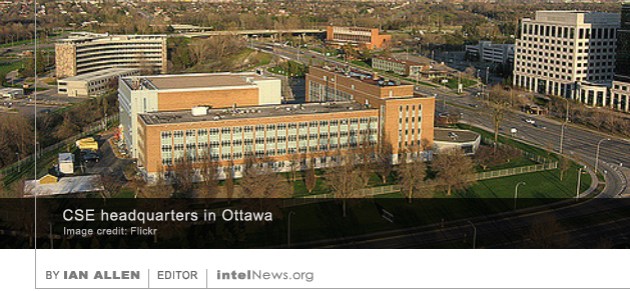
CSE Canada - IAThe volume of domestic communications that were intercepted by Canada’s spy agency increased 26 times between 2014 and 2015, according to a recently released report by a government watchdog. The same report states that intercepted information about Canadian citizens, which is given to Canada’s spy agency by the intelligence organizations of other Western countries, has increased so much that it now requires an elaborate mechanism to analyze it. When asked to explain the reasons for these increases, Canadian government officials said they could not do so without divulging secrets of national importance.
Information about these increases is contained in the latest annual report by the Office of the Commissioner of the Communications Security Establishment. The body was set up in 1996 to review the operations of the Communications Security Establishment (CSE). Founded in 1946, CSE is Canada’s primary signals intelligence agency. It is responsible for interception foreign communications while at the same time securing the communications of the Canadian government. The Office of the Commissioner monitors CSE’s activities and ensures that they conform with Canadian law. It also investigates complaints against the CSE’s conduct of and its officers.

Canadian law forbids the CSE from intercepting communications in which at least one of the parties participating in the exchange is located in Canada. If that happens, the message exchange is termed “private communication” and CSE is not allowed to intercept it, unless it gets written permission from Canada’s National Defense minister. Such permission is usually given only if the interception is deemed essential to protect Canadian national security or national defense. If a “private communication” is inadvertently intercepted, CSE is required to take “satisfactory measures” to protect the personal privacy of the participant in the exchange that is located inside Canada.

According to the CSE commissioner’s report for 2015, which was released in July, but was only recently made available to the media, CSE intercepted 342 “private communications” in 2014-2015. The year before, the spy agency had intercepted just 13 such exchanges. The report states that all 342 instances of interception during 2014-2015 were either unintentional or critical for the protection of Canada’s security. It further states that the reason for the huge increase is to be found in “the technical characteristics of a particular communications technology and of the manner in which private communications are counted”.

Canadian newspaper The Ottawa Citizen asked the CSE commissioner, Jean-Pierre Plouffe, to explain what he meant by “technical characteristics of a particular communications technology” in his report. His office responded that the commissioner could not explain the subject in more detail, because doing so would “reveal CSE operational capabilities” and thus hurt Canada’s national security. The newspaper also contacted CSE, but was given a similar answer. Some telecommunications security experts speculate that the increase in intercepted “private communications” may be due to exchanges in social media, whereby each message is counted separately.

Author: Ian Allen | Date: 25 August 2016 | Permalink

Fake Syrian passports given to ISIS members found in Greek refugee camps

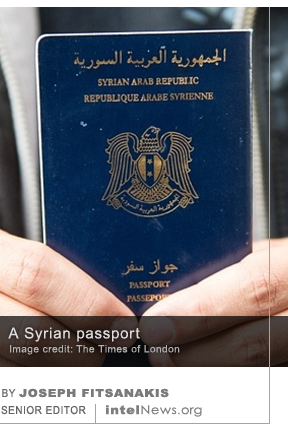
Syrian passportFake Syrian passports designed for use by members of the Islamic State trying to enter Europe have been found in refugee camps in Greece during an investigation by the law enforcement agency of the European Union (EU). Officials from Europol, the EU agency that coordinates intelligence operations against organized crime across EU-member-states, said that the fake travel documents were found during a fact-finding mission in Greek refugee camps. The mission was part of a larger investigation into the production and use of forged passports by the Islamic State, the Sunni militant group that is also known as the Islamic State of Iraq and Syria (ISIS).

According to the Italian newspaper La Stampa, which published the claim, Europol is investigating the production and distribution of fake passports by ISIS in its strongholds of Syria and Iraq, and among refugee networks in European countries like Belgium, Austria, Italy and Greece. Greece is the most widely used route into Europe by hundreds of thousands of refugees from Syria and the rest of the Middle East, who leave their countries in hopes of migrating to the prosperous countries of Western Europe. Nearly 60,000 of them have been trapped in Greece since April, when Macedonia shut down its borders, thus preventing migrants from heading north. These people have been living in refugee camps since that time, hoping for a chance to continue the journey northwards.

But in a leading article published last weekend, La Stampa claimed that ISIS is using the refugee crisis form Syria to infiltrate Europe with militants intent on launching attacks on soft targets. The militants are supplied with false identity papers, said La Stampa, primarily fake Syrian and Iraqi passports. They then use these passports to enter Greece. Their goal is to eventually travel north to countries such as Belgium, Germany, Austria or France, and claim asylum there. La Stampa quoted one unnamed Europol official as saying that fake passports “that were destined to supposed members of ISIS” had been identified in refugee camps in Greece. It has been confirmed that at least two of the perpetrators of last November’s attacks in Paris, France, which killed over 130 people, entered the EU using forged Syrian passports. The Italian daily also noted that the reliability of Turkey, from where the vast majority of Syrian refugees entered Europe in recent years, remains fragile after the failed July 15 coup, which has altered the balance of power in that country. As a result, the EU-Turkey migrant deal may collapse “at any moment”, said the paper.

Author: Joseph Fitsanakis | Date: 24 August 2016 | Permalink

Turkey asks German spies for help in rounding up July coup plotters

Recep Tayyip ErdoğanThe Turkish government has sent an official request to German intelligence for assistance in cracking down on the members of the so-called Gülen movement, which Ankara claims is behind July’s failed coup plot. The movement consists of supporters of Muslim cleric Fethullah Gülen, who runs a global network of schools, charities and businesses from his home in the United States. The government of Turkey has designated Gülen’s group a terrorist organization and claims it has stealthily infiltrated state institutions since the 1980s. The administration of Turkish President Recep Tayyip Erdoğan accuses Gülen’s supporters of orchestrating the July 15 coup that included an armed attack on the country’s parliament and the murder of over 200 people across Turkey.
According to German newsmagazine Der Spiegel, Turkey’s National Intelligence Organization (known by its Turkish initials, MİT) has secretly contacted its German counterpart, the Federal Intelligence Service (BND). The Turks’ request, said Spiegel, involves the provision of assistance to investigate and arrest supporters of the Gülen movement living in Germany, some of whom are German citizens. There are over three million people with Turkish citizenship, or of Turkish descent, currently living in Turkey. Citing “a dossier of classified documents”, Spiegel said that the MİT had asked the BND to investigate a list of 40 individuals for possible links to Gülen, and to extradite to Turkey another three whom Ankara claims have direct ties to the July coup. The documents also allegedly contain a request for MİT officials to pressure German lawmakers to be more critical of Gülen supporters in Germany. Requests for cooperation were also sent by MİT to nearly a dozen state governments in Germany, but all were declined, said Spiegel.

The Turkish government has arrested, fired or demoted tens of thousands of people since July, for alleged links to the Gülen movement. Some European officials, many of them German, have accused President Erdoğan of using the failed coup as an excuse to purge his opponents of all political persuasions in the country. On Sunday, the head of Germany’s Committee on Parliamentary Oversight, Clemens Binninger, said he would launch an investigation into the joint projects between German and Turkish intelligence agencies following the failed July coup. Another member of the Committee, Hans-Christian Ströbele, said he would personally set up a panel to probe any communication between German intelligence agencies and the MİT. By working closely with Turkish intelligence, German spy agencies were risking “becoming complicit in criminal activity”, said Ströbele.

Author: Joseph Fitsanakis | Date: 22 August 2016 | Permalink

More on senior North Korean diplomat who defected in London

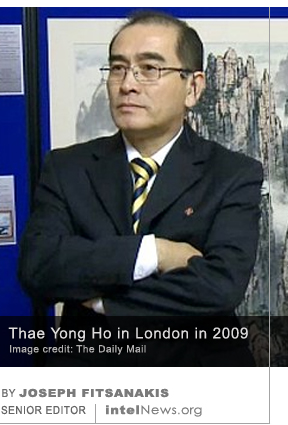
Thae Yong-HoA high-ranking North Korean diplomat, who defected with his wife and children in London, and is now in South Korea, is from a privileged family with a long revolutionary pedigree in North Korean politics. South Korea’s Ministry of Unification confirmed on Wednesday that Thae Yong-Ho, the second-in-command at the North Korean embassy in the United Kingdom, had defected with his wife and children and had been given political asylum in South Korea. As intelNews reported earlier this week, Thae, a senior career diplomat believed to be one of North Korea’s foremost experts on Western Europe, had disappeared with his family and was presumed to have defected “to a third country”.
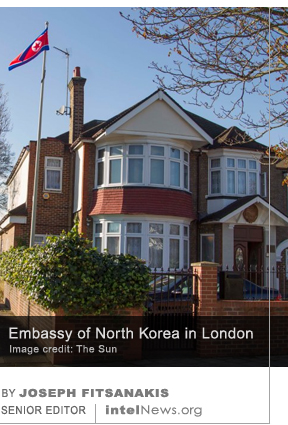
New information has since emerged on Thae and his family, confirming that both he and his wife are members of North Korea’s privileged elite, with decades-old connections to the ruling Workers’ Party of Korea. According to the Seoul-based JoongAng Daily, Thae’s wife, O Hye-Son, is a niece of the late O Peak-Ryong, a decorated communist guerrilla who fought Korea’s Japanese colonialists in the 1930s. O, who died in the 1980s, joined the Korean anti-Japanese struggle alongside Kim Il-Sung, founder of the Workers’ Party of Korea and first leader of North Korea. This means that O Hye-Son is also the cousin of O Peak-Ryong’s son, General O Kum-Chol, who is currently vice chairman of the General Staff of the Korean People’s Army. Thae himself is the son of Thae Pyong-Ryol, a four-star general who also fought against the Japanese in the 1930s, alongside Kim Il-Sung. In the postwar period, General Thae became a senior member of the Workers’ Party of Korea and was appointed to the Party’s powerful Central Committee. He died in 1997.

JoongAng Daily quoted an unnamed “source familiar with the matter” of Thae’s defection, who said that the diplomat’s loyalty to the North Korean leadership had been unquestioned prior to his surprise defection. Most North Korean diplomats are posted at an embassy abroad for a maximum of three years before being moved elsewhere in the world. The fact that Thae had been allowed to remain in the United Kingdom for 10 years shows his privileged status within the Workers’ Party of Korea, said the source. Additionally, the children or most North Korean diplomats are required to return to their native country after completing high school. But this did not seem to apply to Thae, whose three children were living with him in Britain even after graduating from university. This and many other clues reflect Thae’s “impeccable credentials”, said the source, which made him one of the most trusted government officials in the regime’s bureaucratic arsenal.

It is believed that Thae defected because he had been told that his tenure in London was coming to an end after a decade, and he would have to relocate to a less desirable location, or possibly recalled back to Pyongyang. Defections among North Korea’s privileged elite are rare, but have been happening increasingly frequently in the past few years. This makes some observers believe that disillusionment among Supreme Leader Kim Jong-Un’ inner circle is growing and that the North Korean regime is becoming weaker.

Author: Joseph Fitsanakis | Date: 19 August 2016 | Permalink

Senior North Korean diplomat reportedly defects in London (updated)

DPRK Embassy in LondonA senior member of North Korea’s diplomatic representation in the United Kingdom, who is considered one of his country’s leading specialists in Western European affairs, has reportedly defected “to a third country” with his family. The alleged defection was first reported on Tuesday by South Korean newspaper JoongAng Ilbo. Citing “a source with in-depth knowledge of North Korea”, the Seoul-based paper said that the diplomat had disappeared several weeks ago, and that staff at the embassy of North Korea in London had failed in attempts to find him. Later on the same day, the British state-owned broadcaster BBC identified the missing diplomat as Thae Yong-Ho.
In a brief report, the BBC said that the diplomat had lived with his wife and children in London for a decade, and that the family —especially its younger members— were very integrated in British culture and way of life. Further updates in South Korean media said Thae was serving as deputy consul at the embassy, essentially as second-in-command after Ambassador Hak Bong Hyon. It is also believed that Thae was tasked with promoting a positive image of North Korea to British audiences, and was also in charge of cultivating the embassy’s relations with the UK Korean Friendship Association, an organized group of North Korean ideological sympathizers in Britain. But some reports indicate that the alleged defector also performed intelligence tasks, such as monitoring the activities of North Korean defectors living in London.

Thae is believed to be a senior member of North Korea’s diplomatic community. He grew up in China and is fluent in Chinese and English, in addition to his native Korean. He joined North Korea’s diplomatic ranks soon after graduating from university and is said to be one of the country’s foremost experts on Western Europe. If confirmed, his defection will deliver a serious blow to North Korea’s prestige and arguably hurt its intelligence capabilities in the West. This development will also have a major impact on the operations of the Asian country’s embassy in London, which is run by only five diplomats, including the ambassador. No comments have been made on this story by the UK Foreign and Commonwealth Office, the embassy of North Korea in London, or the government of South Korea. According to JoongAng Ilbo, Thae is currently “going through procedures to seek asylum in a third country” with his family.

Update 17 Aug. 2016, 5:00 p.m. GMT: The BBC now reports that Thae has defected to South Korea and that he and his family are “under the [South Korean] government’s protection”, according to officials in Seoul. He is believed to be the most senior North Korean official to have ever defected in the history of the communist state.

Author: Joseph Fitsanakis | Date: 17 August 2016 | Permalink

US Pentagon hires private intelligence contractor for Syria operations

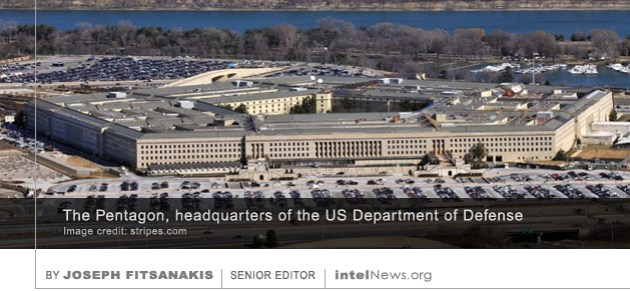
PentagonThe United States Department of Defense has released details of an agreement with a private intelligence contractor, which experts believe involves the provision of services to American Special Forces working clandestinely inside Syria. The announcement, made on the Pentagon’s website, is believed to be the first public admission of the use of a private intelligence contractor by the US government in Syria. In the brief press release, the DoD identifies the contractor as Six3 Intelligence Solutions, a McLean, Virginia-headquartered company that specializes in intelligence, biometrics and security.
Six3 Intelligence Solutions is a subsidiary of CACI International Inc., one of the largest defense, security and intelligence contractors in the US. According to The Daily Beast, CACI purchased Six3 Intelligence Solutions in 2013 for $820 million, in what a CACI media statement said was “the biggest deal” in the company’s 50-year history. Public records indicate that Six3 Intelligence Solutions is already fulfilling a $30 million contract with the Pentagon, involving the provision of nondescript “intelligence services” to American troops stationed in Afghanistan. The latest contract, worth $9.5 million, was announced on July 27. It is a no-bid contract, otherwise known as a ‘sole source contract’, which means that the government believes that only one company can provide the services required. Thus, the process by which a no-bid contract is awarded is non-competitive.

The Pentagon’s July 27 announcement states that, under the contract, work by Six3 Intelligence Solutions personnel “will be performed in Germany, Italy, and Syria”. There is no mention of the precise nature of the work, though it is generally assumed that it will support the operations of US Special Forces troops that are currently stationed in Syria. American troops have been active in Syria for at least a year. Nearly 300 US Special Forces members are believed to be presently operational in the war-torn country, working with officers of the Central Intelligence Agency. The Daily Beast said it contacted CACI and the DoD about the recently announced contract, but received no responses.

Author: Joseph Fitsanakis | Date: 15 August 2016 | Permalink

Ukraine gives Britain intel about Russian ‘hybrid war’ tactics in Crimea

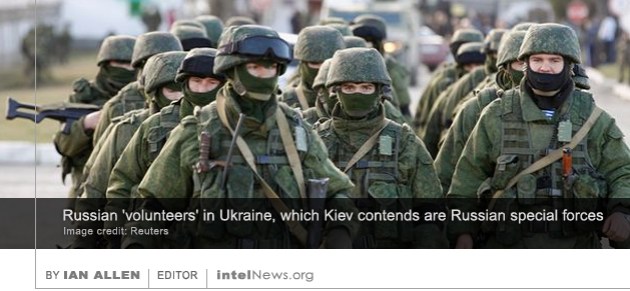
UkraineUkrainian intelligence and defense officials are sharing intelligence with Britain about cutting-edge Russian military tactics in the Crimea and parts of eastern Ukraine. Since the 2014 Russian military intervention in Ukraine, observers have noted the sophisticated tactics used by Moscow. The Russian forces seem to be combining their advanced conventional arsenal with electronic warfare and information operations. The latter include the use of deception, spreading propaganda through social media, and computer hacking. Some experts have described Russia’s tactics in the Crimean Peninsula and the Donbass region of Ukraine as a form of “hybrid warfare”, which has its roots in Soviet times. The difference in the contemporary operational landscape is the prominence of electronic resources, which the Russians are simultaneously employing as disinformation channels and tools of sabotage. Following the Ukrainian crisis of 2014, the former Soviet republic is today seen as being at the forefront of Russia’s experimentation with “hybrid warfare”.
According to British newspaper The Times, a delegation of Ukrainian military officials, with considerable experience in studying Russia’s war tactics in Donbass and Crimea, secretly visited the United Kingdom in July for consultations. The paper quoted an anonymous British military source saying that the visit was part of a series of meetings between Ukrainian and British officials. The goal of the meetings, it said, is to understand Russia’s military tactics in the 21st century. The agenda of the secret meetings includes discussion on topics such as the use of radio-electric weapons that disrupt GPS and drone signals, the deployment of sabotage and covert action, or the use of social media to spread disinformation. Russian tactics that have been discussed include the use of acoustics to locate snipers in an urban battlefield, tactical coordination of drones in fleets, and the widespread use of cellular telephone messages to target civilian populations.

A representative of the UK’s Ministry of Defense, who was contacted by The Times, admitted that “a small delegation from Ukraine was hosted” in Britain “as part of a think-tank sponsored visit”, but refused to provide further details. The paper said the meetings will probably continue and may even widen in scope to include staff from North Atlantic Treaty Organization member states.

Author: Ian Allen | Date: 12 August 2016 | Permalink

US Congressional probe finds DoD intelligence on Islamic State was altered

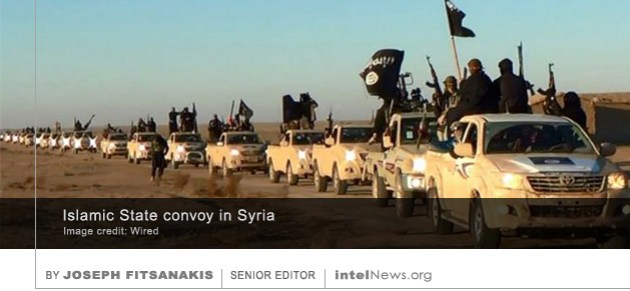
ISISAn investigation by Republican lawmakers in the United States House of Representatives has reportedly found that military intelligence analysts were pressured into changing reports on the Islamic State by their superiors. The investigation follows allegations made a year ago by analysts at the Defense Intelligence Agency (DIA), the Pentagon’s primary human-intelligence agency. As many as 50 analysts claimed that their reports about the Islamic State were being deliberately tweaked by officials at the US Central Command (CENTCOM), the Pentagon body that directs and coordinates American military operations in Egypt, the Middle East and Central Asia. Some of the reports related to al-Qaeda activity in Iraq and Syria, but most were about the Islamic State, the militant Sunni organization that controls large swathes of territory in Iraq and Syria.
The allegations prompted two separate investigations, one by the Department of Defense and one by a task force consisting of Republican members of three committees in the US House of Representatives —namely the Committee on Armed Services, the Permanent Select Committee on Intelligence, and the Defense Subcommittee of the Committee on Appropriations. According to The Daily Beast, the committees have now concluded their five-month investigation and are preparing to release a 10-page report before the end of August. Citing three unnamed US officials, the website claims that the soon-to-be-released report will corroborate claims by DIA analysts that their intelligence reports were deliberately doctored in order to make American efforts against ISIS seem more successful than they have been.

According to the three officials, who are reportedly “familiar with the task force’s findings”, the 10-page document will not corroborate claims that the pressure on the intelligence analysts was exercised by senior sources inside the White House. But they told the website that the Congressional investigation could continue after the release of the report. The Daily Beast said it contacted CENTCOM for a comment on the story, but was told that the Pentagon body has yet to receive the task force report. Meanwhile, the Pentagon’s own investigation into the analysts’ allegations continues and expected to release its findings by the end of 2016.

Author: Joseph Fitsanakis | Date: 11 August 2016 | Permalink


Notorious Russian arms dealer ‘refused US offer for lighter sentence’

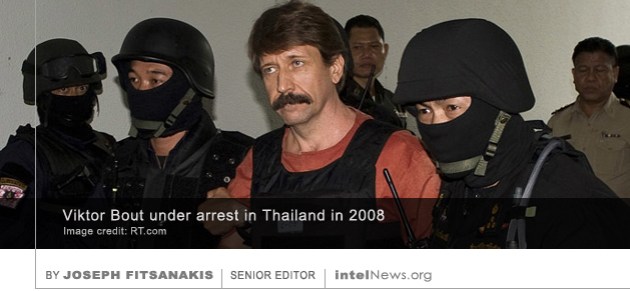
Viktor BoutThe wife of Viktor Bout, the imprisoned Russian arms dealer dubbed ‘the merchant of death’, said he rejected an offer by his American captors who asked him to testify against a senior Russian government official. Born in Soviet Tajikistan, Bout was a former translator for the Soviet military. After the end of the Cold War, he set up several low-profile international air transport companies and used them to transfer large shipments of weapons that fueled wars in Africa, Asia, Latin America and Europe. He made millions in the process and acquired international notoriety, which inspired the Hollywood blockbuster Lord of War. But his business ventures ceased in 2008, when he was arrested in Bangkok, Thailand, by the United States Drug Enforcement Administration, with the cooperation of the Royal Thai Police. He was eventually extradited to the US and given a 25-year prison term for supplying weapons to the Afghan Taliban, and for trying to sell arms to the Revolutionary Armed Forces of Colombia (FARC). Bout is currently serving his sentence at the Brooklyn Metropolitan Detention Center in New York.

In a newspaper interview on Tuesday, Bout’s wife, Alla Bout, said her husband could have gotten away with a considerably lighter sentence had he agreed to testify against a senior Russian government official. Speaking to Moscow-based daily Izvestia, Alla Bout said her husband had been approached by American authorities after being extradited to the United States from Thailand. He was told that US authorities wanted him to testify against Igor Sechin, a powerful Russian government official, whom American prosecutors believed was Bout’s boss. In return for his testimony, US prosecutors allegedly promised a jail sentence that would not exceed two years, as well as political asylum for him and his family following his release from prison. Alla Bout added that her husband’s American lawyers were told by the prosecution that the ‘merchant of death’ “would be able to live in the US comfortably, along with his wife and daughter”, and that his family could stay in America during his trial “under conditions”. Alla Bout claimed she was told this by Bout himself and by members of his American legal team.

From 2008 to 2012, Sechin, who has military background, served as Russia’s Deputy Prime Minister. Today he heads the Board of Directors of Rosneft, a government-owned oil extraction and refinement company, which is considered one of the world’s most powerful business ventures. Many observers see Sechin as the most formidable man in Russia after Russian President Vladimir Putin. He is also believed to be a senior member of the Siloviki, a secretive group of government officials in the Putin government who have prior careers in national security or intelligence. Although Bout and Sechin have never acknowledged having met each other, some investigators of Bout’s weapons-trading activities believe that the two were close allies. It is believed that the two men first met in Angola and Mozambique in the 1980s, where they were stationed while serving in the Soviet military. But the two men deny they knowing each other. According to Alla Bout, Viktor told his American captors that he “never worked for Sechin and did not know him in person”. He therefore turned down the prosecution’s offer and was handed a 25-year sentence. When asked by the Izvestia reporters whether Bout was simply protecting the powerful Russian government official, Alla Bout insisted that the two “have never even met, not once”.

Author: Joseph Fitsanakis | Date: 10 August 2016 | Permalink