Analysis: The Islamic State is far from dead; it is regrouping and rebranding itself
June 11, 2018 1 Comment
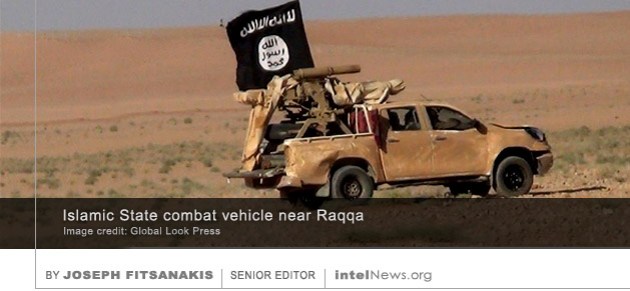 In a recent series of interviews to promote his new book, Anatomy of Terror, former FBI special agent and current counterterrorism expert Ali Soufan insists that the Islamic State remains potent and dangerous. Speaking last week to the British newspaper The Guardian, Soufan warned that, even though the Islamic State was unable to hang on to its self-described caliphate in the Middle East, the group has ample opportunities to regroup. In the days of al-Qaeda, “we only had one vacuum, in Afghanistan”, from where Osama bin Laden’s organization operated from and spread its message, said Soufan. “Now we have so many vacuums —Syria, Yemen, Libya, northern Nigeria, Tunisia, the Philippines— and it’s expanding. That’s very dangerous”, he warned.
Soufan, a well-read analyst and complex thinker, who today presides over The Soufan Group and oversees the Soufan Foundation, is right to warn against the notion that the Islamic State is on its  way out. The group’s meteoric rise marked a watershed moment in the modern history of militant Sunni Islam. Even if it is militarily annihilated —a prospect that is far from certain— its physical absence will in no way erase its impact and influence among its millions of supporters and sympathizers. In fact, experts warn that the group is —like al-Qaeda before it— proving to be resilient and able to withstand intense military pressure from its enemies. Currently, all signs show that the Islamic State is actively reorganizing under the command of its leader, Abu Bakr al-Baghdadi. The prolonged absence of the Iraqi-born al-Baghdadi has prompted wild speculation about this supposed demise or severe incapacitation. There are even some who claim that he was killed by an Islamic State faction in an internal coup.
But most intelligence agencies agree that al-Baghdadi —and his core lieutenants— remain very much alive and well. Three weeks ago, The Washington Post cited anonymously a “senior United States counterterrorism official” who confirmed that, by all indications, al-Baghdadi was alive and was coordinating the group’s activities in its last strongholds in eastern Syria. This is supported by communications intercepts, detainee interrogations and statements by informants, said The Post. It is important to note that Al-Baghdadi continues to have alongside him some of the militant group’s most hardened commanders, most of whom were trained in intelligence and military tactics during the reign of Saddam Hussein. Under their guidance, retreating Islamic State forces are leaving behind cell-based formations of underground fighters in areas that are liberated by the fragile US-led coalition. Read more of this post
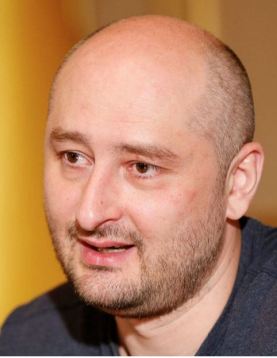
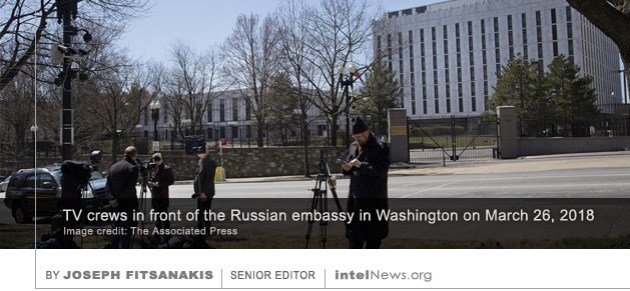 Relations between Russia and much of the West reached a new low on Monday, with the expulsion of over 100 Russian diplomats from two dozen countries around the world. The unprecedented expulsions were publicized on Monday with a series of coordinated announcements issued from nearly every European capital, as well as from Washington, Ottawa and Canberra. By the early hours of Tuesday, the number of Russian diplomatic expulsions had reached 118 —not counting the 23 Russian so-called “undeclared intelligence officers” that were expelled from Britain last week. Further expulsions of Russian diplomats are expected in the coming days.
 predecessor, Barack Obama, and his Secretary of State Hillary Clinton, who is known for her hardline anti-Russian stance. In Europe, the move to expel dozens of Russian envoys from 23 different countries —most of them European Union members— was a rare act of unity that surprised European observers as much as it did the Russians.
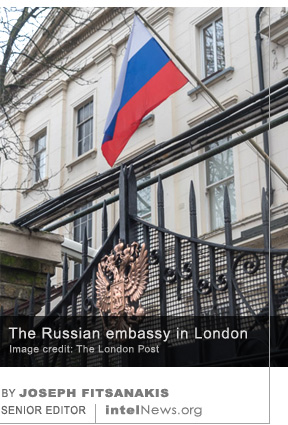 As expected, Moscow snubbed the British government’s demand for information into how a Russian-produced military-grade nerve agent ended up being used in the streets of Salisbury, England. As British Prime Minister Theresa May addressed the House of Commons on Wednesday afternoon, Sergei Skripal continued to fight for his life in a hospital in southern England. His daughter, Yulia, was also comatose, having been poisoned with the same Cold-War-era nerve agent as her father. This blog has
  the latest expulsions are dwarfed by the dramatic expulsion in 1971 of no fewer than 105 Soviet diplomats from Britain, following yet another defection of a Soviet intelligence officer, who remained anonymous.
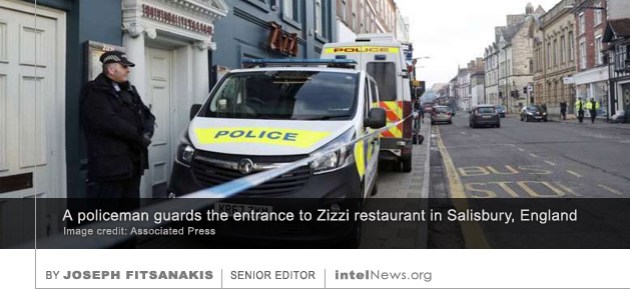 Most state-sponsored assassinations tend to be covert operations, which means that the sponsoring party cannot be conclusively identified, even if it is suspected. Because of their covert nature, assassinations tend to be extremely complex intelligence-led operations, which are designed to provide plausible deniability to their sponsors. Consequently, the planning and implementation of these operations usually involves a large number of people, each with a narrow set of unique skills. But —and herein lies an interesting contradiction— their execution is invariably simple, both in style and method. The
  Skripal, who continued to provide his services to British intelligence as a consultant while living in the idyllic surroundings of Wiltshire. Like the late Russian defector Alexander Litvinenko, who died in London of radioactive poisoning in 2006, Skripal entrusted his personal safety to the British state. But in a country that today hosts nearly half a million Russians of all backgrounds and political persuasions, such a decision is exceedingly risky.
 from abroad. It is, in other words, a simple weapon that can be dispensed using a simple method, with little risk to the assailant(s). It fits the profile of a state-sponsored covert killing: carefully planned and designed, yet simply executed, thus ensuring a high probability of success.
 Latvian defense officials have hinted that Russia is trying to destabilize Latvia’s economy, as a Western-backed anti-corruption probe at the highest levels of the Baltic country’s banking sector deepens. Developments have progressed at a high speed since Monday of last week, when Latvia’s Corruption Prevention and Combating Bureau
 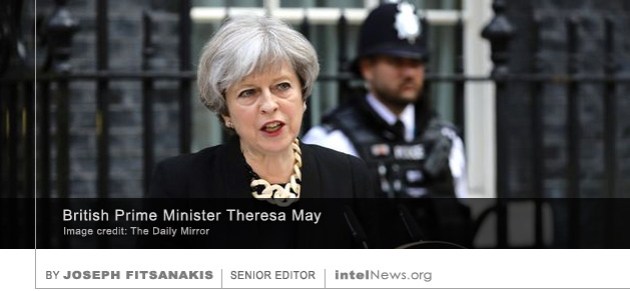 The British government has announced that it will form a new intelligence unit tasked with preventing the spread of so-called “fake news” by foreign states, including Russia. The decision was revealed earlier this week in London by a government spokesman, who said that the new unit will be named “National Security Communications Unit”. The spokesman added that the unit will be responsible for “combating disinformation by state actors and others”. When asked by reporters whether the effort was meant as a response to the phenomenon often described as “fake news”, the spokesman said that it was.
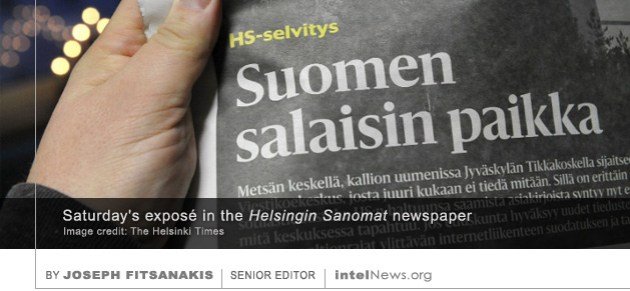 An investigative journalist in Finland, who recently co-authored an exposé of a Finnish intelligence program targeting Russia, destroyed her computer with a hammer, prompting police to enter her house on Sunday. The journalist, Laura Halminen, co-wrote the exposé with her colleague, Tuomo Pietiläinen. Titled “The Secret Behind the Cliff”, the article
  Authorities in Poland have charged three high-level military intelligence officials with acting in the interests of Russia. The three include two former directors of Polish military intelligence and are facing sentences of up to 10 years in prison. The news broke on December 6, when Polish authorities announced the arrest of Piotr Pytel, who was director of Poland’s Military Counterintelligence Service (SKW) from 2014 to 2015. It soon emerged that two more arrests had taken place, that of Pytel’s predecessor, Janusz Nosek, and Krzysztof Dusza, Pytel’s chief of staff during his tenure as SKW director.
 Files released on Monday by the British government reveal new evidence about one of the most prolific Soviet spy rings that operated in the West after World War II, which became known as the Portland Spy Ring. Some of the members of the Portland Spy Ring were Soviet operatives who, at the time of their arrest, posed as citizens of third countries. All were non-official-cover intelligence officers, or NOCs, as they are known in Western intelligence parlance. Their Soviet —and nowadays Russian— equivalents are known as illegals. NOCs are high-level principal agents or officers of an intelligence agency, who operate without official connection to the authorities of the country that employs them. During much of the Cold War, NOCs posed as business executives, students, academics, journalists, or non-profit agency workers. Unlike official-cover officers, who are protected by diplomatic immunity, NOCs have no such protection. If arrested by authorities of their host country, they can be tried and convicted for engaging in espionage.
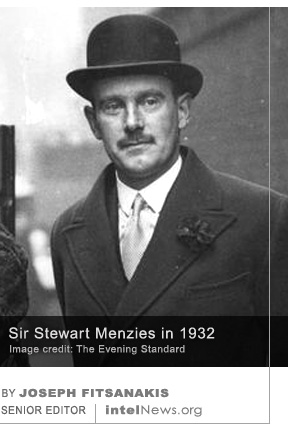 Successive directors of the Secret Intelligence Service used a secret slush fund to finance spy operations without British government oversight after World War II, according to a top-secret document unearthed in London. The document was found in a collection belonging to the personal archive of the secretary of the British cabinet, which was released by the United Kingdom’s National Archives. It was discovered earlier this year by Dr Rory Cormac, Associate Professor of International Relations in the Faculty of Social Sciences of the University of Nottingham in England. It forms the basis of an episode of BBC Radio 4’s investigative history program, Document, which
 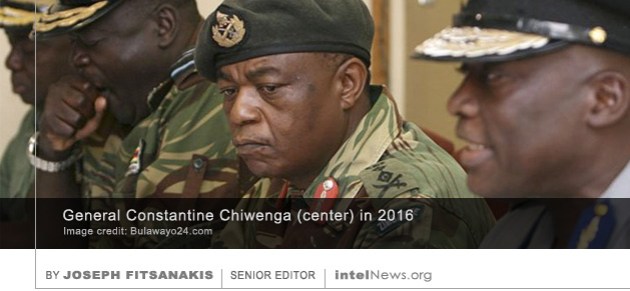 Political affairs in Zimbabwe took an unprecedented turn on Monday, as the chief of the armed forces warned the country’s President, Robert Mugabe, that the military would “not hesitate to step in” to stop infighting within the ruling party. General Constantino Chiwenga, Commander of the Zimbabwe Defence Forces, took the extremely rare step of summoning reporters for a press conference at the military’s headquarters in Harare on Monday. A direct intervention of this kind is unprecedented in the politics of Zimbabwe, a country that is tightly ruled by its authoritarian President, Robert Mugabe. Mugabe is also President and First Secretary of the Zimbabwe African National Union – Patriotic Front (ZANU-PF), the party that has dominated Zimbabwean politics since it assumed power in 1980.
 Dozens of Saudi senior figures, some of them among the world’s wealthiest people, have been fired or arrested, as the king and his son appeared to be removing their last remaining critics from the ranks of the security services. The unprecedented arrests took place without warning less than two hours after state-run media announced the creation of a new “supreme committee to combat corruption”. A
 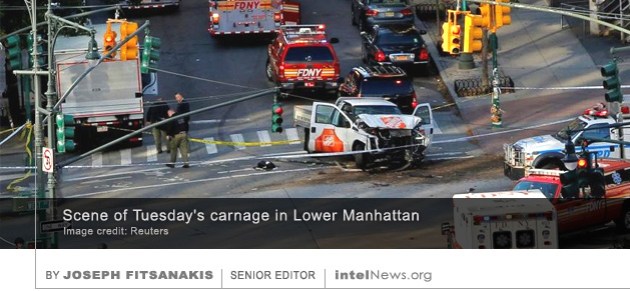 News reports hastened to
  violence, rather than risk failure by breaking new ground. But at a time like this, when the very existence of the Islamic State hangs in the balance, one would think that the group would consciously try to intimidate its opponents by showing off some kind of revolutionary new weapon. That did not happen on Tuesday.
 the heavily attended annual Village Halloween Parade was scheduled to take place on the very same street, just two hours after he launched his deranged attack.








Iran sleeper cell agents, including diplomat, arrested in three European countries
July 6, 2018 by Joseph Fitsanakis Leave a comment
The operation against the alleged sleeper cell began on Saturday, June 30, when members of Belgium’s Special Forces Group stopped a Mercedes car in Brussels. The car was carrying a married Belgian couple of Iranian descent, named in media reports as Amir S., 38, and Nasimeh N., 33. According to the Belgian Ministry of the Interior, Nasimeh N. was found to be carrying 500 grams of triacetone triperoxide (TATP) explosive and a detonator inside a toiletries bag. On the following day, Sunday, July 1, German police arrested Assadollah A., an Iranian diplomat stationed in Iran’s embassy in Vienna, Austria. According to reports, the diplomat was driving a rental car in the southeastern German state of Bavaria, heading to Austria. On the same day, a fourth person, who has not been named, was arrested by authorities in France, reportedly in connection with the other three arrests.
The four detainees were in contact with each other and were allegedly working for the Iranian government. All four have been charged with an alleged foiled plot to bomb the annual conference of the National Council of Resistance of Iran (NCRI) that took place last Saturday, June 30, in a Paris suburb. The National Council of Resistance of Iran is a France-based umbrella group of Iranian dissidents, led by Mujahedin-e Khalq (MEK), a militant group that has roots in radical Islam and Marxism. Between 1970 and 1976, the group assassinated six American officials in Iran and in 1970 tried to kill the United States ambassador to the country. It initially supported the Islamic Revolution of 1979, but later withdrew its support, accusing the government of Ayatollah Khomeini of “fascism”. It continued its operations from exile, mainly from Iraq, where its armed members were trained by the Palestine Liberation Organization and other Arab leftist groups.
Until 2009, the European Union and the United States officially considered the MEK a terrorist organization. But the group’s sworn hatred of the government in Iran brought it close to Washington after the 2003 US invasion of Iraq. By 2006, the US military was openly collaborating with MEK forces in Iraq, and in 2012 the group was dropped from the US Department of State’s list of foreign terrorist organizations. Today the group enjoys open protection from the EU and the US. According to Belgian authorities, the four members of the Iranian sleeper cell were planning to bomb the MEK-sponsored NCRI meeting in Paris under instructions by the Iranian government. Conference participants included over 30 senior US officials, including US President Donald Trump’s personal lawyer, Rudy Giuliani, who addressed the meeting. Stephen Harper, Canada’s former prime minister, also spoke at the conference.
Speaking in Brussels this week, Belgium’s Interior Minister Jambon praised the country’s intelligence, security and law enforcement agencies for foiling the alleged bomb plot in Paris. But Mohammad Javad Zarif, Iran’s Minister of Foreign Affairs, dismissed claims of an Iranian sleeper cell as “fake news” and described reports of a foiled bomb attack as “a sinister false flag plot”.
► Author: Joseph Fitsanakis | Date: 06 July 2018 | Permalink
Filed under Expert news and commentary on intelligence, espionage, spies and spying Tagged with Belgium, France, Germany, Iran, Iranian embassy in Austria, Mujahedeen-e Khalq, National Council of Resistance of Iran, News, Newstex, sleeper agents