French consular employee caught smuggling guns to Gaza using diplomatic car

French consulate in JerusalemAn employee of France’s consulate in Jerusalem is under arrest for allegedly smuggling weapons from the Gaza Strip to the West Bank, according to French media reports, which have been confirmed by Israel. The consular employee has been identified by the Shin Bet, Israel’s domestic security agency, as Romain Franck, 23. He reportedly worked as a driver at the consulate, a job he managed to secure through a prestigious “international volunteer” program sponsored by the French government. The elite program allows recent French college graduates to gain work experience in various countries around the world. Although he had a relatively junior post at the French consulate, Franck carried a diplomatic passport, which allowed him to move through international borders without being searched, due to his diplomatic immunity privileges.

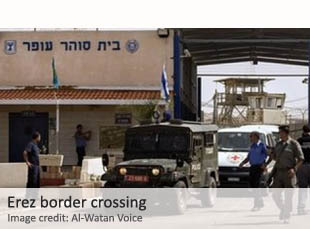
But, according to French newspaper Liberation, Franck was detained by Shin Bet officers on February 19 of this year, as he was trying to enter Israel from the Gaza Strip at the Erez border crossing. He was driving a car that bears French diplomatic license plates and belongs to the French consulate in Jerusalem. Inside the car, the Shin Bet officers reportedly found pistols and assault rifles. According to Liberation, Franck’s arrest has been kept secret. The Shin Bet admitted that the newspaper’s story was true on Tuesday afternoon. Franck reportedly told his Israeli captors that he had received the weapons from a Palestinian who worked at the French Cultural Center in Gaza. He then transported them over several trips to the West Bank, where other Palestinians picked them up, paid him, and sold them on to others.

Israel has reportedly arrested eight more people in connection with the gun running, all of whom are Palestinians. They include a Palestinian security guard at the French consulate. According to the Shin Bet, Franck was not ideologically or politically allied with Hamas, Fatah, or any other Palestinian group. Instead, he participated in the gun smuggling for financial gain. A spokesman at France’s embassy in Tel Aviv said that Paris was closely monitoring the incident and was “in close contact with the Israeli authorities on the matter”.

Author: Joseph Fitsanakis | Date: 21 March 2018 | Permalink | Research credit: MF

Ex-spy chief claims Palestinian officials worked with CIA to wiretap opponents

Telephones PalestineThe former head of the Palestinian Authority’s spy agency claims that the Palestinian government in the West Bank worked with the United States Central Intelligence Agency to wiretap thousands without court authorization. Tawfiq Tirawi, who headed the Palestinian General Intelligence from its founding in 1994 to 2008, has filed an official complaint against the Palestinian Authority and is calling for a criminal investigation into the alleged wiretaps. The complaint has also been signed by Jawad Obeidat, who is the president of the West Bank’s Bar Association. It is based on a leaked 37-page document that surfaced last month on the social networking application WhatsApp. The document was leaked by an anonymous individual who claims to have worked for a surveillance unit in the Palestinian Preventive Security Service, the Palestinian Authority’s domestic security service.

The leaked document appears to show that the Palestinian Preventive Security Service reached out to the CIA in 2013 asking for assistance with installing a communications surveillance system in the West Bank. The CIA agreed to provide the system in exchange for access to the intercepted data. The two agencies installed the interception system in the summer of 2014 and initiated what appears to have been a large-scale operation that included thousands of telephone subscribers. Initial targets of the operation included members of Hamas —the Palestinian group that controls the Gaza Strip— as well as members of the Iran-supported Islamic Jihad Movement in Palestine. But, according to the Associated Press, over time the targets of the program expanded to include “thousands of Palestinians, from senior figures in militant groups to judges, lawyers, civic leaders and political allies of Abbas”. The list of targets included Tirawi and Obeidat, who filed the official complaint on Tuesday.

The anonymous leaker of the document said he decided to quit his job and reveal the information about the intercepts after US President Donald Trump shifted Washington’s policy on Israel’s capital, by officially recognizing Jerusalem as the capital of the Jewish state. Earlier in February, the Palestinian Authority dismissed the leaked document as “nonsense” and said it was part of a large conspiracy that sought to harm Palestinian interests. The CIA refused to comment on the allegations.

Author: Joseph Fitsanakis | Date: 07 February 2018 | Permalink
Egyptian branch of ISIS declares war on Hamas as tensions rise in Sinai

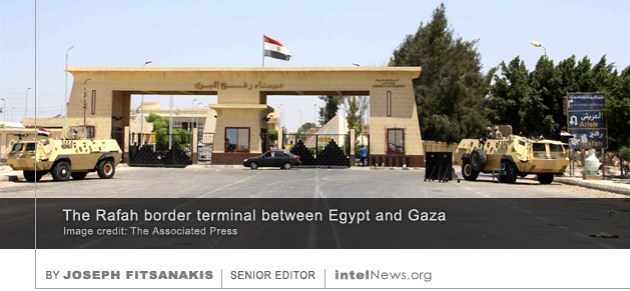
Egypt Gaza borderThe Islamic State in Egypt’s Sinai Province has declared war on the Palestinian militant group Hamas, in a move that experts say will furhter-complicate an already volatile security situation in eastern Egypt. Many observers see the group, Wilayat Sinai, as the strongest international arm of the Islamic State of Iraq and Syria (ISIS). Known officially as ISIS – Sinai Province, Wilayat Sinai was behind the 2015 downing of Metrojet Flight 9268, which killed all 224 passengers and crew onboard, most of them Russians. The same group killed 311 people at a Sufi mosque in November of last year, in what has become known as the worst terrorist attack in Egypt’s modern history.
Israeli sources claim that, in the past, Wilayat Sinai has had limited cooperation with Hamas, the militant group that controls the Gaza Strip, a coastal section of the Palestinian territories that borders with Egypt’s Sinai Province. The two organizations are believed to have engaged in limited cross-border arms-smuggling, while some injured Wilayat Sinai fighters have been treated in Gaza Strip hospitals. But the two groups have major ideological differences that contribute to their increasingly tense relationship. The Islamic State objects to participation in democratic elections, which it sees as efforts to place human will above divine law. It has thus condemned Hamas’ decision to participate in the 2006 elections in the Palestinian territories. Additionally, even though it promotes Sunni Islam, Hamas is far less strict in its religious approach than the Islamic State, and does not impose Sharia (Islamic law based on the Quran) in the territory it controls. Furthermore, Hamas suppresses Saudi-inspired Wahhabism and its security forces often arrest ISIS and al-Qaeda sympathizers in the Gaza Strip. In the past month, ISIS accused Hamas of having failed to prevent America’s formal recognition of Jerusalem as the capital of Israel. Additionally, ISIS is opposed to the support that Hamas receives from Iran, a Shiite nation that ISIS regards as heretical.

There are reports that Hamas has been quietly collaborating with Egypt and even Israel in recent months, in order to combat the rise of ISIS in the region. For several months now, the Palestinian group has exercised stricter control over its seven-mile-long border with Egypt. It has rebuilt border barriers that had previously been destroyed and has installed security fences and a digital surveillance system. It has also launched a public-relations effort to shame the families of young men from Gaza who have joined ISIS forces in Sinai. In response to these moves, Wilayat Sinai has publicly urged its supporters to kill members of Hamas and attack the group’s security installations and public buildings. The ISIS-affiliated group has also urged its members to eliminate members of the small Shiite Muslim community in the Gaza strip. According to experts, the decision by Wilayat Sinai to declare war on Hamas means that the group has now virtually surrounded itself with adversaries. The move may also increase informal collaboration between Hamas and the Israeli government, say observers.

Author: Joseph Fitsanakis | Date: 12 January 2018 | Permalink

Sophistication of Hamas official’s killing points to Mossad, say sources

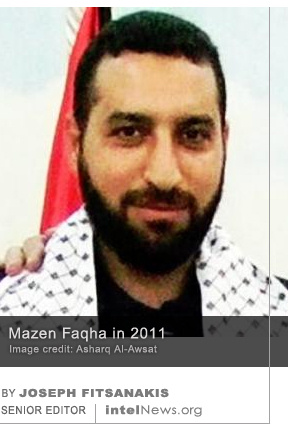
Mazen FaqhaThe sophistication behind the killing of a senior Hamas official, who was assassinated in his home in the Gaza Strip on Friday evening, points almost certainly to Israel, according to observers. Mazen Faqha, 38, helped plan several lethal operations by the Palestinian militant group, including a 2002 suicide bombing that killed nine and wounded over 50. Following an extensive manhunt, Israeli authorities arrested Faqha in the West Bank and in 2003 convicted him to nine life sentences. But in 2011, Faqha was among 1,027 Palestinian and Arab-Israeli prisoners that Israel released in exchange for Gilad Shalit, a soldier in the Israel Defense Forces, who was held prisoner by Hamas. Since that time, Faqha had lived in the Gaza Strip, the Hamas-controlled Palestinian enclave that has been under strict Israeli blockade since 2006.
Last Friday, March 24, Faqha was found dead inside the garage of his apartment block in Tel el-Hawa, a densely populated neighborhood in southwestern Gaza City. Initial reports stated that the Hamas official had been shot dead by a team of assailants outside his home. But subsequent accounts revealed that several gunmen were waiting for Faqha inside the car garage located on the bottom floor of the building that houses his apartment. It now appears that the assailants had been hiding in the garage for several hours before Faqha entered it with his car. Minutes earlier, his wife and young daughter had exited the car and made their way to the front door of their apartment. As soon as Faqha drove his car to the garage and closed the garage’s electric door, the gunmen shot him four times in the head from point-blank range and vanished. There was hardly a sound, because the assailants used weapons equipped with silencers. Faqha’s body was not discovered until 7:30 in the evening, a full 90 minutes after he was shot dead. His wife apparently thought that he was talking to their neighbors.

Investigators who are looking into Faqha’s murder say that his killers were intimately familiar with the architectural details of the apartment building where he lived, and had studied his daily routine. They also made sure to leave no traces behind. Consequently, their identity remains a mystery despite the presence of security cameras around the building. Hamas security officials say they believe that Faqha’s killers entered and exited the Gaza Strip by boat. The Palestinian militant group lost little time in blaming the murder on the Mossad, Israel’s primary external intelligence agency, which has targeted several Hamas officials for assassination in the past. Khalil al-Haya, Hamas’ second-in-command in the Gaza Strip said that Israel was the only beneficiary of Faqha’s demise. Khaled Mashal, who chairs Hamas’ Political Bureau, said Israel had “changed the rules of the game” by killing Faqha, adding that Hamas would “accept the challenge”. There has been no official comment from Israel in regards to Faqha’s killing.

Author: Joseph Fitsanakis | Date: 28 March 2017 | Permalink | Research credit: SF

Israeli military says Hamas lured its soldiers using online profiles of women

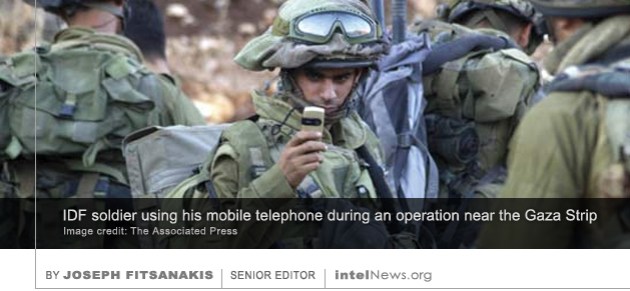
Cellular telephoneThe Israel Defense Forces told a press conference on Wednesday that hackers belonging to the Palestinian militant group Hamas lured Israeli soldiers by posing as young women online. Wednesday’s press conference was led by an IDF spokesman who requested to remain anonymous, as is often the case with the Israeli military. He told reporters that the hackers used carefully crafted online profiles of real Israeli women, whose personal details and photographs were expropriated from their publicly available social media profiles. The hackers then made contact with members of the IDF and struck conversations with them that in many cases became intimate over time. At various times in the process, the hackers would send the Israeli soldiers photographs of the women, which were copied from the women’s online public profiles.
The anonymous IDF spokesman said that, if the soldiers continued to show interest, they were eventually asked by the hackers posing as women to download an application on their mobile telephones that would allow them to converse using video. Once the soldiers downloaded the application, the ‘women’ would find excuses to delay using the application, or the relationships would abruptly end. But the soldiers would leave the application on their telephones. It would then be used by the Hamas hackers to take control of the camera and microphones on the soldiers’ mobile devices. According to the IDF spokesman, dozens of Israeli soldiers were lured by the Hamas scam. No precise number was given.

Media reports suggest that the Hamas hackers were primarily interested in finding out information about IDF maneuvers around the Gaza Strip, the narrow plot of densely inhabited territory that is controlled by the Palestinian militant group. They were also interested in collecting information about the size and weaponry of the Israeli forces around Gaza. Media representatives were told on Wednesday that the operation “had potential for great damage”. But the IDF claims that the harm to its operations was “minimal”, because it primarily targeted low-ranking soldiers. Consequently, according to the Israeli military, the hackers were not able to acquire highly sensitive information.

In 2009, dozens of members of Sweden’s armed forces serving with NATO’s International Security Assistance Force in Afghanistan were found to have been approached via Facebook, and asked to provide details on NATO’s military presence in the country. The Afghan Taliban are believed to have carried out the operation.

Hamas has not commented on the allegations by the IDF.

Author: Joseph Fitsanakis | Date: 12 January 2017 | Permalink

US, British intelligence agencies spied on Israelis and Palestinians, files show

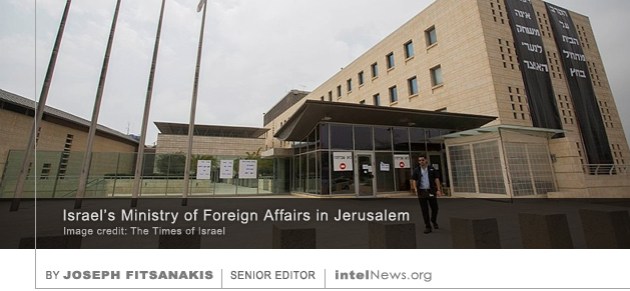
Israel’s Ministry of Foreign AffairsDocuments accessed by a French newspaper show that American and British intelligence agencies worked together to spy on diplomats, academic researchers and defense contractors in Israel and the Palestinian territories. Last year, the German newsmagazine Der Spiegel and the American newspaper The Wall Street Journal reported that the United States National Security Agency spied on senior Israeli politicians throughout the last decade, including Prime Minister Ehud Olmert and his successor, Benjamin Netanyahu. Now French daily Le Monde has alleged that the NSA teamed up with its British equivalent, the Government Communications Headquarters to spy on Israeli foreign service officials and diplomats, academic researchers and defense contractors. The newspaper also alleged that British and American spies targeted Palestinian government officials.

According to Le Monde, the information came from documents leaked by Edward Snowden, a former employee of the NSA and the Central Intelligence Agency, who is currently living in Russia. Snowden defected there in June 2013, after initially fleeing to Hong Kong with millions of stolen US government documents in his possession. In a leading article on Wednesday, the newspaper claimed that British and American spy agencies have systematically targeted senior officials in Israel’s Ministry of Foreign Affairs in Jerusalem. Several Israeli foreign service officials stationed abroad have also been targeted, said Le Monde, including Israel’s ambassadors to Nigeria and Kenya. But the Anglo-American intelligence alliance has also targeted Palestinian government institutions, including the Office of the Secretary General of the Palestinian Liberation Organization. Senior Palestinian officials that have been spied on include Ahmed Qurei, a former prime minister of the Palestinian National Authority, and Ahmad Tibi, a member of the Israeli Knesset who served as an advisor to Palestinian leader Yasser Arafat in the 1990s.

Palestinian diplomats stationed around the world have also been targeted by the NSA and the GCHQ, said Le Monde, in cities such as Paris, Brussels, Lisbon, Islamabad, Pretoria, and Kuala Lumpur. The documents also show that the two intelligence agencies have spied on Israeli defense contractors, including a company named Ophir Optronics, which works in the areas of laser and fiber optic technologies. Finally, the French newspaper said that research centers throughout Israel had been targeted, including scientific laboratories located at the Jerusalem-based Hebrew University.

Author: Joseph Fitsanakis | Date: 08 December 2016 | Permalink

Palestinian leader Mahmoud Abbas was KGB agent, researchers claim

Mahmoud Abbas

Mahmoud Abbas

Two Israeli researchers claim that a document from the archives of the Cold-War-era KGB identifies the current president of the Palestine Authority, Mahmoud Abbas, as a Soviet agent. The document was found in the United Kingdom, and was smuggled out of Russia by a former senior archivist of the Soviet KGB. Abbas is the leader of the largely secular Palestinian group Fatah, which controls the West Bank. Unlike Hamas, which is designated a terrorist group by Israel and its allies, Fatah is seen by Tel Aviv as the legitimate representative of the Palestinian people. That is disputed by Hamas, a religiously inspired group, which controls the Gaza Strip and maintains a tense relationship with Fatah and Abbas himself.

The allegation about Abbas’ past emerged on Wednesday in the Israeli media, after two local academic researchers disclosed the contents of a KGB document discovered at Cambridge University’s Churchill Archives Centre in Britain. The researchers, Gideon Remez and Isabella Ginor, of the Truman Institute at the Hebrew University of Jerusalem, said the document dates from 1983. It was found among thousands of similar documents that were secretly smuggled out of Russia in the early 1990s by British intelligence, following the defection of Vasili Mitrokhin, an archivist in the First Chief Directorate of the KGB during the Cold War. Some of the documents later formed the basis of a two-volume edition on the activities of Soviet intelligence, which was edited by Cambridge University Professor Christopher Andrew.

According to Remez and Ginor, the document identifies Mahmoud Abbas as a “KGB agent” based in Damascus, Syria, codenamed krotov, which in Russian means ‘mole’. Abbas was born in Palestine in 1935, but his family fled to Syria in 1948, following the establishment of the state of Israel and the outbreak of the first Arab-Israeli war. The young Abbas grew up in Damascus, where he went to university and joined the local branch of the PLO, the Palestinian Liberation Organization, of which Fatah is a member. If true, the allegation that Abbas worked for the KGB will not come as a surprise to observers of Palestinian politics. For most of the Cold War, the PLO was known to be close to Moscow, while Abbas was intimately involved with the Palestinian-Soviet Friendship Association, a pro-Moscow group that was widely seen as an agent of communist influence in the Palestinian territories. But the document from the Mitrokhin archives may be the first concrete evidence that Abbas was handled by the KGB.

Palestinian officials quickly dismissed the document on Wednesday as a fabrication and a deliberate slander. Mohammed al-Madani, a member of the central committee of Fatah, and a close associate of Abbas, said the allegation was part of a “clear effort to damage [Abbas] by various actors, including the government of Israel”.

Author: Joseph Fitsanakis | Date: 08 August 2016 | Permalink

Elite Hamas military commander reportedly defects to Israel

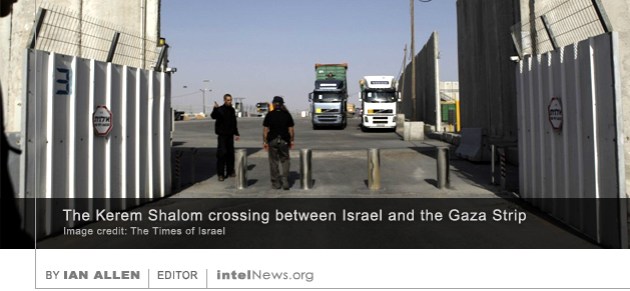
Kerem Shalom border crossingA senior member of the military wing of Hamas, the Palestinian militant group that governs the Gaza Strip, is believed to have defected to Israel. News of the rumored defection first appeared on the website of Al-Hayat al-Jadida, the official newspaper of the Palestinian Authority, which is based in the West Bank. On Tuesday, Al-Hayat said that the man, a member of the Izz ad-Din al-Qassam Brigades, Hamas’ military wing, had not been seen for several days.
The alleged defector was later named as Bassam Mahmoud Baraka, and reportedly comes from a well-known family in Kahn Younis, on the southern sector of the Gaza Strip. Baraka’s father is believed to be a religious judge that serves in Gaza under Hamas’ jurisdiction. According to Al-Hayat, the missing man is an elite member of the al-Qassam Brigades and specializes in operating inside the numerous underground tunnels that are said to span the entirety of the Palestinian enclave. The tunnels are of strategic importance to Hamas, as they secretly connect it with the outside world, despite Israeli efforts to prevent the trafficking of goods and people to and from the Gaza Strip. Some Israeli military officials believe that Hamas operatives are able to travel from one end of the Strip to the other without having to emerge from the ground. Since the 2014 Israeli invasion of Gaza, Tel Aviv has said that it views the elimination of Hamas’ vast underground tunnel network as a national security priority.

According to Palestinian websites, Baraka told members of his family that he was stepping out for a brief hike but never returned. He is believed to have voluntarily approached the border fence that separates Gaza from Israel and surrendered himself to a group of Israeli soldiers. Al-Hayat reports that Baraka’s family has already been informed from representatives of the Red Cross that he is in Israeli hands. Palestinian sources suggest that the Israeli soldiers that took in Baraka were aware of his pending defection and were waiting for him at the border. He was also reportedly carrying a laptop computer with him.

Israel is known to aggressively recruit informants in the Gaza Strip, many of them affiliated with Hamas. In 2010 it was revealed that Mosab Hassan Yousef, whose father is a senior Hamas official, was a secret informant for Shin Bet, Israel’s domestic security agency. Yousef defected to Israel and is now believed to be living in the United States.

Author: Ian Allen | Date: 15 June 2016 | Permalink

Ex-Mossad chief calls on Israel to speak with Hamas

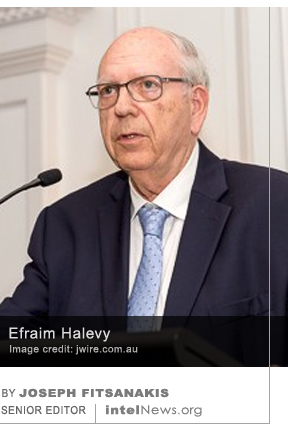
Efraim HalevyA former director of Israel’s Mossad intelligence agency has called on the Israeli government to reach out to Hamas, arguing that the Palestinian group is now ready to accept a peace settlement. Efraim Halevy directed the Mossad, Israel’s primary external intelligence agency, for five years before retiring in 2002. He is best known for helping forge a historic peace treaty between Israel and Jordan in 1994, which made the Hashemite Kingdom the second Arab country, after Egypt, to sing a peace accord with the Jewish state.

Halevy was speaking last week at an annual conference hosted in New York by the Israel-based newspaper The Jerusalem Post. During a panel entitled “Does the World Have an Answer to Islamic Terror?”, Halevy said it was time for Israel to speak to Hamas about the possibility of a peace treaty. The former Mossad director said he knew that “senior figures in the United States” had already established contacts with the Palestinian militant group, which controls the Gaza Strip. He also said that he knew “with certainty” that the leadership of Hamas was prepared to consider some kind of a “temporary settlement” based on the promise of the establishment of a Palestinian state along the pre-1967 Six-Day War borders. “The leadership of Hamas knows that they have no chance of destroying Israel”, said Halevy, adding that “now is the time to talk to Hamas”. According to the retired spy, a temporary settlement between Israel and Hamas that seeks to establish a Palestinian state would amount to a start in negotiations for a recognition of the state of Israel by Hamas. Halevy criticized Israel for refusing to speak with Hamas, saying that “as long as Israel refuses to talk with Hamas, and in the absence of any other alternative, [Hamas] has no option but to do what it does now”.

Last week was not the first time that Halevy has called for Israel to negotiate with Hamas. In July 2014, he told the American television network CNN that there were numerous radical groups in the Gaza Strip that were more threatening to Israel’s security than Hamas, not to mention Sunni Islamist groups like the Islamic State, which posed a much more pertinent challenge to regional stability. Two years earlier, n 2012, Halevy had issued a public call for dialogue between Israel and Iran, saying that “the Iranians, in their heart of hearts, would like to get out of their conundrum”, referring to Tehran’s nuclear program.

Author: Joseph Fitsanakis | Date: 01 June 2016 | Permalink

Israel says it foiled attempt to smuggle spy drones into Gaza

spy droneAuthorities in Israel said on Sunday that they foiled a plan to smuggle dozens of spy drones from Israel into the Gaza Strip. The Israeli Ministry of Defense said in a statement late on Sunday that the drones had been detected by members of the Shin Bet, Israel’s security police. The incident reportedly took place at Kerem Shalom, a major border crossing in to Gaza, a Palestinian enclave that is controlled by Hamas. The Defense Ministry statement also said that Sunday’s incident was only the latest in a string of recent attempts to smuggle spy drones into Gaza, all of which had been stopped by the Shin Bet since January.
According to the Israeli government report, the spy drones were found hidden inside boxes of toys that had been marked for export to Gaza. The drones were of different sizes, types and capabilities, but all were equipped with sophisticated cameras and related software, said the report. Israeli media reported on Sunday that, according to Israeli government sources in Tel Aviv, the drones were almost certainly going to be used by Hamas to spy on possible targets inside Israel. A source in the Israeli Department of Defense said Hamas was known to employ drones in order to explore and map the terrain that is adjacent to the Gaza Strip.

In March of last year, Egyptian authorities reported seeing several spy drones flying out of the Gaza Strip and conducting reconnaissance over Egyptian airspace in the Sinai Peninsula, which borders Gaza. According to some reports, a number of the spy drones that flew out of Gaza were seen as far as 50 kilometers (35 miles) inside Egyptian territory. The latest information from Israel is that the government in Tel Aviv believes that the pattern and frequency of attempts to smuggle spy drones into the Gaza Strip justify an investigation, which is now underway.

Author: Ian Allen | Date: 22 February 2016 | Permalink

Concerns about Israeli spying prompt debate on EU security measures

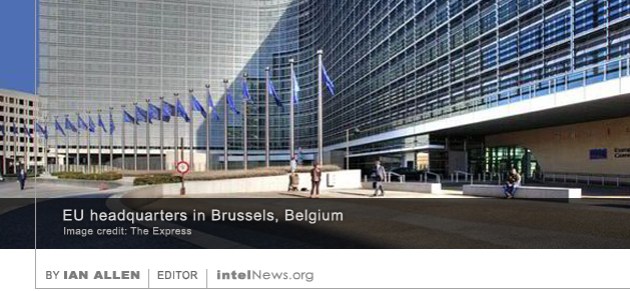
EU headquartersA debate on information security measures in the European Union was prompted last week after some officials voiced concerns that the proceedings of a closed-door meeting were secretly monitored by Israel. The meeting took place on January 15 as part of regular proceedings by the EU’s Political and Security Committee (PSC). The main item on the agenda was the EU’s Middle Eastern policy. According to some meeting participants, Israeli diplomats appeared to be aware of a statement discussed during the PSC meeting “in real time”, which prompted a wider debate on EU information security policies.
According to the Brussels-based EU Observer, which reported on the story, EU member state ambassadors present at the meeting worded a statement that contained a sentence deemed critical to Israel’s policy on Palestine. The sentence allegedly stated: “The EU will continue to unequivocally and explicitly make the distinction between Israel and all territories occupied by Israel in 1967”. According to some ambassadors who were present at the PSC meeting, “Israeli contacts sent text messages to them with requests to alter wording shortly after each new draft [of the PSC statement] went around”. Further suspicions were raised when, at the conclusion of the meeting, the Greek delegate vetoed the contentious line, standing alone against the remaining 27 delegates who had earlier supported it.

Last week, sources told the EU Observer that Israel may have placed bugs in the room where the PSC meeting took place. They added that the committee was debating whether to begin holding meetings in a secure room located in the EU headquarters building in Brussels, where the use of cell phones by meeting participants is not possible. They also said that a stricter classification policy should apply to PSC documents. Others, however, said that the source of the leak may have been the Greek delegate —the sole participant at the meeting who assumed a seemingly pro-Israeli stance. The Greek ambassador may have shared the details of the proceedings with Israeli officials, thus effectively spying on the conference on behalf of Israel, speculated the EU Observer. Another PSC meeting delegate told the paper that “the spy theory” was effectively concocted “in order to avoid confrontation” with the Greek delegation.

The EU Observer contacted the Greek mission to the EU, but was told that the Greek ambassador would never spy on the EU “as a matter of principle”. The Israeli mission to the EU declined to comment.

Author: Ian Allen | Date: 15 February 2016 | Permalink

Switzerland made secret deal with PLO in the 1970s, new book alleges

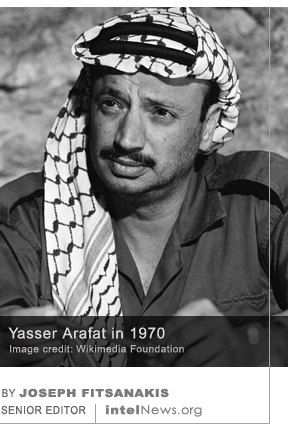
Yasser ArafatSwitzerland secretly agreed in the 1970s to support calls for Palestinian statehood, in return for not being targeted by Palestinian militants, according to a new book. Written by Marcel Gyr, a journalist with the Zurich-based Neue Zürcher Zeitung, the book alleges that the Swiss government took the unprecedented step of contacting Palestinian militants in 1970. According to Gyr, the move followed a series of attacks against Israeli targets in Switzerland by several Palestinian armed groups. In February 1969, Palestinian militants fired on an El Al airliner at Zurich’s Kloten Airport, killing the pilot. A year later, a Swissair Flight 330 from Zurich to Hong Kong with a stopover In Tel Aviv, Israel, exploded in mid-air, killing nearly 50 passengers and crew. The Syrian-backed Palestinian group Popular Front for the Liberation of Palestine – General Command (PFLP-GC) later claimed responsibility for the attack. In September 1970 another Swissair flight, headed to the United States, was hijacked and diverted to Jordan, where its passengers were held hostage.

It was during the latter incident, claims Gyr, that Switzerland’s Minister of Foreign Affairs, Pierre Graber, clandestinely contacted the Palestine Liberation Organization (PLO), the umbrella group that coordinated the activities of a multitude of Palestinian armed groups. Gyr alleges that Graber reached out to the PLO without informing his colleagues in the cabinet, and that he used a junior Swiss parliamentarian as an envoy and intermediary. Eventually, the PLO, which at the time was led by Yasser Arafat, agreed to release the hostages. He also offered to stop launching armed attacks, hijackings, and other violent operations on Swiss soil. In return, claims Gyr, Switzerland would agree to quietly abandon the investigation into the bombing of Swissair Flight 330, and to push for diplomatic recognition of the PLO as the legal representative of the Palestinian people.

Gyr claims that both sides kept their side of the bargain. The Swiss government gradually abandoned the investigation into the bombing of Swissair Flight 330. The country also led European efforts to offer diplomatic status to the PLO. Meanwhile, although the war between the PLO and Israel continued throughout Europe, no Palestinian attacks ever took place again on Swiss soil. Responding to Gyr’s book, Switzerland’s current Minister of Foreign Affairs, Didier Burkhalter, said he had no idea about the secret agreement and that he was “very surprised indeed” to know about it. Some Swiss political figures have asked for the establishment of a parliamentary inquiry to investigate Gyr’s allegations. It is unclear whether such a committee would have access to hundreds of thousands of pages about the Palestinian attacks in Switzerland, which today remain classified.

Author: Joseph Fitsanakis | Date: 25 January 2016 | Permalink

Ex-Mossad chief calls for ouster of Israeli prime minister

Meir DaganBy JOSEPH FITSANAKIS | intelNews.org
A longtime former director of the intelligence agency Mossad has called for the ousting of the country’s Prime Minister Benjamin Netanyahu, dismissing him as dangerous for Israel’s security. Meir Dagan stepped down from his post as head of the Mossad in November of 2010, after leading the agency for over eight years —the longest tenure of any Mossad director in history. Soon after his retirement, Dagan emerged as a leading critic of the government of Prime Minister Netanyahu, whom he accuses of endangering Israel’s security by wrecking its international reputation and isolating the country from its friends and allies around the world. In 2011, Dagan gave a lengthy interview in which he admonished calls by Netanyahu to bomb Iran’s nuclear facilities as “the stupidest idea” he had ever heard. In a subsequent interview to Reuters news agency, Dagan insisted that the military option should be last on the table and said that the Iranian nuclear issue should be “left in the hands of the international community”.

Responding to the Israeli Prime Minister’s controversial trip to the United States last week, Dagan said last week it had been destructive to Israel’s interests. Speaking on Israel’s Channel 2 television, the former spy chief did not deny that Iran’s nuclear program was a potential threat to Israel’s security, “but going to war with the US [over Iran] is not the way to stop it”, he said. Dagan’s supporters, who come mostly from the center-left of the Israeli political scene, accuse the government of Prime Minister Netanyahu of focusing almost exclusively on the Iranian nuclear program and neglecting the increasingly volatile relationship between Israel and the Palestinians. Many Israeli left-of-center voters blame the Prime Minister for the 2014 war in the Gaza Strip, which they say damaged Israel’s reputation and failed to provide a long-term solution to the lingering Palestinian issue.

Last weekend, the former Mossad chief was the keynote speaker at a rally against the Netanyahu administration that brought together nearly 40,000 people in Tel Aviv. He told the crowd that the prime minister’s policies were leading to an apartheid state in the Occupied Territories and was making Israel less safe. “For 45 years I have served this country, all of them dedicated to safeguarding its security”, said Dagan. “I don’t want that dream to disappear”, he added, at one point breaking down in tears. Many of the speakers at the rally also called on the Israeli government to refocus its policy priorities away from Iran and toward domestic social issues, including education, housing, healthcare, income levels in relation to the rising cost of living, and services for the elderly.

Retired Israeli generals, spy directors, urge peace talks with Arabs

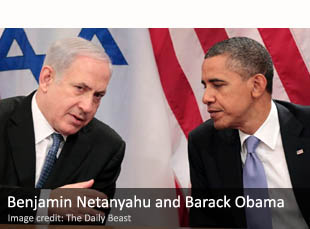
Benjamin Netanyahu and Barack ObamaBy JOSEPH FITSANAKIS | intelNews.org
A record number of over 100 retired Israeli military commanders, police commissioners and directors of the Mossad spy agency have urged the government of Israel to initiate unconditional peace talks with its Arab neighbors. In an open letter addressed to Israeli Prime Minister Benjamin Netanyahu, 106 signatories from the ranks of Israel’s security and intelligence community have urged the Israeli leader to “initiate a diplomatic process” aimed at achieving peace with the Palestinians. All but five of the signatories are veterans of the Israel Defense Forces with the rank of brigadier or major general. The remaining five are former directors of the Mossad —Israel’s covert-action agency— and former commissioners of Mishteret Yisra’el, Israel’s national police force. The initiative was spearheaded by Major General Amnon Reshef (ret.), a former commander of Israel’s Armored Corps and decorated veteran of the 1973 Arab–Israeli War. He was joined by dozens of his former comrades-in-arms, including Major General Eyal Ben-Reuven, who warned in an interview aired last Friday that Israel is on a “steep slope toward an increasingly polarized society and moral decline”. He attributed this trend to the purported “need to keep millions of people under occupation on claims that are security-related”, but are in reality machinations by weak political leaders within Israel. Ben-Reuven told Israel’s Channel 2 News that Israel had the ability and the means to achieve a two-state solution with the Palestinians that would drastically increase regional security. But it was failing to do so, he said, due to “weak leadership” inside Israel. Referring to Prime Minister Netanyahu, Ben-Reuven said he suffers from “some kind of political blindness that drives him to scare himself and us”. The action by the 106 former security and intelligence leaders was described by Israeli newspaper Ha’aretz as “the largest-ever joint protest by senior Israeli security personnel”. In their letter, the signatories argue that peace with the Palestinians “is not a question of left or right. What we have here is an alternative option for resolving the conflict […] with the Palestinians, which have failed time and again”. And they continue addressing Mr. Netanyahu directly: “We expect a show of courageous initiative and leadership from you. Lead, and we will stand behind you”. The Israeli prime minister promotes the view that Palestinian statehood would threaten Israel’s national security under the geopolitical conditions that are currently prevalent in the region.

Analysis: How does Israel recruit Palestinian informants in Gaza?

Erez border crossingBy JOSEPH FITSANAKIS | intelNews.org
According to human-rights organizations, the Palestinian group Hamas has executed over 50 alleged Israeli informants in the Gaza Strip. Nearly two dozen Gaza residents were accused of collaborating with Israel and summarily shot in the weeks following the recent war between Israel and Hamas. There are serious concerns over the absence of appropriate legal processes in these executions. The issue of legal standards aside, however, there is little question that Israeli intelligence agencies have for decades relied on Palestinian informants to gather information on Arab communities in Israel and the Occupied Territories. These individuals provide the Israeli intelligence establishment with human intelligence or plant technical surveillance equipment as instructed by their handlers. But how do Israeli intelligence agencies, including the Mossad and Shin Bet, recruit Palestinian informants in difficult-to-penetrate places such as the Gaza Strip?

Palestinians who have been personally wronged by Hamas, or who oppose the militant group’s seven-year rule in the Gaza Strip, constitute low-hanging fruit for Israeli recruiters. Other informants, such as petty-thieves and other small-time criminals, are recruited through traditional intelligence techniques that include entrapment or blackmail. But it would be reasonable to assume that most recruits are lured by direct cash payments. Unemployment in the Gaza Strip is currently estimated at 40 percent, which makes offers of cash extremely enticing for a significant segment of the Gazan population. One officer in the Shin Bet —Israel’s domestic intelligence agency— said recently in respect to the recruitment of informants that “everything starts and ends with money”.

Read more of this post