French consular employee caught smuggling guns to Gaza using diplomatic car
March 20, 2018 1 Comment
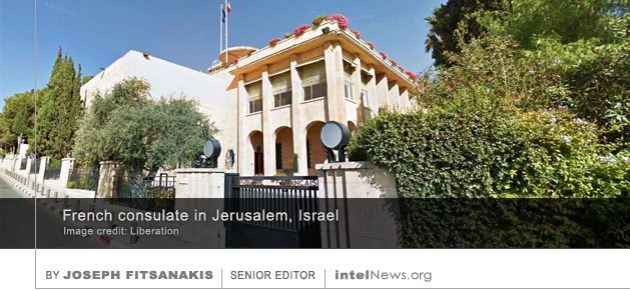 An employee of France’s consulate in Jerusalem is under arrest for allegedly smuggling weapons from the Gaza Strip to the West Bank, according to French media reports, which have been confirmed by Israel. The consular employee has been identified by the Shin Bet, Israel’s domestic security agency, as Romain Franck, 23. He reportedly worked as a driver at the consulate, a job he managed to secure through a prestigious “international volunteer” program sponsored by the French government. The elite program allows recent French college graduates to gain work experience in various countries around the world. Although he had a relatively junior post at the French consulate, Franck carried a diplomatic passport, which allowed him to move through international borders without being searched, due to his diplomatic immunity privileges.
But, according to French newspaper Liberation, Franck was detained by Shin Bet officers on February 19 of this year, as he was trying to enter Israel from the Gaza Strip at the Erez border crossing. He was driving a car that bears French diplomatic license plates and belongs to the French consulate in Jerusalem. Inside the car, the Shin Bet officers reportedly found pistols and assault rifles. According to Liberation, Franck’s arrest has been kept secret. The Shin Bet admitted that the newspaper’s story was true on Tuesday afternoon. Franck reportedly told his Israeli captors that he had received the weapons from a Palestinian who worked at the French Cultural Center in Gaza. He then transported them over several trips to the West Bank, where other Palestinians picked them up, paid him, and sold them on to others.
Israel has reportedly arrested eight more people in connection with the gun running, all of whom are Palestinians. They include a Palestinian security guard at the French consulate. According to the Shin Bet, Franck was not ideologically or politically allied with Hamas, Fatah, or any other Palestinian group. Instead, he participated in the gun smuggling for financial gain. A spokesman at France’s embassy in Tel Aviv said that Paris was closely monitoring the incident and was “in close contact with the Israeli authorities on the matter”.
► Author: Joseph Fitsanakis | Date: 21 March 2018 | Permalink | Research credit: MF
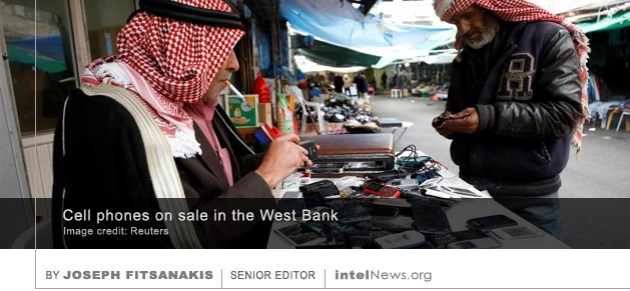 The former head of the Palestinian Authority’s spy agency claims that the Palestinian government in the West Bank worked with the United States Central Intelligence Agency to wiretap thousands without court authorization. Tawfiq Tirawi, who headed the Palestinian General Intelligence from its founding in 1994 to 2008, has filed an official complaint against the Palestinian Authority and is calling for a criminal investigation into the alleged wiretaps. The complaint has also been signed by Jawad Obeidat, who is the president of the West Bank’s Bar Association. It is based on a leaked 37-page document that surfaced last month on the social networking application WhatsApp. The document was leaked by an anonymous individual who claims to have worked for a surveillance unit in the Palestinian Preventive Security Service, the Palestinian Authority’s domestic security service.
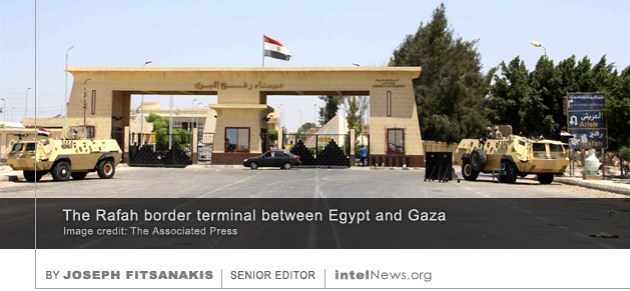 The Islamic State in Egypt’s Sinai Province has declared war on the Palestinian militant group Hamas, in a move that experts say will furhter-complicate an already volatile security situation in eastern Egypt. Many observers see the group, Wilayat Sinai, as the
 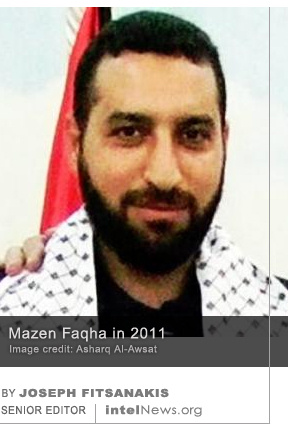 The sophistication behind the killing of a senior Hamas official, who was assassinated in his home in the Gaza Strip on Friday evening, points almost certainly to Israel, according to observers. Mazen Faqha, 38, helped plan several lethal operations by the Palestinian militant group, including a 2002 suicide bombing that killed nine and wounded over 50. Following an extensive manhunt, Israeli authorities arrested Faqha in the West Bank and in 2003 convicted him to nine life sentences. But in 2011, Faqha was among 1,027 Palestinian and Arab-Israeli prisoners that Israel released in exchange for Gilad Shalit, a soldier in the Israel Defense Forces, who was held prisoner by Hamas. Since that time, Faqha had lived in the Gaza Strip, the Hamas-controlled Palestinian enclave that has been under strict Israeli blockade since 2006.
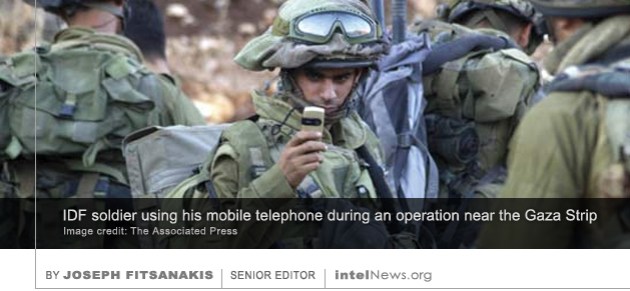 The Israel Defense Forces told a press conference on Wednesday that hackers belonging to the Palestinian militant group Hamas lured Israeli soldiers by posing as young women online. Wednesday’s press conference was led by an IDF spokesman who requested to remain anonymous, as is often the case with the Israeli military. He told reporters that the hackers used carefully crafted online profiles of real Israeli women, whose personal details and photographs were expropriated from their publicly available social media profiles. The hackers then made contact with members of the IDF and struck conversations with them that in many cases became intimate over time. At various times in the process, the hackers would send the Israeli soldiers photographs of the women, which were copied from the women’s online public profiles.
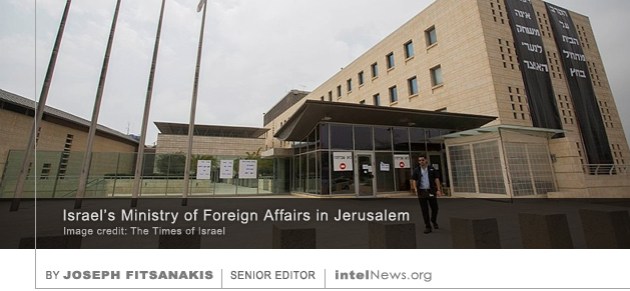 Documents accessed by a French newspaper show that American and British intelligence agencies worked together to spy on diplomats, academic researchers and defense contractors in Israel and the Palestinian territories. Last year, the German newsmagazine Der Spiegel and the American newspaper The Wall Street Journal
 A senior member of the military wing of Hamas, the Palestinian militant group that governs the Gaza Strip, is believed to have defected to Israel. News of the rumored defection first appeared on the website of Al-Hayat al-Jadida, the official newspaper of the Palestinian Authority, which is based in the West Bank. On Tuesday, Al-Hayat said that the man, a member of the Izz ad-Din al-Qassam Brigades, Hamas’ military wing, had not been seen for several days.
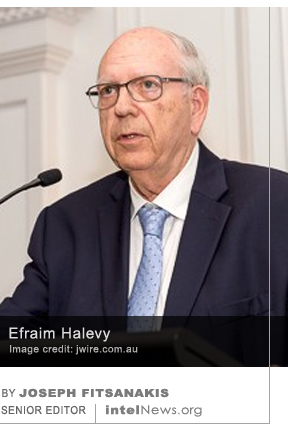 A former director of Israel’s Mossad intelligence agency has called on the Israeli government to reach out to Hamas, arguing that the Palestinian group is now ready to accept a peace settlement. Efraim Halevy directed the Mossad, Israel’s primary external intelligence agency, for five years before retiring in 2002. He is best known for helping forge a historic peace treaty between Israel and Jordan in 1994, which made the Hashemite Kingdom the second Arab country, after Egypt, to sing a peace accord with the Jewish state.
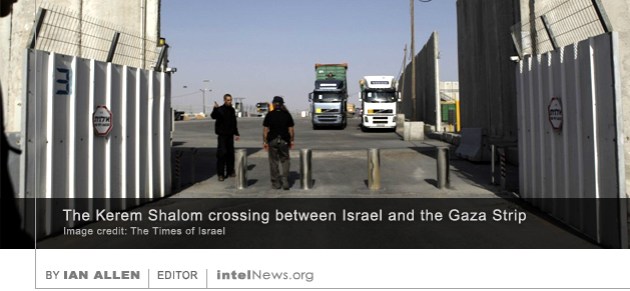
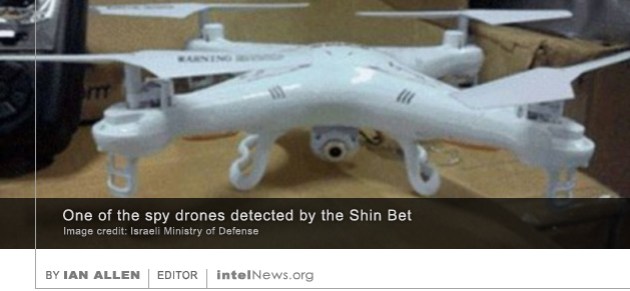 Authorities in Israel said on Sunday that they foiled a plan to smuggle dozens of spy drones from Israel into the Gaza Strip. The Israeli Ministry of Defense said in a statement late on Sunday that the drones had been detected by members of the Shin Bet, Israel’s security police. The incident reportedly took place at Kerem Shalom, a major border crossing in to Gaza, a Palestinian enclave that is controlled by Hamas. The Defense Ministry statement also said that Sunday’s incident was only the latest in a string of recent attempts to smuggle spy drones into Gaza, all of which had been stopped by the Shin Bet since January.
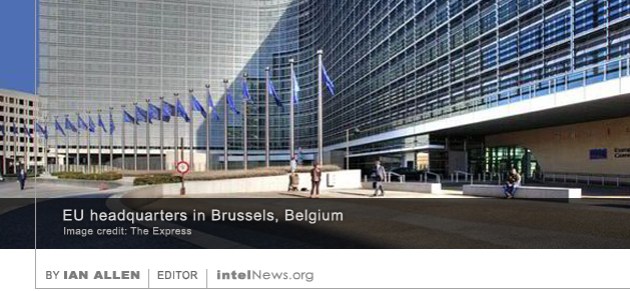 A debate on information security measures in the European Union was prompted last week after some officials voiced concerns that the proceedings of a closed-door meeting were secretly monitored by Israel. The meeting took place on January 15 as part of regular proceedings by the EU’s Political and Security Committee (PSC). The main item on the agenda was the EU’s Middle Eastern policy. According to some meeting participants, Israeli diplomats appeared to be aware of a statement discussed during the PSC meeting “in real time”, which prompted a wider debate on EU information security policies.
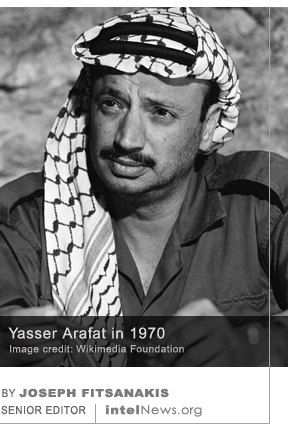 Switzerland secretly agreed in the 1970s to support calls for Palestinian statehood, in return for not being targeted by Palestinian militants, according to a new book. Written by Marcel Gyr, a journalist with the Zurich-based Neue Zürcher Zeitung, the book
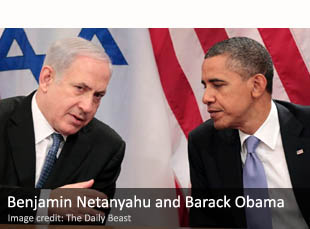









Israeli team spotted in Gaza was installing advanced surveillance system, says Hamas
November 19, 2018 by Ian Allen Leave a comment
In the ensuing political crisis, little has been said about the reason for the Israeli undercover incursion into Gaza. The IDF has refused to comment on the team’s mission, admitting only that its troops “operated […] in the Gaza Strip”. It is believed that the members of the undercover team were dressed in civilian clothes and that at least two of them were disguised as women. After entering Gaza in a civilian Volkswagen vehicle, they drove to Khan Yunis, a city in the south of the Strip, near the Egyptian border. It was there that they were discovered by the al-Qassam Brigades, who stopped them at a checkpoint, asking for identification. The Israeli team killed at least one Palestinian at the checkpoint by shooting him with a silenced gun. Following a high-speed car chase, they left via helicopter after their pursuers were killed by Israeli tank and aircraft fire. Their abandoned Volkswagen car was then blown up by an Israeli fighter jet.
Speaking on Saturday at a media conference held in Gaza City, and aired live on the Hamas-affiliated Al-Aqsa TV, Hamas’ Gaza City Deputy Chief Khalil al-Hayya claimed that the Israeli undercover incursion was significant. Had it been successful, said al-Hayya, the IDF would have “achieved a major security breakthrough” by installing a new, state-of-the-art surveillance system. Had it been able to “install the surveillance equipment”, the undercover team would have given Israel the ability “to kill, hack and abduct”, and it would have “possibly made it easy for [Israel] to discover tunnels and other” activities pursued by Hamas, according to the Palestinian side. Video footage aired by Al-Aqsa TV on Sunday showed what the television station said was remnants of “surveillance devices” left behind by the IDF undercover team. Al-Hayya finished his statement on Saturday with a warning, saying that “penetrating the security of the Gaza Strip will not be an easy task”.
► Author: Ian Allen | Date: 19 November 2018 | Permalink
Filed under Expert news and commentary on intelligence, espionage, spies and spying Tagged with covert action, Gaza Strip, Hamas, IDF, Israel, Khalil al-Hayya, News, Palestine, technical surveillance