Reuters publishes details about alleged Russian airline sabotage plot
April 7, 2025 4 Comments
 THE REUTERS NEWS AGENCY has disclosed more information about an alleged plot by Russian intelligence to detonate bombs on cargo flights from Europe to North America. Initial details of the plot emerged in October 2024, when it was reported that explosions had occurred earlier that year at shipping warehouses in England and Germany. It later emerged that a similar explosion had occurred at a third shipping warehouse, located in Poland.
It is now understood that the explosions occurred on July 19, 20 and 21, 2024, and that at least two of them took place in facilities belonging to DHL, a German logistics firm headquartered in Bonn. Affected facilities are reportedly located in Leipzig, Warsaw, and Birmingham. All three explosions were caused by rudimentary incendiary devices hidden inside commercial shipments. European officials said at the time that the explosions were part of a broader wider campaign by Russian intelligence to sabotage Western European transportation and shipping networks.
Now the Reuters news agency claims that the explosions were meant to test security systems in preparation for a major sabotage operation. The operation aimed to detonate explosive mechanisms in mid-air on cargo flights from Europe to the United States and Canada. Moreover, a fourth incendiary device, which was found at a Warsaw shipping facility, failed to explode and has been forensically examined by bomb experts, Reuters said. Citing “interviews with more than a dozen European security officials”, including a person familiar with the case in Poland, the news agency said it was able to provide “the most granular account yet of the alleged plot”.
The report claims the incendiary devices were concealed inside pillows, bottles of cosmetics, and sex toys. They were ignited with the use of remote timers taken from cheap Chinese electronic goods. Once detonated, the timers sparked explosions with the help of gelled flammable cocktails that included compounds such as nitromethane—a highly flammable liquid chemical used in industrial applications. All ingredients used in the incendiary devices, including nitromethane, are easily accessible to consumers at a relatively low cost.
According to Reuters, the procedures followed in the DHL attacks fit the profile of similar operations that have been carried out in recent years by the Main Intelligence Directorate of the Russian Forces’ General Staff, known as GRU. Such procedures include hiring disposable agents, most of which are not Russian citizens, for one-off operations. In the case of the DHL attacks, the agents were allegedly hired on the encrypted messaging platform Telegram and paid with the use of cryptocurrencies, or in cash.
Among the alleged suspects in the case is a Ukrainian man identified by Reuters as Vladyslav Dekravets, who was recruited in southern Poland and is now facing extradition to Poland from Bosnia. Another suspect, identified in the Reuters report as Alexander Bezrukavyi, allegedly packaged parcels containing sneaker shoes for shipment to the United States and Canada. The shipments were intended to help the GRU “gather information about parcel-processing methods and timing”. During the operation, the two men came in contact with individuals who appeared to be GRU officers, using the cryptonyms WARRIOR and MARY.
The DHL cases remain at a pre-trial stage in several European countries, Reuters said. They involve the pending extradition of suspects from elsewhere in Europe. The trials are going to feature evidence gathered from criminal investigators and intelligence agencies, according to the report.
► Author: Joseph Fitsanakis | Date: 07 April 2025 | Permalink
 AT LEAST FOUR OF the eight Russians
 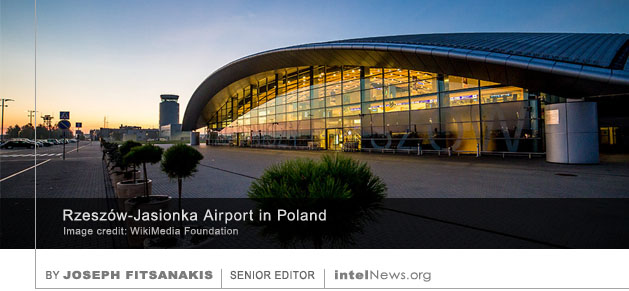 AUTHORITIES IN GERMANY and Poland have charged three individuals with working on behalf of Russian military intelligence in planning acts of sabotage and assassination on European soil. One of the plots allegedly involved an effort to assassinate Ukrainian President Volodymyr Zelenskyy. Another aimed to sabotage commercial airport facilities that are being managed by the United States military.
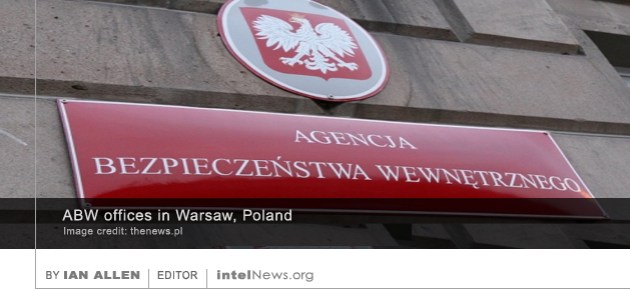 DURING THE COLD WAR, Poland hosted the Eastern Bloc’s only known intelligence training facility for operations officers situated outside of the Soviet Union. The highly secretive training facility operated out of a heavily guarded compound located near the northern Polish village of Stare Kiejkuty in Gmina Szczytno county, approximately 65 miles from the Polish-Soviet border. Today, 50 years after its establishment, the facility continues to train the operations officers of post-communist Poland’s intelligence services.
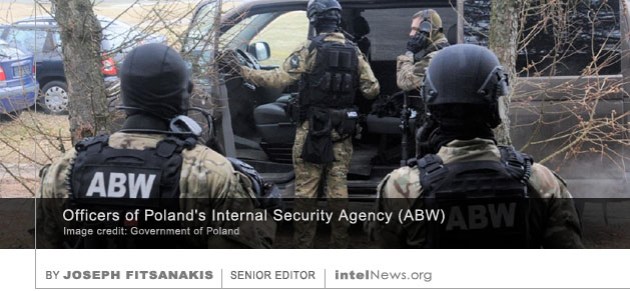
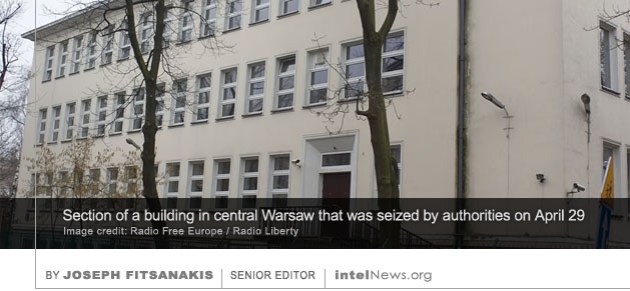 AUTHORITIES IN POLAND HAVE seized an abandoned school building in the Polish capital Warsaw, allegedly because it was being used as a base for espionage activities by the Russian government. Following the seizure of the building complex, Russian officials issued stern but vague warnings, saying that action will be taken in response to what they termed as an “act of provocation” by the Polish government.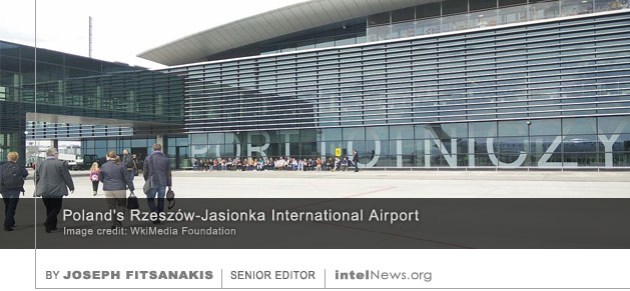
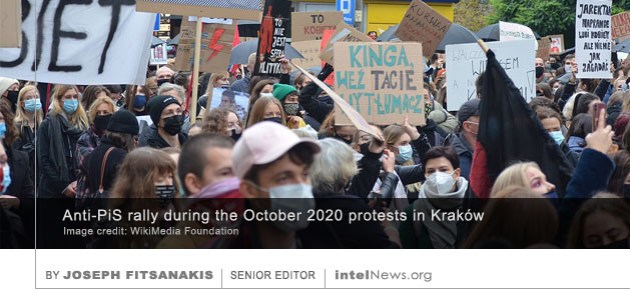 CENTRAL FIGURES OF POLAND’S opposition coalition, which narrowly lost the 2019 parliamentary election, had their cell phones hacked with a surveillance software used by the country’s spy services, according to a new report. A major target of the hacks was Krzysztof Brejza, a member of the lower chamber of the Polish parliament and campaign director of the Civic Coalition, a centrist-liberal alliance. In the parliamentary election of 2019, the Civic Coalition challenged the all-powerful Law and Justice Party (PiS), which has ruled Poland for much of the past decade.
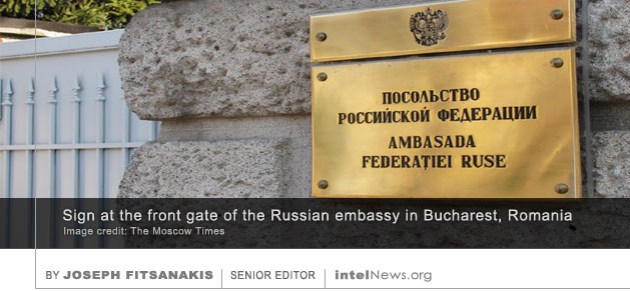 SEVERAL EASTERN EUROPEAN STATES announced plans to expel Russian diplomats this week, as Moscow declared an Italian diplomat persona non grata in a tit-for-tat dispute with Rome over espionage allegations. Earlier this month, the Czech Republic
  Military forces around the world are scrambling to contain the impact of COVID-19 on military readiness, as the virus continues to infect troops and commanders at an alarming rate. On Tuesday, the Polish government
  The Polish government has authorized the release on bail of a former counterintelligence officer who was charged in January of this year with spying for China. The man has been identified in media reports as Piotr Durbajlo and is believed to have served as deputy director of the Internal Security Agency, Poland’s domestic counterintelligence service. A cyber security expert, Durbajlo also served in Poland’s Office of Electronic Communications with a top security clearance and unrestricted access to classified systems of Poland and the North Atlantic Treaty Organization, of which Poland is a member.
 The Chinese telecommunications giant Huawei has fired one of its employees who was arrested last week in Poland on charges of spying for China,
  Authorities in Poland have charged three high-level military intelligence officials with acting in the interests of Russia. The three include two former directors of Polish military intelligence and are facing sentences of up to 10 years in prison. The news broke on December 6, when Polish authorities announced the arrest of Piotr Pytel, who was director of Poland’s Military Counterintelligence Service (SKW) from 2014 to 2015. It soon emerged that two more arrests had taken place, that of Pytel’s predecessor, Janusz Nosek, and Krzysztof Dusza, Pytel’s chief of staff during his tenure as SKW director.






 intelNews.org
Poland to probe alleged ties between Jeffrey Epstein and Russian intelligence
February 6, 2026 by Ian Allen 4 Comments
THE GOVERNMENT OF POLAND has announced plans to launch an investigation into the possibility that an international sex trafficking ring set up by the late financier and sex offender Jeffrey Epstein was a “honey trap” set up by Russian intelligence to entrap “the elites of the Western world,” according to Poland’s Prime Minister Donald Tusk.
Tusk announced the commencement of what he referred to as a “special investigation” at a press conference on Wednesday, following a senior-level government meeting. He told reporters that the investigation would be led by members of the Office of the Prime Minister in association with the Ministry of Justice and the Polish intelligence services.
In 2008 a Florida court convicted Epstein—a jet-setting financier with links to hundreds of prominent individuals in finance, politics, industry, and academia—for sex offences. The disgraced financier was found dead in his jail cell in 2019. Prosecutors in the United States say they have identified over 100 victims of Epstein’s sex-trafficking ring, but some estimates claim that as many as 1,000 other victims have yet to come forward.
At last week’s press conference, a stern-looking Tusk pointed to Epstein’s large fortune, describing it as “unexplained” and adding that it raised important questions about the late financier’s links with state actors. He reminded his audience that “a growing number of commentators and experts assume that it is highly probable that this pedophilia scandal was a premeditated operation by the Russian KGB”—a term still frequently used in Eastern European countries to refer to the post-Soviet intelligence community.
The operation may have been a “so-called ‘honey trap’, a sweet bait, a trap set for the elites of the Western world, primarily the United States,” Tusk said. The Polish prime minister then added: “I don’t need to tell you how serious the increasingly likely possibility that Russian intelligence services co-organized this operation is.” Among other things, it could “mean that they also possess compromising materials against many leaders still active today.” He added that investigators would systematically review and assess “every document currently available in the public domain.”
In a social media post later that day, Russian businessman Kirill Dimitriev, who last year was appointed by Russian President Vladimir Putin as Russia’s special presidential envoy on foreign investment and economic cooperation, dismissed the Polish government’s move. According to Dimitriev, all allegations about connections between Epstein and Russian intelligence are “lies” spread by “leftist elites.”
► Author: Ian Allen | Date: 06 February | Permalink
Filed under Expert news and commentary on intelligence, espionage, spies and spying Tagged with Donald Tusk, espionage, honey traps, Jeffrey Epstein, News, Poland, Russia