Australia fears Asia backlash over PRISM surveillance revelations
June 26, 2013 8 Comments
 By JOSEPH FITSANAKIS | intelNews.org |
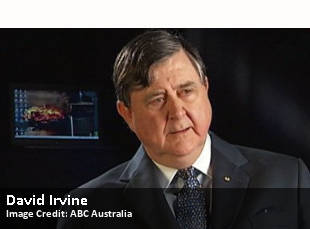
The government of Australia is concerned that American whistleblower Edward Snowden may leak classified information that could damage Australia’s relations with its Asian neighbors, including China and Malaysia. Early this month, Snowden, a former technical assistant for the United States Central Intelligence Agency (CIA), disclosed the existence of PRISM, a clandestine electronic surveillance program operated by the US National Security Agency (NSA). Information provided by Snowden to British newspaper The Guardian suggests that Washington routinely shares PRISM intelligence with Canada, New Zealand, the United Kingdom and Australia. These four countries, along with the United States, are signatories to the so-called UKUSA agreement, a multilateral accord for cooperation in signals intelligence (SIGINT) collection, which was established secretly in 1946. Australian media reported on Wednesday that the Australian Parliament’s Joint Committee on Intelligence and Security had been briefed by senior intelligence officials on Australia’s role in PRISM. The Sydney Morning Herald said that David Irvine, Director of the Australian Security Intelligence Organisation, and Ian McKenzie, who heads Australia’s Defence Signals Directorate, were among those who briefed the parliamentary Committee. Its members were reportedly told that the disclosures about PRISM were likely to damage Canberra’s relations with several Asian countries, in ways that are difficult to predict. One unidentified Australian intelligence official told The Herald that Snowden had “very wide access” to classified information held by the NSA, and that some of it probably includes “much detail of communications intelligence cooperation between the US and Australia”. One source went as far as to say that Snowden’s disclosures have already “damaged […] Australia’s intelligence capabilities”. Read more of this post








 intelNews.org
Snowden leaks reveal GCHQ’s reliance on NSA money, data
August 6, 2013 by Joseph Fitsanakis 4 Comments
Information provided by American defector and former intelligence insider Edward Snowden shows that Britain’s signals intelligence agency is very much the junior partner in an uneven relationship with its American counterpart. Snowden, a former computer expert for the Central Intelligence Agency (CIA) and the National Security Agency (NSA), has been given political asylum in Russia. In June, he revealed a number of enormous intelligence-collection programs, including PRISM and TEMPORA. The latter is administered by the General Communications Headquarters (GCHQ), Britain’s signals intelligence organization. The program enables the agency to access communications traffic carried through fiber optic cables worldwide. But GCHQ also receives data from PRISM, a massive electronic surveillance program operated by the NSA, which provides access to millions of email and online chat exchanges facilitated by some of the world’s foremost Internet service providers. Because of these arrangements, GCHQ’s access to electronic data increased by 7,000 percent between 2008 and 2012, according to an internal GCHQ document provided to The Guardian newspaper by Snowden. The agency’s immense access to information has propelled it to a leading role within Britain’s intelligence establishment. It currently receives over half of Britain’s £1.9 billion annual intelligence budget, while its employee size is more than twice that of Britain’s domestic (MI5) and external (MI6) intelligence agencies combined. Its headquarters, the so-called “doughnut building” in Cheltenham, Gloucestershire, was Europe’s largest single construction project when it was being built in the early 2000s. But the documents provided by Snowden show that, despite its considerable wealth and access to resources, GCHQ’s intelligence planners are deeply concerned about “being left behind by technology” in the fiber optic age. One internal report highlights “the pressure on the agency to deliver” and warns that “the complexity of [GCHQ’s] mission has evolved to the point where existing mission management capability is no longer fit for purpose”. Read more of this post
Filed under Expert news and commentary on intelligence, espionage, spies and spying Tagged with AUSCANZUKUS, cellular telephony, Edward Snowden, GCHQ, News, NSA, PRISM surveillance program, Project TEMPORA, SIGINT, UK, UKUSA, USA