Russia accuses UK of deliberately delaying visas for its diplomats in London
October 24, 2016 Leave a comment
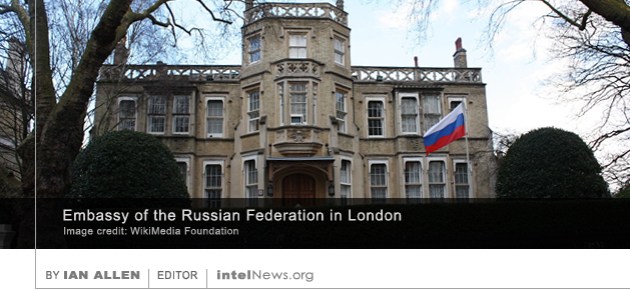 Russia’s ambassador to the United Kingdom has accused the British Foreign Office of deliberately delaying the issuance of visas for its diplomatic officials who have been assigned to join the Russian embassy in London. Alexander Yakovenko, Russia’s former Deputy Minister of Foreign Affairs, who has been heading the Russian embassy in London since 2011, said last week that the size of his staff was “shrinking” to unprecedented numbers. The reason, said Yakovenko, was that the government in London appeared to be following a systematic policy of delaying visa requests for Russian diplomats assigned to serve in London.
“As our people return home or go on to other postings, visas for their replacements are not being issued”, said Yakovenko. Consequently, the Russian embassy’s personnel numbers were shrinking, and would shrink even further unless the issue was resolved by Whitehall, he said. The Russian ambassador added that his embassy did not understand “the strategy of this country on visa issues”, implying that London was following a deliberate plan to prevent Russian diplomats from staffing the embassy. But the British Foreign Office responded on Saturday that it was not following a deliberate policy of delaying the issuance of visas for Russian diplomats. The BBC quoted a Foreign Office spokesman who said that the British government had “made it clear to the Russians that the queues [for visa issuances] need to be cleared on both sides”. The comment implies that London’s stance may be a response to efforts by Moscow to reduce the size of the British diplomatic core stationed in the Russian capital.
Bilateral relations between Britain and Russia have suffered since 2006, when the murder of former Russian intelligence officer Alexander Litvinenko in London prompted Whitehall to expel four Russian diplomats stationed there. The Russian involvement in Ukraine and Syria has further strained relations between Moscow and London in recent years. In August of 2015, the Russian Embassy accused the British government of “effectively expelling” four of its diplomats from London by refusing to grant them visas for more than three months.
► Author: Ian Allen | Date: 24 October 2016 | Permalink
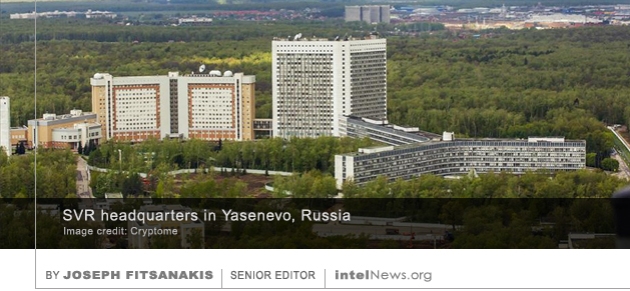 Last week, following the results of Russia’s parliamentary election, Russian media run a story suggesting that the Kremlin is planning to implement far-reaching changes to the country’s intelligence apparatus.
 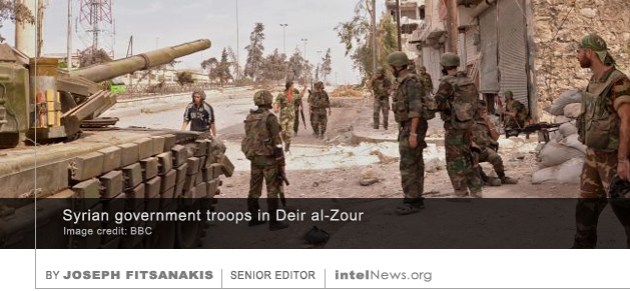 A cease-fire that was launched with much fanfare by the United States and Russia last week appeared in tatters on Sunday night, after Washington acknowledged it mistakenly killed over 60 Syrian troops on Saturday. American officials expressed regret for the alleged error, but Syrian and Russian officials accused Washington of deliberately sabotaging the cease-fire agreement. Russian sources
 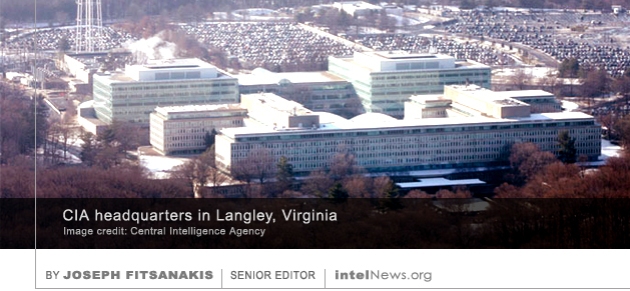 American intelligence agencies are diverting counterterrorist resources to Russian accounts, prompting some commentators to describe the move as the greatest expansion of spy operations against Russia since the Cold War. In a leading
 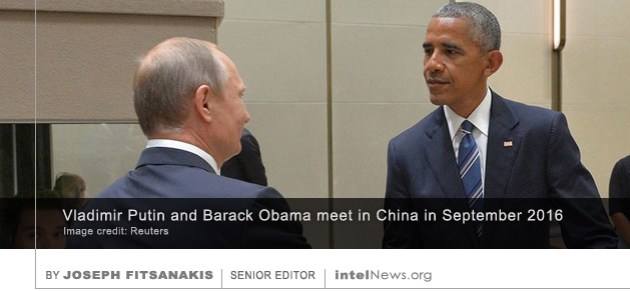 The Federal Bureau of Investigation is among several intelligence agencies in the United States that have expressed concerns about an alleged Russian campaign to destabilize November’s presidential elections. The Washington Post, which
 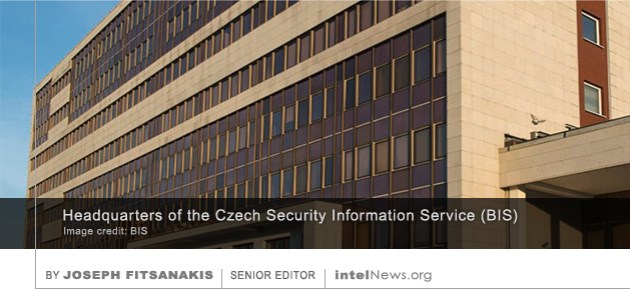 The intelligence agency of the Czech Republic has accused Russian spy services of waging a “war of information” aimed at destabilizing the eastern European country. The agency has also warned that Russia continues to maintain a large intelligence presence in the Czech Republic, 25 years after the country, which was formerly known as Czechoslovakia, exited the Soviet sphere of influence and joined the European Union (EU) and the North Atlantic Treaty Organization (NATO).
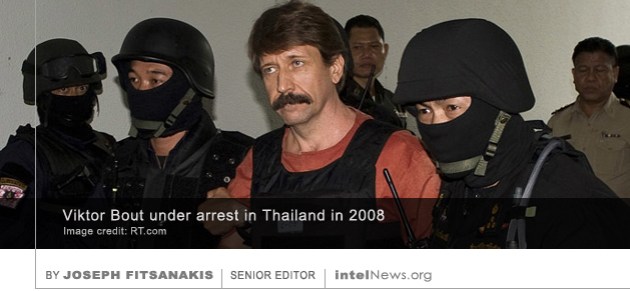 The wife of Viktor Bout, the imprisoned Russian arms dealer dubbed ‘the merchant of death’, said he rejected an offer by his American captors who asked him to testify against a senior Russian government official. Born in Soviet Tajikistan, Bout was a former translator for the Soviet military. After the end of the Cold War, he set up several low-profile international air transport companies and used them to transfer large shipments of weapons that fueled wars in Africa, Asia, Latin America and Europe. He made millions in the process and acquired international notoriety, which inspired the Hollywood blockbuster Lord of War. But his business ventures ceased in 2008, when he was
 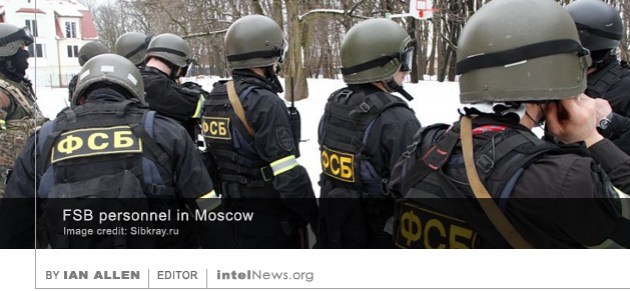 According to the predominant media narrative, the United States is constantly defending itself against cyber-attacks from countries like China and Russia. But, as intelNews has
  Russian and Turkish authorities will not confirm or deny reports that the Kremlin warned Turkey’s intelligence services about an impending coup on July 15, several hours before tanks appeared on the streets of major Turkish cities. On Wednesday, several
  American Scientists’ Secrecy News blog, has
 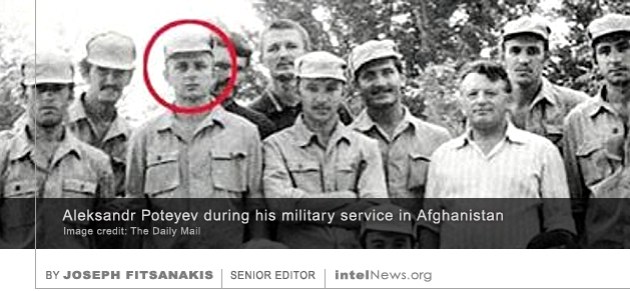 A Russian former senior intelligence officer, who reportedly defected to the United States after helping the Federal Bureau of Investigation arrest 10 Russian spies in 2010, is believed to have died. The arrests, which revealed the so-called “Russian illegals program” in the US, were part of a counterintelligence operation codenamed GHOST STORIES by the FBI. The operation culminated in June 2010 with the
 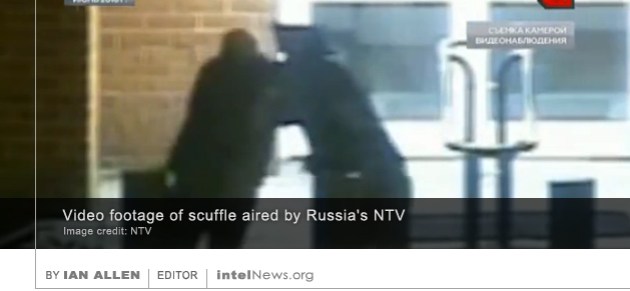 A Russian television station has aired footage allegedly showing a Russian guard stationed outside the United States embassy in Moscow trying to stop an American diplomat from entering the embassy. The Kremlin claims that the alleged US diplomat was in fact a Central Intelligence Agency officer who was returning to the embassy in disguise following a spy operation. As intelNews
 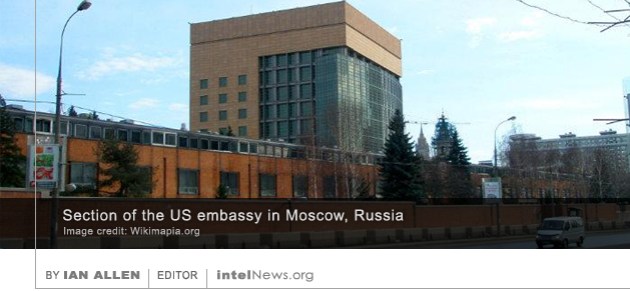 A notable increase in incidents of harassment of American diplomats stationed in Europe by Russian intelligence personnel appears to be part of what some officials describe as an escalating “gray war” between the US and Russia. For over a year now, American State Department personnel stationed in Europe have been complaining of a systematic campaign of “harassment and intimidation” against them and their families by Russian intelligence operatives. The campaign is allegedly being waged in Moscow and other European capitals, and has prompted one US diplomat to say that he and his colleagues were “feeling embattled out there in the embassy”. The Washington Post, which published the






 intelNews.org
Mystery death of Putin’s ex-adviser in DC was accident, say US authorities
October 31, 2016 by Joseph Fitsanakis 1 Comment
Lesin became famous in Russia soon after the collapse of the communist system, when he founded Video International, an advertising and public-relations agency that was hired by Russian President Boris Yeltsin in 1995 to run his reelection campaign. Yeltsin’s electoral success was partly attributed to the well-tailored media message projected by Lesin’s company. The media magnate was rewarded by Yeltsin, who offered him influential government posts, including that of director of Russia’s state-owned news agency Novosti. Meanwhile, Lesin became a media personality and frequently gave interviews espousing a free-enterprise model for the Russian media industry. But soon after Vladimir Putin’s ascendance to the presidency, Lesin saw the writing on the wall and began advocating for increased government regulation of media and telecommunications conglomerates. In 1999, Putin made him Minister of Press, Broadcasting and Mass Communications, a post he held for nearly six years, until 2004. In 2006, Lesin was awarded the Order for Merit to the Fatherland, one of the most prestigious civilian decorations in Russia.
But in late 2009, Putin abruptly fired Lesin from his post in the Kremlin’s Media Advisory Commission, allegedly because the media mogul had developed close contacts with Russian organized crime. Lesin’s ties with Putin’s inner circle were further strained in 2014, when he resigned from his position as head of Gazprom Media, after he clashed with pro-Putin executives on the board. Last November, when Lesin’s body was found in his hotel room by a member of the staff, some suggested that he may have been killed by the Kremlin. But On Friday, the Metropolitan Police Department of Washington, DC, in cooperation with the US Attorney’s Office for the District of Columbia, said that Lesin’s death had been the result of injuries “induced by falls”, which came after “days of excessive consumption of alcohol”. The two agencies said that the Federal Bureau of Investigation, which had assisted in the investigation into Lesin’s death, concurred with the results. Consequently, the investigation is now closed, they said. The Kremlin, the Russian embassy in Washington, and the FBI, have not commented on the case.
► Author: Joseph Fitsanakis | Date: 31 October 2016 | Permalink
Filed under Expert news and commentary on intelligence, espionage, spies and spying Tagged with Mikhail Lesin, News, Russia, suspicious deaths, United States, Washington DC