Russia ‘mobilizing for war’ warns Canadian intelligence report
June 16, 2016 8 Comments
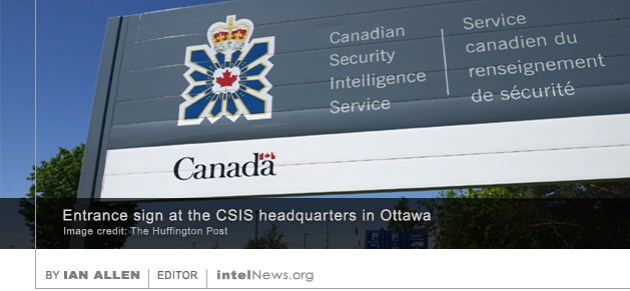 A report by Canada’s primary intelligence agency warns in stark language that Russia is “retooling its military for a fight” and appears to be “mobilizing for war”. The classified report was accessed by the Canadian Broadcasting Corporation (CBC), the country’s state-owned broadcaster. According to the CBC, the document was produced by the Canadian Security Intelligence Service (CSIS), Canada’s primary national intelligence service. It is titled 2018 Security Outlook and is described by the CBC as a “distillation” of information from open sources and publicly available academic research, without input from internal CSIS assessments.
The 104-page report contends that, in the absence of any serious opposition inside Russia, the hardline nationalistic policies of Russian President Vladimir Putin are going unchallenged and becoming “more deeply entrenched”. When assessed collectively, Putin’s maneuvers in the area of national defense reveal that he is “retooling [the Russian] military for a fight”, claims the CSIS report. It goes on to add that Moscow “is not modernizing its military primarily to extend its capacity to pursue hybrid warfare”. The term ‘hybrid warfare’ is used by some experts to describe Russia’s utilization of irregular military tactics during its invasion and annexation of Crimea in 2014, and many believe that it points to the future evolution of Russian military thinking. But the CSIS document argues that President Putin is primarily modernizing Russian “conventional military capability on a large scale” and argues that “the state is mobilizing for war”.
The CSIS report is believed to be among several reasons why Ottawa is considering contributing hundreds of troops to a new 4,000-strong North Atlantic Treaty Organization (NATO) force that is expected to be stationed in the Baltic States in the coming months. The Canadian intelligence agency argues in favor of a more aggressive NATO policy vis-à-vis Russia in its report, stating that the economic sanctions imposed by the West on Moscow after the annexation of Crimea are not working. Instead of faltering due to outside economic pressures, the Kremlin “appears to be coherent, durable and united”, says CSIS. Consequently, “Western assessments that Russia is vulnerable to economic collapse and disruptive internal discontent are exaggerated”, according to the report. The document concludes that Russia is “adapting to diversity [by] deliberately tilting [its economy] to security, rather than economic freedom”.
► Author: Ian Allen | Date: 16 June 2016 | Permalink
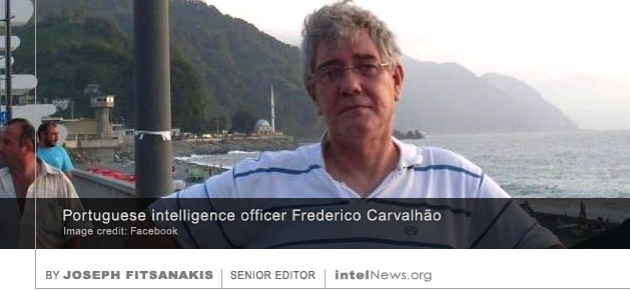 A Portuguese intelligence officer arrested a week ago in Rome, allegedly while passing classified documents to his Russian handler, may have accomplices with access to North Atlantic Treaty Organization (NATO) secrets. IntelNews
 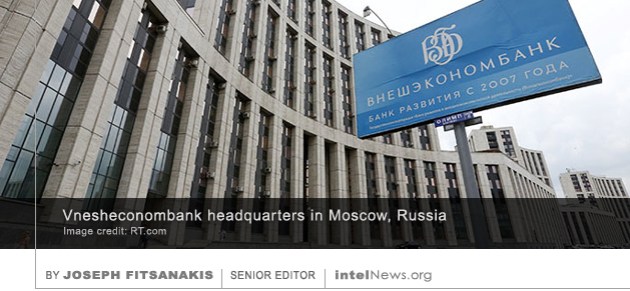 A Russian intelligence officer, who posed as a banker in the United States, has been handed a prison sentence by a court in New York. Evgeny Buryakov, 41, posed as an employee of the New York branch of Vnesheconombank, a Russian state-owned bank headquartered in Moscow. However, in January 2015, the Federal Bureau of Investigation
 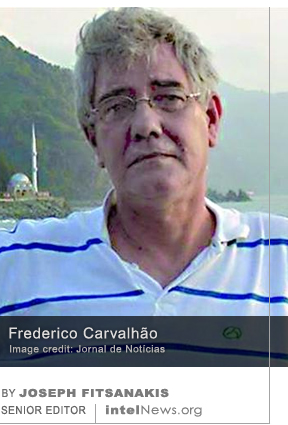 Two intelligence officers, one Russian and one Portuguese, have been arrested by Italian authorities on charges of espionage. The arrests took place in Rome on Monday by Italian police, who were reportedly accompanied by Portuguese counterintelligence officers. It is suggested in Portuguese media that the two men were arrested in the act of exchanging classified documents and money. The Portuguese intelligence officer has been identified in
 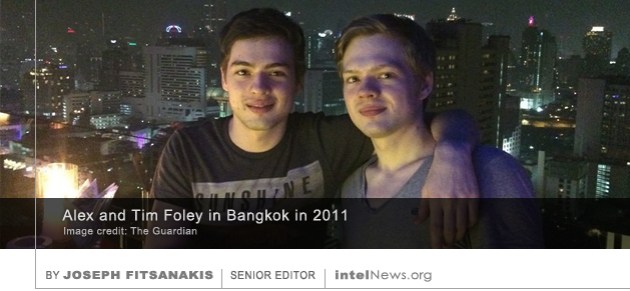 The two sons of a Russian couple, who were among 10 deep-cover spies arrested in the United States, have given an interview about their experience for the first time. Tim and Alex Foley (now Vavilov) are the sons of Donald Heathfield and Tracey Foley, a married couple arrested in 2010 under Operation GHOST STORIES, a counterintelligence program run by the US Federal Bureau of Investigation. Following their arrest, their sons, who had grown up thinking their parents were Canadian, were told that they were in fact Russian citizens and that their real names were Andrei Bezrukov and Elena Vavilova. Their English-sounding names and Canadian passports had been
  The Russian government says it has arrested a senior Ukrainian intelligence officer, who was allegedly trained by the United States Central Intelligence Agency and tasked with infiltrating the Russian secret services. In a
 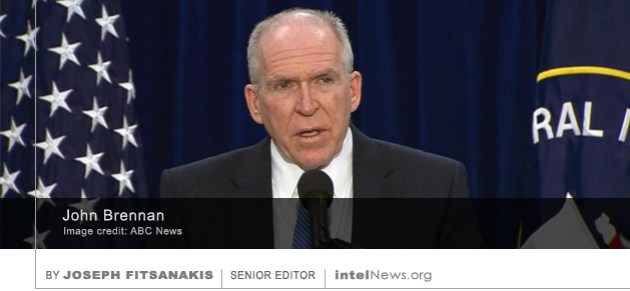 Russia is being “very aggressive” toward the United States, but cooperation on counter-terrorism between Moscow and Washington is “highly active” despite the differences between them, according to the director of the United States Central Intelligence Agency. John Brennan, a longtime CIA career officer, who has led the Agency for nearly three years,
  Syrian and American media are reporting that Russian engineers, employed by a Moscow-based contractor with close ties to Russian President Vladimir Putin, are working at a Syrian gas plant under the control of the Islamic State. The facility in question is the so-called Tuweinan gas plant, which is located in central Syria, approximately 60 miles (40 kilometers) southwest of the city of Raqqa. The Islamic State declared Raqqa its capital shortly after occupying it, in June 2013, and the city has since served as the militant group’s administrative headquarters. The nearby Tuweinan gas plant is believed to be the largest of its kind in Syria. In 2013, it was occupied by an alliance of factions operating under the banner of the Al-Nusra Front, the primary al-Qaeda affiliate in Syria. But in early 2014, Islamic State forces took control of the plant following a military offensive against Al-Nusra.
 A Russian former intelligence officer, who is accused by the British government of having killed another Russian former spy in London, said the British intelligence services tried to recruit him in 2006. British government prosecutors have charged Andrei Lugovoi with the killing of Alexander Litvinenko, a former employee of the Soviet KGB and one of its successor agencies, the FSB. In 2006, Litvinenko died in London, where he had defected with his family in 2000, following exposure to the highly radioactive substance Polonium-210. In July of 2007, the British government charged Lugovoi and another Russian, Dmitri Kovtun, with the murder of Litvinenko, and expelled four Russian diplomats from London. Last week, following the conclusion of an official inquest into the former KGB spy’s death, the British government took the unusual step of summoning the Russian ambassador to London, to file an official complaint about Moscow’s refusal to extradite Lugovoi and Kovtun to the United Kingdom.
 The British government has taken the unusual step of summoning the Russian ambassador to London, following the conclusion of an official inquest into the death of a former KGB officer who is believed to have been killed on the orders of Moscow. Alexander Litvinenko, an employee of the Soviet KGB and one of its successor organizations, the FSB, defected with his family to the United Kingdom in 2000. But in 2006, he died of radioactive poisoning after meeting two former KGB/FSB colleagues, Dmitri Kovtun and Andrey Lugovoy, in London. A public inquiry into the death of Litvinenko, ordered by the British state,
 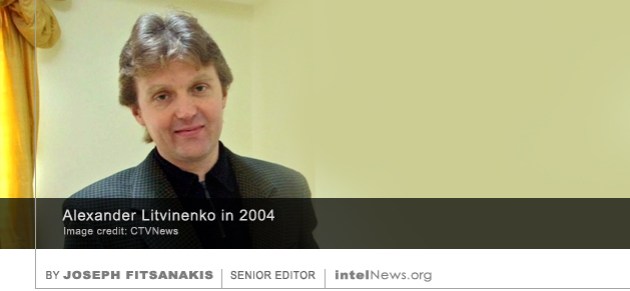 The long-awaited concluding report of a public inquiry into the death of a former Soviet spy in London in 2006, is expected to finger the Russian state as the perpetrator of the murder. Alexander Litvinenko was an employee of the Soviet KGB and one of its successor organizations, the FSB, until 2000, when he defected with his family to the United Kingdom. He soon became known as a vocal critic of the administration of Russian President Vladimir Putin. In 2006, Litvinenko came down with radioactive poisoning after meeting two former KGB/FSB colleagues, Dmitri Kovtun and Andrey Lugovoy, at a London restaurant. In July of 2007, after establishing the cause of Litvinenko’s death, which is attributed to the highly radioactive substance Polonium-210, the British government officially charged the two Russians with murder and issued international warrants for their arrest. Whitehall also announced the expulsion of four Russian diplomats from London. The episode, which was the first public expulsion of Russian envoys from Britain since end of the Cold War, is often cited as marking the beginning of the worsening of relations between the West and post-Soviet Russia.
 Russia’s official envoy to Afghanistan has said that Moscow is now working with the Afghan Taliban in order to stop the growth of the Islamic State in the region. Many Taliban fighters are direct descendants of the Afghan and Pakistani Pashtuns who fought the Soviet Red Army in the 1980s, when the USSR invaded Afghanistan and fought a bloody decade-long war there. But the militant group, which today continues to control much of Afghanistan, despite a prolonged American-led military effort to defeat it, is now being challenged by the Islamic State. Known also as the Islamic State in Iraq and Syria (ISIS), the group enjoys growing popularity in Afghanistan, and some tribal warlords have already declared their allegiance to it. In contrast, the leadership of the Taliban has rejected the legitimacy of ISIS and refused to recognize its leader, Abu Bakr al-Baghdadi, as the caliph of all Sunni Muslims. According to Sunni doctrine, a caliph is the recognized political and religious successor to Muhammad, Islam’s prophet, and thus commands the Muslim ummah, or community.
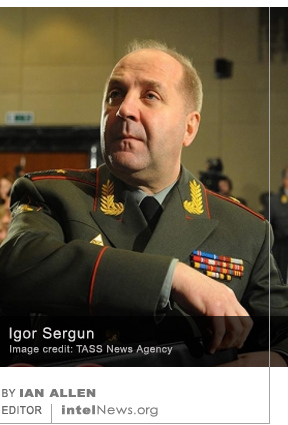 The director of Russia’s powerful military intelligence agency has died unexpectedly at 58, according to the Kremlin, which has yet to release precise information about the circumstances of his death. General Igor Sergun had led the Main Intelligence Directorate, known as GRU, since 2011, when he replaced his predecessor, Colonel General Aleksandr Shlyakhturov, in a Kremlin-instigated reshuffle. The Russian government
 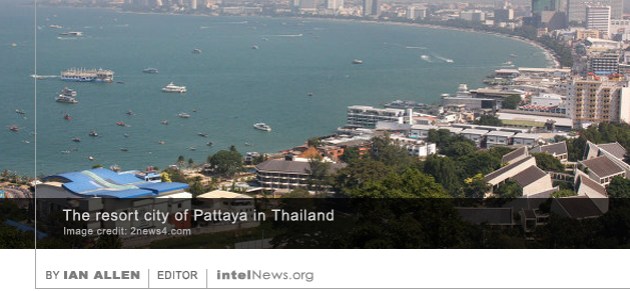 Russian intelligence officials have warned authorities in Thailand that the Islamic State is planning to strike at Russian targets in the Southeast Asian country. Thai authorities received the warning in a memorandum dated November 27, 2015, which came from the Russian Federal Security Service (FSB). The document, marked ‘urgent’, warned of a series of coordinated attacks against Russian-related businesses and facilities in several cities across Thailand. Several Thai news sites, as well as CNN in the United States,






 intelNews.org
Islamic State’s online army is a Russian front, says German intelligence
June 20, 2016 by Ian Allen 1 Comment
Since its inception, the Cyber Caliphate has claimed responsibility for hacking a number of European government agencies and private media outlets. Its targets include the BBC and French television channel TV5 Monde, which was severely impacted by cyber sabotage in April of 2015. The Cyber Caliphate said it was also behind attacks on the servers of the United States Federal Bureau of Investigation, the Department of Defense, and the website of the Pentagon’s US Central Command. The US has since retaliated, both with cyber attacks and physical strikes. One such strike resulted in the killing of Junaid Hussain, a British hacker of Pakistani background, who was said to be among the Cyber Caliphate’s senior commanders. Hussain, 21, was reportedly killed in August 2015 in Raqqa, the Islamic State’s de facto capital in Syria, reportedly after clicking on a compromised link in an email, which gave away his physical whereabouts.
Now, however, a German intelligence report claims that the Cyber Caliphate is not associated with the Islamic State, but is rather a fictitious front group created by Russia. According to German newsmagazine Der Spiegel, which said it had seen the classified report, German authorities suggest that the Cyber Caliphate is in fact a project of APT28 (also known as ‘Pawn Storm’), a notorious Russian hacking collective with close ties to Russian intelligence. The German intelligence report echoes previous assessments by French authorities, which in 2015 stated that the TV5 Monde cyber attack was a false flag operation orchestrated by APT28. Also in 2015, a security report by the US State Department concluded that despite the Cyber Caliphate’s proclamations of connections to the Islamic State, there were “no indications —technical or otherwise— that the groups are tied”.
► Author: Ian Allen | Date: 20 June 2016 | Permalink
Filed under Expert news and commentary on intelligence, espionage, spies and spying Tagged with computer hacking, Cyber Caliphate, false flag operations, Islamic State, Junaid Hussain, News, Russia