Analysis: Russian-Czech spy scandals show new direction in Russian espionage

ÚZSI seal

ÚZSI seal

By JOSEPH FITSANAKIS | intelNews.org |
Last July saw the resignations of three Czech Generals, including the head of the president’s military office and the country’s representative to NATO, following revelations that one of their senior staffers had a relationship with a Russian spy.  Intelligence observers have become accustomed to frequent reports of Russian-Czech spy scandals in recent years. But, according to reports from Prague, recent Russian intelligence activity in the Czech Republic may indicate a change of direction by Moscow. Some say that Russia’s new espionage doctrine focuses less on military intelligence in the post-US-missile-shield strategic environment, and more on political and economic espionage. To be sure, Russia’s intelligence presence in the Czech capital remains substantial: Czech counterintelligence sources estimate that at least 60 –that is, one in three– Russian diplomats in Prague are engaged in intelligence-related activities. But the intensity of Russian espionage in Prague is not unique. Read more of this post
Swapped spy says he is not Russian, wants to move to Peru

Mikhail Vasenkov

Mikhail Vasenkov

By IAN ALLEN | intelNews.org |
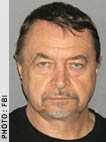
One of the 11 Russian spies arrested in the US in June, and later swapped with CIA assets held in Russian prisons, claims he is not Russian, speaks no Russian, and wants to move to Peru, where he lived in the 1970s. Juan Lazaro was arrested by the FBI on June 27, along with 9 other (and later one more) Russian deep-cover operatives, who had lived in the United States under false identities for up to three decades. Lazaro, who lived in Yonkers, New York, had a doctorate in Political Science, worked as an adjunct professor, and was married to Peruvian-born journalist Vicky Pelaez. But FBI investigators unmasked Lazaro’s real name, which is Mikhail Vasenkov, before deporting him and his wife, who is also accused of working for the Russian secret services, to Moscow. According to FBI records, Vasenkov assumed the Juan Lazaro identity and ‘legend’ (biographical narrative and supporting documentation for intelligence purposes) while living in Latin America in the 1970s, using the papers of the real Juan Lazaro, an Uruguayan child who died at age 3. But now Vasenkov’s American lawyer, Genesis Peduto, claims her client is not from Russia, speaks no Russian, but is in fact the real Juan Lazaro, and wishes to leave Russia for Peru. Read more of this post

News you may have missed #408

  • Russian military spy supervised Czech prisons. Robert Rakhardzho, a Russian spy whose relationship with a Czech female Army major prompted the resignation of three senior Czech military officials, worked as a psychologist at the Czech Prison Service headquarters until last September. Rakhardzho is now hiding in Russia.
  • US undercover feds able to easily obtain fraudulent passports. Gregory Kutz, an investigator for the US Government Accountability Office, testified last week to a Senate panel about how his team of undercover Federal agents was able to get the State Department to issue five of the seven e-Passports it requested using fraudulent information. The government apparently failed to detect such basic red flags as a fake driver’s license.
  • Russia widens powers of KGB successor agency. Russian president Dmitry Medvedev has signed a law widening (again) the powers of the Federal Security Service, the KGB’s main successor agency. The new law allows the FSB to issue warnings to people suspected of preparing to commit “crimes against Russia’s security”. Perpetrators face fines or up to 15 days detention.

Bookmark and Share

News you may have missed #407

Bookmark and Share

Comment: Is Lebanon Using US Assistance to Capture Israeli Agents?

Lebanon

Lebanon

By JOSEPH FITSANAKIS | intelNews.org |
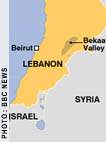
A minor revolution has been taking place in Lebanon over the past 16 months. Since April of 2009, Lebanese authorities have arrested nearly 100 individuals on charges of spying for Israel, three of whom have been sentenced to death. Judging by numbers alone, this may be one of the most astonishing coups in the annals of counterintelligence. There are several reasons why this is happening.

Read more of this post

News you may have missed #402

Bookmark and Share

Did fugitive spy Metsos lead to Russian spy arrests?

Christopher Metsos

C.R. Metsos

By JOSEPH FITSANAKIS | intelNews.org |
Soon after the June 27 arrests of 10 Russian non-official-cover (NOC) spies in several US cities, one name came to the attention of intelligence observers: Sergei Tretyakov. Tretyakov was a senior Russian Foreign Intelligence Service (SVR) officer who defected to the US in 2000, while second-in-command at the SVR station in Russia’s United Nations mission in New York –the same outfit that run the deep-cover operatives arrested in June by the FBI. The Bureau’s own admission that it began monitoring the operatives around 2001, has caused many to believe that Tretyakov, who died suddenly on June 13, at age 53, may have tipped off the FBI about the NOCs. But Russian investigative journalist Yulia Latynina has raised a second possibility, no less intriguing than the first. Namely that it was not Tretyakov who betrayed the deep-cover operatives to the FBI, but rather the mysterious so-called 11th spy, Christopher R. Metsos, a seasoned SVR operative who is said to have acted as a go-between and financier for all 10 Russian spies. Read more of this post

News you may have missed #401

Bookmark and Share

Russian ‘spy’ breaks silence, wants to leave UK for Russia

Igor Sutyagin

Igor Sutyagin

By IAN ALLEN | intelNews.org |
One of the four Russian alleged spies that were handed over to the West in return for 11 Russian intelligence officers arrested in the US last month, has issued a public statement for the first time since his July 9 release from prison. At the time of his release, Dr. Igor Sutyagin, a nuclear expert who headed the Russian Academy of Sciences’ USA and Canada Institute, had served 11 years of a 15-year sentence, for allegedly passing state secrets to Alternative Futures, a British company alleged to be a CIA front by the Russian government. Once Washington included his name on the top-secret exchange list, Sutyagin was transferred from his prison cell in Kholmogory prison, near Arkhangelsk in northern Russia, to the Lefortovo high-security jail in Moscow. It was there that, following a meeting with this family, he was told that he would receive a Presidential pardon in exchange for his unconditional admission of guilt. Minutes after he agreed to the deal, the Russian scientist was flown to London, still in his prison uniform. Read more of this post

News you may have missed #398

  • Britain’s first spy chief ordered Rasputin’s murder. Mansfield Cumming, or ‘C’ as he became known, was the first chief of Britain’s Secret Intelligence Service (MI6). In December 1916, he sent three agents in Russia to eliminate Grigori Rasputin, an influential Orthodox Russian priest who had a positive view of Germany.
  • Russian spy network moved money to Zimbabwe. A Zimbabwean company called Southern Union is alleged to have been used by exposed Russian spy Anna Chapman in a money smuggling operation involving a syndicate linked to the Robert Mugabe regime.
  • Iran says nuclear scientist gave valuable info on CIA. Iran’s semiofficial Fars news agency says that Iranian nuclear scientist Dr. Shahram Amiri, who resurfaced and returned home last week from the United States, after having disappeared during a 2009 religious pilgrimage to Mecca, has provided Iran with “valuable information” on the CIA.

Bookmark and Share

News you may have missed #396 (Russian spy ring edition V)

  • 12th Russian spy network member deported from US. Alexey Karetnikov, a 23-year-old Russian citizen living in Seattle, has been deported to his home country, apparently in connection with the Russian illegals spy network uncovered by the FBI last month. A photograph of Karetnikov is available here.
  • Returned spies look to changed identities. Several of the Russian agents detained in the United States in June and handed over to Russia last week will change their identities under a witness protection program, a Russian intelligence official said last week. All but three of the agents were using false names when they were arrested by the FBI on June 27.
  • Russian spy Chapman stripped of UK citizenship. Anna Chapman, also known as Anya Kushchenko, one of the Russian spies deported from the United States, has been deprived of her British citizenship, and exclusion is expected to follow, meaning she cannot travel to the UK. She has a UK passport through a previous marriage.

Bookmark and Share

Fate of 11th Russian spy suspect remains a mystery

Christopher Metsos

C.R. Metsos

By IAN ALLEN | intelNews.org |
As the world’s media attention is focused firmly on last week’s 14-member spy swap between Russia and the United States, the fate of the 11th member of the Russian deep-cover intelligence network remains unknown. The operative, known as Christopher R. Metsos, was listed as “defendant No. 1” in the FBI criminal complaint against the now infamous Russian illegals network. Like his co-defendants, he was not charged with espionage, but with “acting as an unregistered agent of a foreign government”. He was also charged with money laundering, and was described as the main financier of his ten co-defendants. However, Metsos escaped arrest in the US, because during the FBI raids he was in Cyprus, where he had arrived on June 17. He was arrested on June 29 at the island’s Larnaca International Airport, while trying to board a flight for Budapest, Hungary. A much younger woman traveling with him was allowed to leave on the flight, according to Cypriot media. Read more of this post

News you may have missed #395 (Russia-US spy swap edition IV)

  • All children of Russian spies repatriated. All the children of the 10 Russian spies freed by the US in a dramatic swap with Moscow have been sent to Russia to rejoin their parents, US attorney general Eric Holder has said.
  • Moscow relieved that spy scandal is over. A sense of relief seemed to pervade the halls of the Russian government over the weekend that a potentially embarrassing spy scandal with the United States was over. But few Russian officials showed any enthusiasm about discussing the two-week affair.
  • Russia ‘gave spies hundreds of thousands of dollars’. US Attorney General Eric Holder says 10 Russian secret agents deported by US authorities as part of a spy swap had received hundreds of thousands of dollars from Moscow.

Bookmark and Share

News you may have missed #394 (Russia-US spy swap edition III)

  • Russian spy’s call to father triggered arrests. A telephone call from Russian spy Anna Chapman to her father in Moscow led US counterintelligence services to hasten the arrests of her and nine Russian agents in the United States, claims The Washington Post.
  • Non-Russian spy Pelaez to return to Peru in month. Vicky Pelaez, a journalist with dual US-Peruvian citizenship, who was deported from the United States to Russia on a spy swap, will return to Peru no sooner than in a month, Pelaez’s lawyer, Carlos Moreno, said on Monday.
  • Alleged CIA spy Sutyagin may return to Russia. Igor Sutyagin, a Russian arms expert convicted of espionage in 2004, may return home after he was deported to England in a spy swap with the US, according to his former colleague Pavel Podvig. “He has Russian citizenship, his wife and daughters are in Russia and he has been pardoned by the President”, said Podvig.

Bookmark and Share

News you may have missed #391 (Russia-US spy swap edition II)

  • Expelled spies to experience life in changed Russia. Like those before them, the sleeper spies who were deported to Russia last week in one of the biggest espionage exchanges in decades will probably miss the United States, picket fences and all. But what perhaps most distinguishes this affair from its cold war precursors is what awaits these Russians in their motherland.
  • Past Russian spies have found post-swap life gets a bit sticky. While life in Moscow may be duller than New York, Boston, New Jersey, Seattle and Washington, DC, where the 11 Russians charged last week allegedly lived as long-term, deep-penetration agents, it won’t be too bad, either, if their predecessors’ experience is any guide.
  • Life a nightmare for spies returning to Russia, says Soviet dissident. Vladimir Bukovsky, 67, a Soviet dissident exiled to Europe in a 1976 prisoner swap, says the Russian spies expelled from America to Russia last week “will go from living affluent lives with real freedom, to living under constant surveillance by the Russian secret services”.

Bookmark and Share