Germany is prepared for projected increase in Russian spy activity, says BfV director
January 3, 2023 1 Comment
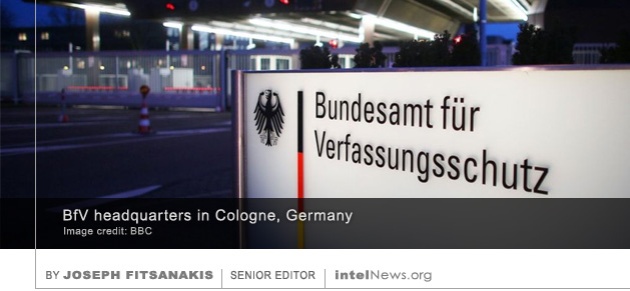 RUSSIAN FOREIGN INTELLIGENCE ACTIVITIES in Germany have increased exponentially since the start of the war in Ukraine, and are projected to further-increase in 2023, according to the head of German counterintelligence. In an interview on Monday with the German Press Agency (DPA), Thomas Haldenwang, director of the Federal Office for the Protection of the Constitution (BfV), also warned that China, Iran and Turkey are intensifying their intelligence activities inside Germany.
In April of last year, the German government expelled 40 members of the diplomatic staff from Russia’s embassy in Berlin. It is believed that the majority of those expelled were intelligence officers operating under official cover. According to Haldenwang, the Kremlin has taken steps to compensate for the loss of its intelligence presence in Germany. This is largely being done in two ways: first, with “traveling operatives”, i.e. intelligence officers who are stationed in third countries and travel to Germany to carry out specific operations; second, with non-official-cover officers, i.e. intelligence operatives who have no overt relations with the Russian government. Moreover, Russia has been mounting its cyber-attacks and foreign-influence operations against Germany, according to Haldenwang.
In response to the Kremlin’s actions, German counterintelligence is making “great efforts to prevent […] people who may be connected to Russian intelligence from entering Germany” with valid visas, Haldenwang said. The BfV has hired more personnel and has “organizationally redesigned” its defensive and offensive counterintelligence capabilities, as well as cyber-defense expertise. As a result, the BfV “feels sufficiently prepared for the current challenges”, Haldenwang said. He also disputed allegations in Western media that the BfV had been relatively passive in countering Russian intelligence operations prior to the war in Ukraine.
Finally, Haldenwang cautioned that Iran and Turkey maintained a significant intelligence presence in Germany, and that the stormy domestic politics in those countries would “have an impact in Germany”, as “internal political conflicts [in those countries] are fought here”. This also applies to China, whose intelligence collection targets are no longer primarily economic, but are moving into the political domain. According to Haldenwang, a “pan-European solution is needed to reverse this trend, at least for the European [Union] states”.
► Author: Joseph Fitsanakis | Date: 03 January 2023 | Permalink
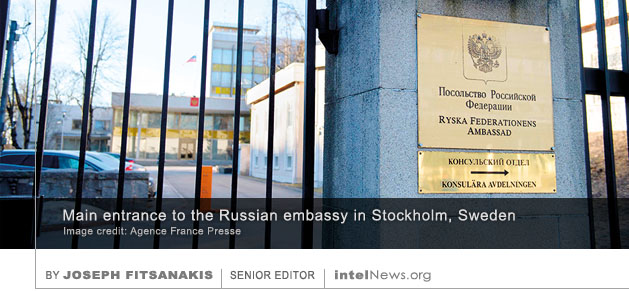 NUMEROUS UNANSWERED QUESTIONS SURROUND the arrest of a Russian married couple in Sweden, on charges of espionage. The arrest took place in dramatic fashion in the early hours of Tuesday, November 22.
 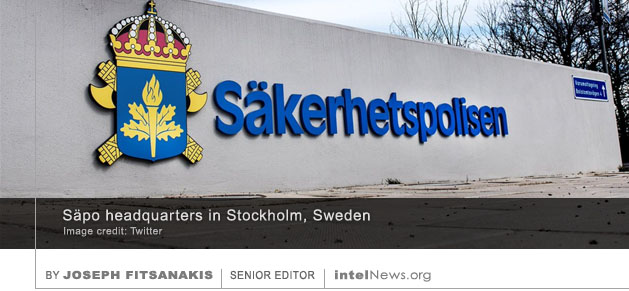 AUTHORITIES IN SWEDEN HAVE charged two brothers, one of whom worked in a highly secretive Swedish intelligence unit, with spying for Russian military intelligence for a decade, according to news reports. The charges resulted from a six-year investigation led by the Swedish Security Service (SAPO), which is the country’s counterintelligence agency. SAPO reportedly launched the probe in 2017, based on suspicions that it harbored a spy in its personnel ranks.
 LAST SUMMER, GERMAN EMBASSY staff in Russia issued an entry visa to a Russian national, despite warnings by at least two European security agencies that he was a known intelligence officer, according to a report. The incident has fueled persistent allegations that Berlin’s counterintelligence posture against Russia is ineffective.
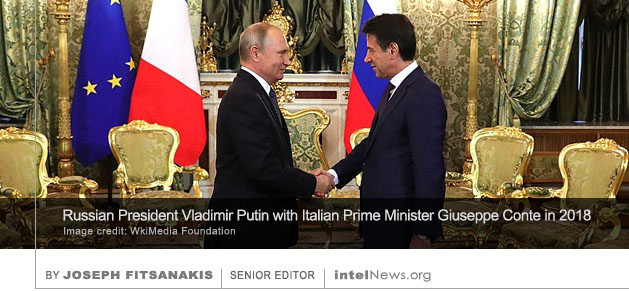 A NEW PAPER, PUBLISHED by the United Kingdom’s Royal United Services Institute (RUSI) for Defence and Security Studies, sheds light the complex relationship between Italy and the West’s two principal adversaries, Russia and China. Italy is a major global economic power. It is a prominent member of the Group of Seven (G7), which collectively account for more than 50 percent of global net wealth. It is also a member of the North Atlantic Treaty Organization (NATO) and the European Union (EU).
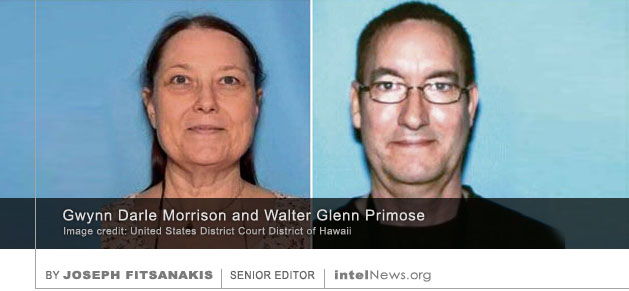 A FEDERAL JUDGE IN HAWAII has denied bail to a married American couple, who are believed to have assumed the identities of dead children in order to lead double lives for over 20 years, according to prosecutors. Local media reports
 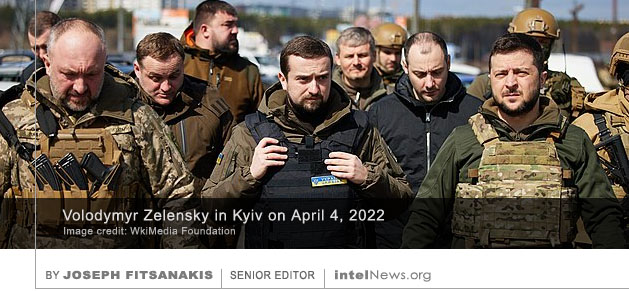 ON SUNDAY, JULY 17, the Ukrainian administration of President Volodymyr Zelenskiy announced the most extensive shake-up of the nation’s security leadership since the Russian military invasion. Two key members of Zelenskiy’s inner circle, Ukraine’s Prosecutor General Iryna Venediktova and domestic security chief Ivan Bakanov, were
  invariably, no. In fact, even the Ukrainians themselves are not in a position to trust their own intelligence services.
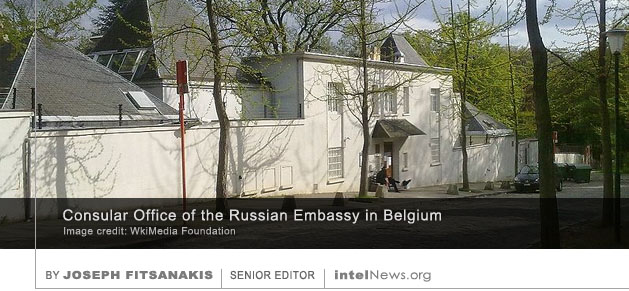 A BRUSSELS-BASED NEWSPAPER has publicized the names and backgrounds of nearly two dozen Russian diplomats, who were recently expelled by the Belgian government on suspicion of espionage. A total of 21 Russian diplomats were expelled from Belgium in April, in co-ordination with dozens of European governments. The move was part of a broader European wave of diplomatic expulsions of Russian diplomatic personnel, in response to the Russian invasion of Ukraine.
 diplomats are expelled in a possible tit-for-tat move by an adversary. It is therefore highly unusual for information concerning expelled diplomatic personnel to be made public. And yet that is precisely what happened earlier this week, when the EUObserver, an English language newspaper based in Brussels, published
  EUObserver said that some of the information about the alleged spies was unearthed by The Dossier Center, a British-based open-source information outlet, which is similar to Bellingcat. The Dossier Center is funded by the oligarch Mikhail Khodorkovsky, who is a critic of the Russian President Vladimir Putin.
 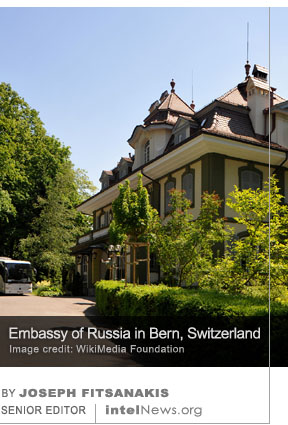 SINCE LATE FEBRUARY, WHEN Russian troops invaded Ukraine, over 500 Russian diplomats have been expelled from Western countries. Even former Russian allies have contributed to the growing list of expulsions —most recently Bulgaria, which
 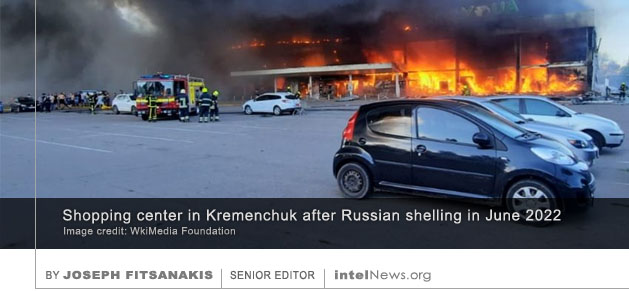 IN THE OPENING STAGES of the Russian invasion of Ukraine, there was a widespread
  related legislation” with Western standards, as well as aligning them with NATO standards, so that Ukrainian cyber-warfare units can make use of advanced technologies and systems. Could it be, therefore, that Ukraine has improved its cyber-security posture enough to be able to defend itself against relentless Russian cyber-attacks?
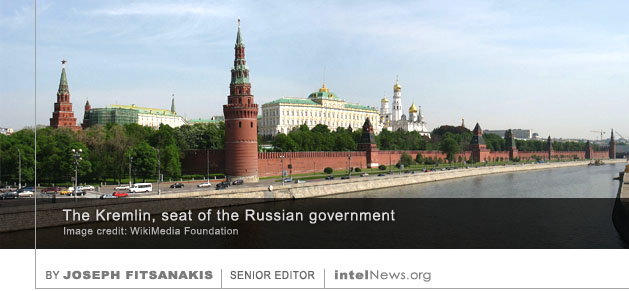 RUSSIANS ARE AWARE OF the phrase “there is no such thing as a former chekist”. The term “chekist” dates from the Bolshevik-era All-Russian Extraordinary Commission (VChK, pronounced “cheka”), which was formed in 1917 as the first Soviet-era state security agency. By the 1940s, intelligence posts had come to be seen as life-long relationships between chekists and the Soviet government, which continued even after one’s retirement. In
  with reference to three Russian intelligence agencies, all of which trace their origins to the Soviet-era Cheka —namely the Foreign Intelligence Service (SVR), the Federal Security Service (FSB), and the Federal Protective Service (FSO).
 RUSSIAN STATE COMPANIES, BUSINESSES and individuals are being targeted in an unprecedented wave of attacks by digital assailants, according to observers, who say they are surprised by its ferocity. Since February of this year, hackers have accessed the personal financial data of pro-Kremlin oligarchs, stolen millions of internal emails stored on Russian government severs, and defaced high-profile websites across the nation. The Washington Post, which
  THE RUSSIAN FEDERATION HAS reportedly ordered 175,000 new diplomatic passports to be printed, prompting speculation about their possible use at a time when Western sanctions are affecting Russia’s governing elite. Diplomatic passports are travel documents that are issued to accredited diplomats and government officials, such as foreign ministry envoys and others. Pursuant to the Vienna Convention of Diplomatic Relations, holders of diplomatic passports enjoy diplomatic immunity and are typically subjected to very limited inspections by security personnel when crossing international borders.








Western intelligence agencies alarmed by arrest of Russian spy in Germany
January 10, 2023 by Joseph Fitsanakis 4 Comments
The official, named only as “Carsten L.”, in compliance with Germany’s strict privacy laws, has been charged with “high treason” and is currently awaiting trial. When announcing his arrest, German officials said they were tipped by a foreign intelligence agency that detected a document from the BND’s internal files in the possession of a Russian spy agency. The identity of the intelligence agency that provided the tip is among several important details about the case that remain unknown for the time being. Among them are the duration of Carsten L.’s alleged espionage for Moscow, as well as his motives.
Some reports suggest that Carsten L. may have been blackmailed by the Russians as a result of a kompromat. It has also been reported that the alleged spy was found to be in possession of material relating to the Alternative for Germany (AfD), a far-right party known for its friendly stance toward the Kremlin. But such reports are largely speculative. No information about Carsten L.’s motives has been released by the office of the German prosecutor. It is clear, however, that at least some of the information that Carsten L. gave the Russian government relates to the ongoing war in Ukraine.
Additionally, the suspect’s seniority within the BND allowed him to access several compartmentalized areas of information, including secrets shared with the BND by other Western intelligence agencies. These almost certainly include the United States Central Intelligence Agency and National Security Agency, as well as a host of British intelligence agencies. On Monday, British newspaper The Telegraph quoted German intelligence expert, Erich Schmidt-Eenboom, who said that British intelligence officials were “most incensed” with the case. He added that British intelligence leaders were “considering whether they will continue to provide the BND with their most sensitive information”. The German expert concluded that the Carsten L. case may have “deep implications for future cooperation between the BND and other Western spy agencies”.
► Author: Joseph Fitsanakis | Date: 10 January 2023 | Permalink
Filed under Expert news and commentary on intelligence, espionage, spies and spying Tagged with BND, Carsten L., espionage, Germany, News, Russia