Ukraine war is being crowdfunded through cryptocurrencies, experts say
March 2, 2022 Leave a comment
 THE WAR BETWEEN RUSSIA and Ukraine is being crowdfunded with the use of cryptocurrencies, making it history’s first major conflict to occur in the era of cryptocurrencies, according to observers. Crowdfunded conflicts are not new phenomena. In the years following its establishment, Israel is believed to have raised $50 million from individual donors around the world for its army. In the 1970s, militant groups like the Irish Republican Army solicited steady streams of donations from expatriate communities. The difference in this war is the pervasive nature of the Internet and cryptocurrencies, which have become “another front” in the quickly escalating conflict in Ukraine.
The Australian Broadcasting Corporation’s science correspondent, James Purtill, points out that some aspects of this war are being increasingly impacted by decentralized autonomous organizations (DAOs). DAOs are member-owned online communities that engage in crowdfunding activities outside of any government-mandated regulatory framework. They are not governed by boards of directors, but instead maintain their financial transaction records on a blockchain. They therefore operate in a legal grey zone, which is facilitated with the use of cryptocurrencies in financial transactions.
Purtill notes that, in recent years, the administration of Ukrainian President Volodymyr Zelensky had aspirations to become the world’s most cryptocurrency-friendly country. It was therefore not a surprise when, just minutes after the Russian invasion of Ukraine began, the government in Kiev launched an official cryptocurrency fund, named Crypto Fund of Ukraine. As of Monday, the fund had amassed over $22 million and was continuing to grow exponentially. Communities of pro-Ukrainian DAOs, such as Come Back Alive, have mushroomed around these cryptocurrencies, and have raised substantial donations, which are now being used to equip the Ukrainian army and volunteer militias.
There is also concern among experts that the Russian government, as well as individual pro-Kremlin oligarchs, may resort to using cryptocurrencies in order to evade international sanctions. Notably, the use of cryptocurrencies may allow Moscow to overcome the barriers posed by its exclusion from the Society for Worldwide Interbank Financial Telecommunications (SWIFT), which is the global standard for secure financial transactions. Last weekend, Kiev issued calls to the world’s largest cryptocurrency exchanges to block Russian clients, including the Russian government, from conducting transactions. However, experts point out that it is extremely difficult to prevent specific users—including governments— from trading on the blockchain, given its decentralized nature.
► Author: Joseph Fitsanakis | Date: 02 March 2022 | Permalink
 LARGE URBAN CENTERS IN Ukraine, such as Kiev, are likely to come “under
 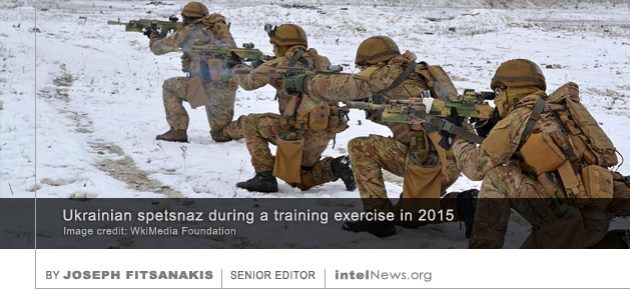 SENIOR UKRAINIAN GOVERNMENT OFFICIALS, including the president, vice president and foreign minister, have begun issuing open calls for foreign volunteers to go to Ukraine and form an international armed brigade. A number of Ukrainian ambassadors around the world are reporting that groups of foreign volunteers are already en route to Ukraine. Others are said to be answering calls to form a pro-Ukrainian ‘cyber army’.
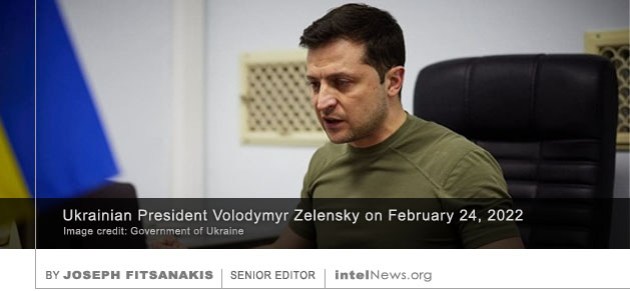 THE PRESIDENT OF UKRAINE, Volodymyr Zelensky, warned on Thursday that teams or Russian assassins have already entered the nation’s capital, Kiev, with orders to kill him and his family. Zelensky made this
  AS THE FULL-SCALE invasion of Ukraine by the Russian Armed Forces continues to unfold, some Western commentators have begun to
 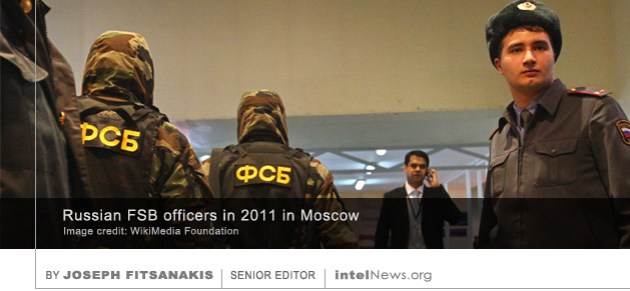 A LITTLE KNOWN SPY unit, which experts have described as a mysterious “third espionage agency” inside the Russian intelligence apparatus, is said to be behind a “kill/capture list” that Moscow allegedly plans to put to use in Ukraine. United States government officials
 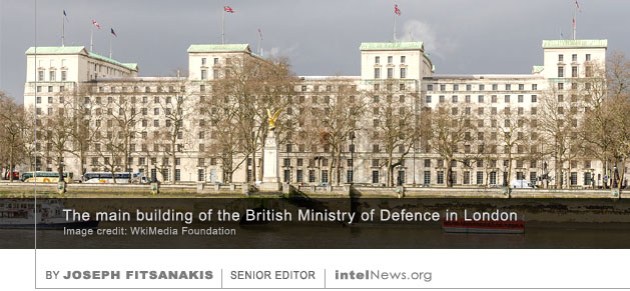 IN A VIDEO MESSAGE described by observers as “extraordinary”, the British Ministry of Defence has warned that at least half of the Russian military’s ground combat units have now encircled much of Ukraine. The report describes this as “the largest gathering of Russian troops” anywhere in the world since 1991—the year when the Soviet Union collapsed.
 THE DECISION BY UNITED States officials to release what appears to be raw intelligence about Russia’s intentions on Ukraine is being described by observers as “highly unusual” and even “unprecedented”. Two weeks ago, American officials
  LAST WEEK, THE DUTCH General Intelligence and Security Service (AIVD) launched an awareness campaign dubbed ‘Check before connecting’. The purpose of the campaign is to inform the Dutch public about risks of foreign actors using fake accounts on social media, in efforts to acquire sensitive business information. According to the AIVD, such online campaigns frequently target and recruit employees of Dutch private sector companies. The
  THE KREMLIN IS PROVIDING “indirect and passive support” to Western neo-Nazi, white supremacist and other far-right groups, in an effort to subvert Western security, according to a leaked report produced by United States intelligence agencies. The report is titled “Russian Federation Support of Racially and Ethnically Motivated Violent Extremists”. It was produced in July of 2021 by the Office of the Director of National Intelligence (ODNI), with information provided by the Federal Bureau of Investigation and the Central Intelligence Agency.
 EVEN RUSSIAN MILITARY COMMANDERS and intelligence officials on the ground near the Ukrainian border are in the dark about whether the Kremlin intends to invade Ukraine in the coming weeks, according to a report. The American news network CNN









Ukrainian forces allegedly foiled plan by Chechen paramilitaries to kill president
March 3, 2022 by Joseph Fitsanakis 1 Comment
The source of the allegation is Oleksiy Danilov, chair of Ukraine’s National Security and Defense Council—which is believed to be closely linked with the Center for Strategic Communications. Danilov said on Tuesday that members of the Kadyrovtsy (known in English as Kadyrovites), a Chechen paramilitary regiment, had been dispatched to Ukraine in order to “eliminate” Zelensky.
The Kadyrovites are rooted in the Chechen separatist movement of the 1990s, when Chechen militants fought against the Russian military. But a sizeable group of Chechen fighters entered the conflict on behalf of the Russian state when their leader, Akhmad Kadyrov, took Moscow’s side during the Second Chechen War. Today they operate as a personal protection squadron for Kadyrov’s son, Ramzan Kadyrov, who rules Chechnya on behalf of the Kremlin. Occasionally the Kadyrovites have been participated in foreign missions on behalf of Moscow, notably in Syria in 2017 and 2018.
Danilov said the assassins had attempted to approach Kiev from the northwest, separated in two groups. One of the groups was allegedly “destroyed” in the town of Hostomel, which borders the northwest suburbs of the Ukrainian capital, Kiev. Another group had come “under fire” in Kiev, Danilov claimed. It is worth noting that, according to Danilov, Ukrainian forces “received information” about the alleged assassination plot by agents of Russia’s Federal Security Service —Russia’s counterintelligence and counterterrorism agency— who “do not want to take part in this bloody war”.
Earlier this week, British newspaper The Times reported that 400 Russian paramilitaries belonging to the Wagner Group were heading to Kiev in order to assassinate Zelensky. Wagner, a secretive security firm believed to operate on behalf of Russian military intelligence, first appeared in eastern Ukraine in 2014. Since then, the company has operated around the world as a private paramilitary entity. Its mission is allegedly to afford the Kremlin “plausible deniability” capabilities for operations in the Middle East, Africa and Eastern Europe.
► Author: Joseph Fitsanakis | Date: 03 March 2022 | Permalink
Filed under Expert news and commentary on intelligence, espionage, spies and spying Tagged with 2022 Russian invasion of Ukraine, assassinations, Kadyrovites, Kadyrovtsy, News, Russia, special operations, Ukraine, Volodymyr Zelensky