Employee of British embassy in Berlin charged with spying for Russia

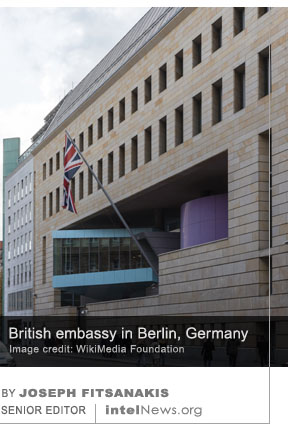
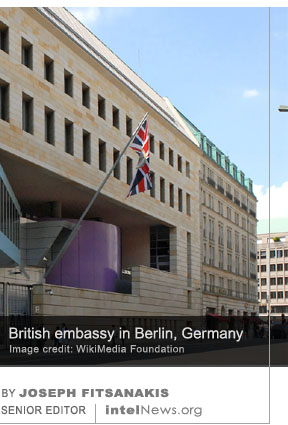
British embassy in BerlinAn employee of the British embassy in Berlin has been arrested by German authorities, who charged him with spying for the intelligence services of the Russian Federation, according to reports. The German newsmagazine Focus said on Wednesday that the employee is a 57-year-old British citizen. He was reportedly arrested on Tuesday by Germany’s Federal Criminal Police Office (BKA). His arrest took place in Potsdam, a city located southeast of Berlin. His arrest is believed to have come as a result of a joint investigation by British and German authorities.
There appears to be some confusion about the man’s position at the British embassy. In some reports, he is referred to as a “liaison officer”, a term that describes diplomatic personnel whose job is to exchange security-related information with the relevant authorities of the host-country. However, other reports suggest that the man is locally based in Berlin, and was working as support personnel at the British embassy, without having been granted diplomatic status. This would mean that he does not have diplomatic immunity in Germany or elsewhere.

It is also believed that BKA officers searched the man’s home and workplace. According to Focus, he has been charged with carrying out espionage activities on behalf of Russian intelligence. German prosecutors said he began working for Russian intelligence in November of 2020 at the very latest. During that time, he allegedly provided classified information to his Russian handlers on at least one occasion, in exchange for cash. Media reports suggest that the information he allegedly gave the Russians relates to counter-terrorism operations. No further information is known about the case at this stage.

Author: Joseph Fitsanakis | Date: 12 August 2021 | Permalink

New report sheds light on Russian private military group’s operations in Libya

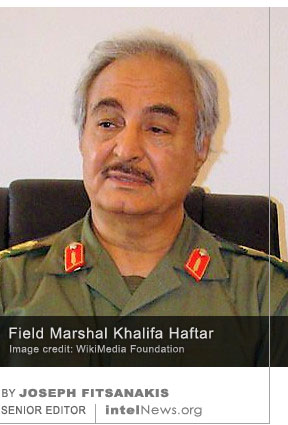
Khalifa HaftarA new documentary aired on Tuesday by the BBC offers new evidence of extensive involvement in Libya by the Wagner Group, a secretive security firm believed to operate on behalf of Russian military intelligence. After first appearing in Ukraine in 2014, the company has been seen to operate around the world as a private paramilitary entity. Its mission is allegedly to afford the Kremlin “plausible deniability” capabilities for operations in the Middle East, Africa and Eastern Europe. As intelNews has explained before, there is evidence that the Kremlin provides payments to Wagner. But concrete information about the secretive firm is hard to come by, and the Russian government strongly denies having links to it.
Now, however, a new television documentary produced by the BBC claims to have uncovered reliable evidence of extensive involvement by Wagner in the Libyan conflict —as well as links between Wagner and the Russian military. Wagner personnel first appeared in Libya in April of 2020, when they were seen operating in support of the Tobruk-based Libyan National Army, commanded by Field marshal Khalifa Haftar. In the spring of 2020, as the conflict was winding down, Wagner group forces retreated from areas south of the city of Tripoli, which were eventually occupied by Haftar’s rival, the Government of National Accord.

The documentary, co-produced by BBC News Russian and BBC News Arabic, is titled “Haftar’s Russian Mercenaries: Inside the Wagner Group”. It is based on the discovery of a Samsung Galaxy tablet, which was left behind in the Tripoli area by a retreating Wagner fighter. According to the BBC the information recovered from the tablet provides “unprecedented insight” into Wagner’s operations in Libya. It includes maps of the terrain in the Russian language, as well as a list of codenames used by Wagner personnel during their operations in the North African country.

Another series of documents recovered from the tablet list weapons used by the group during its operations in Libya. Acceding to the information released online by the BBC, the weapons lists include state-of-the-art radar and other military equipment, which experts claim are “only be available from the Russian military”. The documentary also lays out allegations of war crimes conducted by Wagner personnel in Libya, which include mining and even booby-trapping civilian areas.

Author: Joseph Fitsanakis | Date: 11 August 2021 | Permalink

Moscow denounces ‘NATO propaganda’ as Albania probes alleged Russian spies

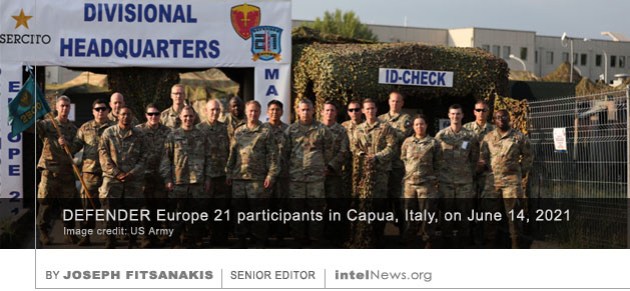
DEFENDER-Europe 21

THE RUSSIAN GOVERNMENT HAS accused media in Albania of channeling “propaganda”, as authorities in the Balkan country are investigating alleged military espionage by two Russian citizens. The case centers on DEFENDER Europe 21, a large-scale multinational military exercise, which is held every year under the auspices of the United States Army and the North Atlantic Treaty Organization (NATO). A portion of the exercise, which brings together nearly 30,000 troops from 26 nations, took place in Albania in April and May of this year.

Late last month, reports in the Albanian media said that the Office of the Prosecutor in the capital Tirana was investigating two Russian and five Czech citizens, who may have engaged in espionage activities. According to the reports, one of the Russian citizens had entered Albania on May 12, and traveled to Durres, Albania’s second most populous city, which is centrally located along the country’s Adriatic coast. Durres is the closest urban center to the site of the DEFENDER Europe 21 exercise. A few days later, the Russian citizen was found deploying a drone, according to the Tirana prosecutor.

The Albanian authorities then began looking into the case of another Russian citizen, who had entered the country in March, and was based in Orikum, a small coastal town southern Albania. Like Durres, Orikum is in close proximity to military training facilities. Albanian authorities have not disclosed any information about the fate of the five Czech nationals. But they said last week that a criminal case had been opened against the two Russians.

Last Friday, the Russian Ministry of Foreign Affairs accused the Albanian media of “fueling the hype” about the two Russians, adding that the case was “an exercise in NATO propaganda”. Meanwhile, the Russian embassy in Tirana said that it had sent a formal inquiry about the criminal case to Albania’s Ministry for Europe and Foreign Affairs. Relations between the former Warsaw Pact allies are currently at a low point. In January of this year, Tirana expelled a Russian diplomat, accusing him of ignoring safety protocols relating to COVID-19. In 2018, two Russian diplomats were expelled from Albania after they allegedly engaged in espionage. Shortly afterwards, Moscow expelled two Albanian diplomats in return.

Author: Joseph Fitsanakis | Date: 12 July 2021 | Permalink

Kremlin spy participated in secret meeting to fund Italian separatist party

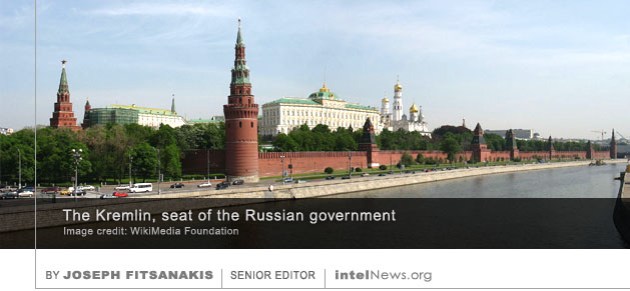
Kremlin, Russia

AN ALLEGED EMPLOYEE OF Russian intelligence was present during a secret meeting in Moscow, in which politicians and investors discussed a plan to fund a northern Italian separatist political party. The party, Lega Nord (Northern League, or LN) was established in 1991 as an amalgamation of northern Italian separatist groups whose members seek greater autonomy and are opposed to Italy’s membership in the European Union. Under its current leader, Matteo Salvini, the LN has adopted an hard-line anti-immigration stance and has associated itself with United Russia, the political home of Russian President Vladimir Putin.

In July of 2019, the investigative news website BuzzFeed released audio recordings of a secret meeting that allegedly took place in Moscow’s Hotel Metropol, between members of the LN and Russian emissaries of the Kremlin. The discussion reportedly concerned a plan to sell Russian oil to an Italian firm connected to the LN at a markedly discounted price, which would allow it to compete with Italy’s state-owned energy supplier and at the same time enrich the LN’s election campaign coffers by nearly $70 million.

According to an investigation by Italian authorities, participants at that meeting were Salvini’s former spokesperson, Gianluca Savoini, as well as two other Italians, who managed investment banks and were also supporters of the LN. There were also three Russian participants, including a Kremlin lawyer who works for the Russian Ministry of Energy, and a Russian former banker and tycoon with clsoe ties to President Putin. But the third Russian had not been identified. Until now.

The Italian newspaper L’Espresso, which has led the investigative reporting into the alleged scandal, reports that the Milan Prosecutor’s Office has identified the third Russian participant as Andrey Yuryevich Kharchenko, an alleged employee of Russian intelligence. The paper said that Kharchenko’s identity was supplied to the Italian government by “another Western state” that has been targeted by Russian intelligence in recent years. The investigation into the alleged scandal continues.

Author: Joseph Fitsanakis | Date: 29 June 2021 | Permalink

Germany arrests Russian PhD student on suspicion of spying for Moscow

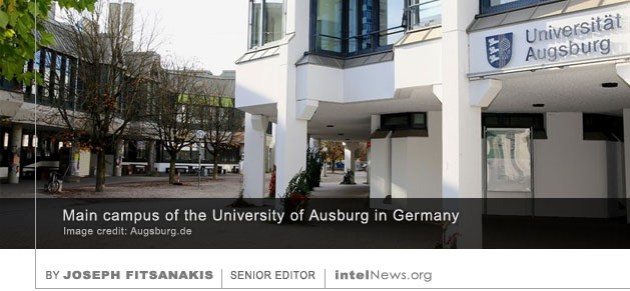
University of Augsburg

A RUSSIAN DOCTORAL STUDENT in mechanical engineering, who is studying in a Bavarian university, has been arrested by German police on suspicion of spying for Moscow, according to official statements and reports in the German media. According to a press statement issued by the Federal Public Prosecutor General’s office in the city of Karlsruhe, the PhD student was arrested on Friday, June 18.

The student was subsequently identified by the German authorities only as “Ilnur N.”, in accordance with German privacy laws. On Monday, however, local media identified the suspected spy as Ilnur Nagaev, a doctoral candidate at the University of Augsburg, which is located 50 miles northwest of Munich. Nagaev reportedly works as a research assistant there, while pursuing his doctoral studies in mechanical engineering.

German authorities maintain that the suspect began working “for a Russian secret service” in early October of 2020, and possibly earlier. He is also accused of having met with an unidentified “member of a Russian foreign secret service” at least three times between October 2020 and June of this year. According to German federal prosecutors, Nagaev shared unspecified information with his alleged Russian handler, and received cash in return at the end of each meeting.

German police reportedly searched Nagaev’s home and work office looking for further clues about the case. In the meantime, a judge at the Bundesgerichtshof (Federal Court of Justice) in the Federal Court of Justice in Karlsruhe, which is Germany’s highest court on matters of ordinary jurisdiction, ordered that Nagaev be kept in pre-trial detention, pending a possible indictment. Neither the Russian nor the German federal governments have commented on this case.

Author: Joseph Fitsanakis | Date: 22 June 2021 | Permalink

Russian actors had access to Dutch police computer network during MH17 probe

Flight MH17

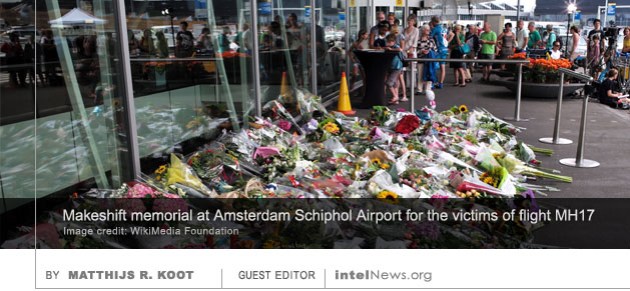
Russian hackers compromised the computer systems of the Dutch national police while the latter were conducting a criminal probe into the downing of Malaysia Airlines Flight 17 (MH17), according to a new report. MH17 was a scheduled passenger flight from Amsterdam to Kuala Lumpur, which was shot down over eastern Ukraine on July 17, 2014. All 283 passengers and 15 crew on board, 196 of them Dutch citizens, were killed.

Dutch newspaper De Volkskrant, which revealed this new information last week, said the compromise of the Dutch national police’s computer systems was not detected by Dutch police themselves, but by the Dutch General Intelligence and Security Service (AIVD). The paper said that neither the police nor the AIVD were willing to confirm the breach, but added that it had confirmed the breach took place through multiple anonymous sources.

On July 5, 2017, the Netherlands, Ukraine, Belgium, Australia and Malaysia announced the establishment of the Joint Investigation Team (JIT) into the downing of flight MH-17. The multinational group stipulated that possible suspects of the downing of flight MH17 would be tried in the Netherlands. In September 2017, the AIVD said it possessed information about Russian targets in the Netherlands, which included an IP address of a police academy system. That system turned out to have been compromised, which allowed the attackers to access police systems. According to four anonymous sources, evidence of the attack was detected in several different places.

The police academy is part of the Dutch national police, and non-academy police personnel can access the network using their log-in credentials. Some sources suggest that the Russian Foreign Intelligence Service (SVR) carried out the attack through a Russian hacker group known as APT29, or Cozy Bear. However, a growing number of sources claim the attack was perpetrated by the Main Directorate of the Russian Armed Forces’ General Staff, known commonly as GRU, through a hacker group known as APT28, or Fancy Bear. SVR attackers are often involved in prolonged espionage operations and are careful to stay below the radar, whereas the GRU is believed to be more heavy-handed and faster. The SVR is believed to be partly responsible for the compromise of United States government agencies and companies through the supply chain attack known as the SolarWinds cyber attack, which came to light in late 2020.

Russia has tried to sabotage and undermine investigation activities into the MH17 disaster through various means: influence campaigns on social media, hacking of the Dutch Safety Board, theft of data from Dutch investigators, manipulation of other countries involved in the investigation, and the use of military spies. The Dutch police and public prosecution service were repeatedly targeted by phishing emails, police computer systems were subjected to direct attacks, and a Russian hacker drove a car with hacking equipment near the public prosecution office in Rotterdam.

The above efforts are not believed to have been successful. But the attack that came to light in September 2017 may have been. The infected police academy system ran “exotic” (meaning uncommon) software, according to a well-informed source. The Russians reportedly exploited a zero day vulnerability in that software. After the incident, the national police made improvements in their logging and monitoring capabilities, and in their Security Operations Center (SOC). It is not currently known how long the attackers had access to the national police system, nor what information they were able to obtain.

Author: Matthijs Koot | Date: 17 June 2021 | Permalink

France suspends aid to Central African Republic over espionage charges

Juan Remy Quignolot

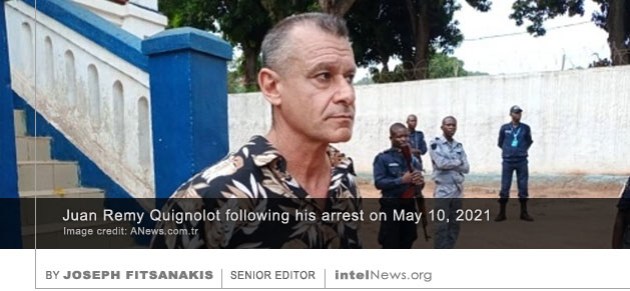
THE GOVERNMENT OF FRANCE has suspended all civilian and military aid to the Central African Republic (CAR), after authorities there charged a French national with espionage and conspiracy to overthrow the state. The charges were announced approximately a month after the arrest of Juan Remy Quignolot, 55 (pictured), who was arrested in CAR capital Bangui on May 10 of this year. Following Quignolot’s arrest, CAR police said they found more than a dozen cell phones, machine guns, ammunition and foreign banknotes in his hotel room.

Speaking to reporters in Bangui on Wednesday, the CAR’s attorney general, Eric Didier Tambo, said that Quignolot had been charged with espionage, illegal weapons possession, as well as conspiracy against the security of the state. According to CAR authorities, Quignolot has been providing training and material support to anti-government rebel groups for nearly a decade. However, CAR authorities have not specified for which country or group Quignolot performed his alleged activities.

The French Ministry of Foreign Affairs and the French embassy in Bagnui have not commented on Quignolot’s charges. When the French national was arrested in May, French Foreign Affairs Ministry officials said the move was part of “an anti-French campaign” orchestrated by Russia. Paris has been competing with Moscow for influence in this former French colony —a diamond- and gold-producing country of nearly 5 million people— which remains highly volatile following a bloody civil war that ended in 2016.

Earlier this week, France said it would immediately suspend its $12 million-a-year civilian and military aid to the CAR. The reason is that the African nation’s government had allegedly failed to take measures against “massive disinformation campaigns”, purportedly originating from Russia, which have “targeted French officials” in the CAR and the broader central African region. Despite suspending financial aid, France continues to maintain approximately 300 soldiers in the CAR. In recent years, however, France’s military presence in its former colony has been dwarfed by contingents of Russian military instructors, who are now training government forces.

Quignolot’s trial is expected to take place by December. Speaking about the Frenchman’s possible sentence, attorney general Tambo said on Wednesday that, “in cases of harming domestic security, you’re talking about lifetime forced labor”.

Author: Joseph Fitsanakis | Date: 10 June 2021 | Permalink

Russian spy activity has reached Cold War levels, say Germany’s intelligence chiefs

Thomas Haldenwang Bruno Kahl

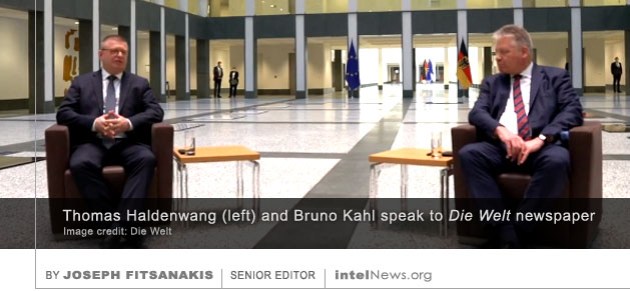
RUSSIAN INTELLIGENCE ACTIVITY in Germany has reached levels not seen since the days of the Cold War, while espionage methods by foreign adversaries are now more brutal and ruthless, according to the country’s spy chiefs. These claims were made by Thomas Haldenwang, who leads Germany’s Agency for the Protection of the Constitution (BfV), and Bruno Kahl, head of the Federal Intelligence Service (BND), which operates externally.

The two men spoke to the Sunday edition of Die Welt, one of Germany’s leading newspapers. Their joint interview was published on June 6. Haldenwang told Die Welt am Sonntag that the presence of Russian spies on German soil reflects Moscow’s “very complex intelligence interest in Germany”. Accordingly, Russia has “increased its [espionage] activities in Germany dramatically” in recent years, said Haldenwang.

The counterintelligence chief added that Russia has a “large number of agents” that are currently active in German soil. Their goal is to try to “establish contacts in the realm of political decision-making”. One of many topics that the Kremlin is intensely interested at the moment is the future of Russia’s energy relationship with Germany, according to Haldenwang.

At the same time, Russia’s espionage methods are becoming “coarser” and the means that it uses to steal secrets “more brutal”, said the spy chief. Kahl, his external-intelligence colleague, agreed and added that Germany’s adversaries are “employing all possible methods […] to stir up dissonance between Western states”. Their ultimate goal is to “secure their own interests”, concluded Kahl.

However, despite Russia’s increased intelligence activity in Germany, the most serious threat to the security and stability of the German state is not Moscow, but domestic rightwing extremism, said Haldenwang. Notably, the German spy chief discussed the unparalleled rise of rightwing rhetoric on social media and websites. Such propaganda is being spread by people that he termed “intellectual arsonists”. Their “hate-filled messages” are essentially anti-democratic, said Haldenwang.

Author: Joseph Fitsanakis | Date: 07 June 2021 | Permalink

Polish counterintelligence arrest man for giving military secrets to Russia

Poland ABW

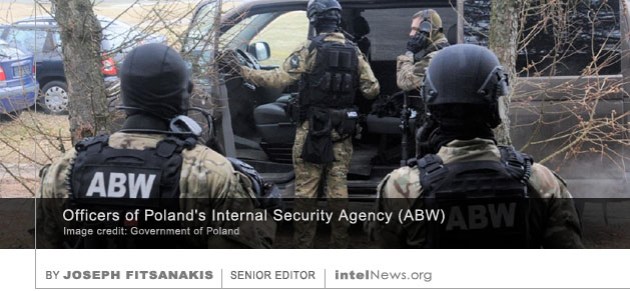
POLAND’S COUNTERINTELLIGENCE AGENCY HAS announced the arrest of a Polish citizen, who reportedly admitted spying for Russian military intelligence. The 43-year-old man has been named only as “Marcin K.”, in compliance with Polish law. He was reportedly arrested on May 5 by officers of the Internal Security Agency (ABW), Poland’s domestic counter-intelligence agency.

According to ABW spokesman Stanisław Żaryn, the accused spy had been handing over classified “information and materials” to the Russian secret services. Much of the classified information reportedly related to the “military field”. The Russians also received sensitive information relating to “Polish entities and citizens”, according to government prosecutors. The Polish government described the information as “extremely important for Russian operations […] and to the detriment of the Republic of Poland”. No further information has been provided about the case.

Importantly, Polish authorities have not shared information about Marcin K.’s possible Russian handlers, who are likely to be employees of the Russian embassy in Warsaw. Regular intelNews readers will recall that Poland was among several European countries that expelled Russian diplomats last month, following a call for solidarity by the Czech Republic. Prague issued the call after it expelled 18 Russian diplomats in protest against an explosion that totaled a remote munition depot in the east of the country, which the Czechs claim was part of a Russian intelligence operation. In addition to expelling a number of Russian diplomats, Poland joined Hungary and Slovakia in issuing a joint statement decrying what it described as “deplorable act[s] of aggression and breach of international law committed by Russia on European soil”.

According to news reports, Marcin K. has been placed in pre-trial detention for three months, as investigators are interviewing witnesses and gathering material evidence for a pending trial.

Author: Joseph Fitsanakis | Date: 18 May 2021 | Permalink

US Army Special Forces soldier sentenced to 15 years for spying for Russia

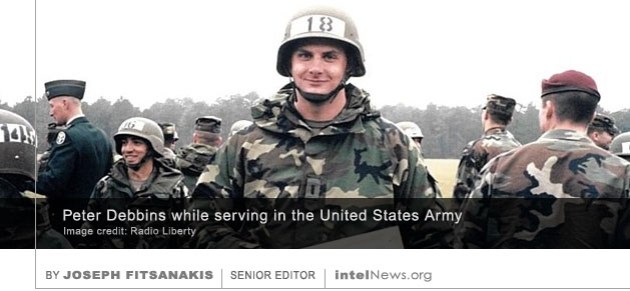
Peter Debbins

A FORMER MEMBER OF the United States Army’s Special Forces has been sentenced for spying for Russia for 15 years, after he was reportedly groomed by Russian military intelligence at a young age. Peter Debbins, 46, born in the US to an American father and a Soviet-born mother, admitted in 2020 to spying for Russia for over 20 years.

Even though he had Russian background from his mother’s side of the family, he had never been to Russia until he traveled there in 1994. On that trip he met his Russian family members for the first time, as well as a young Russian woman who would eventually become his wife. In 1996 Debbins returned to Russia as an exchange student from the University of Minnesota, and reconnected with a Russian woman. She was from the city of Chelyabinsk, located near the Russian-Kazakh border. The woman’s father was reportedly a colonel in the Russian Air Force.

It was during that second trip, according to the Federal Bureau of Investigation, that he was spotted by the Main Directorate of the Russian Armed Forces’ General Staff, known commonly as GRU. By 1997, when Debbins returned to Russia to marry his girlfriend, he was already working for the GRU, according to US government prosecutors. It is stated in his indictment that he told his GRU handler he saw himself as a “son of Russia” and sought to limit America’s dominance in the world.

Between 1998 and 2005, Debbins served in the US Army, where he became a Green Beret. He was discharged and lost his security clearance after “violating protocols” while he was stationed in Azerbaijan. Throughout his time in the US Army, Debbins frequently traveled to Russia, where his wife was studying at the time. While there he met with his GRU handlers. The court heard that he gave the GRU information on a variety of classified subjects, as well as private information on other members of the Green Berets. This information was intended to be used to blackmail these soldiers to work for the GRU.

Following his stint in the US Army, Debbins worked as a contractor for the US military, on topics relating to Russian language translation, as well as counterintelligence. Throughout that time, he reportedly continued to apply for dozens of positions in the US intelligence community, but without success. He is believed to have stopped spying for Russia in 2011.

The judge who hand down Debbins’ sentence ordered that his incarceration should begin immediately. Debbins’ legal team has requested that he be incarcerated near the Washington Metropolitan Area, so that he can remain in contact with his wife and four daughters.

Author: Joseph Fitsanakis | Date: 17 May 2021 | Permalink

Flurry of diplomatic expulsions as European states respond to Russia spy allegations

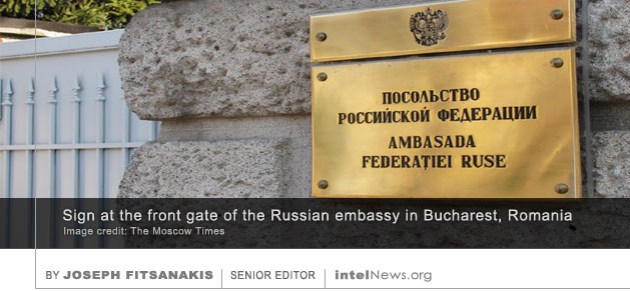
Russian embassy RomaniaSEVERAL EASTERN EUROPEAN STATES announced plans to expel Russian diplomats this week, as Moscow declared an Italian diplomat persona non grata in a tit-for-tat dispute with Rome over espionage allegations. Earlier this month, the Czech Republic expelled 18 Russian diplomats in protest against an explosion that totaled a remote munition depot in the east of the country, which Prague claims was part of a Russian intelligence operation.
The explosion, which occurred in October of 2014, killed two people and destroyed a munitions storage facility belonging to the Military Technical Institute of the Czech Ministry of Defense. Czech investigators recently concluded it was perpetrated by Unit 29155, a Russian elite spy outfit that operates under the Main Directorate of the General Staff of the Russian Armed Forces, commonly known as GRU. The Kremlin responded to the expulsions of its diplomats by ordering 20 Czech diplomats to leave Russia, and condemning Prague’s move as an “unprecedented” and “a hostile act” that was designed “to please the United States”.

The Czechs retorted by calling their allies in the North Atlantic Treaty Organization and the European Union to “expelled officers of Russian special services” in solidarity. In recent days, five countries have answered Prague’s call. Seven Russian diplomats have been given just days to leave Slovakia, Lithuania, Latvia, Lithuania and Estonia. Meanwhile, Romania announced on Monday that it would expel Alexei Grichayev, who serves as a deputy military attaché at the Russian embassy in Bucharest. The Romanian government said Grichayev’s “activities and actions [were] contrary to the Convention of Vienna on diplomatic relations” —a phrase used to denote espionage in diplomatic parlance.

Also on Monday, the Romanian Ministry of Foreign Affairs summoned the Russian ambassador in order to file an official complaint, while Hungary, Poland and Slovakia issued a joint statement decrying what they described as “deplorable act[s] of aggression and breach of international law committed by Russia on European soil”. In a separate development, Moscow said on Monday it would expel an Italian diplomat in response to the expulsions of two Russian diplomats from its embassy in Rome last month. The two Russians were accused of recruiting an Italian Navy captain, who has been charged with spying for the Kremlin.

Author: Joseph Fitsanakis | Date: 27 April 2021 | Permalink

Czechs ask EU and NATO to expel Russian diplomats in solidarity against Moscow

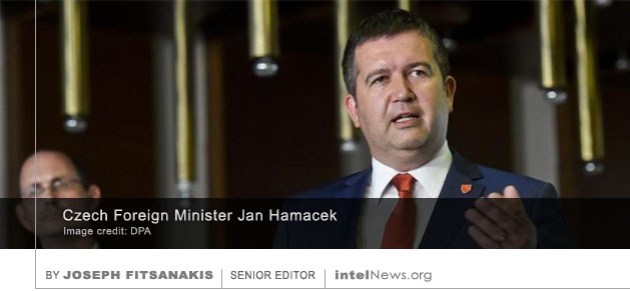
Jan HamacekCZECH GOVERNMENT OFFICIALS SAID they would welcome the expulsion of Russian diplomats from European Union and North Atlantic Treaty Organization countries, in support of Prague’s ongoing diplomatic spat with Moscow. The Czech Republic expelled 18 Russian diplomats last weekend, in order to protest against an explosion at a remote munition depot in the east of the country, which the government claims was part of a Russian intelligence operation.
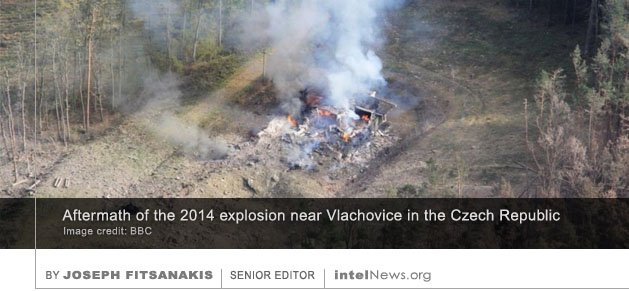

As intelNews reported on Monday, the explosion occurred in October of 2014. It killed two people and destroyed a munitions storage facility belonging to the Military Technical Institute of the Czech Ministry of Defense. Although the blast was initially classified as an accident, Czech investigators have recently come to the conclusion that it was in fact caused by Unit 29155, a Russian elite spy outfit. Little is known about Unit 29155, which is believed to operate under the Main Directorate of the General Staff of the Russian Armed Forces, commonly known as GRU.

The Kremlin responded to the expulsions of its diplomats by ordering 20 Czech diplomats to leave Russia, and condemning Prague’s move as an “unprecedented” and “a hostile act” that was designed “to please the United States”. Meanwhile the Czech Republic’s acting Minister of Foreign Affairs, Jan Hamacek (pictured), stated on Tuesday that Prague “would welcome” if its allies in the EU and NATO “expelled officers of Russian special services” in the coming days, in an act of solidarity with the efforts of his office.

Following consultations with Hamacek, the office of the EU’s High Representative for Foreign Affairs and Security Policy said that it stood in “full support and solidarity” with the Czech Republic. No EU or NATO country has so far announced that it plans to expel Russian diplomats in response to Prague’s request. According to Czech media, discussions on the matter between Hamacek and several of his counterparts in the EU’s so-called Visegrad Group —consisting of Poland, the Czech Republic, Hungary, and Slovakia— are ongoing.

Author: Joseph Fitsanakis | Date: 20 April 2021 | Permalink

Russia expels Czech diplomats after Prague links Kremlin to munitions depot explosion

Vrbětice Czech Republic ammunition depot explosions

RUSSIA AND THE CZECH Republic ordered expulsions of each other’s diplomats over the weekend, after authorities in Prague said the Kremlin was behind a mystery explosion that leveled a munitions depot. The explosion took place on October 16, 2014, in a remote forest area near the village of Vlachovice, which is situated 171 miles southeast of the Czech capital, Prague.

The storage depot belonged to the Military Technical Institute of the Czech Ministry of Defense, and it was managed by a contractor, Imex Group. The blast killed two security guards and forced the evacuation of several communities located nearby. It was assumed to have been the result of an accident, though investigators were unable to determine the cause of the explosion.

On Saturday, Czech authorities announced that the blast was the work of Unit 29155, a Russian elite spy outfit, whose goal is to subvert European political and economic systems and processes. As intelNews has reported in the past, Unit 29155 operates under the Main Directorate of the General Staff of the Russian Armed Forces, commonly known as GRU. It has allegedly been in existence since at least 2009. According to Czech investigators, two members of Unit 29155 visited the munitions depot days prior to the explosion. They used forged passports from Tajikistan and Moldova, and claimed to be members of the National Guard of Tajikistan that were scheduled for an inspection. Based on their passport photographs, the two men, who used the cover names Ruslan Tabarov and Nicolaj Popa, appear to be the same men who tried to kill GRU defector Sergei Skripal in England in 2018.

The reasons why the Russians allegedly decided to blow up the munitions depot are unclear. It is speculated that some of the weapons in the depot were intended to be delivered to Ukraine on behalf of Bulgarian weapons dealer Emilian Gebrev. In 2015 Gebrev was hospitalized for several days for signs of poisoning, along with his son and one of his company’s executives. They eventually made a full recovery, but have since alleged that they were targeted by Moscow, because Gebrev’s firm sells weapons to adversaries of the Kremlin, including the government of Ukraine.

On Saturday, the Czech government gave 18 Russian diplomats, which its claims are intelligence officers, 48 hours to leave the country. It also said it would provide detailed information about its probe into the blast to European Union ministers and representatives of the North Atlantic Treaty Organization. But Moscow called the allegations “unfounded and absurd” and condemned the expulsions of its diplomats, describing them as “unprecedented” and “a hostile act” that was designed “to please the United States”. On Sunday, the Russian Ministry of Foreign Affairs announced that 20 diplomats of the Czech Republic would be expelled from Russian in retaliation to the expulsion of its diplomats by its former Cold War ally.

Author: Joseph Fitsanakis | Date: 19 April 2021 | Permalink

Wife of Italian spy for Russia says he was desperate for money due to COVID-19

Embassy of Russia in Italy

THE WIFE OF AN ITALIAN Navy captain, who is facing espionage charges for allegedly selling classified documents to Russia, has claimed that he resorted to spying after facing bankruptcy due to the COVID-19 pandemic. Meanwhile, Italian Foreign Affairs Minister Luigi Di Maio described the case on Wednesday as “an extremely grave matter […] tied to spying and state security”.

The Navy captain has been named as Walter Biot, 54, who served in the National Security Policy Department of the Italian Ministry of Defense. His job duties included advising military and civilian officials on formulating national security policy in coordination with Italy’s North Atlantic Treaty Organization (NATO) partners. He was reportedly arrested late on Tuesday evening at a car park in Rome, alongside two members of the Russian embassy in the Italian capital.

Reports in the Italian media said Biot was caught as he was handing the Russians documents and a memory card containing classified data, for which he received €5,000 (approximately $6,000) in cash. Italian authorities said on Thursday that the material Biot handed over to the Russians included 181 photos of secret and top-secret documents belonging to the Italian government, as well as 47 classified documents belonging to NATO.

On Thursday, Biot’s legal team told Italian media that their client was a father of four, and that his income was insufficient to provide for one of his children, who was “seriously ill and needed special care”. Biot’s wife, Claudia Carbonara, said in an interview that her husband committed espionage in order to supplement the family’s €3,000 ($3,500) income, which had been reduced significantly in recent months due to the coronavirus pandemic. According to his lawyers, Biot reportedly said that he “made a mistake but I did it for my family [during] a moment of great weakness and fragility”.

Meanwhile, the two Russian diplomats who were arrested alongside Biot have been identified as Dmitry Ostroukhov and Alexei Nemudrov. They reportedly served in the office of the military attaché at the Russian embassy in Rome. Both have been expelled from the country. Russia has threatened to retaliate in the coming days, possibly by expelling a number of Italian diplomats from Moscow.

Author: Joseph Fitsanakis | Date: 02 April 2021 | Permalink

Bulgaria expels Russian diplomats over spy claims, Moscow threatens retaliation

Bulgaria MFA

TWO RUSSIAN DIPLOMATS STATIONED in Bulgaria were declared personae non grata by the Bulgarian government on Monday, after they were allegedly implicated in acts of espionage, according to reports. The two Russians, who have not been officially named, were stationed at the embassy of Russia in the Bulgarian capital Sofia. They were allegedly implicated in an espionage affair that has resulted in the arrests of at least six Bulgarian citizens, accused of carrying out acts of espionage on behalf of Moscow.

As intelNews reported on Monday, six members of the alleged spy-ring were arrested by Bulgarian counterintelligence on Thursday, March 18. They were charged with espionage on behalf of the Main Directorate of the General Staff of the Russian Armed Forces, known commonly as GRU, which is Russia’s main military intelligence agency. The six alleged spies reportedly gave Moscow secrets about Bulgarian military affairs, as well as information concerning the North Atlantic Treaty Organization and the European Union. Bulgaria, a former ally of the Soviet Union, joined NATO in 2004 and the EU in 2007.

On Tuesday, the Bulgarian Ministry of Foreign Affairs said it proceeded to declare the two Russian diplomats personae non grata on March 22. The decision to expel the diplomats was reportedly taken soon after the ministry received official confirmation from the state prosecutor’s office that the two Russians had been implicated in the alleged spy ring’s espionage activities. The Russian embassy was given 72 hours to make arrangements for the two diplomats to leave Bulgaria. Nor further information was provided by the ministry.

The Russian embassy in Sofia said on Tuesday that the Kremlin could carry out reprisals against the Bulgarian government in the coming days —potentially by expelling at least two Bulgarian diplomats from Moscow or St. Petersburgh. In a statement posted on its website, the embassy blasted what it described as “another groundless demarche of the Bulgarian authorities [that] will not contribute to the further building of a constructive Russian-Bulgarian dialogue”. The statement added that “[t]he Russian side reserves the right to retaliate” to the Russian diplomats’ expulsions.

Author: Joseph Fitsanakis | Date: 24 March 2021 | Permalink