Saudi Arabia closer than Iran to acquiring nukes, BBC reports
November 8, 2013
 By JOSEPH FITSANAKIS | intelNews.org
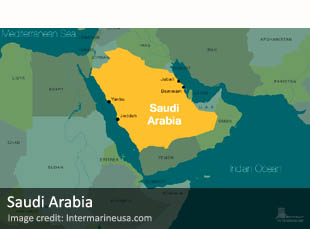
Saudi Arabia is able to obtain atomic bombs “at will” through a secret pact with Pakistan, and can acquire nuclear weapons far quicker than Iran, according to the BBC. On Wednesday, the British broadcaster’s flagship Newsnight television program cited “a senior decision maker” at the North Atlantic Treaty Organization, in claiming that Pakistan had already built nuclear weapons ordered by Saudi Arabia. The weapons, which include “finished warheads” that can be affixed on long-range missiles, “are now sitting ready for delivery” as soon as Riyadh asks for them, according to the BBC. The program’s producers spoke to an unnamed “senior Pakistani official” who allegedly confirmed in general terms the secret agreement between Saudi Arabia and Pakistan. The pact is said to require the Pakistanis to build and maintain a nuclear arsenal for use by the oil kingdom. Another Pakistani source, identified by Newsnight as “a one-time intelligence officer”, told the program that Pakistan maintained “a certain number of warheads” and that “if the Saudis were to ask for them at any given time they would immediately be transferred”. Newsnight’s diplomatic and defense editor, Mark Urban, wrote on the BBC website that Pakistan may already have transferred several Shaheen ballistic missiles to Saudi Arabia, in preparation for delivering nuclear warheads later on. This is not the first time such allegations have surfaced in public, though it is rare for Pakistani intelligence insiders to be quoted in such reports. Claims of a Saudi-Pakistani nuclear pact have been circulating in diplomatic circles since the mid-1990s, with some sources suggesting that the Saudis funded the Pakistani nuclear weapons program in exchange for access to nuclear warheads. Read more of this post












 intelNews.org
Saudi ex-spy director urges Gulf states to join Iran nuclear talks
December 9, 2013 by Joseph Fitsanakis Leave a comment
The influential former director of Saudi Arabia’s intelligence agency has urged Arab oil states to participate directly in the ongoing international negotiations over the Iranian nuclear program. Nearly a decade of diplomatic deadlock on this contentious issue appeared to come to an end on November 24, when a preliminary deal was struck between the Islamic Republic and a group of nations that have come to be known as P5+1. The group represents the five permanent members of the United Nations Security Council —the United States, Russia, China, Britain, and France— plus Germany. Under the deal, Tehran has provisionally agreed to limit the scope of its nuclear energy program in exchange for the P5+1 group of nations taking initiative to have certain economic sanctions on Iran lifted. Several Middle Eastern nations, including Israel and Iran’s primary energy rival, Saudi Arabia, initially dismissed the agreement, causing British foreign secretary William Hague to warn that critics of the deal should “confine their criticism to rhetoric”. On Sunday, however, Saudi Arabia’s former intelligence chief, Turki bin Faisal Al Saud, said the kingdom should be among several Arab oil states that must have a seat at the table during the negotiations with Iran. Prince Turki, who is the youngest son of the late King Faisal, directed the kingdom’s intelligence agency, the Al Mukhabarat Al-A’amah, from 1979 until 2001, following which he briefly became ambassador to Britain and the United States. Speaking at the Manama Dialogue in the Bahraini capital on Sunday, the Prince urged that the negotiations on Iran’s nuclear program should “not be limited to the P5+1”. Instead, he said, the Gulf Cooperation Council should be involved. He was referring to the Cooperation Council for the Arab States of the Gulf (commonly referred to as GCC), a political and economic union of Arab oil states bordering the Persian Gulf, which is led by Saudi Arabia. Read more of this post
Filed under Expert news and commentary on intelligence, espionage, spies and spying Tagged with Al-Mukhabarat Al-A'amah (Saudi Arabia), Bahrain, Gulf Cooperation Council, Iran, Iranian nuclear program, Manama, Manama Dialogue, News, Saudi Arabia, Turki al-Faisal