Facebook says efforts to subvert upcoming US elections resemble ‘new arms race’
August 1, 2018 Leave a comment
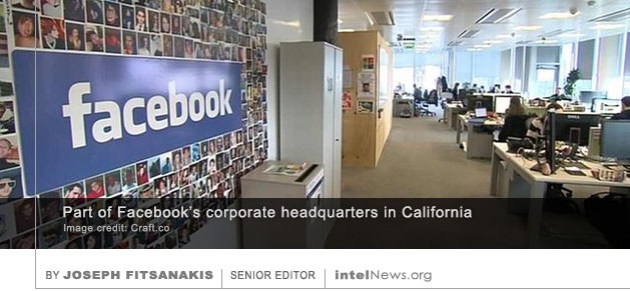 Facebook has said it is involved in an “arms race” against “bad actors” as it announced on Tuesday the removal of accounts that allegedly tried to subvert the upcoming mid-term elections in the United States. The social-media giant said its security division had identified 32 profiles and pages that were set up for the sole purpose of disrupting, subverting or otherwise influencing the American political process. At least seven more accounts were shut down on the Instagram platform –which is also owned by Facebook– for the same reasons. In the past 14 months, the suspect accounts generated nearly 10,000 posts and were liked or followed by over 290,000 users, said Facebook.
In addition to producing memes that aimed to stir existing racial, political and religious tensions in American society, the suspect accounts are also believed to have generated approximately 150 paid advertisements, spending around $11,000 for that purpose. Moreover, close to 30 public events were organized, advertised and hosted by the suspect pages throughout the US in the past 14 months. One such event was subscribed to by 4,700 users, with another 1,400 users stating that they would attend.
In a preliminary report posted on its online newsroom, Facebook said it was too early in the investigation to identify the party or parties behind the alleged effort to influence the US mid-term elections. Its security team had detected “one instance” of a connection between this latest operation and the Russian-based Internet Research Agency (IRA), which Facebook identified as being one of the main sources behind efforts to influence the 2016 US presidential elections. But the report cautioned that the instigators of this latest attempt to influence the US political process had gone to great pains to hide their identities, affiliations and geographical coordinates. For instance, they routinely employed virtual private networks in order to disguise their internet protocol addresses. They also used third parties to purchase advertisements on Facebook and Instagram. These and many other tactics severely limited the ability of security technicians to attribute these efforts to specific countries, governments or companies, said Facebook.
Using unusually strong language to describe its ongoing probe, Facebook said that the exploitation of its platform for sinister political purposes resembled “an arms race” and that constantly changing tactics were needed to combat it. In addition to removing the suspect accounts, Facebook said it was working closer with law enforcement and leading online security firms in order to analyze and eliminate threats from what it described as “bad actors”. It added that it was “investing heavily” in more people and better technology in order to eliminate those who were trying to weaponize its communication platform for sinister goals.
► Author: Joseph Fitsanakis | Date: 01 August 2018 | Permalink
 With nearly 53 million Twitter followers, United States President Donald Trump could easily be described as the most social-media-friendly American leader in our century. It is clear that Trump uses Twitter to communicate directly with his followers while circumventing mainstream media, which he views as adversarial to his policies. However, according to former Central Intelligence Agency analyst Nada Bakos, foreign intelligence agencies are among those paying close attention to the president’s tweets. Bakos spent 20 years in the CIA, notably as the Chief Targeter of the unit that tracked down Abu Musab al-Zarqawi, the founder of al-Qaeda in Iraq, which later evolved into the Islamic State of Iraq and Syria. In a June 23
  The online social media company Facebook shares data about its users with a Chinese telecommunications company that has been flagged in United States government reports as a threat to security. The New York Times
  Indian authorities have arrested an Indian Air Force officer for allegedly giving classified documents to two Pakistani spies on Facebook, who posed as women interested in him. The officer has been named as Arun Marwaha, a wing commander stationed at the Indian Air Force headquarters in Delhi. Marwaha, 51, is a para-jumping instructor who trains members of India’s Garud Commando Force —the Special Forces unit of the Indian Air Force. He was reportedly due to retire in 2019.
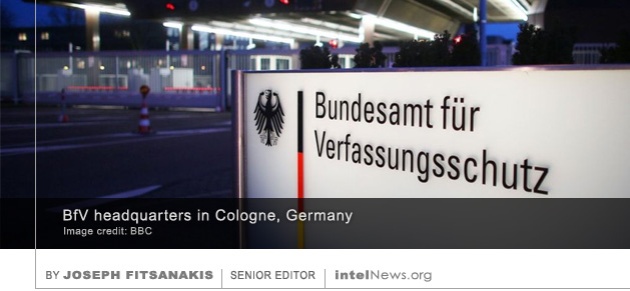 In an unusual step, German intelligence officials have issued a public warning about what they said are thousands of fake LinkedIn profiles created by Chinese spies to gather information about Western targets. On Sunday, Germany’s Federal Office for the Protection of the Constitution (BfV) held a press conference in which it said that it had discovered a wide-ranging effort by spy agencies in China to establish links with Westerners. The agency said that it undertook a 9-month investigation, during which it identified 10,000 German citizens who were contacted by Chinese spy-run fake profiles on LinkedIn. Across Europe, the number of targets could be in the hundreds of thousands,
  Whistleblowers say mismanagement, amateurism and cronyism are plaguing a multimillion-dollar American psychological operation aimed at countering online propaganda by the Islamic State. The program, known as WebOps, was established by the United States Department of Defense during the administration of US President Barack Obama. Its stated goal is to counter efforts by the Islamic State (also known as the Islamic State of Iraq and Syria —ISIS) to spread propaganda and recruit followers using online social media. Since its creation, it has been administered by the US Central Command’s Information Operations Division. But its implementation has been contracted to Colsa Corporation, a private company based in the US state of Alabama. The company specializes in providing services for US government agencies, some of which include the use of specialized software that utilizes information found on social media.
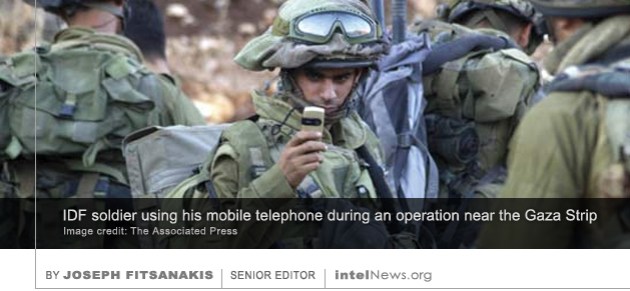 The Israel Defense Forces told a press conference on Wednesday that hackers belonging to the Palestinian militant group Hamas lured Israeli soldiers by posing as young women online. Wednesday’s press conference was led by an IDF spokesman who requested to remain anonymous, as is often the case with the Israeli military. He told reporters that the hackers used carefully crafted online profiles of real Israeli women, whose personal details and photographs were expropriated from their publicly available social media profiles. The hackers then made contact with members of the IDF and struck conversations with them that in many cases became intimate over time. At various times in the process, the hackers would send the Israeli soldiers photographs of the women, which were copied from the women’s online public profiles.











 intelNews.org
Islamic State’s online footprint declines drastically, experts say
October 26, 2018 by Ian Allen Leave a comment
According to The Washington Times newspaper, most information warfare experts at the United States Department of Defense believe that very little is left of the Islamic State’s once sizeable Web and social-media presence. The paper said that, according to the US Pentagon, the total media footprint of the group —which is also known as the Islamic State of Iraq and Syria (ISIS)— has diminished by as much as 83 percent since its peak in 2015. Online activity measured by the US Pentagon includes posts on social media by Islamic State members and commanders, as well as professionally produced pro-ISIS images and videos aired on YouTube and other image- and video-based online platforms. It also includes material from the Islamic State’s press bureau, the Amaq News Agency, which in previous years produced hundreds of pro-ISIS videos.
Experts told The Washington Times that the Islamic State’s online footprint has shrunk as a result of the group’s loss of its territory. The loss of ISIS’ physical bases in the Middle East has resulted in the death of many of the group’s online propagandists. Those who survived are currently hiding or fleeing from the authorities, fearing arrest or death. This has “crushed [the militant Sunni group’s] ability to mount a coordinated Web-based strategy”, said The Washington Times. The military attacks against ISIS continue to take place alongside an “aggressive counterstrategy in cyberspace”, said the paper, which is being led by the US Pentagon and its allies. This has included the successful targeting of thousands of social media accounts belonging to ISIS members and supporters, as well as complex hacking operations. The US Pentagon also coordinates the delivery of online content that counters the Islamic State’s narrative and messages.
But some experts warned the paper that the Islamic State continues to recruit members online and that the group’s online recruitment efforts are not completely a thing of the past. In fact, new ISIS-sponsored content continues to appear online regularly, they said. In September of this year alone, the Islamic State released 12 different videos, mostly aimed at recruiting new members. Additionally, the militant group continues to use Facebook, YouTube, and other popular online social media platforms, experts warned.
► Author: Ian Allen | Date: 26 October 2018 | Permalink
Filed under Expert news and commentary on intelligence, espionage, spies and spying Tagged with Amaq News Agency, Islamic State, News, propaganda, social networking, US DoD