CIA ‘used fake British passports’ in kidnap operation

UK passport

British passport

By JOSEPH FITSANAKIS | intelNews.org |
British authorities are looking into allegations that a team of CIA agents made use of forged British passports during an abduction operation in 2003. The allegations surfaced last week in Spain, where a team of prosecutors is currently investigating the activities of 13 CIA agents (11 men and two women) who appear to have used the Spanish tourist resort of Majorca as a base for conducting various operations around Europe. Following the example of Italy, which last year convicted several CIA operatives for illegally abducting a Muslim cleric in Milan, Spanish authorities are now considering issuing arrest warrants for the 13 CIA agents. They are all believed to have been involved in the abduction and rendition of German citizen Khaled El-Masri. El-Masri was abducted in Skopje, Macedonia, in 2003, and later transferred on a secret CIA flight to a Syrian prison, where he says he was brutally tortured. He was later released without explanation, once US authorities realized they had the wrong man. Read more of this post

Analysis: An Economic Security Role for European Spy Agencies?

Economic espionage

Economic spying

By JOSEPH FITSANAKIS | intelNews.org |
Last February, Spain’s intelligence service began investigating alleged suspicious efforts by foreign financial speculators to destabilize the Spanish economy. According to newspaper El País, the Spanish government asked the country’s Centro Nacional de Inteligencia (CNI) to probe links between speculative moves in world financial markets and a series of damaging editorials “in the Anglo-Saxon media”. There are indications that the National Intelligence Service of Greece (EYP) is following in the CNI’s footsteps. In February, when Athens and Brussels began to realize the magnitude of the financial crisis threatening the European common currency, several news outlets suggested that the EYP was cooperating with Spanish, Irish and Portuguese intelligence services in investigating a series of coordinated speculative attacks on money markets, most of which allegedly originated from London and Washington. Read more of this post
More on alleged Mossad spy arrested in Algeria

Forged passports

Forged passports

By JOSEPH FITSANAKIS| intelNews.org |
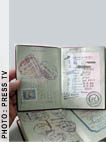
On March 29, intelNews reported on allegations by the Algerian government that an Israeli intelligence agent had been arrested in the country, after he was found to be carrying a forged Spanish passport. The next day, Algerian authorities identified the man only as “Alberto”, and insisted he was a member of the Mossad, Israel’s foremost external intelligence agency. News sources have now identified the man’s forged identity as “Alberto Vagilo”, which appears to be the name listed on his Spanish travel documentation. According to Algerian government officials, the man, whose year of birth is listed as 1975 in his Spanish passport, entered the North African country in mid-March, via a regularly scheduled flight from Barcelona, Spain. Read more of this post

News you may have missed #317

  • Captured MI6 spy denied bail. Daniel Houghton, a former MI6 officer who allegedly attempted to sell British classified top-secret computer files to what he thought was a foreign intelligence agency (but were in fact MI5 counterintelligence agents) has had his bail application rejected.
  • Alleged Israeli spy arrested in Algeria. The Algerian security services have arrested an unidentified Israeli, who allegedly entered Algeria using a forged Spanish passport. No further information available at this time.
  • MI6’s top ranking female spy dies at 88. Daphne Park, the Baroness of Monmouth, who died Wednesday, aged 88, had a long career in the Secret Intelligence Service (SIS), which culminated in her appointment as Controller Western Hemisphere in 1975, the highest post ever occupied by a woman at MI6.

Bookmark and Share

Spanish intelligence probe ‘financial attacks’

CNI seal

CNI seal

By IAN ALLEN | intelNews.org |
Spain’s primary intelligence agency is actively probing alleged links between speculative moves in world financial markets and a series of editorials in “the Anglo-Saxon media”, which Madrid says have sought to undermine market confidence in Spain’s economy. Spanish newspaper El Pais says the Centro Nacional de Inteligencia (CNI) has been asked by Spain’s government to investigate whether “there is something more behind the campaign” to destabilize the Spanish economy, which, if successful, would add tremendously to the financial challenges currently facing the Eurozone. The El Pais article hints at suspicions among many in the European Union that countries not currently participating in the Euro common currency zone may be trying to subvert the Euro through a series of well-timed media reports questioning the financial stability of the European Union. Read more of this post

News you may have missed #0287

  • India still trying to get access to Headley. Congratulations to The New York Times, for managing to publish a feature-length article about the constant requests by Indian intelligence officials to interrogate David C. Headley, currently held in a US prison, without probing why the US is refusing to facilitate these requests. The American-born Headley was arrested in October for having links to Islamic extremist group Lashkar-e-Taiba. There are rumors in India and Pakistan that Headley is in fact a renegade CIA informant.
  • Spanish double agent sentenced to 12 years. Roberto Flórez García, a former employee of Spain’s National Intelligence Center (CNI), was arrested in September for giving classified documents to Russian intelligence, via Petr Melnikov, political attaché at the Russian Embassy in Madrid. This was Spain’s first treason conviction since returning to democracy in 1978 after decades of military dictatorship.

Bookmark and Share

News you may have missed #0269

  • LeT planning paraglide attacks in India? Indian intelligence officials suspect that the Pakistan-based Lashkar-e-Taiba, the group behind the 2008 Mumbai attacks, is planning another audacious strike on the country, this time from the air, using suicide bombers flying paragliders. The group is thought to have purchased 50 paragliding kits from Europe for this purpose.
  • Trial of double agent begins in Spain. The trial has begun in Spain of Roberto Flórez García, a former employee of Spain’s National Intelligence Center (CNI), who was arrested in September for giving classified documents to Russian intelligence, via Petr Melnikov, political attaché at the Russian Embassy in Madrid.

Bookmark and Share

Spanish spies remain active in UK territory of Gibraltar

Gibraltar

Gibraltar

By IAN ALLEN | intelNews.org |
The British Crown has ruled Gibraltar since the early 1700s, but Spain has never ceased to claim national rights over the territory. Today, la Cuestión de Gibraltar (the Gibraltar question) is as critical an issue in Spanish-British relations as it has been for over 300 years. A recent article in Gibraltar’s English-language Panorama news site reminds us that, even though the two countries are NATO and European Union allies, Spanish intelligence agents remain active in the territory. It is true that the Rock is frequented by agents of Spain’s Centro Nacional de Inteligencia (CNI), who are mostly concerned with assessing economic and political life in the British possession. The article lacks sources, but its views are probably not far from the truth, considering Gibraltar’s immense geostrategic significance. Read more of this post

A veteran British envoy on diplomacy, sex and espionage

Christopher Meyer

Christopher Meyer

By IAN ALLEN | intelNews.org |
British newspaper The Daily Mail has published a well-written and entertaining essay by a longtime UK government envoy, explaining the close links between diplomacy, sex and espionage. Sir Christopher Meyer, a career diplomat with the UK’s Foreign and Commonwealth Office, served in several countries during his career, including the Soviet Union and Spain, as well as in Germany and the United States, where he was ambassador from 1997 to 2003. He argues in his article that “sex and diplomacy have long been bedfellows”, and recounts some of his personal experiences in the former USSR, where he began his 35-year diplomatic career in 1968, as “an innocent, unmarried 24-year- old”. He arrived in Moscow along with Sir Duncan Wilson, Britain’s ambassador to the Soviet Union from 1968 to 1971. Sir Christopher is bold enough to recount that Sir Duncan’s predecessor, Sir Geoffrey Harrison (ambassador from 1965 to 1968), “had to leave [Moscow] in a hurry, having fallen for the charms of his Russian maid –trained and targeted, of course, by the KGB”. Read more of this post

Documents show CIA had prior knowledge of 1989 Salvador murders

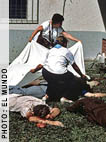
The 1989 José Simeón Cañas Central American University massacre

UCA massacre

By JOSEPH FITSANAKIS | intelNews.org |
The CIA and the US State Department had advance knowledge of the 1989 murders of six Jesuit clerics and two women by troops of the US-supported Salvadoran regime of Alfredo Cristiani, according to declassified internal US government documents submitted at a Spanish court. On November 16, 1989, a group of soldiers from the Atlacatl Battalion, a counter-insurgency squad created and trained at the US Army’s School of the Americas, entered the campus of José Simeón Cañas Central American University (UCA) in El Salvador and summarily executed six Jesuit clerics. They also shot dead two UCA staff members, a woman and her 16-year-old daughter. In the months that followed, pressure from several countries, including the US, forced the Cristiani government to try the Atlacatl Battalion leaders. But the Salvadoran court sentenced only two individuals, both of whom were released in a 1993 Presidential amnesty. Now the declassification of thousands of US government documents sheds further light on the UCA campus massacre and allegedly shows that US authorities in Washington and El Salvador had prior knowledge of the murders. Read more of this post

Indians allege Pakistani spies funded through Europe

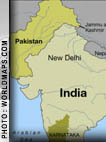
India-Pak border

India-Pak border

By JOSEPH FITSANAKIS | intelNews.org |
Indian authorities have told a major newspaper that Pakistani spies operating in India are funded with money transfers from spy handlers in Europe. Indian daily The Telegraph cites Indian counterintelligence sources, who claim that Pakistani embassies in several European nations, including Spain, Estonia and Luxembourg, use “a popular money transfer company” (in all likelihood Western Union) to fund Pakistani agents operating in India. According to the Indians, most money transfers are facilitated through the simple technique of email account password sharing, which allows both the handler in Europe and the agent in India to access the same email inbox, as well as the same money transfer drafts. Read more of this post

News you may have missed #0124

  • Top Russian spy indicted in sex trafficking case. One of thirteen people indicted on Tuesday in an international sex trafficking case is Dmitry Strykanov, a senior intelligence officer with the Russian Military Intelligence Directorate. Immense corruption still plagues Russian intelligence.
  • Colombian intelligence officer detained in Venezuela. An agent of Colombia’s scandal-prone DAS security agency was detained at a hotel in Maracaibo, Venezuela. The agent, Julio Enrique Tocora Parra, says he was invited to Venezuela by the country’s SAIME immigration agency. A classic case of luring?
  • Spain uncovers double agent’s Russian handler. Spain’s National IntelligenceCenter (CNI) says Petr Melnikov, political attaché at the Russian Embassy in Madrid, facilitated the transfer of Spanish classified documents to Russian intelligence. The documents were allegedly supplied between 2001 and 2004 by Roberto Flórez García former CNI agent, who was arrested by Spanish counterintelligence agents in Tenerife in July of 2007.

Bookmark and Share

News you may have missed #0119

  • CIA opens center on climate change. The CIA Center on Climate Change and National Security is a small unit led by senior specialists from the Directorate of Intelligence and the Directorate of Science and Technology. It focuses on “the national security impact of phenomena such as desertification, rising sea levels, population shifts, and heightened competition for natural resources”. Methinks the emphasis will probably be on the latter.
  • Brazilian political figures spied on after dictatorship. Senior Brazilian politicians, religious leaders and activists were spied on illegally for 16 years after the 1964-1985 military regime, according to recent allegations in the country’s press. Major surveillance targets included Brazil’s current President Luiz Inacio Lula da Silva, opposition leader and Sao Paulo Governor Jose Serra, Cardinal Claudio Hummes, and others.
  • New book examines life of Franco-sympathizer British spy. Jimmy Burns has written a biography of his father, Tom Burns, an anti-communist sympathizer of Spanish dictator Francisco Franco, who organized the British intelligence network in Spain during and after World War II.

Bookmark and Share

Analysis: Is Afghanistan really important in the “war on terrorism”?

Paul P. Pillar

Paul P. Pillar

By JOSEPH FITSANAKIS | intelNews.org |
The Deputy Chief of the CIA’s Counterterrorism Center from 1997 to 1999, Paul Pillar, has authored an interesting editorial in which he asks “how important are physical havens to terrorist groups, such as al-Qaeda?”. The answer: not very. Writing in The Washington Post, Pillar points out that the main unstated assumption behind the US invasion of Afghanistan, namely that the country must not be allowed to again become a haven for terrorist groups, is incompatible with what we know about how such groups organize. If they are offered a haven, groups such as al-Qaeda will use it for basic training of recruits, says Pillar. But operations planning and training does not require such a base, nor is such a center crucial for successful execution of operations. Read more of this post

News you may have missed #0017

  • Spain’s chief spy resigns in financial scandal. Alberto Saiz, who headed Spain’s National Intelligence Center, was accused by the daily newspaper El Mundo of using public money for diving and hunting trips in Mexico, Senegal, Mali and Morocco. He denied the accusations, but on July 2, he resigned “to prevent further damage to the reputation of the intelligence agency and the government”. 
  • FBI declassifies reports on agents’ interviews with Saddam. Just-declassified FBI reports reveal that FBI special agents carried out 20 formal interviews and at least 5 “casual conversations” with former Iraqi dictator Saddam Hussein after his capture by US troops in December 2003. Interestingly, the declassified reports include nothing about “Iraq’s complicated relationship with the US”, especially the alleged role of the CIA in facilitating the Ba’ath party’s rise to power in the 1960s. 
  • Release of CIA report on detention, interrogation, delayed (again). Like many others, we at intelNews were eagerly expecting this previously classified CIA report on detention and interrogation under the Bush administration to be released last Wednesday. It was initially going to be released in mid-June, but was then delayed until July 1. Now the CIA says it won’t be able to release the report until the end of August. The ACLU says it will wait for as long as it has to.