Star on CIA’s memorial wall honors employee who took her own life
May 21, 2019 3 Comments
 A new star that was recently added to the United States Central Intelligence Agency’s memorial wall is seen by some as a way to draw attention to the mental pressures that come with the job, while others view it as disrespectful to the Agency’s mission. The specially designated wall is located at the main entrance lobby of the CIA’s headquarters in Langley, Virginia. It was created in 1974 and displays a star for each of the CIA’s personnel who have perished in the line of duty while working for the Agency. Today it displays nearly 130 stars, which span the CIA’s 72-year history.
The CIA holds an annual ceremony in recognition of its fallen members, at which time new stars are usually added to the memorial wall. Among them there is a star for Ranya Abdelsayed, who died on August 28, 2013, while employed by the CIA in Kandahar, Afghanistan. However, unlike the other 19 known deaths of CIA personnel in Afghanistan since 2001, Abdelsayed reportedly died by suicide. Her lifeless body was found by a colleague after she shot herself to death at Firebase Gecko, an International Security Assistance Force base in Afghanistan, which is commanded by the North Atlantic Treaty Organization. It is believed that Abdelsayed’s star is the only star on the CIA’s memorial wall that recognizes a CIA employee who took her own life.
In an article published on Sunday, The Washington Post’s Ian Shapira reports that not everyone at CIA agrees that Abdelsayed deserves to have a star on the Agency’s memorial wall. Shapira spoke to Nicholas Dujmovic, a recently retired CIA historian, who claims that Abdelsayed’s star “must absolutely come off the wall” because it violates the CIA’s own criteria for this highest of honors. Dujmovic opines that the memorial wall is reserved for deaths of CIA personnel that are “of an inspirational or heroic character”, typically deaths that are caused by hazardous conditions or violent actions by adversaries. The CIA historian tells The Washington Post that he has researched past deaths of CIA personnel and fears that “there has been an erosion of understanding in CIA leadership for at least two decades about what the wall is for and who is it that we’re commemorating”.
The paper reports that Dujmovic made his views known to CIA officials when the Agency’s Merit Awards Board decided to include a star in honor of Abdelsayed. But the Board upheld its decision, and so did the CIA’s director at the time, John Brennan. He told The Post that he stands by that decision today, arguing that Abdelsayed’s death was “something the Agency needed to recognize as being one of those unfortunate consequences of the global challenges the CIA addresses”.
► Author: Joseph Fitsanakis | Date: 21 May 2019 | Permalink
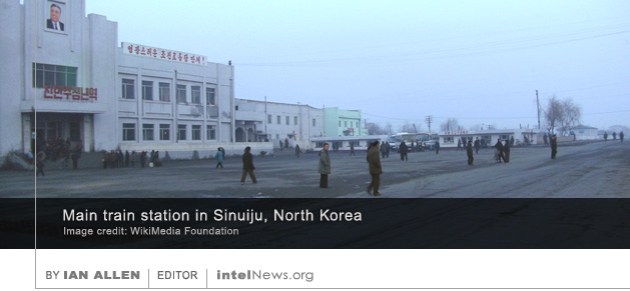 A North Korean nuclear scientist who defected to China but was involuntarily sent back to North Korea in November reportedly killed himself in his North Korean cell hours before he was due to be interrogated. Information about the scientist’s alleged suicide was issued on Thursday by Radio Free Asia (RFA), a multilingual news service based in Washington, DC, which is funded by the United States government. The service said its reporters spoke to an anonymous source in North Hamgyong province, North Korea’s northernmost region that borders China. The source identified the late scientist as Hyun Cheol Huh, but cautioned that this may not be his real name, because the North Korean security services are known to “use […] fake names when referring to important persons” in their custody.
 A senior Chinese People’s Liberation Army (PLA) military official, who was seen as a close ally of President Xi Jinping, has allegedly committed suicide, according to Chinese state media. Zhang Yang was one of the most high-profile generals in the Chinese PLA. His rise to power after Xi became president of China was meteoric. He was appointed member of the Central Military Commission (CMC) of the Communist Party of China, which exercises political supervision of the Chinese armed forces. In addition to his role in the CMC, Zhang directed the General Political Department of the PLA’s Ground Force, which made him the top political commissar in the army.
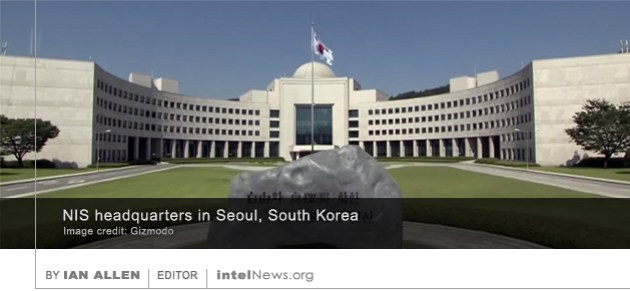 A suicide note found next to the body of a South Korean intelligence officer mentions a phone hacking scandal that has caused controversy in the country. The 45-year-old man, identified only as “Lim” by South Korean authorities, worked for the country’s primary intelligence organization, the National Intelligence Service (NIS). He was found dead late on Saturday morning inside his car, which had been parked on a deserted rural road on the outskirts of South Korean capital Seoul. According to local reports, authorities found a metal plate with burnt-out coal inside his car, which had been locked from the inside. Finding no apparent marks on his body, the police have ruled his death a suicide.




 By IAN ALLEN | intelNews.org |








 intelNews.org
Executive of Danish bank implicated in massive money laundering found dead
September 26, 2019 by Ian Allen Leave a comment
But the reputation of the Estonian banking sector was tarnished last year, when a criminal investigation was launched into an alleged money laundering scandal. The investigation focused on customers from Russia and other Eastern European countries who allegedly used Danske Bank’s subsidiary in Estonia to launder billions of dollars in illicit funds. The probe prompted Danske Bank to pull out of the Baltic countries. Meanwhile, the probe extended to Sweden, Germany and the United States. Deutsche Bank, one of the world’s largest financial institutions, is currently being investigated for allegedly helping facilitate Danske Bank’s customers launder money by converting it into United States dollars. The criminal probe has damaged the previously spotless reputation of the Scandinavian banking sector and has made Central European banks hesitant to do business in the Baltics. Some financial observers have even warned that the Danske Bank scandal could drag the Baltic economies into a prolonged recession.
Rehe was not involved in the money laundering scandal. However, much of the money laundering took place between 2007 and 2015, when he was in charge of the Estonian subsidiary of Danske Bank. Under his leadership the bank’s operations were allegedly marred by “deficiencies in controls and governance”, which allowed for criminal activity to occur unnoticed, according to an internal Danske Bank investigation into the money laundering affair. Rehe had been missing from his home since Monday, having apparently left without taking his wallet and cellphone. His body was discovered on Wednesday in the garden of his home in the Estonian capital. Police have ruled his death an apparent suicide and believe that no foul play was involved.
► Author: Ian Allen | Date: 26 September 2019 | Permalink
Filed under Expert news and commentary on intelligence, espionage, spies and spying Tagged with Aivar Rehe, corruption, Danske Bank, Denmark, Estonia, money laundering, suicides