China assesses emotions of subjects using AI technology that monitors skin pores
May 26, 2021 2 Comments
 POLICE STATIONS IN CHINA are reportedly experimenting with a new technology that uses artificial intelligence to detect the emotions of subjects, and even monitors their skin pores, according to a source who spoke to the BBC. The source is a software engineer, whose identity has not been disclosed by the BBC. He said he helped install the controversial technology in a number of police stations in the Chinese region of Xinjiang.
Xinjiang, China’s most impoverished region, is home to 12 million Uighurs, most of whom are Muslims. The Chinese state is currently engaged in a campaign to quell separatist views among some Uighurs, while forcibly integrating the general population into mainstream Chinese culture through a state-run program of forcible assimilation. It is believed that at least a million Uighurs are currently living in detention camps run by the Communist Party of China, ostensibly for “re-education”. Xinjiang is often referred to as the world’s most heavily surveilled region.
According to the BBC’s Panorama program, patents filed by Chinese companies point to the development of facial recognition programs that can distinguish subjects by ethnicity, and appear to be “specifically designed to identify Uighur people”. Among them are artificial intelligence systems that are able to detect facial micro-expressions, so as to analyze the emotions of subjects. According to Panorama, some systems even monitor “minute changes” in skin pores on the face of subjects, as a means of detecting micro-expressions. The software then allegedly produces a pie chart that details a subject’s state of mind.
The BBC said it reached out to the Chinese embassy in London, which claimed to have “no knowledge” of these alleged surveillance programs. In a statement issued on Tuesday, the Chinese embassy said that “the political, economic and social rights and freedom of religious belief in all ethnic groups in Xinjiang are fully guaranteed”. It added that people in Xinjiang “live in harmony and enjoy a stable and peaceful life with no restriction to personal freedom”.
► Author: Joseph Fitsanakis | Date: 25 May 2021 | Permalink
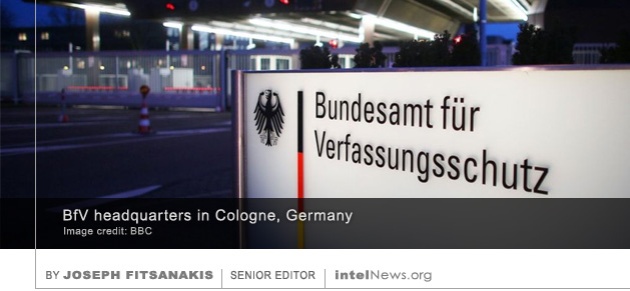 A GERMAN COURT HAS temporarily blocked an attempt by the country’s intelligence service to place a domestic far-right party under government surveillance for the first time since the Nazi era. The far-right party, Alternative für Deutschland, or AfD, was established in 2013. It shocked the German political establishment in 2017, when it received nearly 6 million votes, which amounted to 12.6% of the national vote. Since then, however, the AfD has been shunned by other political parties and the German media, for its alleged links with neo-Nazi groups and sympathizers.
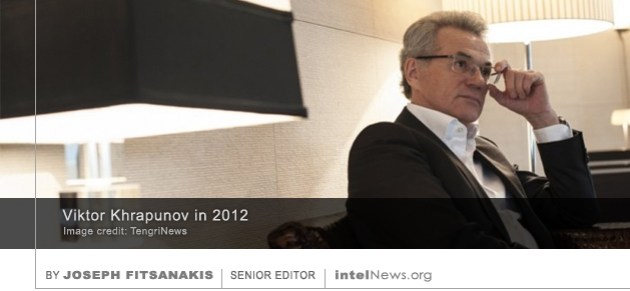 A Swiss court has reopened an investigation of alleged espionage activities by agents of the government of Kazakhstan against a high-profile political exile living in Switzerland. The case, which dates to 2014, centers on Viktor Khrapunov, a former senior Kazakh government official, who has been living in Geneva since 2008. In the years immediately following the dissolution of the Soviet Union, Khrapunov served as Kazakhstan’s Minister for Energy and Coal, a post that was later renamed to Minister of Energy and Natural Resources. After 1997, he was appointed mayor of Almaty, Kazakhstan’s largest city, which is inhabited by 10 percent of the country’s population. But by 2006, Khrapunov had fallen out with the government of Kazakhstan’s authoritarian President Nursultan Nazarbayev. The government claimed that Khrapunov was embroiled in a series of fraudulent real-estate schemes and that he laundered large sums of money for his own personal use.
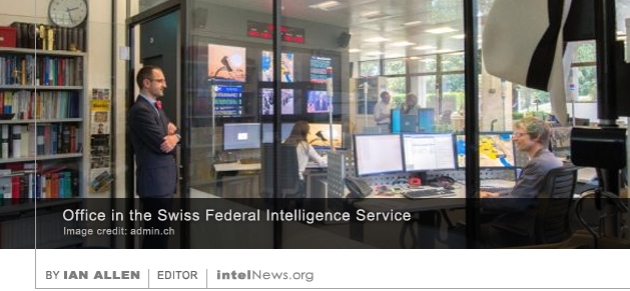 Voters in Switzerland have strongly approved a proposed law that aims to expand the surveillance powers of Swiss intelligence agencies. The move is uncharacteristic of the Swiss, who have historically been skeptical of giving far-reaching surveillance powers to their government. In the late 1980s, Swiss public opinion was shocked by the revelation that the country’s Federal Military Department had spied without permission on tens of thousands of Swiss citizens for many decades under a top-secret project codenamed P-27. In response to the revelations, P-27 was ended, the Swiss intelligence agencies were reorganized, and stricter parliamentary controls were imposed on their activities. Today, even CCTV cameras are rarely used in Switzerland, while Google has not been given permission to incorporate the country’s streets into its Streetview application due to strict local privacy laws.












 intelNews.org
Mossad targeted cell phones ‘unofficially’ with Pegasus software, report alleges
February 14, 2022 by Joseph Fitsanakis Leave a comment
The move followed revelations about a spy software known as Pegasus, which is marketed by NSO Group. Pegasus is able to install itself on targeted telephones without requiring their users to click a link or download an application. Upon installation, the software provides the spying party with near-complete control of a targeted telephone. This includes the ability to browse through the device’s contents, such as photographs and videos, record conversations, as well as activate the telephone’s built-in microphone and camera at any time, without its user’s consent or knowledge.
Now a report by Haaretz, one of Israel’s leading newspapers, alleges that, under its previous director, Yossi Cohen, the Mossad worked closely with NSO Group Technologies. Citing NSO Group “employees, who asked to remain anonymous”, Haaretz alleges that Mossad officials “frequently visited the company headquarters in Herzliya”, in the northern outskirts of Tel Aviv. Initially, the Mossad officials sought to learn about the uses and capabilities of the spy software, according to Haaretz. Later, however, they began to bring with them foreign officials from countries like Saudi Arabia and Angola, whose governments were interested in acquiring the software.
On “several occasions”, the Mossad officials asked NSO Group to make use Pegasus in order to “hack certain phones” on behalf of the Mossad. It is not known whether this was because NSO Group’s spyware was more advanced than the Mossad’s spyware, or whether the spy agency was engaged in “unofficial intelligence gathering”, says Haaretz. The paper adds that, under its current director, David Barnea, the Mossad has distanced itself from NSO Technologies.
► Author: Joseph Fitsanakis | Date: 14 February 2022 | Permalink
Filed under Expert news and commentary on intelligence, espionage, spies and spying Tagged with communications interception, Israel, Mossad, News, NSO Group Technologies, Pegasus software, surveillance