Bizarre explosion kills Palestinian diplomat in Prague

Jamal al-JamalBy JOSEPH FITSANAKIS | intelNews.org
The ambassador of Palestine to the Czech Republic was pronounced dead yesterday following injuries he sustained from a mysterious explosion at his residence. Czech police said Jamal al-Jamal died in hospital on New Year ’s Day, having suffered lethal injuries to his chest, abdomen and head. According to early indications, the 56-year-old diplomat was killed by an explosion caused as he opened a safe that had been transferred to his residence from the old Palestinian Liberation Organization (PLO) offices in downtown Prague. During the Cold War, the PLO, which al-Jamal joined in 1975, maintained close relations with most of the nations of the communist bloc, including what was then Czechoslovakia. The organization, which was led by Fatah leader Yasser Arafat, maintained an office in the Czechoslovakian capital. However, according to the Palestinian Minister of Foreign Affairs, Riyad al-Malki, the Palestinian National Authority is currently in the process of moving its diplomatic premises from downtown Prague to the northern suburb of Suchdol, adjacent to the two-story building that housed Ambassador al-Jamal and his family. Al-Maliki said that the safe al-Jamal was trying to open at the time of the explosion had come from the old PLO offices in downtown Prague where “no one had touched it for 20 to 25 years”. He added that the blast was triggered just moments after al-Jamal opened the safe in order to record its contents, prior to having it moved to the new premises of the Palestinian diplomatic mission next door. “After he decided to open [the safe], apparently something happened inside and [it] went off”, said the minister. Read more of this post

Further evidence shows Litvinenko worked for MI6 when killed

Alexander LitvinenkoBy JOSEPH FITSANAKIS | intelNews.org
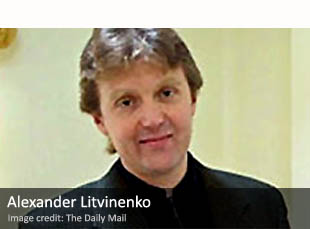
In 2012, a court in the United Kingdom was told that former KGB officer Alexander Litvinenko, who died of poisoning in 2006, had been working for British and Spanish intelligence when he was killed. Now British newspaper The Independent says it has proof that the late Russian spy provided “expert analysis” on Russian politics for British intelligence, shortly before his death. Litvinenko was an employee of the Soviet KGB and one of its successor organizations, the FSB, until 2000, when he defected with his family to the UK. He soon became known as a vocal critic of the administration of Russian President Vladimir Putin. In 2006, Litvinenko came down with radioactive poisoning soon after meeting a former KGB/FSB colleague, Andrey Lugovoy, at a London restaurant. Many suspect that the Russian government is behind Litvinenko’s murder. But the dead spy’s family has argued for years that his killers did not only kill an intelligence defector, but also an officer of British intelligence. On Thursday, The Independent said it had seen a diplomatic memo that was given to Litvnenko for analysis by British external intelligence agency MI6. The document, known in the British Foreign Office lingo as a “diptel” (diplomatic telegram), was dispatched to several British embassies around the world in 2000. It includes a descriptive analysis of a confidential meeting in London between British intelligence officials and Sergei Ivanov. Currently a political powerhouse in Putin’s administration, Ivanon was at the time an unknown quantity in Western circles. He had entered politics after having spent nearly two decades working for Soviet and Russian external intelligence. The diptel seen by The Independent outlines the exchange of views between Ivanov and the British officials during the meeting, and evaluates his stance on a broad range of issues, ranging from the rise of Islamic militancy, to China, the Middle East, and the role of the North Atlantic Treaty Organization. Read more of this post
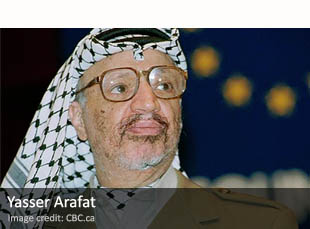

Arafat ‘may have been poisoned’, claims Swiss forensic report

Yasser ArafatBy JOSEPH FITSANAKIS | intelNews.org
A forensic investigation by Swiss researchers into the death of Yasser Arafat states that the data “moderately suggests” that the Palestinian statesman may have been poisoned with a deadly radioactive substance. The founder of Palestinian nationalist group Fatah, who led the Palestine Liberation Organization for over three decades before becoming the first president of the Palestinian Authority, passed away in November 2004 at the Percy military hospital in Paris, France. His official records indicate that he died from a stroke, which he suffered as a result of a blood disorder known as disseminated intravascular coagulation. However, a year-long investigation by a team of forensic pathologists at the Vaudois University Hospital Centre in Lausanne, Switzerland, suggests that the late Palestinian leader is likely to have been poisoned with radioactive polonium. According to the results of the study, published by Qatari news channel Al Jazeera, tests on Arafat’s bones and on soil samples from around his corpse, showed “unexpected high activity” of polonium 210. Traces of the same substance were discovered on the personal artifacts that Arafat used during his final days while in hospital in Paris. According to the study, some of the Fatah leader’s personal belongings, including his underwear and his toothbrush, contained levels of polonium that were as many as ten times higher than those in random samples used as control subjects in the study. The BBC spoke to Dr. Paddy Regan, of the University of Surrey, United Kingdom, who specializes in the detection and measurement of radiation. He said the Swiss study had delivered “a pretty strong statement” in support of the theory that Arafat was poisoned. Read more of this post

Medical review article considers Arafat poisoning theory

Yasser Arafat in Tunis in 1993By IAN ALLEN | intelNews.org
The publication of a peer reviewed article in one of the world’s leading medical journals has reinforced the possibility that the late Palestinian leader Yasser Arafat may have died of poisoning. A nine-month study into the possible poisoning of the founder of Palestinian nationalist group Fatah, was commissioned in 2012 by Qatari news channel Al Jazeera. It was undertaken by a team of researchers at the Institut de Radiophysique (IRA) in Lausanne, Switzerland. According to the results, announced in July of that year, significant traces of the radioactive substance polonium 210 were discovered on the personal artifacts that Arafat used during his final days while in hospital in Paris, France, in 2004. According to the IRA, some of the Fatah leader’s personal belongings, including his underwear and his toothbrush, contained levels of polonium that were as many as ten times higher than those in random samples used as control subjects in the study. Shortly after the IRA study, Arafat’s wife and daughter filed an official complaint with French judicial authorities, who in turn decided to open an official murder investigation into the death of the late Palestinian national leader. Now British medical journal The Lancet has published a peer reviewed analysis of the IRA research, which outlines and endorses its conclusions. The article, entitled “Improving forensic investigation for polonium poisoning”, was authored by a group of researchers at the IRA in Lausanne and at the University Centre of Legal Medicine, which is also in Switzerland. It explains the procedures followed during the forensic investigation of  Arafat’s belongings, and examines the theory that Arafat may have been poisoned. The researchers state that the “findings [of the investigation] support the possibility of Arafat’s poisoning with 210Po”. Read more of this post

US court dismisses lawsuit against CIA over scientist’s death

CIA headquartersBy JOSEPH FITSANAKIS | intelNews.org |
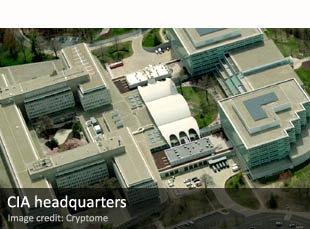
A United States federal court has dismissed a lawsuit filed against the Central Intelligence Agency over an alleged murder of an American Department of Defense scientist, which occurred in 1953. The lawsuit concerned the case of Dr. Frank Olson, a specialist in biological warfare working for the US Pentagon at Fort Detrick, Maryland. It appears that Olson, who studied the effects of toxic substances on the brain, participated —knowingly or unknowingly— in Project MKNAOMI/ MKULTRA. The project was a joint effort by the CIA and the US military to study the effects of substances such as heroin and LSD on the human brain. On November 28, 1953, Dr. Olson fell to his death from the window of his room on the 13th floor of New York City’s Statler Hotel. In an internal report that was declassified in 1975, the US government admitted that Dr. Olson had been assigned the task of military-scientific liaison with the CIA’s Technical Services Staff —the unit in charge of MKULTRA. Moreover, the report disclosed that the late scientist had been administered LSD by his CIA colleagues without his knowledge nine days prior to his sudden death. Ever since the report was aired, Dr. Olson’s family has maintained that the scientist did not voluntarily plunge from his hotel window on November 28, 1953. Rather, they claim, he was pushed to his death by CIA personnel, after he raised strong objections against the testing of chemical and biological substances on non-consenting human subjects by the Agency’s Technical Services Staff. But US District Judge James Boasberg ruled that, although the CIA had yet to come clean on the controversial history of MKULTRA, the lawsuit by Dr. Olson’s family had been “filed too late”; he added in his ruling that an earlier settlement between the dead scientist’s family and the US government effectively barred the possibility of a new lawsuit. Read more of this post

News you may have missed #826 (suspicious deaths edition)

Pablo Neruda (right) and Salvador AllendeBy IAN ALLEN | intelNews.org |
►►Key suspect in Russian spy murder refuses to cooperate. Andrey Lugovoi, who is now an elected official in Russia, says he will not talk even by video to British investigators about the poisoning of Alexander Litvinenko in London just over six years ago. The murder of former Russian spy Alexander Litvinenko in London in 2006, has never been solved and remains the subject of conflicting narratives and still-deepening intrigue over who may have killed him and why.
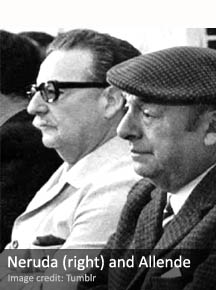
►►Exhumation of Neruda’s remains set for April. A court in Chile has set April 8 as the date for the exhumation of the remains of the Nobel Prize-winning poet Pablo Neruda, as part of an inquest into his death. The poet and leftwing activist died 12 days after a military coup replaced the socialist President Salvador Allende with General Augusto Pinochet. The poet’s family maintains that he died at 69 of advanced prostate cancer. But in 2011, Chile started investigating allegations by his former driver, Manuel Araya Osorio, that the poet had been poisoned.
►►Venezuela to investigate Chavez murder allegations. Venezuelan officials have said they will set up an inquiry to investigate suspicions that President Hugo Chavez was “murdered by foreign agencies”. Venezuelan Oil Minister Rafael Ramirez told the BBC the United States and Israel were to blame for Chavez’s death, and that he had no doubt that Chavez’s death was an act “similar to Yasser Arafat’s“. Earlier this week, the US expelled two Venezuelan diplomats following the expulsion of two American officials from Caracas.

News you may have missed #825

Ben ZygierBy IAN ALLEN | intelNews.org |
►►Australian Mossad officer was facing 20 years in prison. Mossad operative Ben Zygier was facing 20 years in prison on “serious espionage” charges when he hanged himself in an Israeli prison, suggests a report published Wednesday by Australia’s Department of Foreign Affairs and Trade. The report is the first confirmation of the nature of Zygier’s indictment. Under Israeli criminal law, the only security-related crimes that carry a 20-year prison sentence fall under the heading of “serious espionage”.
►►MS-13 smuggles missile launchers and teams up with Zetas. Mara Salvatrucha, or MS-13, became El Salvador’s deadliest gang through force of numbers and the power of the handgun. Now if they weren’t deadly enough, the gang is transitioning into adopting heavier weapons while teaming up with Mexico’s Zetas. But according to a recent report, the gang is moving “away from a dependence on handguns via the acquisition of automatic rifles such as AK-47s, along with grenades, rocket propelled grenade launchers, and Light Anti-Tank Weapons”, or LAWs.
►►Secretive US anti-smuggling program marks one-year anniversary. A nascent and somewhat secretive US government anti-smuggling program is marking its first anniversary this week. It is called E2C2, shorthand for Export Enforcement Coordination Center, and 18 law enforcement and intelligence agencies use it to find links between their targets and other investigations. The E2C2 was created by presidential order in 2010, but the collaboration has evolved slowly. According to a Government Accountability Office report, the E2C2 opened nine months late, in part because of “some difficultly” between agencies over how the center would operate.

British government tries to block probe into ex-KGB officer’s murder

Alexander LitvinenkoBy JOSEPH FITSANAKIS | intelNews.org |
The family of a Russian spy, who died of poisoning after defecting to Britain, has accused the British government of trying to cover up the affair in order to avoid embarrassing Russia. Alexander Litvinenko was an employee of the Soviet KGB and one of its successor organizations, the FSB, until 2000, when he defected with his family to the United Kingdom. He soon became widely known as a vocal critic of the administration of Russian President Vladimir Putin. In 2006, Litvinenko came down with radioactive poisoning soon after meeting a former KGB/FSB colleague, Andrey Lugovoy, at a London restaurant. He died in hospital three days later. A public inquest into Litvinenko’s murder had been scheduled for May, 2013. On Tuesday, however, it was revealed that the British government had filed a written petition to limit the information disclosed in the inquest. According to The London Times, British Foreign Secretary William Hague filed a Public Interest Immunity Certificate (PIIC), which, if allowed to stand, would limit the scope of the inquest on national security grounds. It is believed that the government wishes to block information linking Litvinenko to the Secret Intelligence Service —also known as MI6— Britain’s primary external spy agency. Last December, Ben Emmerson, the lawyer representing Litvinenko’s widow, claimed that the late Russian spy was a “registered and paid” agent of MI6 and Spanish intelligence at the time of his death. Read more of this post

Former Mossad officer describes Zygier affair as ‘scandalous’

Ben ZygierBy JOSEPH FITSANAKIS | intelNews.org |
A former member of Israeli spy agency Mossad, who claims to have worked in the same covert-operations unit as Ben Zygier, has described the latter’s incarceration and subsequent death as “scandalous”. The Australian-born Zygier was a Mossad officer several years before he was placed in solitary confinement following his arrest in Israel, in February 2010. Known to the outside world only as ‘Prisoner X’, he allegedly killed himself in his cell a few months later. Earlier this month, when an Australian television program identified ‘Prisoner X’ as Zygier, the Australian government admitted it had been aware of its citizen’s incarceration and death, but chose not to extend to him diplomatic support. So far, the Mossad, Israel’s foremost covert-action agency, has remained silent on the matter. But a former Mossad operative, who uses the name Michael Ross, has weighed in with his opinion. Ross was born in Canada and converted to Judaism before joining the Mossad for 13 years, seven of which he claims to have spent in the same covert-operations unit as Zygier. Although he never met his Australian-born colleague, Ross wrote in The Daily Beast in the weekend that he and Zygier “were in the field at the same time, albeit in different units”. In his article, the former Mossad spy dismisses allegations that Zygier may have betrayed his employer, saying that he has seen no evidence that the Australian-born Jew was not dedicated to the mission of the Mossad. He argues that the circumstances surrounding Zygier’s incarceration in solitary confinement were “scandalous”, because the jailed spy presented “no danger to the public”. Instead, says the former spy, Zygier could have been dismissed from the spy service and placed under house arrest for as long as it would have been necessary for the accusations against him to be “dealt with internally”. Read more of this post

Did Aussies ‘burn’ Israel’s Prisoner X and was he also a British citizen?

Ben ZygierBy JOSEPH FITSANAKIS | intelNews.org |
As intriguing questions continue to mount about the case of Israel’s so-called ‘Prisoner X’, the flow of verifiable information from official channels in Australia and Israel has slowed to a trickle. However, two important analyses appeared over the weekend, which could potentially place the incarceration and subsequent death of Ben Zygier under new light. One claims that the Australian-born Israeli was a low-level Mossad operative who did not commit any serious crime —let along high treason. The other suggests that Zygier might have held British citizenship, in addition to being a dual Australian and Israeli citizen, and that the British government might have been privy to the information regarding his arrest and subsequent incarceration in Israel’s Ayalon prison. In an article for Ynet, the online outlet for Israel’s high-selling newspaper Yediot Ahronot, veteran security correspondent Ron Ben-Yishai posits that Zygier was simply a “support operative” for the Mossad, adding that he “did not commit treason”. Instead, says Ben-Yishai, Zygier was probably arrested by the Israelis because they suspected he might have given, or might consider giving, information about forged Australian passports to Canberra. The Mossad decided to detain him after he told them he had been contacted by Australian journalist Jason Koutskoukis in late 2009 and asked whether he was a Mossad operative. Koutsoukis was tipped-off by Australian counterintelligence, which suspected Zygier of supplying the Mossad with Australian passports in his possession. It was the stigma of being considered a traitor by his own people that drove Zygier —a passionate Zionist— to suicide, claims Ben-Yishai. Read more of this post

Interview: Israel’s ‘Prisoner X’ linked to 2010 al-Mabhouh killing

Ben ZygierThis morning I spoke to SBS Radio Australia’s Greg Dyett about the mysterious case of Ben Zygier, an Australian-born naturalized citizen of Israel, who is said to have killed himself in 2010 while being held at a maximum-security prison near Tel Aviv. As intelNews reported on Wednesday, Zygier, who is believed to have been recruited by Israel’s covert-action agency Mossad, had been imprisoned incommunicado for several months and was known only as ‘Prisoner X’, even to his prison guards. Is there any connection between Zygier’s incarceration and the January 2010 assassination of Palestinian arms merchant Mahmoud al-Mabhouh, in Dubai? And what could Zygier have done to prompt Israel to incarcerate him? You can listen to me discuss this mysterious case in an eight-minute interview here, or read the transcript, below.

Q: You say that, after conferring with your contacts in Israel, Europe and the United States, you believe that Ben Zygier had some sort of involvement in the assassination of Mahmoud al-Mabhouh in Dubai in January 2010.

A: Mahmoud al-Mabhouh was a weapons procurer for the Palestinian militant group Hamas. At this point, there is little doubt that the Mossad was behind this operation. Several members of the team that killed al-Mabhouh were using third-country passports —Irish, British, Australian, and others— to travel to and from Dubai. In the aftermath of the assassination, there were questions about how the Mossad operatives managed to get those passports; and, if you’ll remember, that led to the expulsion of several Israeli diplomats from around the world, including Australia. Read more of this post

Israel’s ‘Prisoner X’ supplied Australian passports to the Mossad

Ben ZygierBy JOSEPH FITSANAKIS | intelNews.org |
Concerns about the routine use of Australian passports by Israeli spies led to the exposure of Israel’s mystery ‘Prisoner X’, who killed himself in 2010 while in prison, it has been claimed. On Tuesday, ABC Australia reporter Trevor Bromann identified the mystery prisoner as Ben Zygier, an Australian father of two, who had been recruited by the Mossad, Israel’s covert-action agency, after moving to Israel in 2000. Zygier, whose identity had been withheld even from his prison guards, was arrested in early 2010 and was held for several months in Ayalon, Israel’s most secure prison, located southeast of Tel Aviv. Ayalon’s Unit 15, where Zygier was held, consists of a single cell constructed in 1995 to house Yigal Amir, the assassin of Israel’s Prime Minister Yitzhak Rabin. Remarkably, shortly after ABC Australia revealed Zygier’s identity, Israeli news outlets received telephone calls from the Office of Israel’s Prime Minister, requesting urgent meetings “in the interest of Israel’s national security”. Israeli media reported that senior news editors across Israel were told by the government “to exercise restraint” and refrain from exposing information that could have “very dramatic repercussions” for Israel’s security. Read more of this post

Israel’s ‘Prisoner X’ identified as Australian Mossad agent

Ben ZygierBy JOSEPH FITSANAKIS | intelNews.org |
In late 2010, an unnamed man known in Israel as ‘Prisoner X’ allegedly hanged himself while being held at a maximum-security prison near Tel Aviv. He committed suicide despite being under constant surveillance inside a facility originally built for the man who assassinated Israeli Prime Minister Yitzhak Rabin in 1995. So secret was the identity of the mysterious prisoner that, it was claimed, not even his guards knew his identity. Some in Israel speculated at the time that it might have been an abducted Iranian general. On Tuesday, however, an investigative Australian television program identified the dead man as an Australian citizen who had allegedly been recruited by the Mossad, Israel’s covert-action agency. ABC’s Foreign Correspondent program identified ‘Prisoner X’ as Ben Zygier, an Australian father of two, who moved to Israel in 2000 at the age of 24. The program said Zygier, who in Israel went by the name Ben Alon, was arrested by Israeli authorities in 2010 for unknown reasons. There is intense speculation, however, that Zygier’s secretive incarceration might be connected with an extremely serious security case, possibly involving high treason against the state of Israel. Despite the allegation by ABC of Zygier’s Mossad connection, Israeli news outlets are subjected to an active court order authorizing Israel’s Shin Bet internal security service to prohibit any media discussion on the subject. Israeli newspaper Ha’aretz reported on Tuesday that, hours after ABC’s revelation of Zygier’s identity, Israeli news outlets received telephone calls from the Office of the Israeli Prime Minister. Read more of this post

News you may have missed #820

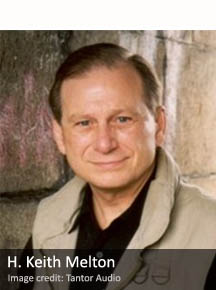
H. Keith MeltonBy IAN ALLEN | intelNews.org |
►►World’s best known spy collector displays his home. And now for something completely different. Most intelNews readers will be aware of H. Keith Melton, the author of more than 25 nonfiction works on espionage (including The Ultimate Spy Book) and the world’s largest private collector of spy memorabilia. The question is, where does he keep all this stuff? The 68-year-old author invited Forbes magazine to his Boca Raton house, which includes his two-story private spy museum. The article is here, a photo gallery here, and a video of the house (but not the museum) is here.
►►Acting CIA director criticizes ‘Zero Dark Thirty’. IntelNews has ignored the commentary that has flooded the Web about Zero Dark Thirty, the feature film fictional account of the assassination of al-Qaeda founder Osama bin Laden. But when the Director of CIA, the agency behind the real-life operation to kill bin Laden, publicly comments, it is time to pay attention. Michael J. Morell, who took over as CIA Director from General David Petraeus last month, has criticized the film, saying it exaggerates the role of coercive interrogations in producing clues to bin Laden’s whereabouts.
►►British police says MI6 expert ‘killed himself’. British police say MI6 cryptology expert Gareth Williams, who was found dead inside a sports bag in August 2010, probably locked himself into the sports bag, where his naked body was found, and was not the victim of a hit by the security services. Williams, 31, worked for Britain’s secret eavesdropping service GCHQ but was attached to MI6 when his remains were found inside the bag in a bathtub at his London apartment.

Litvinenko was working for UK, Spanish intelligence when he was killed

Alexander LitvinenkoBy JOSEPH FITSANAKIS | intelNews.org |
A lawyer representing the family of a KGB defector to Britain, who died of poisoning in 2006, has told a court hearing in London that the late spy was working for British and Spanish intelligence at the time of his death. Alexander Litvinenko was an employee of the Soviet KGB and one of its successor organizations, the FSB, until 2000, when he defected with his family to the United Kingdom. He soon became known as a vocal critic of the administration of Russian President Vladimir Putin. In 2006, Litvinenko came down with radioactive poisoning soon after meeting a former KGB/FSB colleague, Andrey Lugovoy, at a London restaurant. Speaking at a preliminary court hearing on Thursday, in light of an upcoming British government inquiry into Litvinenko’s death, Ben Emmerson, QC, said that the late Russian spy was a “registered and paid” asset of the Secret Intelligence Service. This is not the first time that Litvinenko has been linked to the SIS —known informally as MI6— Britain’s external spy agency. Litvinenko’s widow, Marina, made similar claims to the British press in January of this year. But yesterday’s testimony by her legal team provided the public record with further revelations about her husband’s connections with British intelligence. The court heard that Litvinenko received a regular stipend from MI6 either in cash or via electronic transfer and that he had been provided with an encrypted telephone, which MI6 used to contact him on a routine basis. The night before his poisoning, said Emmerson, Litvinenko had met his MI6 handler, who went by the operational alias MARTIN. Read more of this post