Analysis: The Current State of the China-Taiwan Spy War

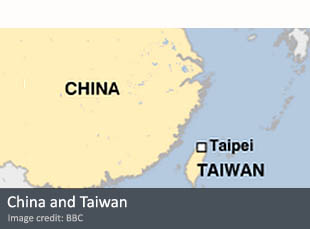
China and TaiwanBy JOSEPH FITSANAKIS | intelNews.org |
Last week I spoke about the current state of the espionage war between China and Taiwan with Tim Daiss, a Southeast Asia-based American journalist who has been covering the Asia-Pacific region for over a decade. Our discussion formed the basis of a comprehensive piece on the subject, published in British newspaper The Independent, in two parts (part one and part two). I told Daiss that the Ministry of State Security —China’s primary national intelligence agency— is not known for its technological prowess. However, the sheer size of Beijing’s intelligence apparatus is proving a good match for the more advanced automated systems used by its less populous regional rivals, including Taiwan. When it comes to traditional human intelligence, the Chinese have been known to employ time-tested methods such as sexual entrapment or blackmail, as was confirmed most recently in the case of Taiwanese Major-General Lo Hsien-che. Lo, who headed the Taiwanese military’s Office of Communications and Information, was convicted of sharing classified top-secret information with a female Chinese operative in her early 30s, who held an Australian passport. During his trial, which marked the culmination of Taiwan’s biggest spy scandal in over half a century, Lo admitted that the Chinese female spy “cajoled him with sex and money”. In addition to honey-trap techniques, Chinese spies collect intelligence by way of bribery, as do many of their foreign colleagues. In the case of China, however, a notable change in recent years has been the accumulation of unprecedented amounts of foreign currency, which make it easier for Chinese intelligence operatives to entice foreign assets, such as disgruntled or near-bankrupt state employees, to sell classified data. Read more of this post

Taiwan arrests eight military officers for spying for China

China and TaiwanBy IAN ALLEN | intelNews.org |
Authorities in Taiwan have announced the arrest at least eight current and former military officers on suspicion of conducting espionage on behalf of China. The eight are accused of leaking Taiwanese military secrets to Beijing, in a case that some Taiwanese legislators described yesterday as one of the most serious instances of espionage in the island’s history. According to official statements issued yesterday, the person in charge of the alleged spy ring appears to be Lieutenant Colonel Chang Chin-hsin, who until his retirement earlier this year was charge of political warfare at the Naval Meteorology and Oceanography (METOC) Office. Based outside of Taipei, METOC is in charge of producing mapping data for use by Taiwan’s naval forces, including cartographic manuals used by Taiwanese warships and submarines guarding the Taiwanese coastline. Taiwanese authorities allege that Chang “initiated contacts” with Chinese mainland officials while still serving in the Taiwanese Navy. Following his recruitment, Chang gradually enlisted several other members of the Taiwanese military by offering hefty monetary bribes in exchange for military secrets. Taipei authorities claim that they found out about Chang’s espionage activities in March of this year, and that Taiwan’s Military Prosecutors Office gathered evidence against him before he was able to seriously compromise national security. Read more of this post


News you may have missed #771

Shawn HenryBy IAN ALLEN | intelNews.org |
►►Analysis: Ex FBI official says foreign spies biggest online threat. Former FBI executive assistant director Shawn Henry has warned that the biggest threat online comes not from terrorists or hackers, but from foreign intelligence organizations looking to steal intellectual property. “The threat from computer attack is the most significant threat we face as a society, other than a weapon of mass destruction”, he said in his opening keynote at the Black Hat 2012 conference in Las Vegas. “Everything we do —R&D, intellectual property, and corporate strategies— is stored or transmitted electronically. The DNA of companies is available to bad guys”.
►►Taiwanese officials jailed for espionage. Two Taiwanese former officials have been sent to prison by the Taiwan High Court for leaking state secrets to China. Presidential Office official Wang Ren-bing was jailed for two years after being found guilty of passing confidential information about President Ma Ying-jeou’s May 2008 inauguration to Chinese intelligence operatives. Chen Pin-jen, a former aide of Chinese Nationalist Party (KMT) Legislator Liao Kuo-tung, was sentenced to eight months in prison for delivering the confidential information Wang gave him to China. The two were arrested in 2009.
►►Germany charges suspected Syrian spy. A spokeswoman for federal prosecutors in Germany said Sunday that they have filed charges against suspected Syrian spy Akram O., one of two men arrested on suspicion of having spied on Syrian opposition activists in Germany for several years. The two were arrested in February during a sting operation involving over 70 German counterintelligence operatives, who searched the suspects’ apartments. The spokeswoman said she could not give further details before an official confirmation is issued that the suspect and the defense team have received the indictment.

News you may have missed #763

RedHack posterBy IAN ALLEN | intelNews.org |
►►Taiwan ex-colonel nabbed for spying for China. Cheng Lin-feng, a retired Lieutenant Colonel in the Taiwanese army, and civilian Tsai Teng-han, were taken in by Taiwanese police last week on suspicion of spying for China. Cheng was allegedly recruited by Chinese intelligence when he travelled to the mainland to do business, Taiwan’s Ministry of National Defense said in a statement, adding that he had been investigated ever since a tip-off in 2009. A court spokesman said that details of case will be held until the investigation is completed.
Russian law brands foreign-funded NGOs ‘foreign agents’. Russia’s Lower House of Parliament has approved a bill that brands non-governmental organizations receiving funding from abroad as “foreign agents”, a law that activists fear the Kremlin will use to target critics. The bill is almost certain to be approved by the Upper House before being signed into law by President Vladimir Putin, who last year accused the US State Department of funding protests against him. The bill is seen by many analysts as setting up a legal infrastructure for a crackdown on the opposition. Meanwhile, official statistics show that wiretapping in the Russian Federation has nearly doubled over the past five years. The main driver of the rise, analysts say, involves the myriad of Russia’s rival security services spying on each other.
►►Turkish hackers release names of police informants. Members of Turkey’s Marxist cyberactivist group RedHack have dumped online a 75-megabyte text file with thousands of emails from Turkish police informants. The group said it released the information in retaliation against ultra-nationalist hackers who have been threatening opposition academics and journalists. RedHack, which has been using ‘defacement hacking’ to promote a Marxist political agenda since its founding, in 1997, is included on the Turkish government’s list of terrorist organizations. In March of this year, RedHack stole data from the Turkish police’s network, forcing the police to shut down all its servers.

News you may have missed #760

Aleksei DressenBy TIMOTHY W. COLEMAN | intelNews.org |
►►Turkey breaks up major military espionage ring. Turkish newspaper Hurriyet Daily News reported on July 9 that 51 active-duty soldiers from over twelve cities have been implicated in a major espionage ring involving Turkey’s military. Following a series of raids on July 7, at least 40 people were detained and four others were taken into custody. The raids were in response to an investigation launched in 2009, regarding warcraft radar locations in Turkey, illegal surveillance, as well as wiretapping of military officers.
►►Taiwan navy misplaces classified naval charts. During the decommissioning last June of Taiwan’s Hai Ou missile boats, classified naval charts were discovered to have gone missing during a final inventory check. The Taipei Times reports that the individual officer tasked with the responsibility of safeguarding the charts in question claimed to have burned one by accident, but was unable to account for the second chart. The classified charts contained information on Taiwanese naval activity including deployments in the Taiwan Strait.
►►Estonia security official and wife jailed for treason. Aleksei Dressen, a former security official at Estonia’s Interior Ministry, and his wife, Viktoria, were both convicted of treason, receiving 16 years and 6 years respectively. During a closed trial the proceedings did not provide direct evidence as to whom Dressen and his wife were working for. However, reports indicate that Dressen’s handlers were most likely representatives of Russia’s FSB.  The prosecution alleged that Dressen brought classified state secrets from the Estonian Interior Ministry to the airport in an envelope and then passed them along to his wife, who acted as a courier to Russian handlers. Heili Sepp, the Estonian prosecutor, indicated that the sentencing of the Dressens was part of a plea bargain effort, noting: “To our knowledge, this is the harshest punishment meted out in plea bargain proceedings in Estonia”.

News you may have missed #717

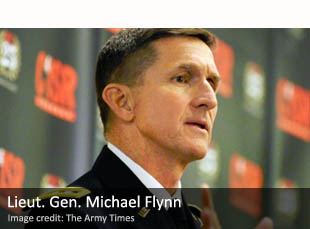
Lieutenant General Michael FlynnBy IAN ALLEN | intelNews.org |
►►CIA wants more drone strikes in Yemen. The CIA is seeking permission to launch more airborne drone strikes in Yemen, even when there is a risk the victims might not always be terrorists, The Washington Post reports. The paper quotes an unnamed Obama administration official saying that “there is still a very firm emphasis on being surgical and targeting only those who have a direct interest in attacking the United States”. But critics of the drone program say killings of innocent victims could become more common if the strikes are expanded. The CIA proposal for the “signature strikes” is awaiting a decision by the National Security Council, The Post quotes unnamed US officials as saying.
►►US military intelligence critic to lead spy agency. Lieutenant General Michael Flynn, who once blasted the work of US military spies in Afghanistan as “only marginally relevant”, has been nominated to take over the Defense Intelligence Agency, which is the US Pentagon’s intelligence organization. Flynn was a scathing public critic of military intelligence in Afghanistan, where he served as a top intelligence officer in 2010, saying it failed to provide decision makers with a clear picture of conditions on the ground. Flynn is credited with playing an influential role during his tenure at Joint Special Operations Command (JSOC), the secretive headquarters that oversees elite commandos like the team that killed Osama bin Laden in May 2011.
►►Taiwanese man detained for spying for China. A Taiwanese businessman, identified by his surname Cheng, has been detained for allegedly spying for China. He was allegedly recruited by China when he moved to the southeastern coastal province of Fujian to do business a few years ago, prosecutors said. Cheng is accused of trying to lure a former classmate, who is now a military officer, to meet with Chinese officials abroad for money; but the officer turned him in to Taiwanese authorities.

News you may have missed #700: analysis edition

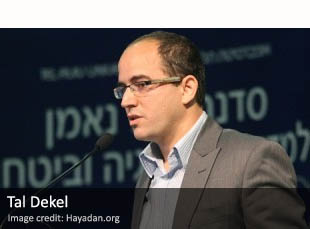
Tal DekelBy IAN ALLEN | intelNews.org |
►►Egypt struggles to advance spy satellite program. Since Egyptian technicians lost touch two years ago with an observation satellite they hoped would help carry the country into the “space club”, the country has struggled to make progress in gaining intelligence satellite capabilities, but it remains committed to the program. This is according to Tal Dekel, a research fellow at Tel Aviv University’s Yuval Ne’eman Workshop for Science, Technology and Security. He said few are aware of the extent of Egypt’s satellite program: “People talk about the Iranians, but no one talks about Egypt’s program, which includes much more than a satellite”.
►►China spying on Taiwan despite thaw. When Taiwanese security personnel detained a suspected spy for China at a top secret military base last month, they may have had a sense of déjà vu. Four suspected spies have been detained in Taiwan during the last fourteen months. The cases show that China is seeking information about systems that are integral to Taiwan’s defenses and built with sensitive US technology. A major breach could make Taiwan more vulnerable to Chinese attack.
►►US intel says water shortages threaten stability. Competition for increasingly scarce water in the next decade will fuel instability in regions such as South Asia and the Middle East that are important to US national security, according to an intelligence report from the US Director of National Intelligence. The report, drafted principally by the Defense Intelligence Agency, reflects a growing emphasis in the US intelligence community on how environmental issues such as water shortages, natural disasters and climate change may affect US security interests.

News you may have missed #698

Cecilia LooströmBy IAN ALLEN | intelNews.org |
►►Swedish official sent top-secret intel briefing via Hotmail. A high-ranking official at Sweden’s Ministry of Defense sent notes on highly confidential arms trade negotiations with a Saudi Arabian official through a Hotmail email address. The four-page-long email, which details a secret conversation with a Saudi General, was sent in 2008 from assistant Under-Secretary for Defense Cecilia Looström, according to a Swedish newspaper.
►►Russian diplomat won’t deny espionage activity in Canada. Russia’s ambassador to Canada, Georgiy Mamedov, has refused to deny that his country carries out spy activity in Canada. He told a Canadian television reporter that “I am neither denying nor confirming [Russian espionage in Canada]. I would be a fool […] if I would confirm that we are doing as much”. He said Russia conducts intelligence activities in other countries —although he didn’t specify which— but refused to give any details on what activities, if any, are conducted within Canada.
►►New Taiwan spy case raises concerns. A Taiwanese air force captain surnamed Chiang is believed to have passed intelligence to China. Reportedly, Chiang’s uncle, who operates a business in China, helped pass on the information allegedly obtained by Chiang, which is said to have included classified material on Taiwan’s early-warning radar system as well as E-2T/E-2K Hawkeye surveillance aircraft. The case has rocked the Taiwanese military, as it comes a little more than a year after a high-profile spy for China was caught and is now serving a life sentence.

News you may have missed #660

Margaret ThatcherBy IAN ALLEN | intelNews.org |
►►Taiwan President accused of spying on political opponents. Taiwan’s opposition challenger for the presidency, Tsai Ing-wen, has accused intelligence services under the control of incumbent President Ma Ying-jeou of tracking her campaign events for political advantage. The allegations – unproven and denied by Ma – conjure up memories of Taiwan’s one-party past when Ma’s party, the Nationalists, used their total control of the state apparatus to persecute opponents.
►►Analysis: Has Israeli-Australian spy relationship been restored? Intelligence sharing between Israel and Australia was halted this time last year, when a Mossad hit squad with forged Australian passports assassinated senior Hamas official Mahmoud al-Mabhouh in in Dubai. But Australian newspaper The Age reports that “the flow of top secret intelligence between the two countries has now been restored”, in a move apparently initiated by the Australian side.
►►Thatcher threatened to ban BBC program on MI5 and MI6. The Conservative government of British Prime Minister Margaret Thatcher threatened to “veto” a BBC investigative program about British intelligence services MI5 and MI6, because it would reveal details about how they operated and question their public accountability. In a letter marked “top secret and personal”, cabinet secretary Sir Robert Armstrong, recommended that Margaret Thatcher consider invoking the rarely used power, saying that “the government has the power to ban any program”. Thatcher wrote on the note: “I would be prepared to use the veto”.

News you may have missed #625

Ahmed Al Hawan

Ahmed Al Hawan

►►Egypt’s most famous spy dies at 74. Egypt’s most famed spy on Israel, Ahmed Al Hawan, 74, has died after a long fight with illness, local media reported on Wednesday. Al Hawan worked for the Egyptian intelligence service during the years that followed Egypt’s military defeat by Israel in 1967. He supplied the Israelis with mistaken and misleading information that was crucial in Egypt’s war with Israel in 1973.
►►Analysis: Dark days for Taiwan’s spies. When Taiwan’s government last month announced budget cuts in military intelligence, the Ministry of National Defense (MND) insisted operations against mainland China would not be affected. However, media paint a vastly different picture, suggesting Taiwan’s future leaders will be completely deaf and blind to secretive developments across the Taiwan Strait.
►►US cyberespionage report names adversaries. A US intelligence report released last week concluded China and Russia are “the most aggressive collectors” of US economic information and technology online. But the report also states that America’s “allies and partners“, including the “French and the Israelis” are also stealing the s vital industrial and commercial secrets by infiltrating computer networks.

News you may have missed #615

Clair E. George

Clair E. George

►►Ex-KGB spy Litvinenko’s widow seeks donations. The widow of Alexander Litvinenko has appealed for donations to help expose her husband’s murderers. Marina Litvinenko said she has to know the truth about the Russian ex-KGB spy’s death in London on November 23, 2006. He died of radioactive Polonium 210 poisoning in London’s University College Hospital. He had fallen ill shortly after drinking tea during a meeting with former KGB contacts at a West End hotel.
►►Memorial ceremony for controversial CIA figure. Clair George, who died in August from cardiac arrest at 81, has a rare status in CIA lore. He was the first high-ranking agency official to be found guilty of felony charges while carrying out official duties. Despite the public outrage about CIA actions during the Iran-Contra affair, George remained a popular figure among agency alumni because they believe his loyalty never faltered.
►►Taiwan intelligence agency accused of wasting money. Taiwan’s military-intelligence body has come under fire after one of its agents returned as a Le Cordon Bleu-certified chef following a so-called undercover mission in France. The agent, whose U$42,000 tuition for the cooking classes in France was sponsored by the military, has now lent his Le Cordon Bleu certificate to someone else for a fee, according to reports.

News you may have missed #600 (China edition)

Lo Hsien-che

Lo Hsien-che

►►Chinese spy stirs unease in Taiwan military. Excellent, well-researched piece by The Washington Post about Lo Hsien-che, a Major General in the Taiwanese military, who earlier this year was convicted in what has been described as Taiwan’s biggest spy scandal in over 50 years. Lo appears to have fallen victim to a carefully planned Chinese honey-trap operation, involving a “tall, beautiful and chic” Chinese female operative, who held an Australian passport.
►►US consulate guard accused of trying to spy for China. Bryan Underwood, a former contract security guard at a US consulate under construction in southern China’s largest city, Guangzhou, was charged Wednesday with trying to pass defense secrets about the site to Chinese intelligence officials. Scheduled for completion next year, the consulate is the only one under construction in the world’s most populous nation.
►►Taiwan professor detained for spying for China. Wu Chang-yu, of Taiwan’s Central Police University, was detained Friday for allegedly providing data on visiting Chinese activists to Beijing. Taiwan’s United Daily News quoted unidentified sources as saying Wu was recruited during a recent visit to China.

News you may have missed #583

Chiou I-jen

Chiou I-jen

►►Ex-Akamai worker pleads guilty to spy charge. Elliot Doxer, an American employee of Massachusetts-based Akamai Technologies, is charged with providing inside company information to an FBI agent posing as an Israeli spy. Ironically, Israel may have helped the Bureau nab Doxer.
►►Taiwan ex-spy cleared of corruption charge. Chiou I-jen, Taiwan’s ex-spy chief and right-hand man of jailed former president Chen Shui-bian, was cleared Tuesday of embezzling diplomatic funds during Chen’s term in office. The former head of the National Security Bureau, was acquitted of pocketing $500,000 –earmarked for expanding Taiwan’s participation in international affairs– in 2005, due to a lack of evidence.
►►Wiretaps seen as key in hunt for Gaddafi. “There are some groups who are looking for him and also trying to listen to his calls. Of course he doesn’t use the phone, but we know the people around him who use the phones”. This is according to Hisham Buhagiar, a senior military official in Libya’s National Transitional Council, who is coordinating efforts to find Muammar al-Gaddafi.

News you may have missed #580

Baroness Manningham-Buller

Manningham-Buller

►►Ex-MI5 director says Iraq posed not threat to UK. Iraq posed no threat to the UK when then Prime Minister Tony Blair took Britain to war there, according to Baroness Manningham-Buller, former Director of MI5, Britain’s domestic intelligence agency. In an interview, she described the Iraq war as an unnecessary action that increased the domestic threat to the UK, and “a distraction from the pursuit of al-Qaeda”. No kidding.
►►Interview about DAS wiretaps with Colombia Attorney General. This blog has covered extensively the wiretapping program against opposition politicians, journalists and civil rights activists, by Colombia’s disgraced DAS domestic intelligence agency. This Washington Post interview with Colombia’s new attorney general, Vivian Morales, displays the toothless nature of the government’s ‘investigation’ into the scandal. Morales says that her investigation has “nothing to do” with allegations that the Colombian government used funds provided by Washington to implement the wiretapping. She also says that she cannot “legally investigate” the question of whether former President Alvaro Uribe knew about the wiretaps.
►►Taiwan losing spy game with China. The deputy news editor of The Taipei Times argues that the United States is scaling back its sales of defense equipment to Taiwan because of “the penetration of almost every sector of Taiwanese society by Chinese intelligence”. Accordingly, “any arms sale to Taiwan carries the risk that sensitive military technology will end up in Beijing”, he says.

Video of Chinese general’s espionage lecture leaked onto YouTube

Jin Yinan

Jin Yinan

By JOSEPH FITSANAKIS | intelNews.org |
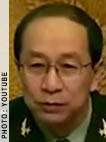
Video footage of a lecture on recent espionage incidents against China, delivered before a vetted audience by a senior Chinese military official, has been leaked to online video sites, including YouTube. The lecturer has been identified as Major General Jin Yinan, and the location appears to be one of the main lecture halls at China’s National Defense University (NDU) in Beijing. Administered by the Central Committee of the Chinese People’s Liberation Army (PLA), NDU is China’s equivalent of the United States’ West Point Military Academy. The precise date of the venue cannot be verified, though it appears to have been intended as a cautionary lesson for NDU students, on the fate that awaits Chinese officials spying against their country. In the video, General Jin laments the fact that too many Chinese Communist Party members have “become decadent” and have succumbed to selling classified national secrets to foreign adversaries. He also discusses several recent cases of espionage against China, including that of Xu Junping, a senior colonel in the PLA, who defected to the United States in December of 2000. The speaker also mentions the case of Tong Daning, a Social Security Department economist who was executed in 2006 for sharing classified Chinese economic data with Taiwanese intelligence operatives. But the primary revelations of the speech concern the cases of Li Bin and Kang Rixin, which General Jin addresses in detail. Li Bin was arrested during his tenure as China’s Ambassador to South Korea, and was eventually sentenced to a seven-year prison term for corruption. But General Jin discloses in his speech that the Ambassador was arrested for selling classified information to South Korean intelligence, and that the Chinese prosecutors decided to bring him up on corruption charges, to “avoid embarrassing [our] country”. Read more of this post