Germany probes UK spy program revealed by CIA whistleblower

Sabine Leutheusser-SchnarrenbergerBy JOSEPH FITSANAKIS | intelNews.org |
Germany wants to know whether its citizens were spied on under a British government surveillance program revealed by American intelligence whistleblower Edward Snowden. The program, codenamed Project TEMPORA, was disclosed earlier this week by Snowden, a former technical assistant for the United States Central Intelligence Agency (CIA). Snowden remains holed up at Moscow’s Sheremetyevo International Airport, as Russian authorities have rejected repeated requests by Washington to extradite him to the US. According to British newspaper The Guardian, which first wrote about Project TEMPORA on June 21, Britain’s General Communications Headquarters (GCHQ) has been able to “plug into the cables that carry internet traffic into and out” of the United Kingdom. The agency, which is tasked with communications interception, has therefore collected and stored massive quantities of foreign telephone call data and email messages, and has shared much of it with its US counterpart, the National Security Agency. On June 25, Germany’s Federal Minister of Justice, Sabine Leutheusser-Schnarrenberger, wrote a letter to her British counterpart, Chris Grayling, asking for immediate clarification on the precise legal basis for Project TEMPORA. In her letter, which was copied to the British Home Secretary, Theresa May, the German cabinet minister also inquires whether TEMPORA has been authorized by the appropriate judicial authorities. She argues that “European institutions should shed light on this [issue] immediately” and warns her British colleagues that she plans to raise the subject during the July 2013 meeting of European  Union Justice and Home Affairs ministers, which will be held in Brussels, Belgium. Read more of this post

UK/US spy agencies targeted heads of state at London G20 meeting

NSA/GCHQ listening station in Menwith HillBy JOSEPH FITSANAKIS | intelNews.org |
British and American intelligence agencies targeted the communications of heads of state and other senior officials during a G20 summit held in London in 2009, according to documents. The summit was hosted by the then British Prime Minister Gordon Brown and was attended by delegates from 20 major world economies, including then Russian President Dmitry Medvedev, who was specifically targeted in the spy operation. British newspaper The Guardian, which published the information, said that delegates had their personal computers and cellular telephones monitored during a joint effort by the US National Security Agency (NSA) and Britain’s General Communications Headquarters (GCHQ). The two agencies, which are tasked with intercepting communications signals on behalf of their respective governments, maintain a jointly administered listening base inside the Royal Air Force station in Menwith Hill near Harrogate, North Yorkshire. According to one of the documents, entitled “Russian Leadership Communications in support of President Dmitry Medvedev at the G20 summit in London —Intercept at Menwith Hill station”, the listening facility was utilized to spy on the communications of the Russian President during his stay in London. The targeting began as soon as President Medvedev and the Russian delegation arrived in the British capital on April 1, and continued for several days. The top-secret document, which was shared between British, American, Australian, Canadian, and New Zealand intelligence services, noted “a change in the way Russian leadership signals have been normally transmitted” through satellite links from the Russian embassy in London. Another set of documents, also published by The Guardian, indicate that some G20 summit delegates were “tricked into using Internet cafes [that] had been set up by British intelligence agencies” in order to intercept their email communications. Read more of this post
UK planned to spy on 2009 Commonwealth heads of state meeting

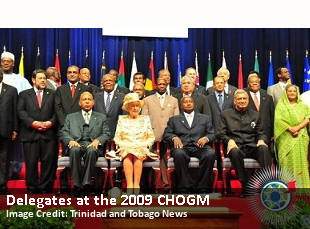
Delegates at the 2009 CHOGMBy JOSEPH FITSANAKIS | intelNews.org |
British intelligence agencies had plans to spy on a British Commonwealth meeting, which was attended by Queen Elizabeth and the President of France, among other heads of state. The plans to spy on the meeting, which was held in 2009, are revealed in a document disclosed to The Guardian newspaper by American whistleblower Edward Snowden. Earlier this month, Snowden, a former technical assistant for the United States Central Intelligence Agency (CIA), disclosed the existence of PRISM, a clandestine national security electronic surveillance program operated by the United States National Security Agency (NSA). The Guardian said on Sunday that it had in its possession a page from an internal classified document given to NSA by Britain’s General Communications Headquarters (GCHQ), which is tasked with collecting signals intelligence. The document apparently outlines plans to spy on international delegates in order to “give UK ministers an advantage in talks with their Commonwealth counterparts”. Some “key intelligence [collection] requirements” at the summit, which took place in 2009 in Trinidad, included “intelligence on South Africa’s views on Zimbabwe”, as well as “climate change reporting”. The document, says The Guardian, also sets out a schedule for various British intelligence agencies to arrive and begin operations in the South American island-nation. GCHQ is instructed to initiate its surveillance activities following the arrival of the international delegates. On the other hand, the Secret Intelligence Service (SIS, also known as MI6), which is Britain’s primary external intelligence agency, is expected to set up operations in Port of Spain several days prior to the event. Read more of this post

Iran announces spy arrests after Ahmadinejad helicopter ‘accident’

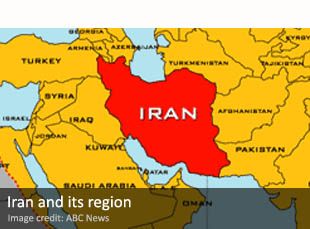
Iran and its regionBy IAN ALLEN | intelNews.org |

Iran announced the arrest of an alleged 12-member spy network on Sunday, just hours after a helicopter carrying the country’s President was forced to make an emergency landing due to an unspecified “accident”. Iran’s state controlled media reported late on Sunday that the alleged spy ring had been instructed “to carry out terrorist acts” aimed at disrupting the Iranian presidential election, which is to be held on June 14. In a carefully worded statement, the Iranian Intelligence Ministry said the alleged spy ring operated under the direction of Israel’s covert-action agency, Mossad. The statement added that the ring’s leader had been recruited through “a reactionary Arab country” in the region and his espionage and sabotage activities in Iran were directed from “a headquarters in Britain”. Unconfirmed news reports claimed yesterday that “a remarkable amount of weapons” had been confiscated by Iranian counterintelligence forces as they apprehended the 12 ring members. The government’s statement said the weapons were meant to be used to “conduct terrorist acts” before and during the June 14 election day, and to “create ethnic and religious divisions” inside the country. On June 14, Iran is scheduled to hold its first presidential election since 2009, when the reelection of Mahmoud Ahmadinejad sparked mass demonstrations organized by the opposition ‘Green Movement’. Some have called these demonstrations a precursor of the Arab Spring, which led to the toppling of regimes in several Arab countries, including Egypt and Libya. Read more of this post

News you may have missed #837

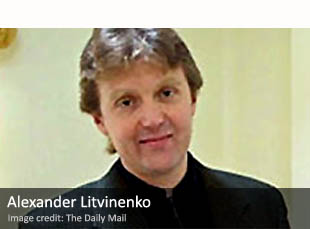
Alexander LitvinenkoBy IAN ALLEN | intelNews.org |

►►Russian ex-spy ‘would testify’ in Litvinenko inquiry. The 2006 murder of former Russian spy Alexander Litvinenko has never been solved and remains the subject of conflicting narratives and still-deepening intrigue over who may have killed him and why. Now a key witness, a US-based former Russian spy who worked with Litvinenko in the months leading up to his death, says he is willing to give evidence at a public inquiry. British police considered him such a vital witness that they visited the US three times to persuade him to give evidence at the inquest.
►►Assange reveals GCHQ messages discussing extradition. Authorities at GCHQ, Britain’s eavesdropping agency, face embarrassing revelations about internal correspondence in which WikiLeaks founder Julian Assange is discussed, apparently including speculation that he is being framed by Swedish authorities seeking his extradition on rape allegations. The records were revealed by Assange himself in a Sunday night interview with Spanish television. A message from September 2012, apparently says: “They are trying to arrest him on suspicion of XYZ. It is definitely a fit-up. Their timings are too convenient right after Cablegate“.
►►North Korean defector accused of spying by his sister. Earlier this year, Yoo Woo-sung, one of the most prominent North Korean defectors living in South Korea, was arrested on charges of espionage. Now court documents have shown that Yoo was arrested after testimony from his sister, who said he had been sent on a mission by North Korea’s secret police to infiltrate the defector community and pass back information about the people he met. The Washington Post reports that defectors from the North are increasingly facing the brunt of this suspicion.
►►Iran hangs two men for spying for Israel and US. Mohammad Heydari was found guilty of passing intelligence on “security issues and national secrets” to Israeli Mossad agents in exchange for cash. Kourosh Ahmadi was convicted of providing intelligence to the CIA, Tehran’s prosecutor’s office said. It is not clear when Heydari and Ahmadi were arrested or where they were tried. Their execution was handed down by Tehran’s Revolutionary Court and confirmed by the Supreme Court, Iran’s Fars news agency reported.

British spy agency to scrap $140m IT system over security fears

DeloitteBy IAN ALLEN | intelNews.org |
Britain’s domestic intelligence agency, MI5, has decided to “accept defeat” and scrap a multimillion digital records management program over fears it could create a dangerous “intelligence vacuum”. The program, which has so far cost the British taxpayer over £90 million ($140 million) in payments to private consultants, was first conceived in the run-up to the London 2012 summer Olympic Games. While evaluating terrorist-related threats posed by the hosting of the Games in the United Kingdom, British security officials decided that the government-wide intelligence-sharing system in place was archaic and in need of serious overhaul. They hired a group of senior IT management consultants from Deloitte, one of the world’s largest professional services firm, headquartered in New York, NY. The pricey corporate experts were tasked with helping MI5 digitally collate intelligence data collected or produced by all departments of the British government. Deloitte’s planning team had projected that the multi-million dollar system would be in place and operational by the summer of 2012, before the Olympic Games were held in London. This, however, proved wildly optimistic; Deloitte barely managed to scrape together a watered-down version of the promised records management program in late 2012. When the program was tested by MI5’s intelligence collection managers, it was found to contain serious errors that, according to British newspaper The Independent, could leave the country’s intelligence agencies “vulnerable and struggling with an intelligence vacuum”. When initially questioned about the Deloitte debacle by British lawmakers, MI5’s (now retired) Director, Sir Jonathan Evans, told the frustrated members of the British House of Commons Intelligence and Security Committee not to worry. Read more of this post

MI5 wants secret court session over IRA informant’s lawsuit

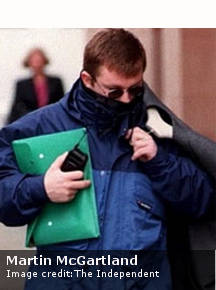
Martin McGartlandBy JOSEPH FITSANAKIS | intelNews.org |
Britain’s domestic intelligence agency, MI5, has requested a secret court hearing to deliberate a lawsuit from a high-profile spy who infiltrated the Provisional Irish Republican Army, commonly known as IRA. The mole, Martin McGartland, of Belfast, Northern Ireland, was recruited by the Special Branch of the Royal Ulster Constabulary in the 1980s. The information he supplied to the security agencies over several years is widely credited with having saved the lives of at least 50 British police officers and soldiers. His autobiographical experiences formed the basis of the 2008 motion picture 50 Dead Men Walking, written and directed by Kari Skogland and starring Jim Sturgess as Martin and Ben Kingsley. McGartland’s cover was dramatically blown in 1991, when the IRA began suspecting that he might be an MI5 mole. After several hours of interrogation by the IRA’s Internal Security Unit, McGartland managed to escape his captors and throw himself out of a third-floor window. He survived serious injuries and was taken into hiding by MI5, living in a series of safe houses across Britain for nearly a decade. However, in 1999 the IRA caught up with him at an MI5 safe house in North Tyneside, in the northeast of England, where he was shot by an IRA hit team while walking to his car one morning and left for dead. McGartland is now suing MI5 and its institutional patron, the British Home Office, claiming that they failed to support him after he was shot by the IRA. In his lawsuit, McGartland claims that government funding he was receiving for treatment for post-traumatic stress disorder was withdrawn after he publicly criticized the British government’s counterterrorism policies. Read more of this post

Alongside CIA, British spies also bankrolling Afghan government

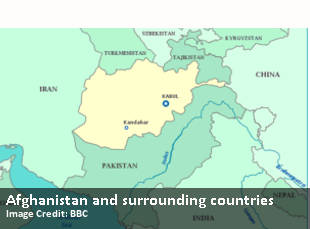
AfghanistanBy JOSEPH FITSANAKIS | intelNews.org |
British officials have publicly admitted that senior members of the Afghan government receive “direct cash payments” from London on a regular basis. British newspaper The Daily Telegraph reported over the weekend that the funds have been delivered to Afghan cabinet members “periodically” ever since 2001, when British troops entered Afghanistan alongside their American colleagues. The revelation comes only a week after the publication of a New York Times exposé, which disclosed that the United States Central Intelligence Agency (CIA) had delivered “tens of millions of dollars [in] off-the-books cash” to Afghanistan’s governing elite. The newspaper added that there was little evidence that such bribes had helped promote Washington’s interests in the country in any substantial way. According to British officials, London has channeled “a smaller fraction” of the amount paid by the CIA. The British funds are delivered to senior members of the government of Hamid Karzai by MI6, Britain’s foremost external intelligence agency. The funds are then allegedly spent on what Afghan government officials call “special projects”, implying that they are used as bribes to pacify local warlords, many of which are ethnic Pasthuns and belong to the Taliban. Last week, following The New York Times revelations, Mr. Karzai told the loya jirga —Afghanistan’s grand assembly— that there was “nothing unusual” about the CIA funneling money to his government. He added that he had implored the CIA’s Station Chief in Afghan capital Kabul to continue making regular payments despite popular concern in the US, as the funds were vital to the stability of the government: “we really need it”, he said. Read more of this post

MI5 chief credited with ‘transforming the agency’ to step down

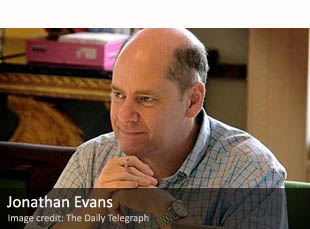
Jonathan EvansBy IAN ALLEN | intelNews.org |
The head of MI5, Britain’s primary domestic intelligence agency, is to step down at the end of this month, it has been announced. Sir Jonathan Evans is widely credited with transforming MI5, also known as the Security Service, in one of the agency’s most turbulent periods following 9/11/2001. A career MI5 officer, Sir Jonathan entered MI5 in 1980 and eventually joined the agency’s G-Branch, which focuses on international counter-terrorism. He rose to lead G-Branch just 10 days before the 9/11 attacks and the subsequent launch of America’s ‘war on terrorism’. In 2005, Evans was faced with another major crisis as chief of G-Branch, when Britain suffered the bloody July 7 suicide attacks —also known as the 7/7 attacks— which killed 56 and injured nearly 1,000 people. Two years later, in 2007, he rose to the post of Director General at MI5, replacing Eliza Manningham-Buller (now Baroness Manningham-Buller), who had been only the second female intelligence officer to head the organization. Perhaps inevitably, considering world events, Evans helped steer MI5’s operational focus away from Irish republican groups and toward Islamist-inspired militancy in the United Kingdom and beyond. In early 2009, in a move that stunned some intelligence insiders, Evans gave the first public interview by a serving MI5 Director General in the organization’s 100-year history. He answered questions in a face-to-face interview with a carefully selected group of security correspondents representing a handful of British media outlets. The event was seen as reflecting a sea of change in the culture of MI5 —an agency that had never revealed the identities of its Director Generals until 1990. Later in the same year, however, Sir Jonathan caused controversy by suggesting during a public lecture that the intelligence extracted by torturing suspects after 9/11 had stopped “many attacks” on Western and other targets. Read more of this post

News you may have missed #827

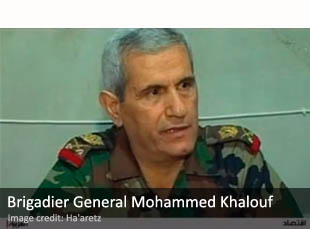
Brigadier General Mohammed KhaloufBy IAN ALLEN | intelNews.org |
►►Analysis: The spies who fooled the world about Iraq. On the tenth anniversary of the Iraq War, the BBC flagship investigative program Panorama has aired a documentary arguing that, even before the fighting in Iraq started, intelligence from highly placed sources was available in the UK, suggesting that the administration of Iraqi President Saddam Hussein had no weapons of mass destruction.
►►Syrian officer to auction spy files as general defects. Kuwaiti daily Al-Seyassah reported this past weekend that an intelligence officer that defected is offering to auction the intelligence archives of Syrian President Bashar al-Assad’s brother-in-law, Assef Shawkat. Meanwhile, Syrian Brigadier General Mohammed Khalouf and about 20 soldiers defected from the Syrian army in two separate incidents on Saturday, according to rebel-controlled media.
►►Half a million wiretapped in Turkey in last decade. Some 470,000 people in Turkey have been subject to eavesdropping over the past 11 years, said officials from the Gendarmerie Command’s intelligence unit. In 2012 alone, over 33,000 people were eavesdropped on by the Gendarmerie, according to information given to the Turkish Parliament’s Eavesdropping Examination Commission. Notably Gendarmerie authorities said that they found no information or documents regarding the case of the wire-tapping of the Turkish Prime Minister in their examination of their own records.

News you may have missed #826 (suspicious deaths edition)

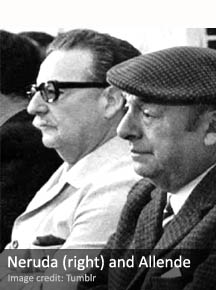
Pablo Neruda (right) and Salvador AllendeBy IAN ALLEN | intelNews.org |
►►Key suspect in Russian spy murder refuses to cooperate. Andrey Lugovoi, who is now an elected official in Russia, says he will not talk even by video to British investigators about the poisoning of Alexander Litvinenko in London just over six years ago. The murder of former Russian spy Alexander Litvinenko in London in 2006, has never been solved and remains the subject of conflicting narratives and still-deepening intrigue over who may have killed him and why.
►►Exhumation of Neruda’s remains set for April. A court in Chile has set April 8 as the date for the exhumation of the remains of the Nobel Prize-winning poet Pablo Neruda, as part of an inquest into his death. The poet and leftwing activist died 12 days after a military coup replaced the socialist President Salvador Allende with General Augusto Pinochet. The poet’s family maintains that he died at 69 of advanced prostate cancer. But in 2011, Chile started investigating allegations by his former driver, Manuel Araya Osorio, that the poet had been poisoned.
►►Venezuela to investigate Chavez murder allegations. Venezuelan officials have said they will set up an inquiry to investigate suspicions that President Hugo Chavez was “murdered by foreign agencies”. Venezuelan Oil Minister Rafael Ramirez told the BBC the United States and Israel were to blame for Chavez’s death, and that he had no doubt that Chavez’s death was an act “similar to Yasser Arafat’s“. Earlier this week, the US expelled two Venezuelan diplomats following the expulsion of two American officials from Caracas.

As many Russian spies in UK today as in Cold War: Soviet defector

Oleg GordievskyBy JOSEPH FITSANAKIS | intelNews.org |
The Soviet KGB’s former station chief in London, who defected to the United Kingdom in the 1980s, has alleged that Russia operates as many spies in Britain today as it did during the Cold War. Oleg Gordievsky, 74, a fluent speaker of Russian, German, Swedish, Danish, and English, entered the Soviet KGB in 1963. He eventually joined the organization’s Second Directorate, which was responsible for coordinating the activities of Soviet ‘illegals’, that is, intelligence officers operating abroad without official diplomatic cover. Gordievsky’s faith in the Soviet system was irreparably damaged in 1968, when Warsaw Pact troops invaded Czechoslovakia. In 1974, while stationed in Copenhagen, Denmark, he made contact with British intelligence and began his career as a double agent for the UK. In 1985, when he was the KGB’s station chief at the Soviet embassy in London, he was summoned back to Moscow by an increasingly suspicious KGB. He was aggressively interrogated but managed to make contact with British intelligence and was eventually smuggled out of Russia via Finland, riding in the trunk of a British diplomatic vehicle. In 2007, Gordievsky was awarded the Order of Saint Michael and Saint George (CMG) by the Queen “for services to the security of the UK”. Russia, however, considers Gordievsky a traitor and the government of Vladimir Putin refuses to rescind a death sentence given to him in absentia by a Soviet court. In an interview with The Guardian newspaper this week, Gordievsky said London is currently home to 37 officers of the Russian Foreign Intelligence Service (SVR), one of the successor agencies to the KGB. Read more of this post

Spy claims against diplomat cast shadow over Anglo-Russian relations

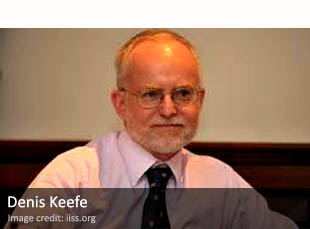
Denis KeefeBy JOSEPH FITSANAKIS | intelNews.org |
Widespread allegations of espionage against Britain’s deputy ambassador to Russia threaten to derail the ongoing diplomatic rapprochement between Russia and the United Kingdom, according to a leading British newspaper. Painstaking efforts to rebuild Anglo-Russian relations, which crumbled after the 2006 assassination of Russian defector Alexander Litvinenko in London, are scheduled to culminate later this week, when senior Russian cabinet officials will be visiting London for a “strategic dialogue” with their British counterparts. But British newspaper The Sunday Telegraph reports that Whitehall is increasingly annoyed by persistent attacks in the Russian media against Denis Keefe, the UK’s deputy ambassador to Moscow. Keefe, a career diplomat with over 30 years in the Foreign Office, much of it during the Cold War, is a Cambridge University graduate who speaks six languages, including fluent Russian. Prior to arriving in Moscow, he served as British ambassador to Georgia, where he was stationed during the 2008 Russia-Georgia war. Almost as soon as he arrived in Russia, Keefe found himself at the center of persistent allegations in the Russian media that he is “an undercover spy, with his diplomatic position serving as a smokescreen”. Several Russian news reports have indirectly accused him of contacting dissident groups inside Russia in an effort to undermine the government of Russian President Vladimir Putin. The Telegraph, which published for the first time an account of the Russian media claims in the West, said that Russian reporters appear to hound Keefe every time he makes a public appearance in the country. In one recent instance, two journalists asked him whether he was “a spy for MI6”, Britain’s primary external intelligence agency, insisting that he give a “straightforward answer to this question”. Keefe reportedly responded that this was “not a serious question” and had “nothing to do” with him. Read more of this post

British journalists worked for MI6 during the Cold War: investigation

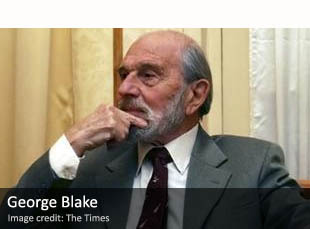
George BlakeBy JOSEPH FITSANAKIS | intelNews.org |
Numerous notable journalists working for some of Britain’s most prestigious publications routinely collaborated with British intelligence during the Cold War, according to a BBC investigation. In 1968, Soviet newspaper Izvestia published the contents of an alleged British government memorandum entitled “Liaison Between the BBC and SIS”. SIS, which stands for Secret Intelligence Service, also known as MI6, is Britain’s foremost external intelligence agency. The paper, which was the official organ of the Presidium of the Supreme Soviet of the USSR, claimed that the foreign correspondents of most leading British newspapers secretly collaborated with the British intelligence community. It also alleged that the BBC’s world radio service had agreed with MI6 to broadcast preselected sentences or songs at prearranged times. These signals were used by British intelligence officers to demonstrate to foreign recruits in the Eastern Bloc that they were operating on behalf of the UK. At the time, the BBC virulently rejected the Izvestia’s claims, calling them “black propaganda” aimed at distracting world opinion from the invasion of Czechoslovakia by Warsaw Pact troops, which had taken place some months earlier. But an investigation aired this week by the BBC Radio 4’s investigative Document program suggests that the memo published by the Soviet newspaper was probably genuine. The program says it discovered a memorandum in the BBC’s archives, which laments the embarrassment caused to MI6 by the Soviet claims. The memorandum, dated April 24, 1969, describes MI6 as “our friends”. The BBC program, which is available to listen to here, discusses the Soviets’ claims that several notable British journalists were MI6 agents. Read more of this post

British government tries to block probe into ex-KGB officer’s murder

Alexander LitvinenkoBy JOSEPH FITSANAKIS | intelNews.org |
The family of a Russian spy, who died of poisoning after defecting to Britain, has accused the British government of trying to cover up the affair in order to avoid embarrassing Russia. Alexander Litvinenko was an employee of the Soviet KGB and one of its successor organizations, the FSB, until 2000, when he defected with his family to the United Kingdom. He soon became widely known as a vocal critic of the administration of Russian President Vladimir Putin. In 2006, Litvinenko came down with radioactive poisoning soon after meeting a former KGB/FSB colleague, Andrey Lugovoy, at a London restaurant. He died in hospital three days later. A public inquest into Litvinenko’s murder had been scheduled for May, 2013. On Tuesday, however, it was revealed that the British government had filed a written petition to limit the information disclosed in the inquest. According to The London Times, British Foreign Secretary William Hague filed a Public Interest Immunity Certificate (PIIC), which, if allowed to stand, would limit the scope of the inquest on national security grounds. It is believed that the government wishes to block information linking Litvinenko to the Secret Intelligence Service —also known as MI6— Britain’s primary external spy agency. Last December, Ben Emmerson, the lawyer representing Litvinenko’s widow, claimed that the late Russian spy was a “registered and paid” agent of MI6 and Spanish intelligence at the time of his death. Read more of this post