Two men held in Ireland over 2006 murder of Provisional IRA spy
July 27, 2016 Leave a comment
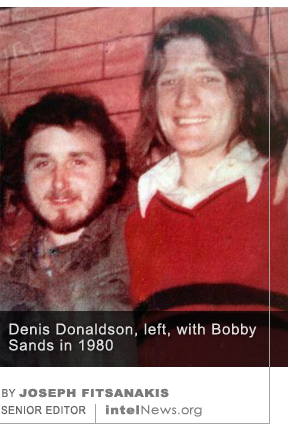 Police in Ireland say they have arrested two individuals in connection with the 2006 killing of a senior member of the Irish Republican Army, who had previously been outed as a spy for the British state. Denis Donaldson joined the Provisional IRA as a volunteer in mid-1960s, before the outbreak of the Troubles, which rocked Northern Ireland from the late 1960s until 1998. He was trained in paramilitary operations in Lebanon and participated in many IRA actions. He served time at the Long Kesh Detention Centre along with IRA volunteer and Member of Parliament Bobby Sands, who died in the famed 1981 Irish hunger strike. After Sands’ death, Donaldson stood as a general election candidate in Belfast East for Sinn Féin, the IRA’s political wing. In the process, he became a close associate of Sinn Féin President Gerry Adams. In 2000, shortly after the end of the IRA’s 30-year military campaign, Sinn Féin appointed Donaldson as the administrator of its parliamentary group in Stormont, the devolved Northern Irish parliament.
But on December 16, 2005, Adams stunned reporters during a press conference in Dublin, Ireland, by announcing that Donaldson had been a spy for the British government inside Sinn Féin and the Provisional IRA. There were rumors at the time that Donaldson was deliberately outed to Adams by the British government. Soon after Adams’ revelation, Donaldson read a prepared statement on Ireland’s state-owned RTÉ television station, admitting that he had been recruited as a spy by the British Security Service (MI5) and the Special Branch of the Royal Ulster Constabulary (known today as the Police Service of Northern Ireland). Following his public admission, Donaldson was nowhere to be found. However, on March 19, 2006, a reporter for a British tabloid newspaper found Donaldson living in a remote farmhouse outside the village of Glenties, in Northern Ireland’s County Donegal. Weeks later, Donaldson was shot dead in his cottage by persons unknown. Most saw the Provisional IRA behind Donaldson’s murder. In 2009, however, the Real IRA, a Provisional IRA splinter group that disagreed with the Good Friday Agreement and subsequent cessation of hostilities, took responsibility for Donaldson’s killing.
On Tuesday, the Garda Síochána, the police force of the Republic of Ireland, said it had arrested two men in connection with Donaldson’s murder. The two men, who are reportedly in their 40s and 70s, have not been named. They are being held under Ireland’s Offences Against the State Act, the Gardaí said. The precise connection —if any— between Tuesday’s arrests and the official inquest into Donaldson’s death, which continues after having been postponed or delayed 20 times, is unknown at this time.
► Author: Joseph Fitsanakis | Date: 27 July 2016 | Permalink
 A former senior member of the Official Irish Republican Army in the United Kingdom claims that he was abandoned by British and American spy agencies after he testified in a high-profile counterfeiting case. The case involves members of the Official IRA, including its alleged former chief of staff, who is wanted in the United States in connection with the so-called supernote counterfeit money investigation. The supernote, also known as superdollar or superbill, is a fake 100-dollar bill believed to be one of the highest-quality counterfeit banknotes ever detected. The US government believes that a nation-state is behind the production of the supernote, with North Korea being the primary suspect.
 After Thursday’s Brexit vote, European and American security officials have tried to pacify concerns about major disruption of longstanding Western security cooperation arrangements. But experts stress that the international security landscape will be significantly impacted by Britain’s decision to leave the European Union (EU). As early as Thursday night, British defense, military and intelligence officials launched a marathon of phone calls in order to reassure their European and American counterparts that the United Kingdom was not going to retreat from its role in security pacts with Europe and the North Atlantic Treaty Organization (NATO).
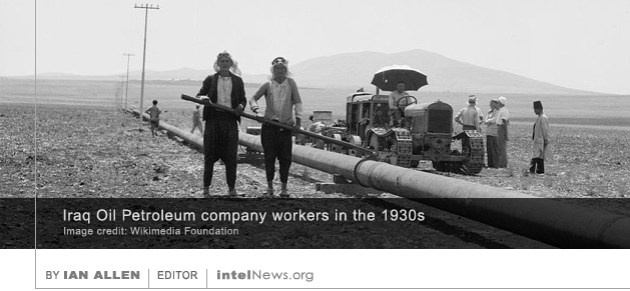 Recently uncovered documents shed further light on an ultra-secret plan, devised by the British and American governments, to destroy oil facilities in the Middle East in the event the region was invaded by Soviet troops. The
 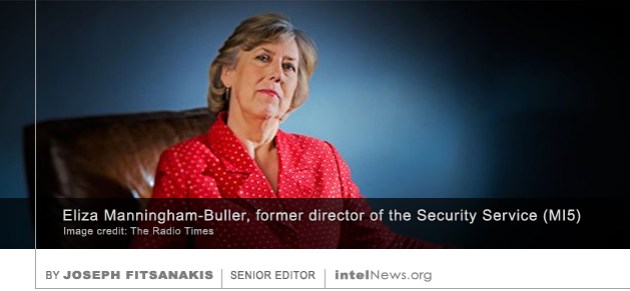 Relations between two of Britain’s most powerful intelligence agencies, MI5 and MI6, suffered a “serious and prolonged breakdown” during the American-led war on terrorism. Citing sources in the British government, the London-based Guardian newspaper said on Tuesday that the two agencies entered an extensive row over Britain’s support for extraordinary rendition. The policy refers to the government-sponsored abduction of individuals and their extrajudicial transfer across national borders. It was widely practiced by the administration of US President George W. Bush, despite its connection to documented cases of torture of terrorism detainees, in countries like Egypt, Libya, and Jordan.
 A videotaped lecture by Kim Philby, one of the Cold War’s most recognizable espionage figures, has been unearthed in the archives of the Stasi, the Ministry of State Security of the former East Germany. During the one-hour lecture, filmed in 1981, Philby addresses a select audience of Stasi operations officers and offers them advice on espionage, drawn from his own career. While working as a senior member of British intelligence, Harold Adrian Russell Philby, known as ‘Kim’ to his friends, spied on behalf of the Soviet NKVD and KGB from the early 1930s until 1963, when he secretly defected to the USSR from his home in Beirut, Lebanon. Philby’s defection sent ripples of shock across Western intelligence and is often seen as one of the most dramatic moments of the Cold War.
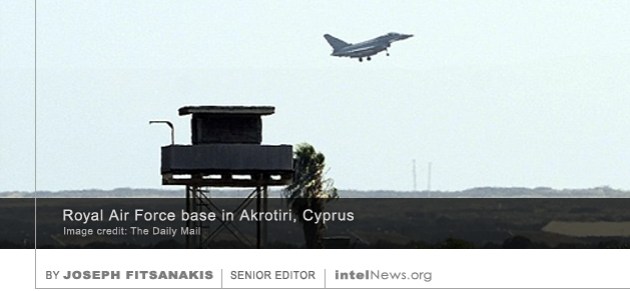 British and American intelligence services worked together to hack Israeli unmanned aerial vehicles in order to acquire information on the Jewish state’s military intentions in the Middle East, according to documents leaked last week. Online publication The Intercept, said the operation was code-named ANARCHIST and was a joint project of Britain’s General Communications Headquarters (GCHQ) and America’s National Security Agency (NSA). The publication said it acquired documents about the operation from former NSA contractor Edward Snowden, who defected to Russia in 2013 and was offered political asylum by Moscow.
 A Russian former intelligence officer, who is accused by the British government of having killed another Russian former spy in London, said the British intelligence services tried to recruit him in 2006. British government prosecutors have charged Andrei Lugovoi with the killing of Alexander Litvinenko, a former employee of the Soviet KGB and one of its successor agencies, the FSB. In 2006, Litvinenko died in London, where he had defected with his family in 2000, following exposure to the highly radioactive substance Polonium-210. In July of 2007, the British government charged Lugovoi and another Russian, Dmitri Kovtun, with the murder of Litvinenko, and expelled four Russian diplomats from London. Last week, following the conclusion of an official inquest into the former KGB spy’s death, the British government took the unusual step of summoning the Russian ambassador to London, to file an official complaint about Moscow’s refusal to extradite Lugovoi and Kovtun to the United Kingdom.
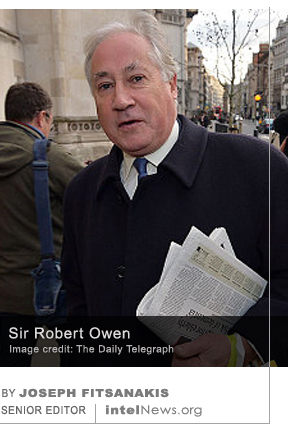 The British government has taken the unusual step of summoning the Russian ambassador to London, following the conclusion of an official inquest into the death of a former KGB officer who is believed to have been killed on the orders of Moscow. Alexander Litvinenko, an employee of the Soviet KGB and one of its successor organizations, the FSB, defected with his family to the United Kingdom in 2000. But in 2006, he died of radioactive poisoning after meeting two former KGB/FSB colleagues, Dmitri Kovtun and Andrey Lugovoy, in London. A public inquiry into the death of Litvinenko, ordered by the British state,
 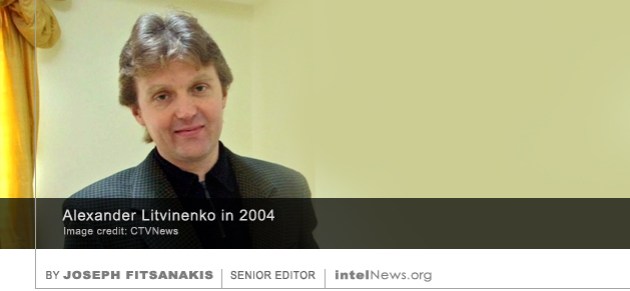 The long-awaited concluding report of a public inquiry into the death of a former Soviet spy in London in 2006, is expected to finger the Russian state as the perpetrator of the murder. Alexander Litvinenko was an employee of the Soviet KGB and one of its successor organizations, the FSB, until 2000, when he defected with his family to the United Kingdom. He soon became known as a vocal critic of the administration of Russian President Vladimir Putin. In 2006, Litvinenko came down with radioactive poisoning after meeting two former KGB/FSB colleagues, Dmitri Kovtun and Andrey Lugovoy, at a London restaurant. In July of 2007, after establishing the cause of Litvinenko’s death, which is attributed to the highly radioactive substance Polonium-210, the British government officially charged the two Russians with murder and issued international warrants for their arrest. Whitehall also announced the expulsion of four Russian diplomats from London. The episode, which was the first public expulsion of Russian envoys from Britain since end of the Cold War, is often cited as marking the beginning of the worsening of relations between the West and post-Soviet Russia.
 Information gathered by British and American intelligence agencies raises the possibility that a bomb may have brought down the Russian civilian airliner that crashed in Egypt last week. The Metrojet Airbus 321 left the Egyptian resort of Sharm el-Sheikh on Saturday, heading for St. Petersburg, Russia. But it crashed in the Sinai Peninsula less than 30 minutes after it took off, killing all 224 passengers and crew onboard, the vast majority of whom were Russian citizens.
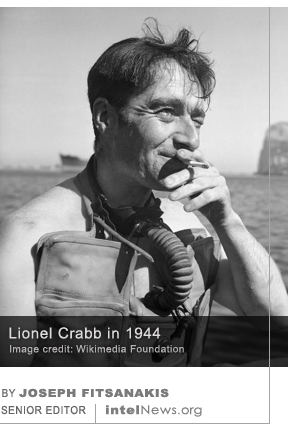 A set of newly released files from the archives of the British Cabinet Office shed light on the mysterious case of a highly decorated combat swimmer, who vanished while carrying out a secret operation against a Soviet ship. The disappearance happened during a historic Soviet high-level visit to Britain in 1956. In April of that year, First Secretary of the Communist Party of the USSR, Nikita Khrushchev, and Nikolai Bulganin, Chairman of the Council of People’s Commissars, arrived in Britain aboard Russian warship Ordzhonikidze, which docked at Portsmouth harbor. Their eight-day tour of Britain marked the first-ever official visit by Soviet leadership to a Western country. But the tour was marred by a botched undersea operation led by Britain’s Secret Intelligence Service, known commonly as MI6. The operation, which aimed to explore the then state-of-the-art Ordzhonikidze, ended in the
 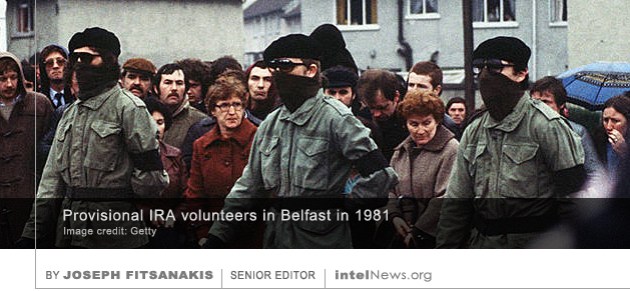 Authorities in Northern Ireland have launched an official investigation into the alleged involvement of a British government informant in dozens of murders perpetrated by Irish republican militants. The informant, codenamed STAKEKNIFE in British government documents, has been identified by some as Freddie Scappaticci, the grandson of an Italian immigrant to Northern Ireland, who in the early 1970s joined the Provisional Irish Republican Army (IRA). Eventually, Scappaticci was put in charge of the Provisional IRA Northern Command’s Internal Security Unit. The unit was tasked with counterintelligence operations, which involved detecting, capturing and eliminating suspected British government spies inside the IRA.
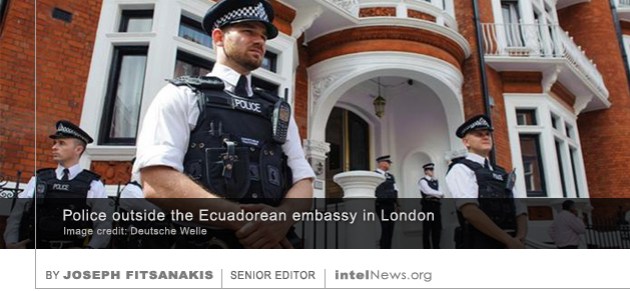 Police in London will no longer physically monitor the embassy of Ecuador in the British capital, where WikiLeaks founder Julian Assange has been living for over two years, fighting against extradition to Sweden. Assange was granted political asylum by the government of Ecuador in June of 2012, after Swedish authorities charged him with rape. But the Australian-born Assange claims that the charges are part of a plot to extradite him to the United States, where he is wanted for having leaked hundreds of thousands of documents belonging to the Department of Defense and the Department of State.






 intelNews.org
Fake URL shortening service was part of British online spy operation
August 2, 2016 by Joseph Fitsanakis 2 Comments
According to the leaked documents, the website, lurl.me, was devised by a specialist until of the Government Communications Headquarters (GCHQ), Britain’s intelligence agency that collects signals intelligence. The unit, called Joint Threat Research Intelligence Group (JTRIG), devised the website as part of an operation codenamed DEADPOOL. The leaked documents state that the purpose of the website was to operate as a “shaping and honeypot” tool, by helping disseminate messages in support of the protests while at the same time allowing the GCHQ to monitor the protesters’ online activities. Lurl.me first appeared in June 2009 as a self-described “free URL shortening service”, using the slogan: “we help you get links to your friends and family fast”. It was used repeatedly on Twitter and other social media platforms to spread messages against the government of Iran. But the vast majority of social media accounts that made use of the website, like @2009iranfree, were operational only for a short period of time, had few followers, and ceased all activity at the end of the Iranian Green Movement. By that time, hardly anyone was using lurl.me. But the website made its appearance again on social media in April of 2011, with messages against the government of Syria. According to Vice’s Motherboard website, Tweets using the lurl.me service appeared to be active only between 9 a.m. and 5 p.m. UK time, and only on weekdays.
Both in 2009 and 2011-2013, lurl.me was used to instruct anti-government activists on how to avoid being monitored by the authorities. Some links contained instructions on how to access the Internet via satellite. Others provided directions on using proxies to access websites that were blocked by the authorities. At the same time, however, the documents leaked by Snowden show that the GCHQ also used the service to track the activities of anti-government activists who clicked on the lurl.me links, and even to ‘deanonymize’ (=to establish the real identity) of these users.
IntelNews first reported on JTRIG in February 2014, when its existence was first revealed by Snowden. The specialist unit has been associated with targeting self-described ‘hacktivist’ groups like Anonymous or LulzSec, using malware, social engineering, and other techniques. JTRIG also appears to have conducted online intelligence operations against the government of Argentina.
Motherboard reports that lurl.me was last used in November 2013, shortly after Snowden began leaking files from his secret hiding place in Russia. Motherboard said it contacted GCHQ for a reaction to the lurl.me allegations, but the agency said it would “not comment on intelligence matters”.
► Author: Joseph Fitsanakis | Date: 02 August 2016 | Permalink
Filed under Expert news and commentary on intelligence, espionage, spies and spying Tagged with 2009 Iranian presidential election protests, Arab Spring, GCHQ, GCHQ Joint Threat Research Intelligence Group, Iran, News, operation DEADPOOL, Twitter, UK