Cambridge spy’s last years in Russia are detailed in new biography
September 4, 2015 Leave a comment
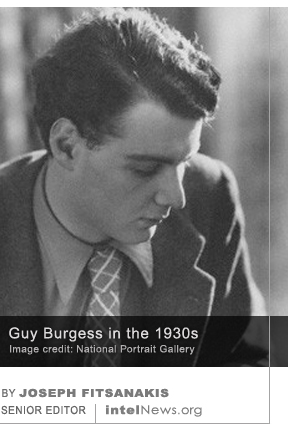 The life of Guy Burgess, one of the so-called ‘Cambridge Five’ double agents, who spied on Britain for the Soviet Union before defecting to Moscow in 1951, is detailed in a new biography of the spy, written by Andrew Lownie. Like his fellow spies Kim Philby, Donald Maclean, Anthony Blunt and John Cairncross, Burgess was recruited by the Soviets when he was a student at Cambridge University. He shook the British intelligence establishment to its very core when he defected to the USSR along with Maclean, after the two felt that they were being suspected of spying for the Soviets.
A few years after his defection, Burgess wrote to a close friend back in the UK: “I am really […] very well and things are going much better for me here than I ever expected. I’m very glad I came”. However, in his book, entitled Stalin’s Englishman: The Lives of Guy Burgess, Lownie suggests that Burgess’ life in the USSR was far from ideal. After being welcomed by the Soviets as a hero, the Cambridge University graduate was transported to the isolated Siberian city of Kuybyshev. He lived for several months in a ‘grinder’, a safe house belonging to Soviet intelligence, where he was debriefed and frequently interrogated until his Soviet handlers were convinced that has indeed a genuine defector.
It was many years later that Burgess was able to leave Kuybyshev for Moscow, under a new name, Jim Andreyevitch Eliot, which had been given to him by the KGB. Initially he lived in a dacha outside Moscow, but was moved to the city in 1955, after he and Maclean spoke publicly about their defection from Britain. He was often visited in his one-bedroom apartment by Yuri Modin, his Soviet intelligence handler back in the UK. According to Lownie, Burgess often complained to Modin about the way he was being treated by the Soviet authorities. His apartment had apparently been bugged by the KGB, and he was constantly followed each time he stepped outside.
The British defector worked for a Soviet publishing house and produced foreign-policy analyses for the Soviet Ministry of Foreign Affairs. He also produced a training manual for KGB officers about British culture and the British way of life. But he did not like living in the USSR and argued that he should be allowed to return to the UK, insisting that he could successfully defend himself if interrogated by British counterintelligence. Eventually, Burgess came to the realization that he would never return to his home country. He became depressed, telling friends that he “did not want to die in Russia”. But in the summer of 1963 he was taken to hospital, where he eventually died from acute liver failure caused by his excessive drinking.
Andrew Lownie’s Stalin’s Englishman: The Lives of Guy Burgess, is published by Hodder & Stoughton in the UK and by St Martins’ Press in the US. It is scheduled to come out in both countries on September 10.
► Author: Joseph Fitsanakis | Date: 04 September 2015 | Permalink
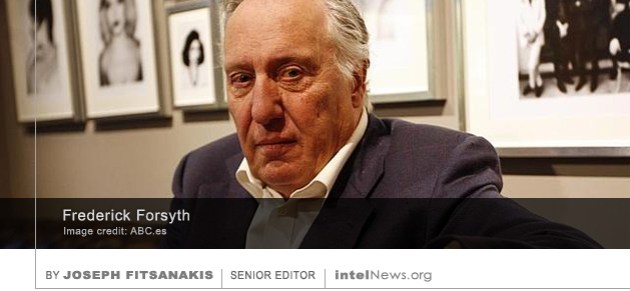 Frederick Forsyth, the esteemed British author of novels such as The Day of the Jackal, has confirmed publicly for the first time that he was an agent of British intelligence for two decades. Forsyth, who is 77, worked for many decades as an international correspondent for the BBC and Reuters news agency, covering some of the world’s most sensitive areas, including postcolonial Nigeria, apartheid South Africa and East Germany during the Cold War. But he became famous for authoring novels that have sold over 70 million copies worldwide, including The Odessa File, Dogs of War and The Day of the Jackal, many of which were adapted into film. Several of his intelligence-related novels are based on his experiences as a news correspondent, which have prompted his loyal fans to suspect that he might have some intelligence background.
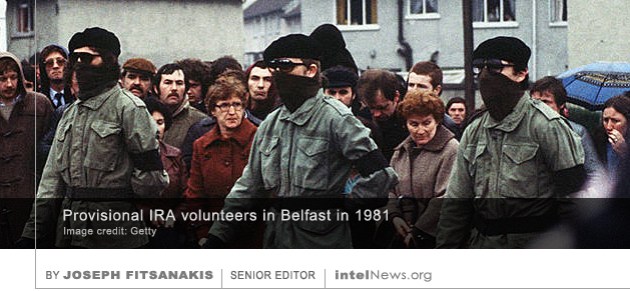 The Provisional Irish Republican Army, which fought British rule in Northern Ireland for decades, but officially disbanded in 2005, is still “broadly in place”, according to the head of the Police Service of Northern Ireland. On July 28, 2005, the Provisional IRA announced that was ceasing all paramilitary operations and disbanding as of 4:00 p.m. that day. The man who made the
 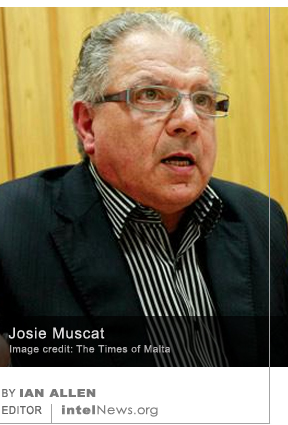 A Maltese ultra-nationalist group believed to be behind a string of bombings in the 1980s was believed by British intelligence to have links to the United States Central Intelligence Agency (CIA), according to recently declassified documents. The Front Freedom Fighters (FFF) was a staunchly anticommunist group whose members violently objected to what they saw as Malta’s overly close contacts with the Communist Bloc. During the 16-year rule of the Maltese Labour Party, which began in 1971, the Mediterranean island maintained close relations with countries during such as Libya and North Korea. The Maltese Nationalist Party, which formed the main opposition to Labour, was highly critical of these contacts, but failed to win three consecutive electoral contests and was thus unable to influence the country’s foreign policy in any significant way.
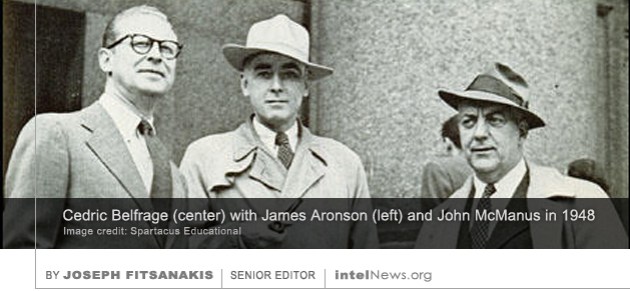 The British government has released a nine-volume file on an influential film critic who
 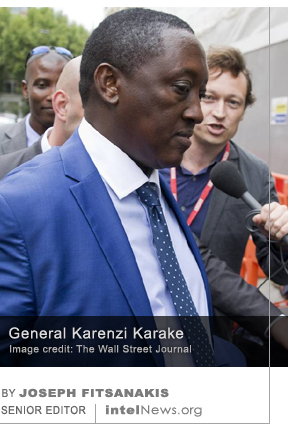 A Rwandan former intelligence chief, whose legal team is led by the wife of British former Prime Minister Tony Blair, has been freed after a court in the United Kingdom refused to extradite him to Spain to face war crimes charges. General Emmanuel Karenzi Karake, 54, was the most senior intelligence official in the administration of Rwandan President Paul Kagame. He rose to fame as a commander in the Rwandan Patriotic Front (RPF), an armed rebel group from Rwanda’s minority Tutsi tribe that fought to end the genocide inflicted upon the Tutsis by their rival Hutus. In 1994, following the death of nearly a million people, the RPF took power in Rwanda and ended the slaughter. That accomplishment caused a rapid upsurge in the popularity of Karake and other senior RPF leaders. Karake’s popularity remains strong among the Tutsis despite his dramatic falling-out with Kagame in 2010, which led to the general’s dismissal from the government.
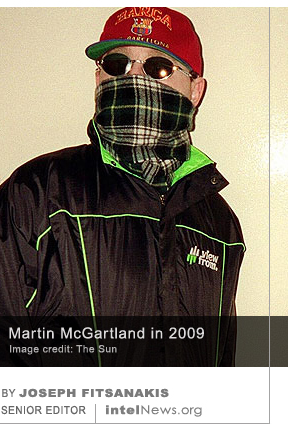 A lawsuit against Britain’s Security Service (MI5) by a former spy, who in the 1980s infiltrated the Provisional Irish Republican Army, commonly known as IRA, is to be judged in secret, a court in London has decided. The spy, Martin McGartland, of Belfast, Northern Ireland, was recruited by the Special Branch of the Royal Ulster Constabulary in the mid-1980s. The information he supplied to the security agencies over several years is widely credited with having saved the lives of at least 50 British police officers and soldiers. His autobiographical experiences formed the basis of the 2008 motion picture 50 Dead Men Walking.
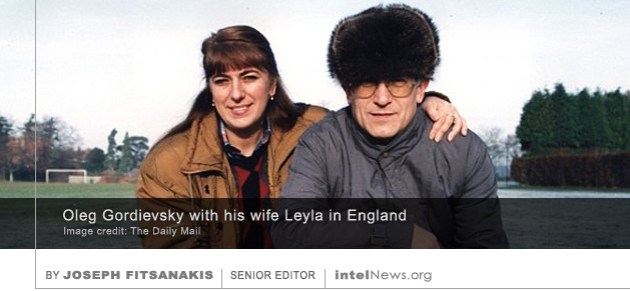 A Soviet double spy, who secretly defected to Britain 30 years ago this month, has revealed for the first time the details of his exfiltration by British intelligence in 1985. Oleg Gordievsky was one of the highest Soviet intelligence defectors to the West in the closing stages of the Cold War. He joined the Soviet KGB in 1963, eventually reaching the rank of colonel. But in the 1960s, while serving in the Soviet embassy in Copenhagen, Denmark, Gordievsky began feeling disillusioned about the Soviet system. His doubts were reinforced by the Soviet invasion of Czechoslovakia in 1968. It was soon afterwards that he made the decision to contact British intelligence.
 A German parliamentary committee investigating spying operations may take the German government to court in order to force it to give up secret documents on Berlin’s intelligence cooperation with Britain. The Committee of Inquiry into Intelligence Operations was set up in 2014, after files leaked by American defector Edward Snowden
  A Russian former intelligence officer, who is accused by the British government of having killed a former KGB spy in London, has agreed to testify at a public inquiry to be held in the British capital next month. British government prosecutors believe Russian businessman Dmitri Kovtun, who worked for the KGB during the Cold War, poisoned his former colleague in the KGB, Alexander Litvinenko, in 2006. Litvinenko was an officer in the Soviet KGB and one of its successor organizations, the FSB, until 2000, when he defected with his family to the United Kingdom. He soon became known as a vocal critic of the administration of Russian President Vladimir Putin. In 2006, Litvinenko came down with radioactive poisoning soon after meeting Kovtun and another former KGB officer, Andrey Lugovoy, at a London restaurant. He was dead less than two weeks later.
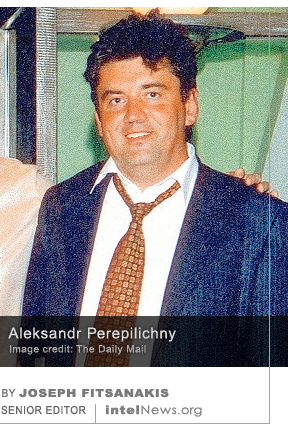 A Russian businessman, who died in London while assisting a Swiss probe into a massive money-laundering scheme, may have been poisoned with a substance derived from a highly toxic plant, an inquest has heard. Aleksandr Perepilichny was an influential Moscow investment banker until he fled Russia in 2009, saying that his life had been threatened after a disagreement with his business partners. A few months later, having moved to an exclusive district in Surrey, south of London, Perepilichny began cooperating with Swiss authorities who were investigating a multi-million dollar money-laundering scheme involving senior Russian government officials. The scheme, uncovered by a hedge fund firm called Hermitage Capital Management (CMP), and described by some as the biggest tax fraud in Russian history, defrauded the Russian Treasury of at least $240 million. The case made international









 intelNews.org
MI6 spy found dead in 2010 may have used female disguise, says expert
September 21, 2015 by Ian Allen Leave a comment
The discovery of £15,000 ($20,000) worth of women’s clothing in Williams’ apartment caused some in the British media to speculate that sexual jealousy may have behind the spy’s death. British tabloid The Sun suggested at the time that Williams was “a secret transvestite who may have been killed by a gay lover”. There were also reports that police investigators themselves suspected that Williams’ death may have been the result of “a sex game gone wrong”. This appeared to be substantiated by the discovery that Williams had visited gay bars and drag nightclubs in London in the weeks before his death. Subsequent reports, however, suggested that law enforcement investigators described Williams’ death as “a neat job”, a term used to refer to professional killings. There have also been official denials by police that Williams’ murder was sex-related.
Now a leading forensic investigator has said that Williams was not a transvestite and that he probably dressed in women’s clothing for his job with MI6. Peter Faulding, who specializes in deaths within confined spaces, and has advised British and American law enforcement agencies, has previously spoken publicly against the theory that Williams locked himself in the bag. He said he tried without success to lock himself in the same type of bag 300 times before discounting the self-lock theory. Faulding spoke again to The Sun last week, this time to suggest that there is no evidence that the late MI6 spy was a transvestite. “The key question never asked was: were these clothes used for his job?” he said, referring to the feminine attire found in Williams’ apartment. He told The Sun that the clothes were “used for work, rather than pleasure”. “I am certain he made a very convincing female”, said Faulding. “He was slim, with feminine features, and as a cyclist he shaved his legs”.
► Author: Ian Allen | Date: 21 September 2015 | Permalink
Filed under Expert news and commentary on intelligence, espionage, spies and spying Tagged with disguises, Gareth Williams, GCHQ, London, MI6, News, suspicious deaths, UK