US and Saudi Arabia ‘suffered intelligence blackout’ during Iran drone strikes: sources
October 11, 2019 3 Comments
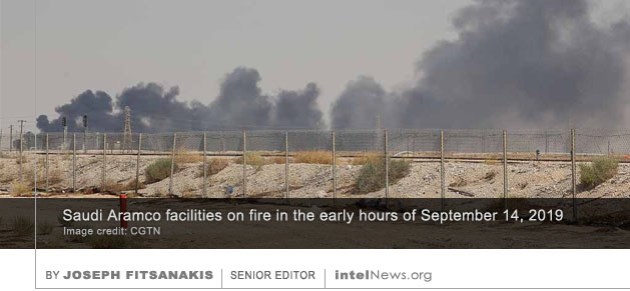 Saudi Arabia and the United States suffered “a total and embarrassing [intelligence] failure” in the lead-up to the drone strikes that shut down half of the kingdom’s oil production last month, according to Israeli sources. In the early hours of September 14, missiles struck two refineries belonging to the world’s largest crude oil processing facility in eastern Saudi Arabia. The facilities, which belong to Aramco, Saudi Arabia’s government-owned oil conglomerate, were forced to cease operation so that repairs could be carried out. This drastically reduced Saudi Arabia’s oil production by close to 50 percent, which amounted to a 5 percent drop in global oil production. By Monday morning, global oil prices had seen their most significant one-day surge since the 1991 Gulf War.
Soon after the attacks, Saudi and American officials accused Iran of having launched the missile strikes. But according to Breaking Defense, Riyadh and Washington suffered “a total and embarrassing [intelligence] failure” in the hours prior to and following the attacks. The US-based website cited a number of anonymous Israeli sources, who said that officials in Tel Aviv were surprised by the lack of intelligence in the US and Saudi Arabia about the missile strikes. The Israelis told Breaking Defense that Saudi intelligence agencies “had no idea Iran was planning to attack the kingdom’s oil facilities […]. It seems that the Americans were also in the dark [or that possibly] Washington […] did not share the data in time with the Saudis”, they added.
The above information was allegedly discussed at an emergency meeting of the Israeli defense cabinet on October 6, which included a briefing on the attacks by the Mossad, Israel’s main external intelligence agency. According to the Israeli sources, Mossad officials were quickly able state with high confidence that the missiles had been launched from military bases in southeast Iran or by Iranian militias in Iraq. It was only following an examination of missile fragments that Saudi and American intelligence officers were able to point the finger at Iran, according to Aahron Ze’evi Farkash, former director of the Israeli Military Intelligence Directorate.
Breaking Defense also said that Israeli intelligence analysts were impressed by the precision of the weapons systems used in the Iranian strikes. Additionally, the specific targets of the attacks were selected with the help of “very accurate intelligence”, said the Israeli sources.
► Author: Joseph Fitsanakis | Date: 11 October 2019 | Permalink
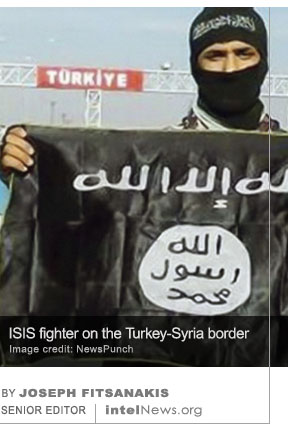 Officials in the United States, Europe and the Middle East have warned that thousands of jailed members of the Islamic State could escape from Kurdish-controlled prisons in northern Syria if Turkey invades the region. For more than two years, the area has been controlled by American-supported Kurdish militias, who were instrumental in helping Washington defeat the Islamic State —also known as Islamic State of Iraq and Syria, or ISIS. But the growing strength of the Kurdish forces has alarmed Turkey, which views Kurdish nationalism in the region as a bigger threat than Salafi jihadism. Ankara has repeatedly threatened to invade northern Syria and disarm the Kurdish groups, which it sees as terrorist.
 The United States has pressed espionage charges against a naturalized American citizen who operated as a courier for Chinese intelligence while working as a tour operator in California. On Monday federal prosecutors in San Francisco filed espionage charges against Xuehua “Edward” Peng, a 56-year-old Chinese-born American citizen. Peng, a trained mechanical engineer, reportedly entered the United States in June 2001 on a temporary visa. In 2012 he became a naturalized American citizen. By that time he was working for US Tour and Travel, an independent tour operator in California.
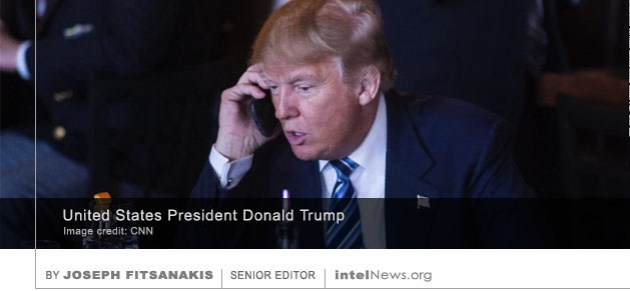 The individual who filed a report claiming that United States President Donald Trump sought help from a foreign country to win the 2020 election is believed to be a male employee of the Central Intelligence Agency. The man, who is legally classified as a whistleblower, filed the report on August 12. It was released for publication on Thursday and is now
 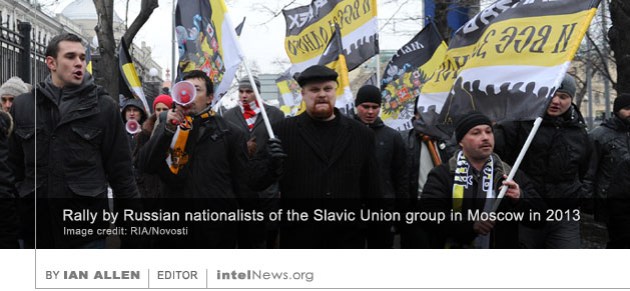 Threats posed by white supremacist and other far-right groups are now global in nature and are increasingly backed by state actors, according to a Congressional testimony by an American former counterterrorism official. The testimony was delivered by Joshua Geltzer, former senior director for counterterrorism at the United States National Security Council. Geltzer, who now directs the Institute for Constitutional Advocacy and Protection at Georgetown University in Washington, DC, testified on Friday before two subcommittees of the US House of Representatives. The Subcommittee on National Security and the Subcommittee on Civil Rights and Civil Liberties held a joint hearing entitled “Confronting Violent White Supremacy”.
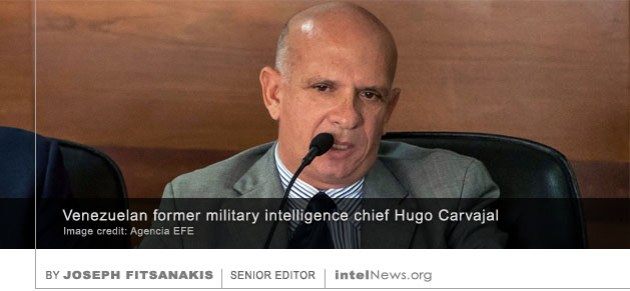 Spain has refused to extradite Venezuela’s former spy chief to the United States, where he is wanted for drug-running. The decision is also an intelligence setback for Washington, as the former spy, Hugo Carvajal, is reputed to possess a “treasure trove” of inside information on the Venezuelan government. Carvajal is a retired general, a former diplomat, and a member of the late Venezuelan President Hugo Chávez’s inner circle. From 2004 to 2011, under Chávez’s tutelage, Carvajal headed the Directorate General of Military Counterintelligence (DGCIM). In 2008 the US named Carvajal as a major facilitator of international drugs trafficking and imposed financial sanctions on his assets around the world. Washington accused Carvajal of assisting the paramilitary group known as the Revolutionary Armed Forces of Colombia (FARC) transport drugs from Latin America to Mexico and from there to the US.
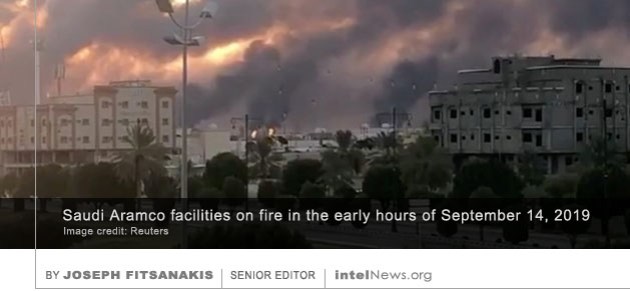 United States officials are considering increasing substantially America’s intelligence-sharing with Saudi Arabia following last weekend’s drone attacks that halved the Kingdom’s oil production and shook global markets. The attacks occurred in the early hours of Saturday, September 14, at two refineries located in eastern Saudi Arabia. The refineries are owned by Aramco, Saudi Arabia’s government-owned oil conglomerate, and are part of the world’s largest crude oil processing facility. The massive fires caused by the attacks were contained within hours and no casualties were reported. But the facilities had to cease operation so that repairs could be completed. This cut Saudi Arabia’s oil production by close to 50 percent, which amounted to a 5 percent reduction in global oil production. The impact on the world’s financial markets was immediate: by Monday morning, oil prices had seen their most significant one-day surge since the 1991 Gulf War.
 The Russian government reportedly fired a number of officials over the defection of a senior Kremlin aide, who alleged worked as an American spy. Meanwhile, Moscow has filed a search request with INTERPOL about the alleged defector’s whereabouts. News of the defection was
  The intelligence services of Israel planted surveillance devices around the White House in an attempt to spy on United States President Donald Trump and his senior advisors, according to a report published on Thursday. The
 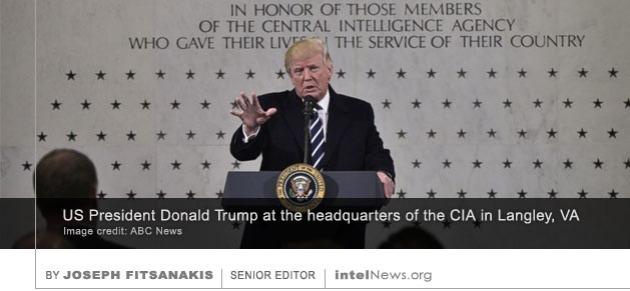 The United States Central Intelligence Agency has questioned the accuracy of a media report, which claimed that “repeated mishandling” of intelligence by President Donald Trump resulted in the exfiltration of a high-level source from Russia. According to the American news network CNN, the CIA carried out the exfiltration operation in 2017. Despite the success of the operation, the removal of the asset has left the US without this high-level source at a time when it is most needed, said CNN. The network
  Italy has arrested a Russian business executive and former foreign ministry official who is wanted by the United States for carrying out espionage against an American aviation firm. Alexander Yuryevich Korshunov, 57, who is a former official in Russia’s Ministry of Foreign Affairs, was reportedly
  The Islamic Revolutionary Guard Corps (IRGC) is still recovering from the damage it suffered by an offensive American cyber campaign against it that took place in June, according to sources. The attack allegedly degraded the IRGC’s ability to strike at oil tankers and other ships in the Persian Gulf. The New York Times
 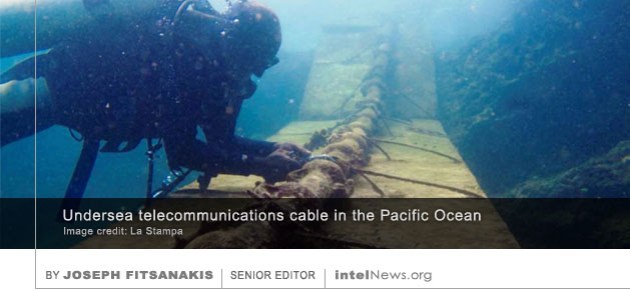 In a move observers describe as unprecedented, a United States government regulator is preparing to recommend blocking the construction of an 8,000-mile long undersea cable linking America with China, allegedly due to national security concerns. Washington has never before halted the construction of undersea cables, which form the global backbone of the Internet by facilitating nearly 100% of Internet traffic. Much of the undersea cable network is in the process of being replaced by modern optical cables that can facilitate faster Internet-based communications than ever before.
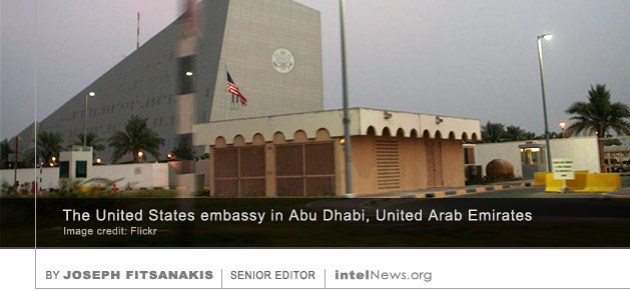 The United States Central Intelligence Agency will not collect human intelligence on the United Arab Emirates, even though the oil kingdom’s actions often run directly counter to American interests, according to sources. The CIA’s policy, which some sources described as “highly unusual”, fails to recognize the growing distance between American interests and the UAE’s foreign policies, according to Reuters. The news agency cited “three former CIA officials familiar with the matter” who claimed that the CIA’s policy is out of touch and may be endangering US national security.






 intelNews.org
Trump thought Erdoğan was “bluffing” about invading Syria, sources claim
October 15, 2019 by Joseph Fitsanakis 2 Comments
Since 2016, Ankara repeatedly threatened to invade northern Syria and disarm the Kurdish groups, which it sees as terrorist. It had refrained from doing so due to the presence of American troops in the area. However, according to news website Axios, key officials in the Trump White House were convinced that Turkish President Erdoğan would not have his troops invade northern Syria even if the American forces pulled out. In making this claim, the website cites six unnamed sources “with direct knowledge of the situation”, some of whom were allegedly “in the room with the two leaders and had access to their phone calls going back several years.
In one of these phone calls, which took place in 2017, President Erdoğan allegedly informed the US leader of his government’s intention to “move in to take care of the Kurdish threat” in northern Syria. But President Trump cautioned him about making such a daring move. He reminded the Turkish leader that, by invading northern Syria, Turkey would become responsible for the tens of thousands of Islamic State supporters and their families who are kept in detention camps. Ankara would also face mass international condemnation and possible sanctions from the United States and Europe. Moreover, the US-trained and -supplied Kurdish forces would arguably create a military quagmire for Turkish troops in the region. At that point Turkey “would own” the problem and would not be able to “come to [the US] for help”, according to Trump.
The Axios report claims that, until last week, the White House thought that “Erdoğan would never actually go through with his long-threatened Syria invasion”, because doing so would be detrimental to Turkish interests in the region. Based on that conviction, President Trump finally decided to call Erdoğan’s bluff by pulling American Special Forces troops out of northern Syria, in the belief that Tukey’s response would amount to nothing further than a few airstrikes and small-scale cross-border incursions. That belief was behind the White House’s surprise decision to suddenly pull its troops from northern Syria, according to Axios’ sources.
The report did not mention whether the US Intelligence Community’s reports to the White House concurred with the US President’s conviction that Turkey would not invade northern Syria even in the absence of US troops. The question is, in other words, did Trump made up his mind about Erdoğan’s intentions to invade northern Syria because, or despite the conclusions of his own Intelligence Community?
► Author: Joseph Fitsanakis | Date: 15 October 2019 | Permalink
Filed under Expert news and commentary on intelligence, espionage, spies and spying Tagged with Donald Trump, News, Recep Tayyip Erdoğan, Syria, Syrian Civil War, Turkey, United States