Spanish court rejects US request to extradite Venezuelan ex-spy chief
September 19, 2019 Leave a comment
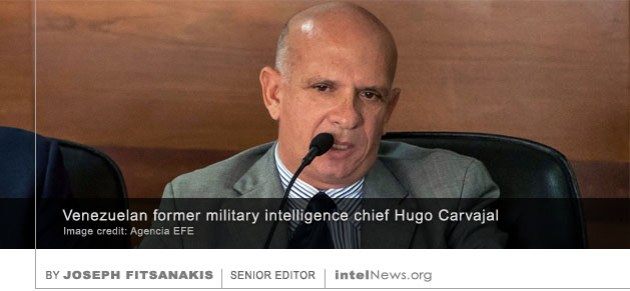 Spain has refused to extradite Venezuela’s former spy chief to the United States, where he is wanted for drug-running. The decision is also an intelligence setback for Washington, as the former spy, Hugo Carvajal, is reputed to possess a “treasure trove” of inside information on the Venezuelan government. Carvajal is a retired general, a former diplomat, and a member of the late Venezuelan President Hugo Chávez’s inner circle. From 2004 to 2011, under Chávez’s tutelage, Carvajal headed the Directorate General of Military Counterintelligence (DGCIM). In 2008 the US named Carvajal as a major facilitator of international drugs trafficking and imposed financial sanctions on his assets around the world. Washington accused Carvajal of assisting the paramilitary group known as the Revolutionary Armed Forces of Colombia (FARC) transport drugs from Latin America to Mexico and from there to the US.
In 2014, the US government officially charged Carvajal with orchestrating a shipment of 1,200lbs of cocaine from Venezuela to Mexico. Washington also charged Carvajal with supplying FARC drug traffickers with Venezuelan passports bearing fake names, which they used to travel internationally to avoid detection. In February of this year, Carvajal publicly unexpectedly denounced Maduro and sided with his arch-nemesis, Juan Guaido, the President of the National Assembly of Venezuela. Carvajal urged the Venezuelan armed forces to stop siding with Maduro and support the US-backed Guaido as Venezuela’s acting president. In April of this year, Carvajal was arrested in Spain. Soon afterwards, the US Department of Justice filed a formal request for the former spy chief’s extradition to the US. An anonymous US official hinted at the time that Carvajal may have willingly given himself up to Spanish police to express his desire to cooperate with the US.
On Monday, however, Spain’s National Court (the country’s top criminal court) announced that Carvajal would not be extradited to the US. The former spy chief was released minutes after the court made its decision known. A court spokesman told reporters that a formal ruling and justification would be released “later”, but an official document has yet to be published. Carvajal’s lawyers told the court that the US request to have him extradited was politically motivated by the administration of US President Donald Trump. It is possible that the court may have sided with that view. There are also rumors that Carvajal may have agreed to cooperate with Spanish intelligence in return for receiving political asylum in Spain. The US Department of Justice has not commented on the case.
► Author: Joseph Fitsanakis | Date: 19 September 2019 | Permalink
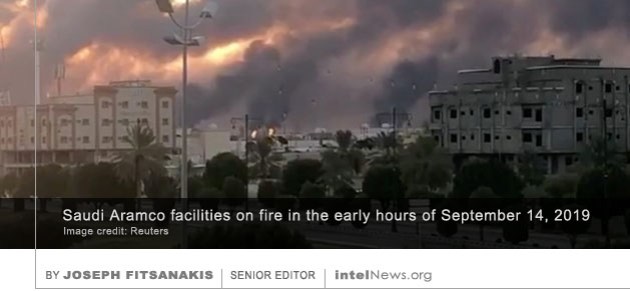 United States officials are considering increasing substantially America’s intelligence-sharing with Saudi Arabia following last weekend’s drone attacks that halved the Kingdom’s oil production and shook global markets. The attacks occurred in the early hours of Saturday, September 14, at two refineries located in eastern Saudi Arabia. The refineries are owned by Aramco, Saudi Arabia’s government-owned oil conglomerate, and are part of the world’s largest crude oil processing facility. The massive fires caused by the attacks were contained within hours and no casualties were reported. But the facilities had to cease operation so that repairs could be completed. This cut Saudi Arabia’s oil production by close to 50 percent, which amounted to a 5 percent reduction in global oil production. The impact on the world’s financial markets was immediate: by Monday morning, oil prices had seen their most significant one-day surge since the 1991 Gulf War.
 The Russian government reportedly fired a number of officials over the defection of a senior Kremlin aide, who alleged worked as an American spy. Meanwhile, Moscow has filed a search request with INTERPOL about the alleged defector’s whereabouts. News of the defection was
 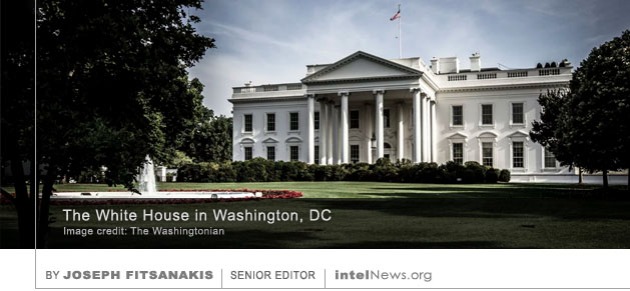 The intelligence services of Israel planted surveillance devices around the White House in an attempt to spy on United States President Donald Trump and his senior advisors, according to a report published on Thursday. The
 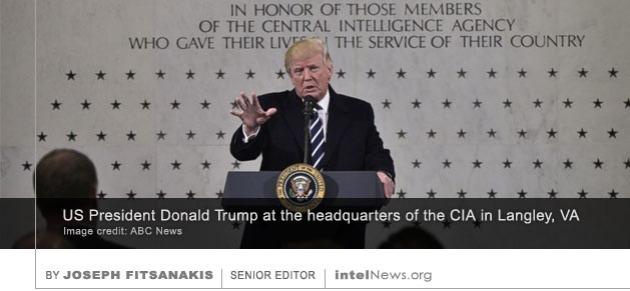 The United States Central Intelligence Agency has questioned the accuracy of a media report, which claimed that “repeated mishandling” of intelligence by President Donald Trump resulted in the exfiltration of a high-level source from Russia. According to the American news network CNN, the CIA carried out the exfiltration operation in 2017. Despite the success of the operation, the removal of the asset has left the US without this high-level source at a time when it is most needed, said CNN. The network
 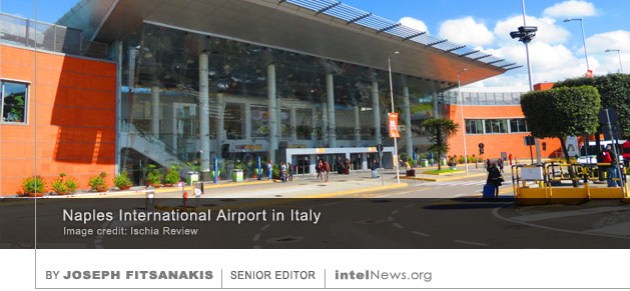 Italy has arrested a Russian business executive and former foreign ministry official who is wanted by the United States for carrying out espionage against an American aviation firm. Alexander Yuryevich Korshunov, 57, who is a former official in Russia’s Ministry of Foreign Affairs, was reportedly
  The Islamic Revolutionary Guard Corps (IRGC) is still recovering from the damage it suffered by an offensive American cyber campaign against it that took place in June, according to sources. The attack allegedly degraded the IRGC’s ability to strike at oil tankers and other ships in the Persian Gulf. The New York Times
  In a move observers describe as unprecedented, a United States government regulator is preparing to recommend blocking the construction of an 8,000-mile long undersea cable linking America with China, allegedly due to national security concerns. Washington has never before halted the construction of undersea cables, which form the global backbone of the Internet by facilitating nearly 100% of Internet traffic. Much of the undersea cable network is in the process of being replaced by modern optical cables that can facilitate faster Internet-based communications than ever before.
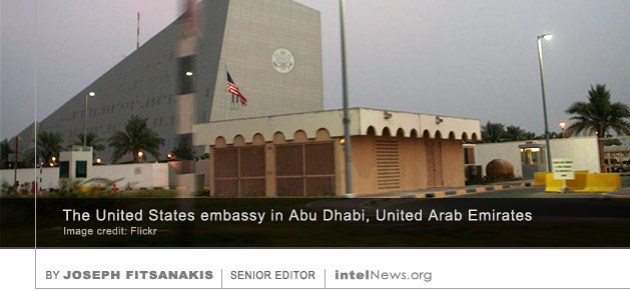 The United States Central Intelligence Agency will not collect human intelligence on the United Arab Emirates, even though the oil kingdom’s actions often run directly counter to American interests, according to sources. The CIA’s policy, which some sources described as “highly unusual”, fails to recognize the growing distance between American interests and the UAE’s foreign policies, according to Reuters. The news agency cited “three former CIA officials familiar with the matter” who claimed that the CIA’s policy is out of touch and may be endangering US national security.
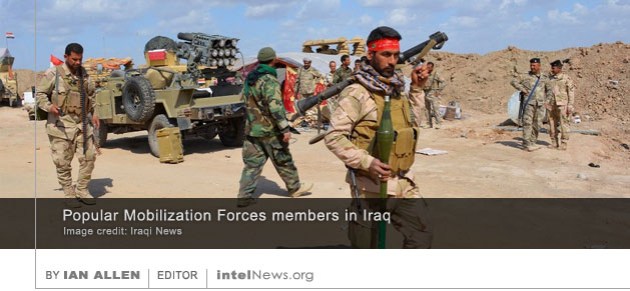 Iraq’s largest Shia militia, which controls parts of Iraq’s territory that were aptured from the Islamic State, has accused the United States and Israel for a series of mystery explosions at its arms depots around the country. Much of the territory captured from the Islamic State (known also as the Islamic State of Iraq and Syria, or ISIS) in northern Iraq is currently controlled by the Popular Mobilization Forces (PMF), a collection of around 40 Shia militias consisting of over 150,000 armed fighters. The Iranian-supported PMF proved instrumental in the territorial defeat of ISIS. However, the group’s leadership is ideologically aligned with Iran, and many of its members will
  The state-owned energy sector of Iran, one of the world’s most lucrative, has become a major target of international espionage since the imposition of new sanctions by the United States this year. The purpose of Washington’s sanctions is to limit the Islamic Republic’s ability to export energy, and by doing so end the country’s reliance on its primary source of income. It is estimated that Tehran’s energy exports have fallen by about 80 percent during the past year, and may continue to fall if the US has its way. This means that American and Iranian intelligence agencies are currently engaged in an intense war of espionage that concentrates on what remains of Iran’s oil exports. Iran continues to entice international buyers by selling energy at below-market prices, while sales are facilitated through the use of throwaway bank accounts that are difficult to trace. Exports are then carefully smuggled into overseas destinations through a variety of means.
 The United States Central Intelligence Agency plans to retain a strong presence on the ground in Afghanistan, despite reports that American troops may soon be leaving the country following a deal with the Taliban. Several news outlets
 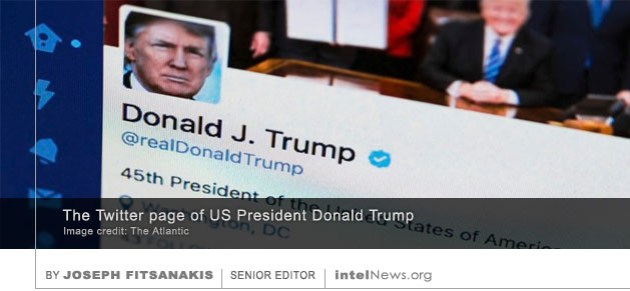 Several countries are behind organized efforts to influence electoral politics in the United States, with Russia being one among a growing list of culprits, according to experts.
 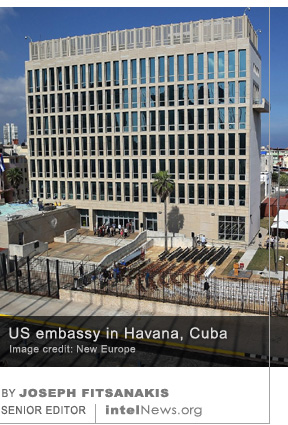 A series of alleged “sonic attacks” by a mysterious weapon may have caused the brains of American diplomats who served at the United States embassy in Cuba to shrink, according to a new scientific study. In 2017 Washington








Far-right terrorism a transnational threat backed by state actors, says US official
September 23, 2019 by Ian Allen 4 Comments
Geltzer said in his testimony [.pdf] that the type of violence perpetrated by white supremacist groups in America cannot any more be characterized as “domestic”, because it is quickly becoming transnational in character. White supremacist violence in America is part of a “global surge” that is “increasingly interlinked and internationalized”. In fact, the attackers themselves internationalize their role in this global movement by referencing white supremacist violence in other parts of the world to justify the use of violence in the US, said Geltzer. He added that the emerging center of this global surge of white supremacist violence appears to be located in Ukraine and Russia. It is there that funds provided by the Russian government are being used to train and educate white supremacist leaders in guerrilla warfare, social media propaganda and various forms of ideological training.
It is therefore imperative, said Geltzer, that the US Intelligence Community begins to examine white supremacist violence within this new transnational context. For instance, it would be helpful if the mission of the National Counterterrorism Center (NCTC) of the Office of the Director of National Intelligence was changed to include a concentration in so-called “domestic terrorism”, including white supremacist violence, he argued.
Also on Friday, the US Department of Homeland Security (DHS) unveiled its new strategy report. The report views “domestic terrorism and mass attacks” as a growing threat to the United States that is equal in magnitude to the threat posed by Islamist terrorists. The report identifies what it describes as “a disturbing rise in attacks motivated by domestic terrorist ideologies”. One of the most powerful drivers of this new wave of domestic violence is “white supremacy”, according to the DHS.
► Author: Ian Allen | Date: 23 September 2019 | Permalink
Filed under Expert news and commentary on intelligence, espionage, spies and spying Tagged with counterterrorism, Joshua Geltzer, News, rightwing extremism, United States, US Department of Homeland Security, US House of Representatives