US expels Chinese diplomats for the first time since 1987
December 16, 2019 1 Comment
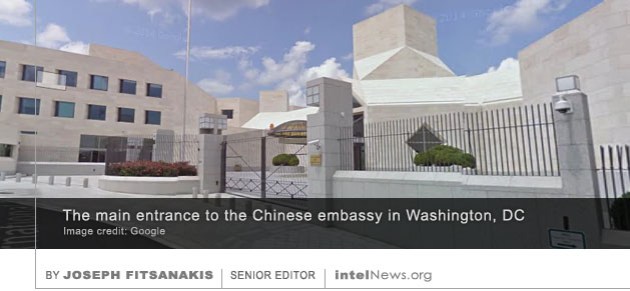 The United States quietly expelled two Chinese diplomats in October of this year, a move that neither Washington nor Beijing chose to make public, according to a report published on Sunday. If true, the incident would signify the first known expulsions of Chinese diplomatic personnel from the US since 1987.
The incident was reported by The New York Times, which cited “six people with knowledge of the expulsions”. It said that the expulsions were triggered by an incident that took place in September in the US state of Virginia. It involved at least two Chinese diplomats stationed in Washington, who allegedly attempted to enter “a sensitive installation” near the city of Norfolk. The paper did not name the installation, but said that it belongs to the US Armed Forces and is also used by members of Special Operations forces.
According to the American side, a car carrying the Chinese diplomats and their spouses drove up to one of the checkpoints of the military installation. Upon realizing that the car’s passengers did not have permission to enter the base, the guard at the checkpoint asked the driver to proceed through the gated entry and immediately turn around, thus exiting the base. But the car allegedly drove straight into the base and did not slow down after military personnel pursued it. It came to a stop only after several fire trucks blocked its way.
Once apprehended, the car’s passengers claimed that their knowledge of English was limited and had thus misunderstood the instructions given to them by the guard at the entrance to the base. The New York Times reported that this explanation was echoed by associates of the Chinese diplomats, who said that they were on “a sightseeing tour when they accidentally drove onto the base”.
But US officials told The Times they are skeptical of that explanation, and suspect the Chinese diplomats were trying to assess the physical security of the installation. Moreover, at least one of the Chinese diplomats was allegedly an intelligence officer operating under diplomatic cover —a clue that heightened the skepticism of American officials.
Interestingly, although it complained about the expulsions of its diplomats following the incident in Virginia, Beijing did not retaliate, as is customary in such cases. Therefore, no American diplomats or intelligence officers have been expelled from China in response to Washington’s move. The last time the US expelled Chinese diplomats from its soil was in 1987, when two employees of the Chinese embassy in Washington —almost certainly intelligence officers operating under diplomatic cover— were declared personae non gratae.
► Author: Joseph Fitsanakis | Date: 16 December 2019 | Permalink
 The United States Federal Bureau of Investigation says it is examining possible counterintelligence threats in connection with the popular online application FaceApp, which is headquartered in Russia. The application first made its appearance in January of 2017 and quickly became popular among smartphone users around the world. It allows users to upload a photograph of their face and then edit it with the help of artificial-intelligence software. The software can change the user’s photograph to make it look younger or older, or make it look as if it is from the opposite gender. The result can be impressively realistic and life-like.
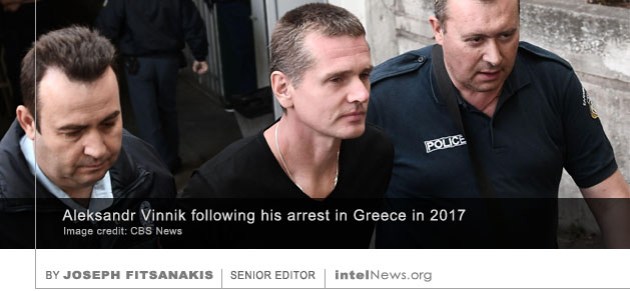 An intense fight between the United States and Russia over the extradition of a Russian cryptocurrency tycoon being held in Greece, is raising questions about the possible use of cryptocurrencies by spies. The tycoon in question is Aleksandr Vinnik, 39, who in 2011 co-founded BTC-e, an international cryptocurrency-trading platform. BTC-e allowed users to buy or sell several popular cryptocurrencies, including bitcoin and litecoin, using Russian rubles, United States dollars, or European Union euro currencies. Although headquartered in Russia, BTC-e’s servers were located in Bulgaria, while its operations were conducted through its offshore components in Cyprus and the Seychelles.
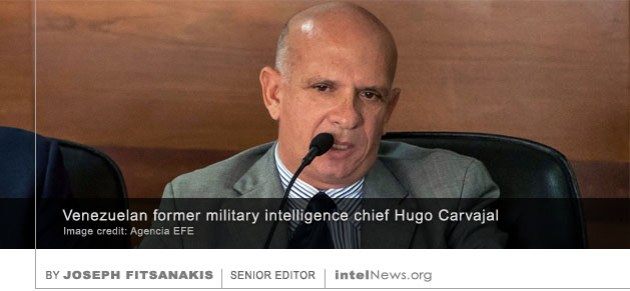 The former director of Venezuela’s military spy agency, who is wanted in the United States for drug trafficking, reportedly disappeared in Spain as authorities there were attempting to extradite him to Washington. Hugo Carvajal is a retired general and former diplomat, who was a member of the late Venezuelan President Hugo Chávez’s inner circle. From 2004 to 2011, under Chávez’s tutelage, Carvajal headed the Directorate General of Military Counterintelligence (DGCIM).
 A day after the United States Department of Justice charged two Saudi citizens with engaging in espionage on American soil, Saudi officials hosted the director of the Central Intelligence Agency in Riyadh, reportedly to discuss “the longstanding Saudi-US partnership”.
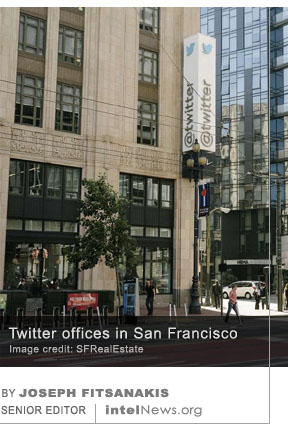 United States authorities have charged two employees of the social media firm Twitter and a member of staff of Saudi Arabia’s royal family with spying for Riyadh. The Federal Bureau of Investigation filed a complaint on Wednesday in San Francisco, accusing the three men of “acting as unregistered agents” for Saudi Arabia. The phrase is used in legal settings to refer to espionage.
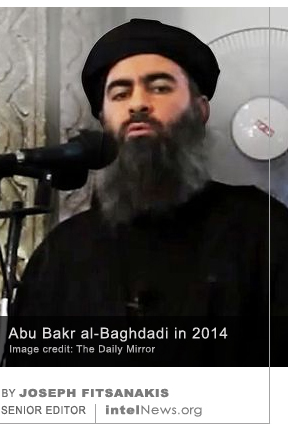 American intelligence agencies are studying up to seven terabytes of data that were captured by Special Operations Forces during last week’s nighttime raid that killed Abu Bakr al-Baghdadi in Syria. Officials in Washington
  Russian authorities detained three American diplomats because they allegedly tried to enter a highly secret weapons testing site in northern Russia, according to reports. The site in question is located near the northern Russian city of Severodvinsk. The city is home to a number of military shipyards and is thus restricted for non-Russians. The latter require a special permit to enter it.
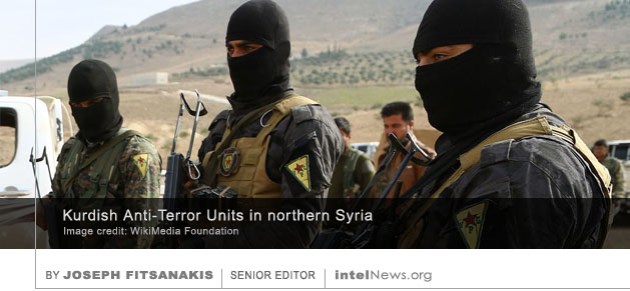 American defense officials with knowledge of Special Operations Forces activities in Syria are concerned that their secrets may fall into the hands of the Russians, as the Kurds switch their allegiance to the Moscow-backed Syrian government. Members of the United States Special Operations Forces and the Central Intelligence Agency (CIA) have had a presence in Kurdish-dominated northern Syria since
 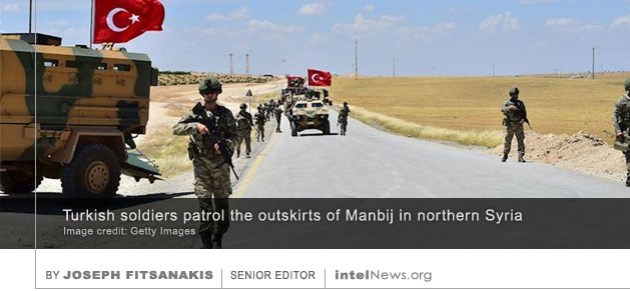 Senior White House officials close to United States President Donald Trump believed that Turkish President Recep Tayyip Erdoğan was bluffing when he threatened to invade northern Syria, according to sources. For over two years, most of northern Syria has been controlled by American-supported Kurdish militias, who were instrumental in helping Washington defeat the Islamic State. But the growing strength of the Kurdish forces alarmed Turkey, which views Kurdish nationalism as a bigger threat than the Islamic State.
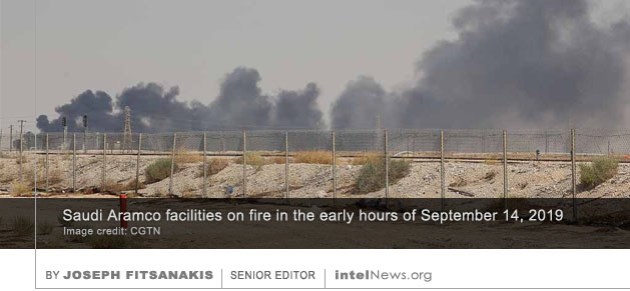 Saudi Arabia and the United States suffered “a total and embarrassing [intelligence] failure” in the lead-up to the drone strikes that shut down half of the kingdom’s oil production last month, according to Israeli sources. In the early hours of September 14, missiles
 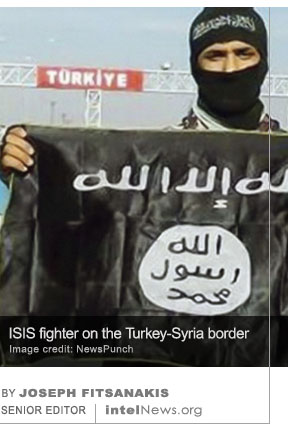 Officials in the United States, Europe and the Middle East have warned that thousands of jailed members of the Islamic State could escape from Kurdish-controlled prisons in northern Syria if Turkey invades the region. For more than two years, the area has been controlled by American-supported Kurdish militias, who were instrumental in helping Washington defeat the Islamic State —also known as Islamic State of Iraq and Syria, or ISIS. But the growing strength of the Kurdish forces has alarmed Turkey, which views Kurdish nationalism in the region as a bigger threat than Salafi jihadism. Ankara has repeatedly threatened to invade northern Syria and disarm the Kurdish groups, which it sees as terrorist.
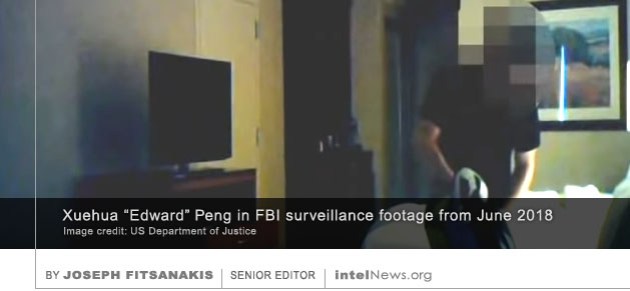 The United States has pressed espionage charges against a naturalized American citizen who operated as a courier for Chinese intelligence while working as a tour operator in California. On Monday federal prosecutors in San Francisco filed espionage charges against Xuehua “Edward” Peng, a 56-year-old Chinese-born American citizen. Peng, a trained mechanical engineer, reportedly entered the United States in June 2001 on a temporary visa. In 2012 he became a naturalized American citizen. By that time he was working for US Tour and Travel, an independent tour operator in California.
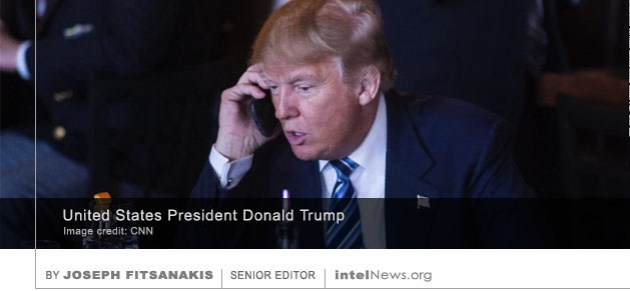 The individual who filed a report claiming that United States President Donald Trump sought help from a foreign country to win the 2020 election is believed to be a male employee of the Central Intelligence Agency. The man, who is legally classified as a whistleblower, filed the report on August 12. It was released for publication on Thursday and is now







Analysis: Middle East on verge of new regional war as US kills top Iran general
January 3, 2020 by Joseph Fitsanakis 7 Comments
The United States, Israel and Saudi Arabia have targeted Soleimani for assassination for over a decade. In 2019 alone, Iran reported over half a dozen alleged plots to kill the general, the most recent of which was in early October. Soleimani’s killing is therefore not surprising. Moreover, Washington’s move rests on a number of crucial calculations by the White House, which help explain why US President Donald Trump made the decision to kill Soleimani, and why he did so now.
In the not-too-distant past, some of America’s tactical security goals aligned with Soleimani and his Quds Force —an elite unit inside the Islamic Revolutionary Guard Corps, which is tasked with exporting the Iranian Revolution abroad. The Iranian paramilitary unit helped Washington deal with the Afghan Taliban in the days after the 9/11 attacks, and its proxies in Iraq and Syria helped the US and its allies deliver fatal blows to the Islamic State. But in doing so, Tehran solidified its power within Iraq, turning its government into a satellite of Iran. The rise of the Popular Mobilization Forces (PMF), the Iranian-supported militias in Iraq, is largely a replay of the rise of Hezbollah, Iran’s paramilitary proxy in Lebanon, in the 1980s. Having painted themselves into a corner, America’s political leadership had to act. It chose to do so by essentially ‘decapitating’ the Quds Force, which is the main conduit between Iran and the PMF. It is worth noting that Abu Mahdi al-Muhandis, the deputy head of the PMF, was also killed in the same strike. Washington’s hope is that these killings can somehow prevent —or at least curtail— the Lebanization of Iraq. Read more of this post
Filed under Expert news and commentary on intelligence, espionage, spies and spying Tagged with Analysis, assassinations, Iran, Iraq, Islamic Revolutionary Guard Corps, Joseph Fitsanakis, Newstex, Qassem Suleimani, Quds Force, United States